
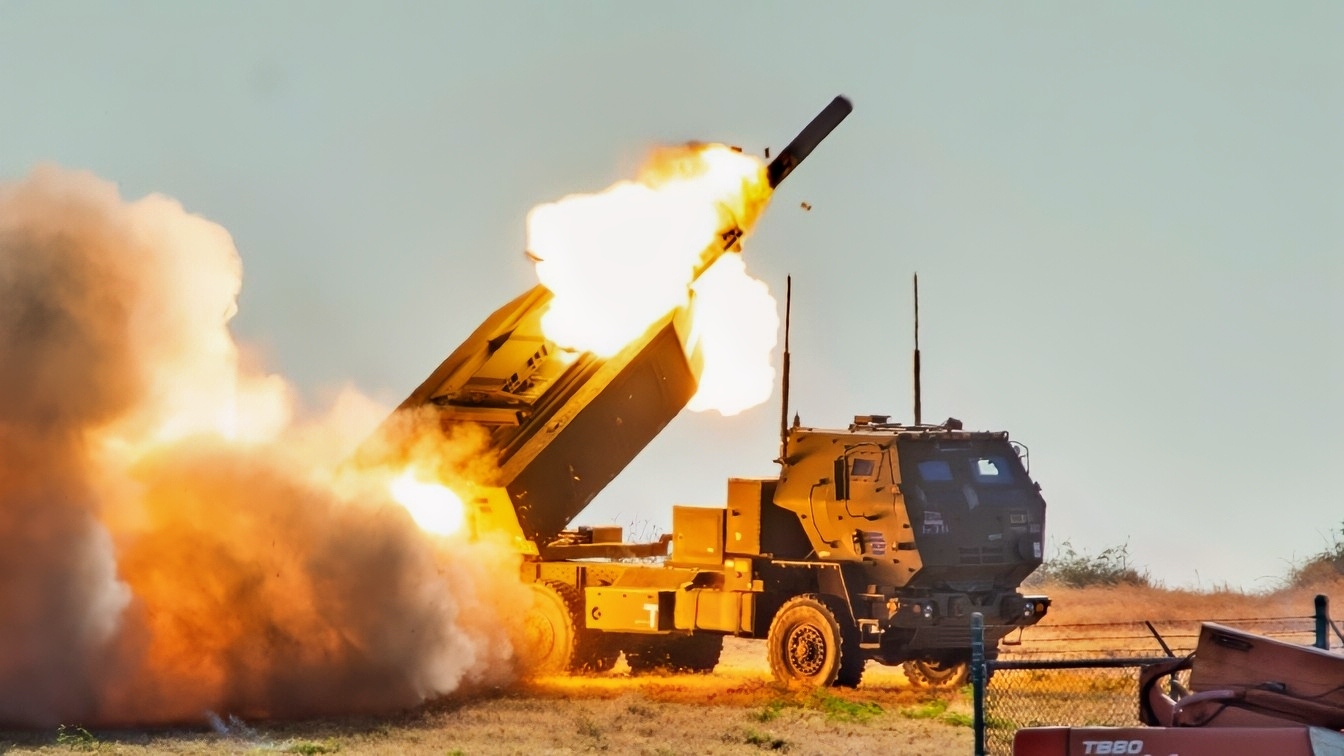
Russia Launches 36 Ballistic Missiles at Kyiv Overnight – Russia launched a massive overnight missile and drone strike against Ukraine on Saturday, November 6. The assault saw 36 ballistic missiles fired at Kyiv and the surrounding area, with energy infrastructure that connects the capital to two of the country’s nuclear power plants being the main targets.
On Saturday, Ukrainian President Volodymyr Zelenskyy confirmed that Russian forces also launched 172 drones during the assault. They hit electricity substations, residential properties, a major bridge crossing the Dnipro River, and other infrastructure.
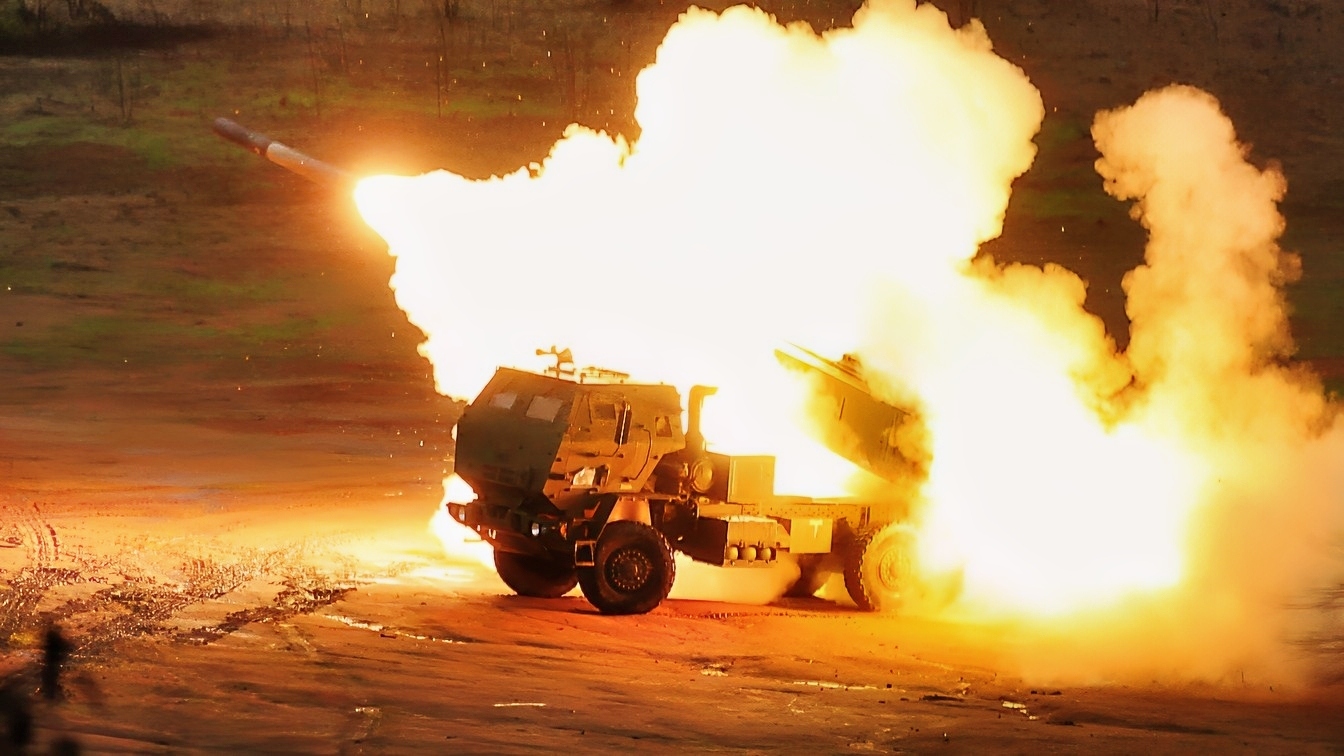
U.S. Marines with 1st Battalion, 11th Marine Regiment, fire a M142 High Mobility Artillery Rocket System (HIMARS), a truck mounted multiple-rocket launcher system, during exercise Steel Knight at Marine Corps Base Camp Pendleton, Calif., Dec. 13, 2012. The battalion conducted this historic live-fire exercise, simultaneously utilizing HIMARS, M777 Lightweight Howitzer and Expeditionary Fire Support System. This is the first time all three artillery weapons systems were fired during the same exercise. (DoD photo by LCpl Joseph Scanlan, U.S. Marine Corps/Released)
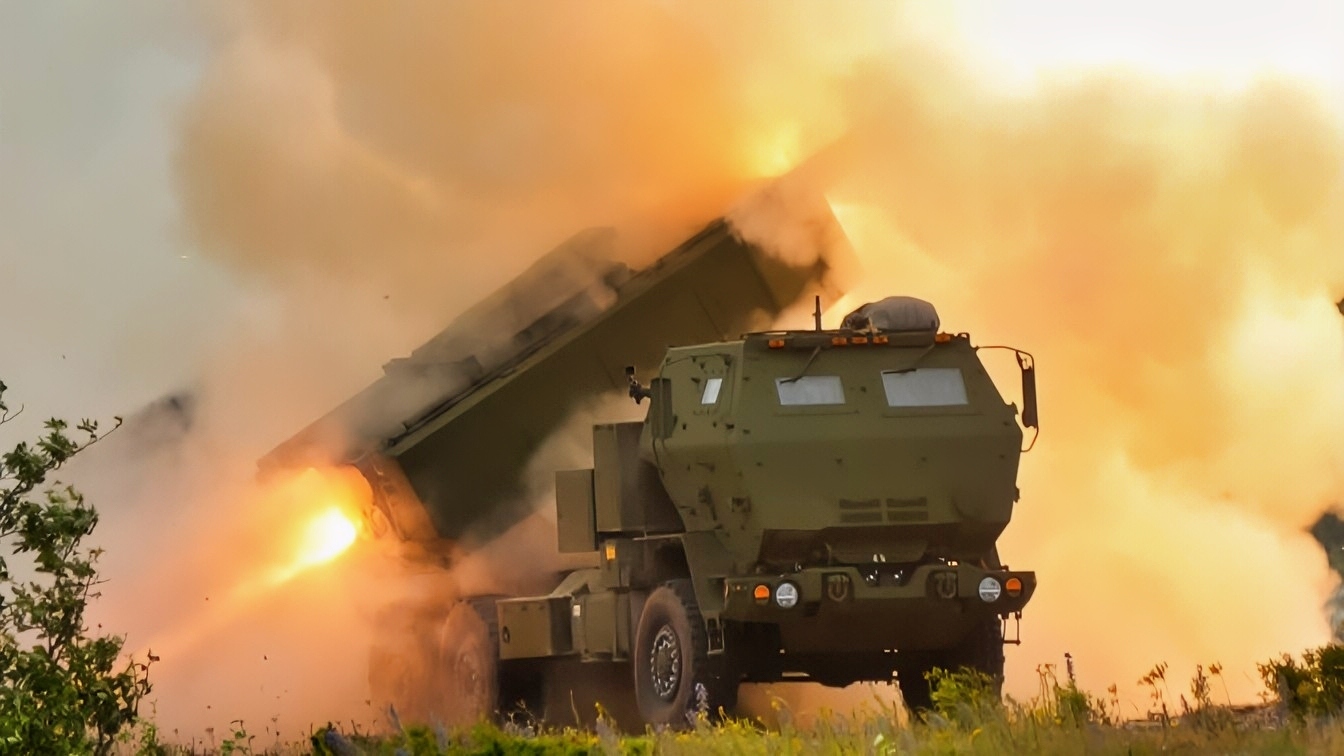
HIMARS Test US Military Creative Commons Photo
The new strikes come only days before officials from Ukraine, Russia, and the United States are expected to meet in Abu Dhabi, where another round of negotiations aimed at ending the war will take place. However, the attack suggests Moscow has no immediate plans to scale back its military operations even as negotiations continue, signaling to Kyiv that it will not back down.
It’s also clear that Moscow is now deliberately attempting to disrupt Ukraine’s electricity infrastructure ahead of winter.
The strikes reportedly left large parts of Kyiv without electricity, heating, and water supplies.
What Zelenskyy Said: The Interceptor Crisis
In a statement issued on X, Zelenskyy said that he had held a call regarding the aftermath of Russia’s overnight attack, during which he said Ukraine was only able to intercept four missiles.
“Unfortunately, there is still a significant shortage of interceptors for Patriot systems, and the United States is in the best position to help address it. At every level, we are looking for ways to speed up deliveries and get the necessary messages across to the American side, so Ukraine has the means to protect lives. This is especially important right now – not just ahead of winter, but also ahead of another joint effort with our partners to reinvigorate negotiations,” Zelenskyy said.
The Ukrainian president also said that Russia has a “very particular view of diplomacy,” describing it as a “subtype of aggression,” and arguing that by intensifying attacks on Ukrainian infrastructure, Moscow is trying to “lay the groundwork for putting pressure on Ukraine’s position and that of its partners.”
Zelenskyy also confirmed that Russian forces used KN-23 missiles that were manufactured and supplied by North Korea.
Only Four Missiles Intercepted
In recent months, Kyiv has called on its European partners, and indeed the United States, to urgently supply more interceptors capable of preventing ballistic missile strikes. As that shortage of interceptors—specifically, Patriot interceptors—continues, Russia is striking targets with greater success. Zelenskyy said that Ukrainian forces struggled to intercept the ballistic missiles fired at the city, and according to the Ukrainian Air Force, most of the 32 missiles were not intercepted. The figure does not mean every missile hit its intended target, but it suggests Kyiv faces serious risk in the coming weeks and months.
Ukrainian forces were far more successful at intercepting the hordes of drones fired at the city, intercepting or neutralizing 149 of the 172 that were reportedly launched overnight. The Ukrainian military said that 137 of the drones launched were high-speed, jet-powered drones. 117 of those drones were intercepted.
Russia Targets Ukraine’s Nuclear Power Infrastructure
Russia targeting Kyiv with ballistic missiles and drones is not new, but the targets this time are interesting. The strikes damaged the infrastructure that connects Ukraine’s Rivne and Khmelnytskyi nuclear power plants to Kyiv and the country’s central regions. Those facilities are critical parts of Ukraine’s electricity network. Damage to high-voltage substations that connect them to consumers would make it difficult to maintain electricity supplies to the civilian population across Kyiv and surrounding regions.
Zelenskyy confirmed that the strikes also damaged substations in the Vinnytsia, Zhytomyr, Rivne, Kharkiv, and Dnipropetrovsk regions.
The strikes targeted infrastructure associated with the nuclear power plants, but no reports indicate the reactors themselves were struck. Damaging the transmission network does not prevent nuclear power plants from generating electricity, but without the infrastructure to move power to consumers, that generating capacity is not useful for Ukraine through the winter.
The Coming Peace Talks
Ukrainian, Russian, and American officials are scheduled to begin a new round of negotiations in Abu Dhabi on November 10 and 11. The talks are expected to focus on possible de-escalation steps and humanitarian measures. Negotiators will, however, be discussing a potential end to the conflict under new circumstances, with Ukraine now less capable of defending itself against future Russian ballistic missile strikes, and at risk of losing critical energy infrastructure over the winter.
President Donald Trump continues to hope an agreement can be reached, but the latest strikes suggest Moscow believes it needs to strengthen its position before re-entering talks. That recent overnight assault proves that Russia has the missiles and the capability to cause major disruption over the coming months, and Ukraine continues to prove incapable of stopping the attacks.
About the Author: Jack Buckby
Jack Buckby is a British researcher and analyst specializing in defense and national security, based in New York. His work focuses on military capability, procurement, and strategic competition, and he produces and edits analysis for policy and defense audiences. He brings extensive editorial experience, with a career output spanning over 1,000 articles at National Security Journal, and has previously authored books and papers on extremism and deradicalization.


