


In October, President Trump promised not to launch any strikes against Iran until after November’s elections.
Now that the midterm elections are over, the whole world is waiting to see whether the U.S. will resume its strikes in the Middle East.
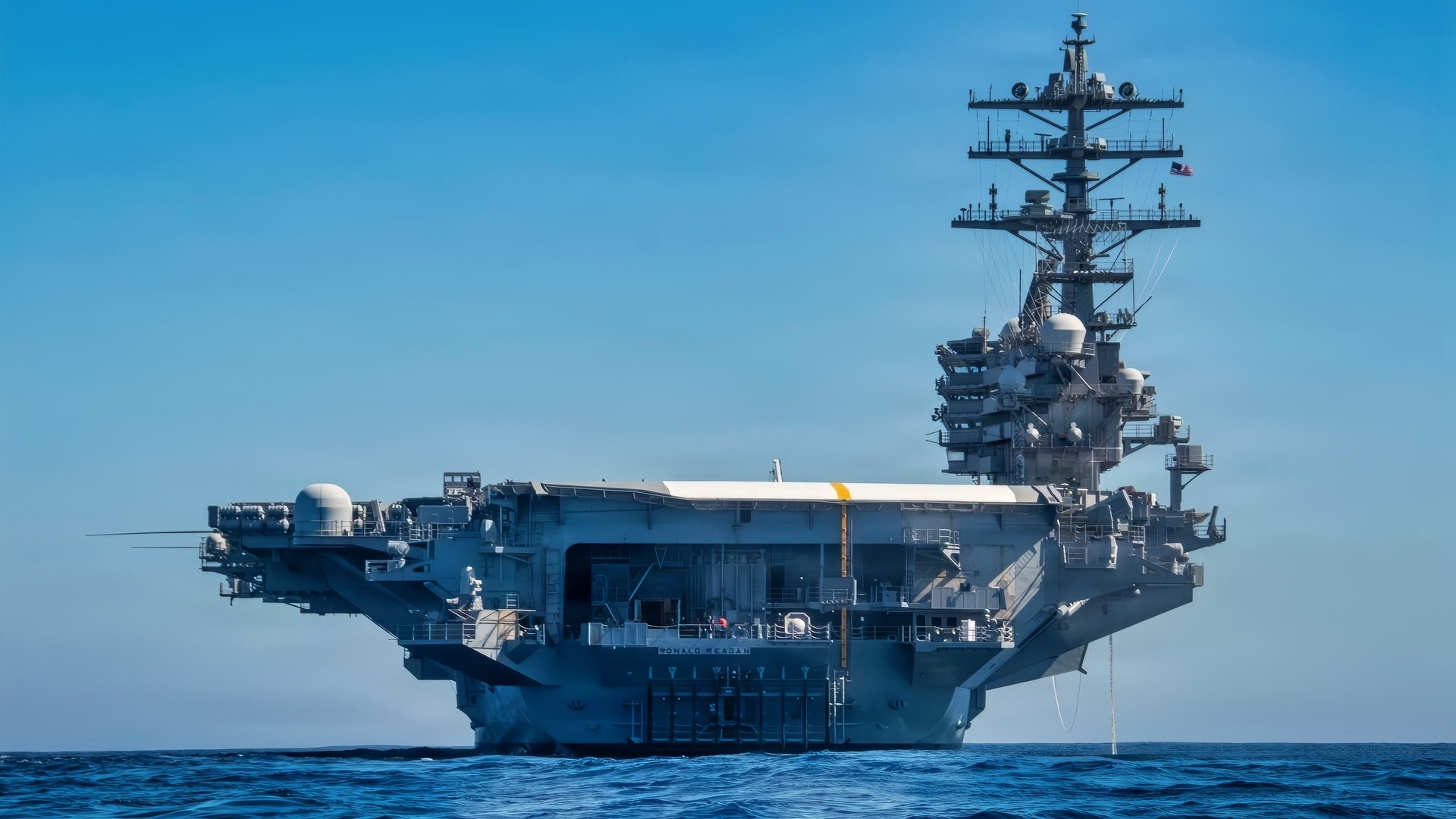
USS Ronald Reagan (CVN 76) steams in the Pacific Ocean, Oct. 4, 2026. The Nimitz-class aircraft carrier Ronald Reagan is underway conducting routine training in U.S. 3rd Fleet area of operations. (U.S. Navy photo by Mass Communication Specialist 2nd Class Jaron Wills)
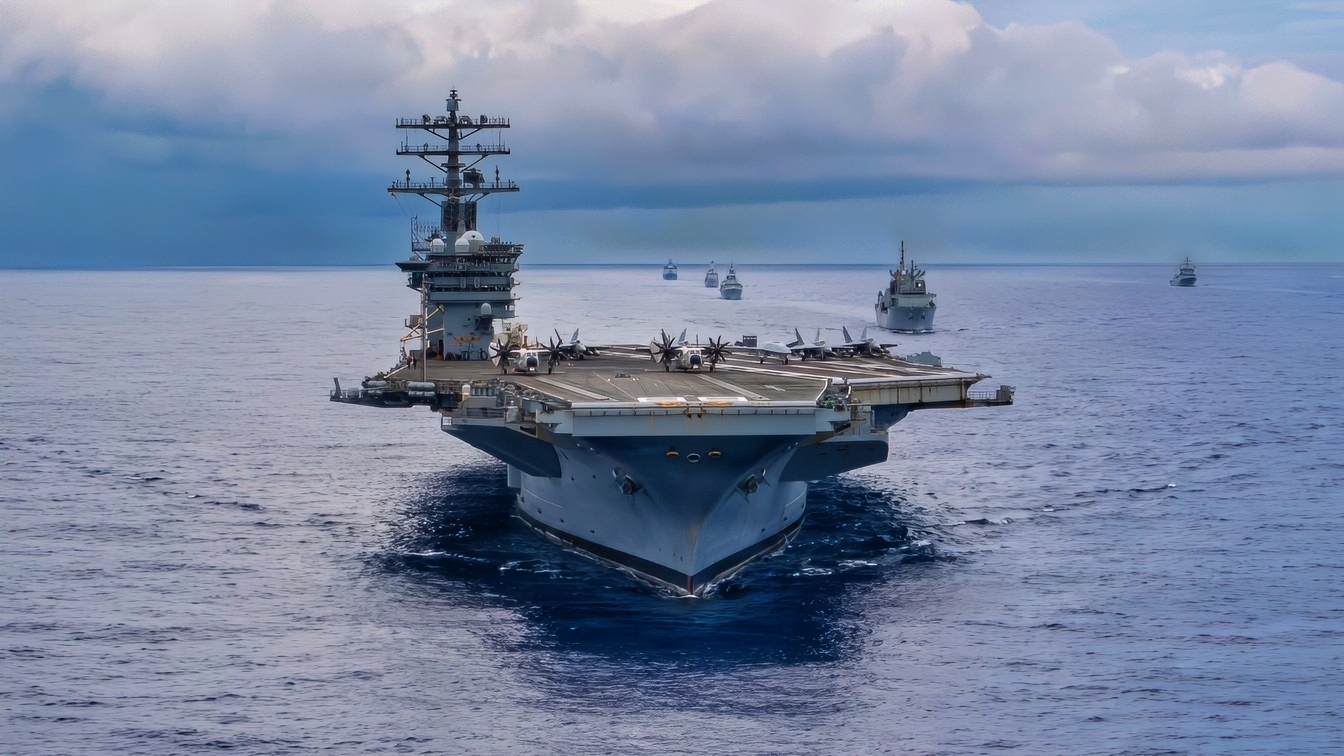
Twenty-six ships from 13 partner and allied nations steam in formation with Nimitz-class aircraft carrier USS Nimitz (CVN 68) during a multinational maritime exercise as part of Fleet Exercise (FLEETEX) 250 in the Atlantic Ocean, June 25, 2026. Nimitz is underway taking part in FLEETEX 250, a series of structured multilateral training events at-sea, aimed at building cohesiveness, validating tactical procedures, and strengthening the interoperability of participating units—which include warships, aircraft, and crews from the U.S. and 13 partner and ally nations. (U.S. Navy photo by Mass Communication Specialist Seaman Julian Jaime)
However, after suffering a massive defeat at the ballot box, Trump is reportedly trying to go the diplomatic route to end the eight-month-long conflict.
The President said that he is “highly unlikely” to restart the war, although renewed military action is still on the table depending on how Tehran reacts.
The ongoing conflict, which has hurt the energy market and other sectors of the economy, remains largely unpopular with most Americans and likely cost the GOP the midterms.
The U.S. Might Not Escalate Attacks Against Iran
In an interview with CNN, Trump said the U.S. was making progress with Iran and that diplomatic talks are underway to secure a lasting peace settlement in the region.
When asked whether the U.S. would resume its military strikes, the President responded that it depends on what Iran does. “It depends on whether or not they sign a very strong agreement,” Trump said. “The answer is highly unlikely it’s going to be necessary. They’re a failing nation.” However, the door is still open to additional strikes if Iran decides to launch sudden attacks. “I’ve got three aircraft carriers here. The other one just arrived. We have three. They’re fully locked and loaded,” Trump continued. “We have 38 bridges in our sight that we can knock down in literally one hour.”
A few days ago, reports indicated that the U.S. may have launched limited airstrikes against Iranian air defense installations on Qeshm Island in the Strait of Hormuz.
According to Iranian state news, residents on the island heard two explosions in the Suza area after hearing an aircraft overhead. Iranian Officials later reported that no vital infrastructure on the island was damaged and that the strikes hit objects outside residential and commercial areas.
The U.S. has not claimed responsibility for the strikes, likely to avoid any political pushback.
However, U.S. Central Command (CENTCOM) reported on November 7 that it struck and disabled a civilian tanker in the Gulf of Oman after it violated the U.S. naval blockade. CENTCOM has made no official comments on any missions carried out against Qeshm Island.
The Current State of Iran’s Offensive and Defensive Capabilities
During his interview with CNN, Trump claimed that Iran’s stockpile of air defenses and offensive missiles was severely depleted, leaving the country vulnerable to any potential American attacks. “It’s unstoppable because they have no anti-aircraft stuff. All of their anti-aircraft systems are gone,” he said. According to the President, Iran currently maintains around 10% of its prewar missile inventory and around 15% of its drone capabilities.
“The only thing they can do is operate at about a 10% level, make some missiles, and make some drones. Drones are at about 15% because many of their factories are gone,” Trump said. According to OSINT claims, the IRGC has conducted multiple ballistic missile tests over the past month. In the last week alone, Iran reportedly conducted more than ten ballistic missile tests. These reports, however, are unverified and should be taken with a grain of salt.
Iran produces its ballistic missiles in massive underground bases, commonly referred to as missile cities. These missile cities are situated roughly 100 to 500 meters underground and are protected by layers of hard granite and high-performance concrete.
Throughout the conflict, the U.S. and Israel have struck these facilities multiple times, aiming to block their entrances or hit vehicles traveling to or from them.
The problem, however, is that the U.S. cannot do much more than damage their entrances.
Even with the strongest bunker-buster munitions, fully destroying these heavily fortified underground installations is likely not possible.
As a result, Iran’s missile cities are likely fully operational, and any damage sustained has likely been repaired during the current operational pause.
Pursuing the Diplomatic Option
Although the President is confident that Iran’s air defenses have been depleted, Trump is hesitant to target Iran’s infrastructure, stating that he would rather pursue a peaceful end to the conflict. “I don’t want to do that because, essentially, it’ll take 10 years to rebuild them,” the President said regarding Iran’s bridges. “I don’t like ripping down bridges. And the hardest thing to build is a bridge. It takes years, and I’m a good builder.” According to Qatar, diplomatic activity between the U.S. and Iran has increased recently.
President Trump reportedly spoke with Qatar’s Emir, Sheikh Tamim bin Hamad Al Thani, to discuss de-escalation.
At the same time, Iran’s Foreign Minister, Abbas Araghchi, has spoken with his counterparts across the Middle East.
Despite the increased diplomatic activity, it is too early to expect any results. Before leaving for the G7 foreign ministers’ meeting in Paris, Secretary of State Marco Rubio told reporters that a deal with Iran was still a ways away since Iran’s demands are currently unacceptable to the U.S. “I wouldn’t say we’re on the verge of a breakthrough,” Rubio said. “Right now, it hasn’t been very productive because the Iranian demands are simply not just unacceptable but, in some cases, outrageous, ridiculous, and really not realistic.”
About the Author: Isaac Seitz
Isaac Seitz, a Defense Columnist, graduated from Patrick Henry College’s Strategic Intelligence and National Security program. He has also studied Russian at Middlebury Language Schools and has worked as an intelligence Analyst in the private sector.


