

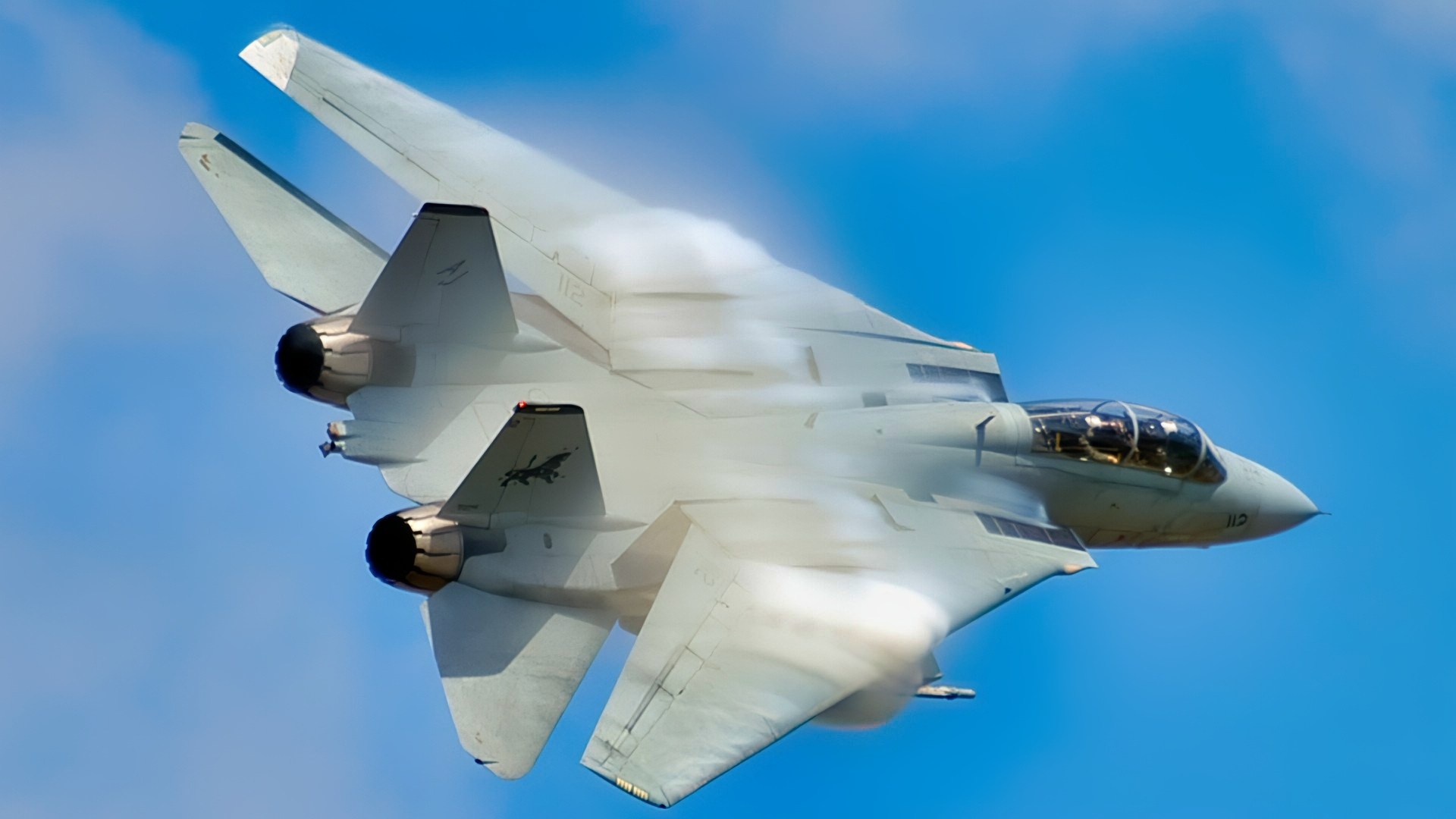
The Grumman F-14 Tomcat is one of the most recognizable American fighter aircraft ever built. Immortalized in the Top Gun film series, the Tomcat was a defining symbol of US naval aviation during the late Cold War.
As you can tell from the original photos and video in this article, we really love spending time with the F-14 Tomcat.
The aircraft’s final variant, the F-14D Super Tomcat, incorporated major improvements over the original aircraft. Yet the Navy retired its last Tomcats in September 2006, replacing them with the F/A-18E/F Super Hornet.
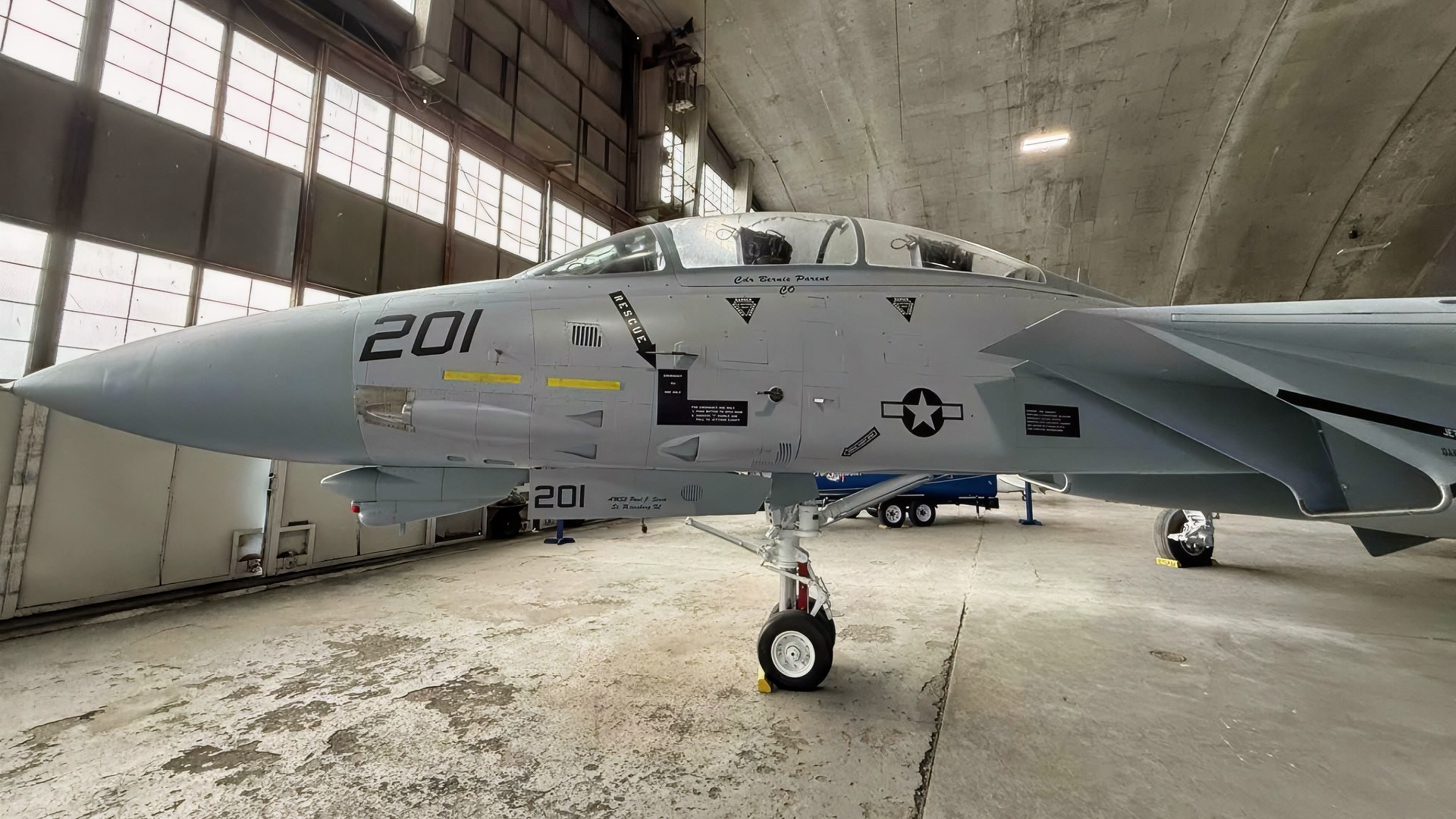
F-14 Tomcat in Museum. Image Credit: National Security Journal.
Now, two decades later, the question persists: did the Navy retire the F-14D prematurely? The answer depends on priorities.
The Ultimate F-14 Tomcat
The F-14 entered Navy service in 1974 and was originally designed to defend aircraft carriers against Soviet bombers and anti-ship missiles.
Its signature features included variable-sweep wings, twin engines, and long-range radar.
The original F-14A used the troubled Pratt & Whitney TF30 engines, but the F-14D was upgraded with the more powerful (and less prone to blowing up) General Electric F110-GE-400 engines.
The F-14D also featured the AN/APG-71 radar, improved avionics, digital flight controls, and enhanced electronic systems.
The Tomcat could carry the long-range AIM-54 Phoenix missile, giving the jet long-range fleet-defense capability.
With a two-person crew (featuring a pilot and radar intercept officer, or RIO), the F-14D offered a large airframe with substantial fuel capacity, speed, and weapons-carrying potential.
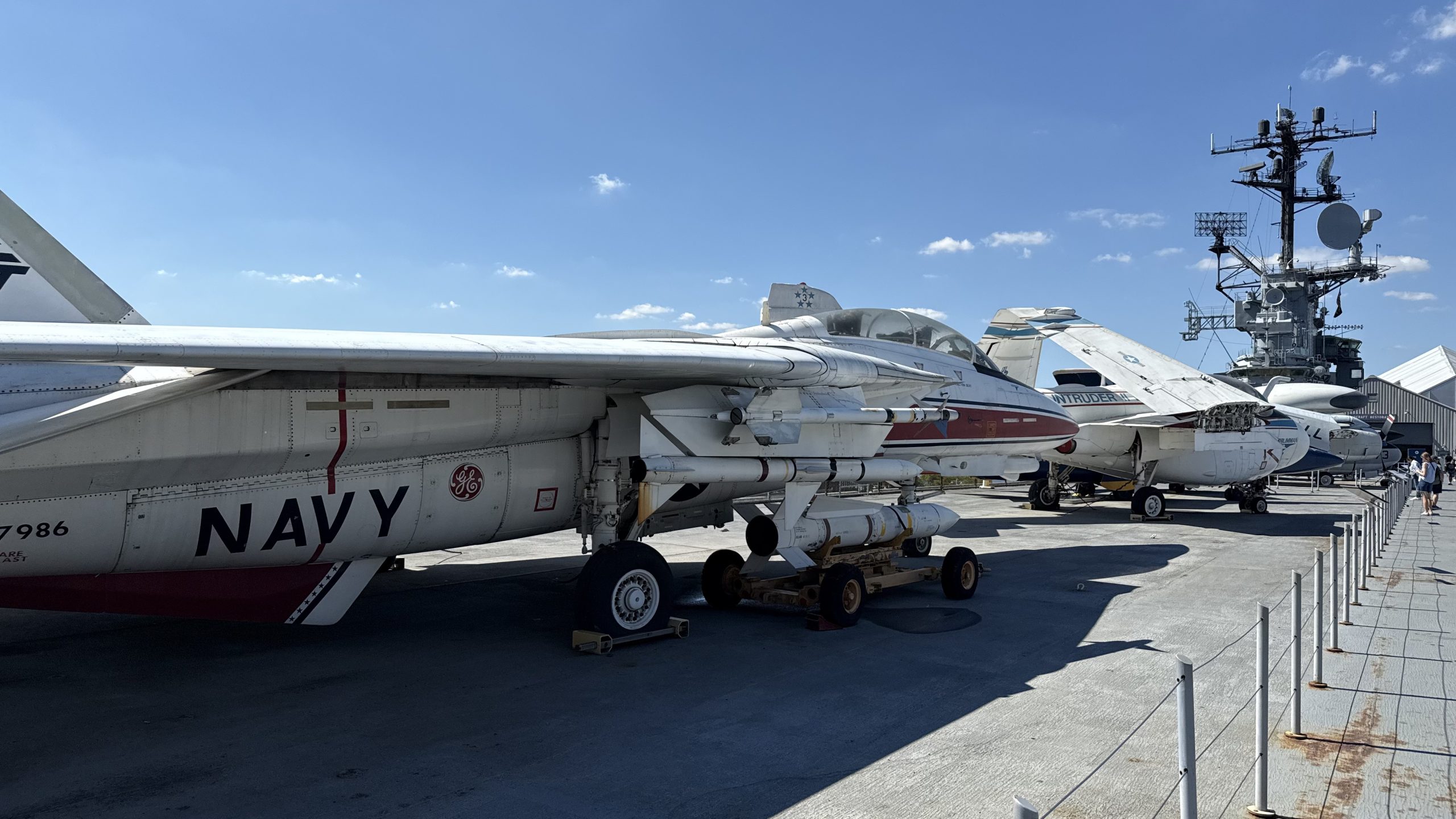
F-14 Tomcat. National Security Journal Original Photo.
The D-variant was the most sophisticated production version of the Tomcat, though only a relatively small number entered service.
Mission Transition
The Tomcat was designed primarily for air-to-air combat against Soviet aircraft threatening American carrier groups.
Following the Cold War, however, the Navy’s operational priorities changed.
The Soviet naval aviation threat diminished, while American carriers increasingly conducted strike operations against land targets.
Adapted to these post-Cold War missions, the Tomcat earned the nickname “Bombcat.” Upgrades enabled the aircraft to employ precision-guided bombs, including laser-guided weapons. Tomcats participated in operations over the Balkans, Afghanistan, and Iraq.
The F-14D’s improved sensors and avionics made it a capable strike platform.
However, the aircraft’s original design remained optimized for long-range interception rather than the multirole flexibility that increasingly defined carrier aviation.
Retiring the Tomcat
The F-14 was expensive and maintenance-intensive compared with newer carrier aircraft. Its variable-sweep wing mechanism, aging airframes, and complex systems contributed to a substantial maintenance burden.

F-14D Tomcat in NYC on USS Intrepid. Image Credit: National Security Journal Taken on 9/19/2025.

F-14D Tomcat Onboard USS Intrepid in NYC. Image Taken by National Security Journal on 9/19/2025.
Because the fleet was so small, logistics and parts support for the F-14D were more complicated. At the same time, the Navy was introducing the Boeing F/A-18E/F Super Hornet, which entered operational service in 2001.
The Super Hornet could perform air-to-air combat, precision strike, maritime attack, and other missions using a common platform.
It was a true multirole platform, consistent with the Navy’s 21st-century needs.
And standardizing carrier air wings around the Hornet family simplified training, maintenance, and logistical support.
The Navy also retired the AIM-54 Phoenix in 2004, further reducing the Tomcat’s distinctive long-range interception advantage.
By 2006, retaining the Tomcat would have required continued investment in a specialized, aging aircraft alongside a newer multirole fleet.
Retirement was therefore the effect of economics, maintenance, and changing operational requirements. In all, retirement was a rational choice.
The Hornet’s Offerings
The F/A-18E/F Super Hornet was not a direct performance replacement in every category.
The F-14D was faster and possessed impressive long-range interception capabilities.

F-14D Tomcat Fighter NSJ Original Image. Taken by Dr. Brent M. Eastwood.
The Super Hornet’s strengths, meanwhile, lay elsewhere, including modern multirole mission systems, lower maintenance demands, precision-strike flexibility, carrier-operating characteristics and fleet commonality, and continued modernization potential.
The F/A-18E/F could also employ the AIM-120 AMRAAM.
But the Super Hornet lacked the Tomcat’s maximum speed.
In kinetic terms, the Super Hornet was something of a step back from its predecessor, the Tomcat.
But raw speed and maximum missile range were not the Navy’s only requirements.
For the counterterrorism and regional conflicts dominating the 2000s, the Super Hornet was well suited to the missions American carriers were actually conducting.
Critics could argue that retiring the Tomcat sacrificed valuable range, speed, and fleet-defense capabilities.
Those attributes might appear increasingly relevant today as the Navy confronts Chinese long-range aircraft and anti-ship missiles.
But in the twenty years since the Tomcat’s retirement, the Navy has never truly needed it.
Meanwhile, the Navy would have needed separate infrastructure, funding, training pipelines, and supply chains to keep the F-14D in service.
Not worth it. The F-14D was retired at the right time.
About the Author: Harrison Kass
Harrison Kass is a writer and attorney focused on national security, technology, and political culture. His work has appeared in Tablet, City Journal, The Hill, The Spectator, and The Cipher Brief. He holds a JD from the University of Oregon and a master’s in Global & Joint Program Studies from NYU—more at harrisonkass.com.


