

Iran’s top security official said Wednesday, November 11, that Tehran had informed Moscow it would not transfer its enriched uranium abroad, rejecting a proposal that Russia take custody of the material as part of efforts to resolve the conflict with the United States.
Mohsen Rezaei, secretary of Iran’s Supreme National Security Council, said Tehran “will not remove a single atom of enriched nuclear material.”

B-52 Stratofortress, 40th Expeditionary Bomb Squadron, loaded with 12 Joint Direct Attack Munitions (JDAM) heads toward Iraq with it’s new mission directive. The bomber’s mission is to provide close air support for coalition troops stabilizing the country of Iraq, April 15, 2003. Operation Iraqi Freedom is the multi-national coalition effort to liberate the Iraqi people, eliminate Iraqi’s weapons of mass destruction and end the regime of Saddam Hussein. (U.S. Air Force photo by Tech. Sgt. Richard Freeland) (Released)
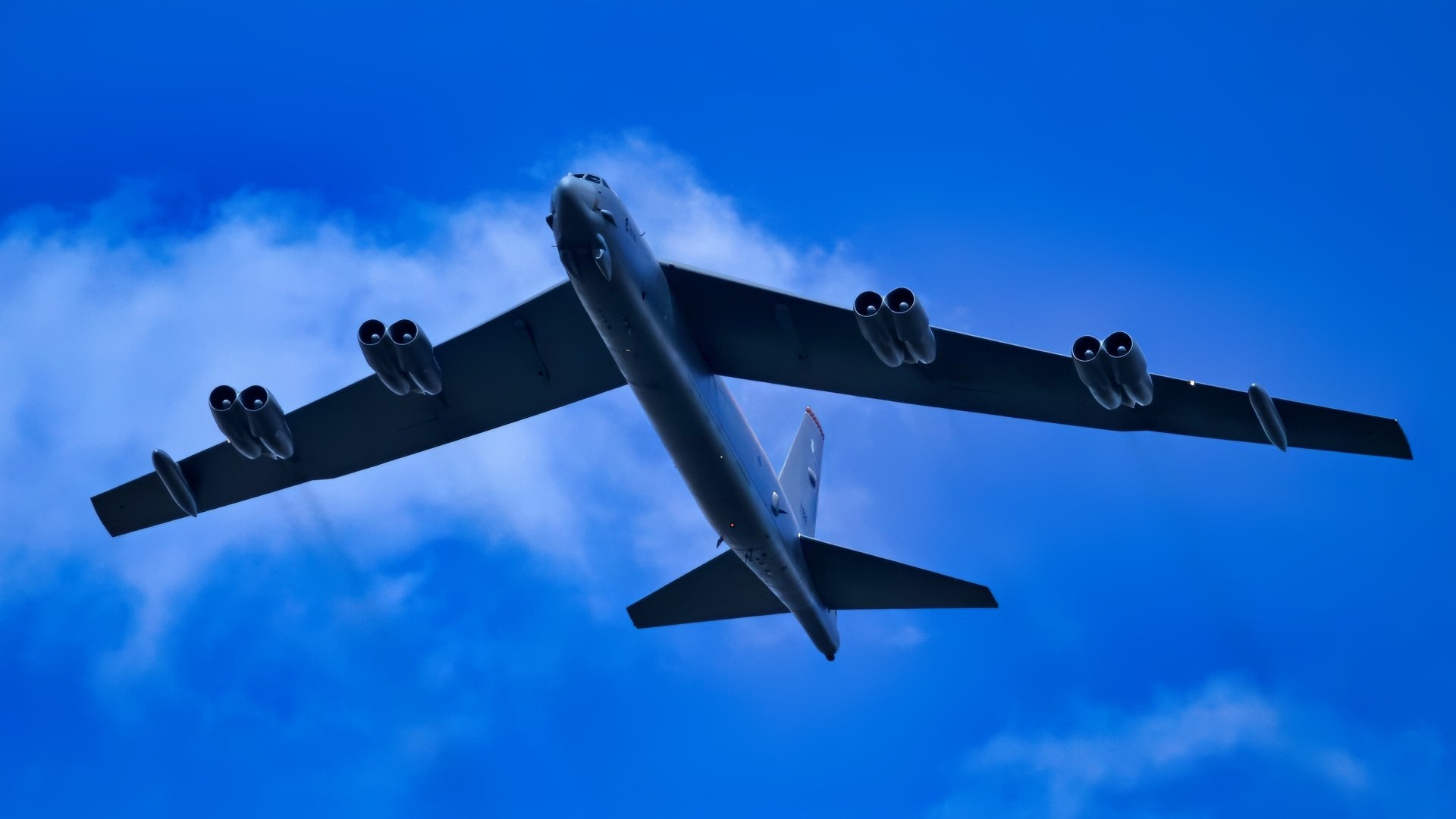
Boeing B-52H Stratofortress. Image Credit: Creative Commons.
Rezaei has been subject to an Interpol Red Notice since 2007, due to his alleged links to a 1994 attack on a Jewish community center in Buenos Aires.
“Any new US attacks will also be met with targeting U.S. bases far away,” he said, according to Reuters.
Rezaei Meets With Putin
Rezaei met Russian President Vladimir Putin at the Kremlin on November 5, delivering a message from Supreme Leader Mojtaba Khamenei, Iranian state media reported.
In May, two senior Iranian sources told Reuters that Khamenei had ordered Iran’s stockpile of near-weapons-grade uranium to remain in the country.
Khamenei succeeded his father, Ayatollah Ali Khamenei, who was killed during the initial U.S. and Israeli strikes on Iran on February 28.
Russia first proposed taking custody of Iran’s enriched uranium in June 2025. On April 15, 2026, Kremlin spokesperson Dmitry Peskov said Washington had rejected a renewed proposal.
“This would be a good decision. But unfortunately the American side rejected this proposal,” Peskov told India Today, according to Russia’s RIA news agency.
More than 25,000 pounds of low-enriched uranium materials were shipped from Iran to Russia in December 2015 under the nuclear agreement reached that year.
Then-Secretary of State John Kerry described the shipment as “one of the most significant steps Iran has taken toward fulfilling its commitments.” President Donald Trump withdrew the United States from the agreement in 2018.
Inspections Remain Blocked
The International Atomic Energy Agency estimated that Iran had around 440.9 kilograms of uranium enriched to 60% purity on June 13, 2025, prior to Israel launching a first round of airstrikes on Iranian nuclear facilities.
Facilities in Fordow, Natanz, and Isfahan were subsequently targeted by the U.S. overnight on June 21-22, 2025. Other nuclear sites faced attacks during this year’s conflict.
Inspectors have been unable to verify how much of Iran’s enriched uranium remains or where it is stored.
“Normal inspection activities have not resumed,” IAEA Director General Rafael Grossi told the U.N. Security Council on October 27.
Grossi said inspectors were conducting verification activities at the Bushehr Nuclear Power Plant, but Iran had not provided the access necessary to verify its previously declared nuclear material elsewhere.
He specifically identified the Isfahan Fuel Enrichment Plant as a facility where inspectors still required access.
In a joint declaration released Wednesday following their November 9-10 meeting in Paris, Group of Seven foreign ministers urged Iran to return to compliance with its international obligations and “resume full cooperation with the International Atomic Energy Agency.”
The ministers also supported diplomatic efforts to settle the dispute over Iran’s nuclear program. Tehran maintains that its program is peaceful.
Qatar Delivers Tehran’s Offer
Iran sent Washington a nuclear proposal through Qatar on November 5, but discussions could proceed only after the United States met Tehran’s seven demands, a senior Iranian official told Reuters.
Iran has demanded sanctions relief, access to frozen assets, compensation for war damage, an end to the U.S. naval blockade, and an end to hostilities across the region, including Lebanon.
Washington has insisted that nuclear issues be included in initial negotiations.
“We will neither open the Strait of Hormuz nor have negotiations,” Rezaei said during his November 5 visit to Moscow, referring to Tehran’s conditions.
Rezaei said Tehran would neither reopen the Strait of Hormuz nor negotiate until Washington fulfilled its seven conditions, which include unfreezing Iranian assets and ending the naval blockade.
Rezaei subsequently denied that negotiations were taking place between Tehran and Washington.
On Tuesday, Qatar’s Foreign Ministry said mediation efforts were continuing and that both countries had spoken positively about a diplomatic solution.
Ministry official Ibrahim bin Sultan Al Hashmi described Monday’s White House meeting between President Trump and Qatari Prime Minister Sheik Mohammed bin Abdulrahman Al Thani as “positive,” according to the ministry’s official statement.
Following the meeting, Trump said the war was “militarily effective over.”
“Iran militarily is effectively over,” Trump told reporters. “We’re just keeping it the status quo,” according to the Associated Press.
He nevertheless said U.S. forces would maintain their naval blockade.
Earlier Monday, Defense Secretary Pete Hegseth said Trump could decide to end combat operations while continuing to monitor Iran’s nuclear material.
“Hey, we’re done, and we’re going to watch your nuclear material, and you’d better not move it,” Hegseth said, describing one possible message to Tehran.
About the Author: Georgia Gilholy
Georgia Gilholy is a journalist based in the United Kingdom who has been published in Newsweek, The Times of Israel, and the Spectator. Gilholy writes about international politics, culture, and education.


