

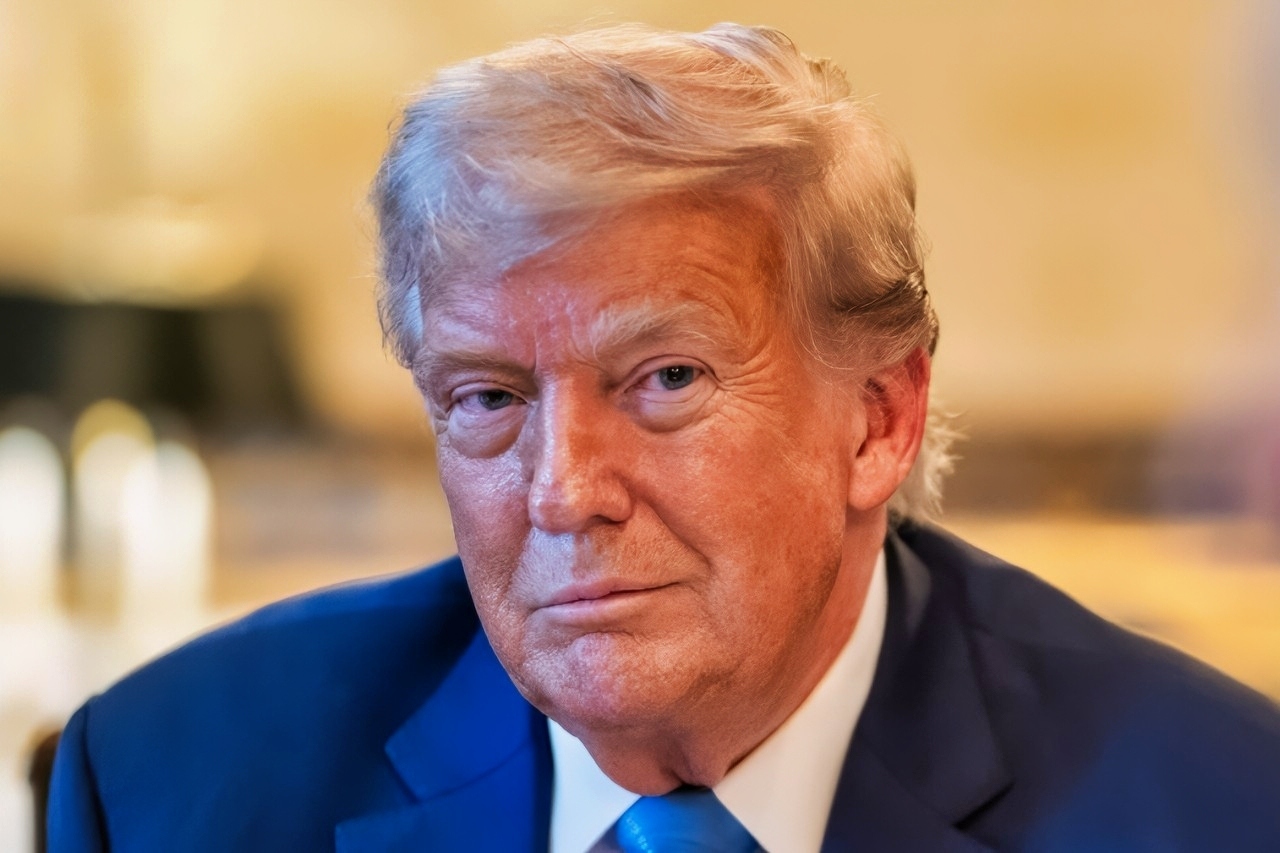
Back in October, President Donald Trump announced a shocking deal with Russia: The U.S. agreed to buy diesel from Russia and suspend some sanctions on the country.
The deal was hugely controversial at the time because it was seen as undercutting years of Western policy to pressure Russia after it invaded Ukraine.
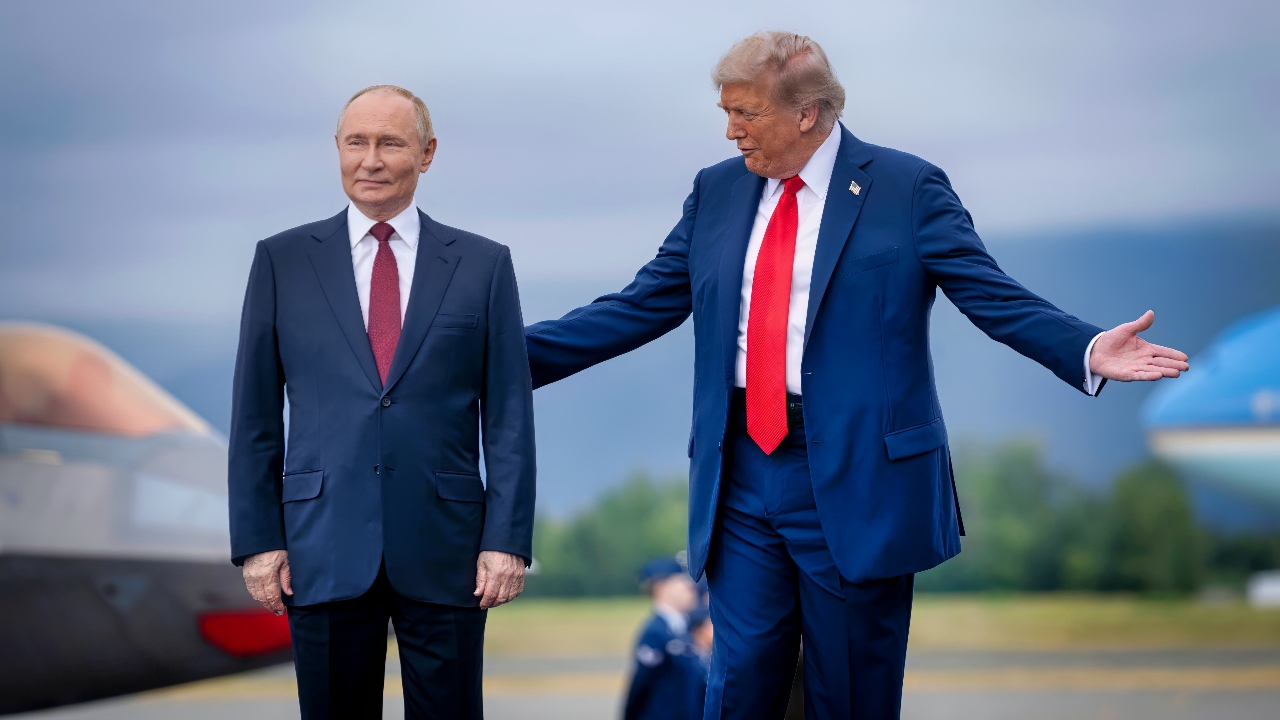
President Donald J. Trump welcomes Russian President Vladimir Putin to Joint Base Elmendorf-Richardson, Anchorage, Alaska, August 15, 2025 (DoD photo by Benjamin Applebaum)

President Donald J. Trump welcomes Russian President Vladimir Putin to Joint Base Elmendorf-Richardson, Anchorage, Alaska, August 15, 2025 (DoD photo by Benjamin Applebaum)
From a Trump Administration standpoint, the idea was to use the oil to give Americans relief from record-high diesel prices, as those costs were creating a political problem for the president and his party.
It was also reported at the time that Trump was seeking to pressure Ukrainian President Volodymyr Zelensky to stop attacking Russian oil refineries, as the president was arguing at the time that it was those refinery attacks, and not anything related to Iran or the Strait of Hormuz, that was causing such high gas prices. After Zelensky declined to agree to an “energy ceasefire” with Russia, Trump announced the diesel deal.
A little more than a month later, the deal has not delivered any real dividends for the U.S. side.
Gas and diesel prices remain high, even if they’re off their all-time highs; the deal also did nothing to prevent last week’s Republican wipeout in the midterm elections.
Also, Ukraine has continued to attack Russian oil facilities.
Also, none of the diesel has actually reached the United States.
Blocked at Sea
The Wall Street Journal reported Wednesday that the deal has “yet to result in any new imports into the country.” That’s because several tankers headed to the United States have shifted course because of what the Journal described as “difficulties finding buyers willing to accept the controversial cargoes.
U.S. oil companies, the Journal reported, are wary of the “potential legal and reputational consequences” of accepting such shipments.
They’re afraid that accepting the oil could violate existing sanctions and could also be illegal, as members of Congress from both parties have warned.
The European Union continues to sanction Russian oil, as do the U.K. and Switzerland.
Russia is exporting oil to various parts of the world, including the Middle East and North Africa, but has yet to deliver any diesel to the U.S. since the deal was announced last month.
“There are political, compliance and enforcement challenges,” Michelle Wiese Bockmann, who is a senior analyst at the maritime intelligence firm Windward, told the newspaper.
Bloomberg News and other outlets have reported on specific tankers containing Russian oil that have turned around rather than deliver it to the United States.
The c, an Eastern Mediterranean Maritime-owned tanker carrying 40,000 metric tons of ultra-low-sulfur diesel, “started to move away from the US East Coast and has been dawdling in a zigzag pattern since Monday,” Bloomberg News reported on Tuesday, citing ship-tracking data.
Agioi Fanendes made its U-turn about 400 nautical miles from New York, the report said.
Russia said after the agreement that it had loaded four tankers headed for the United States.
Two other tankers had previously turned back, the Financial Times reported last week.
Those two tankers were the Russian Talisman, which remains under U.S., U.K. and E.U. sanctions, and the Hong Kong-owned, Sierra Leone-flagged tanker Leruo, which the European Union, the U.K. and Canada sanction.
FT reported that Trump’s “controversial gambit to import Russian diesel to the US ahead of the midterm elections appears to be unraveling.”
Matt Smith, an analyst at Kpler, had told FT that the first two tankers had diverted, and that the Agioi Fanendes likely would too, a prediction that proved accurate.
“Given the apparent hesitancy from US buyers — due to regulatory, legislative and sanction issues — it wouldn’t be too surprising if this tanker diverted away from the US as well,” Smith predicted.
Jacob Meldgaard, chief executive of the product tanker company TORM, told FT that removing sanctions on Russia was harder than Trump likely thought, and could get harder now that he faces a hostile Congress.
“Even before Congress being Democrat, it looks as if it is not so easy to reintegrate Russia into the broader economy,” Meldgaard told the Financial Times. “Not even when you have an administration that is trying to do it.”
About the Author: Stephen Silver
Stephen Silver is an award-winning journalist, essayist, and film critic, and contributor to the Philadelphia Inquirer, the Jewish Telegraphic Agency, Broad Street Review, and Splice Today. The co-founder of the Philadelphia Film Critics Circle, Stephen lives in suburban Philadelphia with his wife and two sons. For over a decade, Stephen has authored thousands of articles that focus on politics, national security, technology, and the economy. Follow him on X (formerly Twitter) at @StephenSilver, and subscribe to his Substack newsletter.


