

U.S. sanctions and a naval blockade have put Iran under sufficient economic pressure that major new military strikes are unnecessary for now, Secretary of State Marco Rubio told reporters after meeting Group of Seven allies in Paris on Tuesday.
Trump: Blockade to Continue
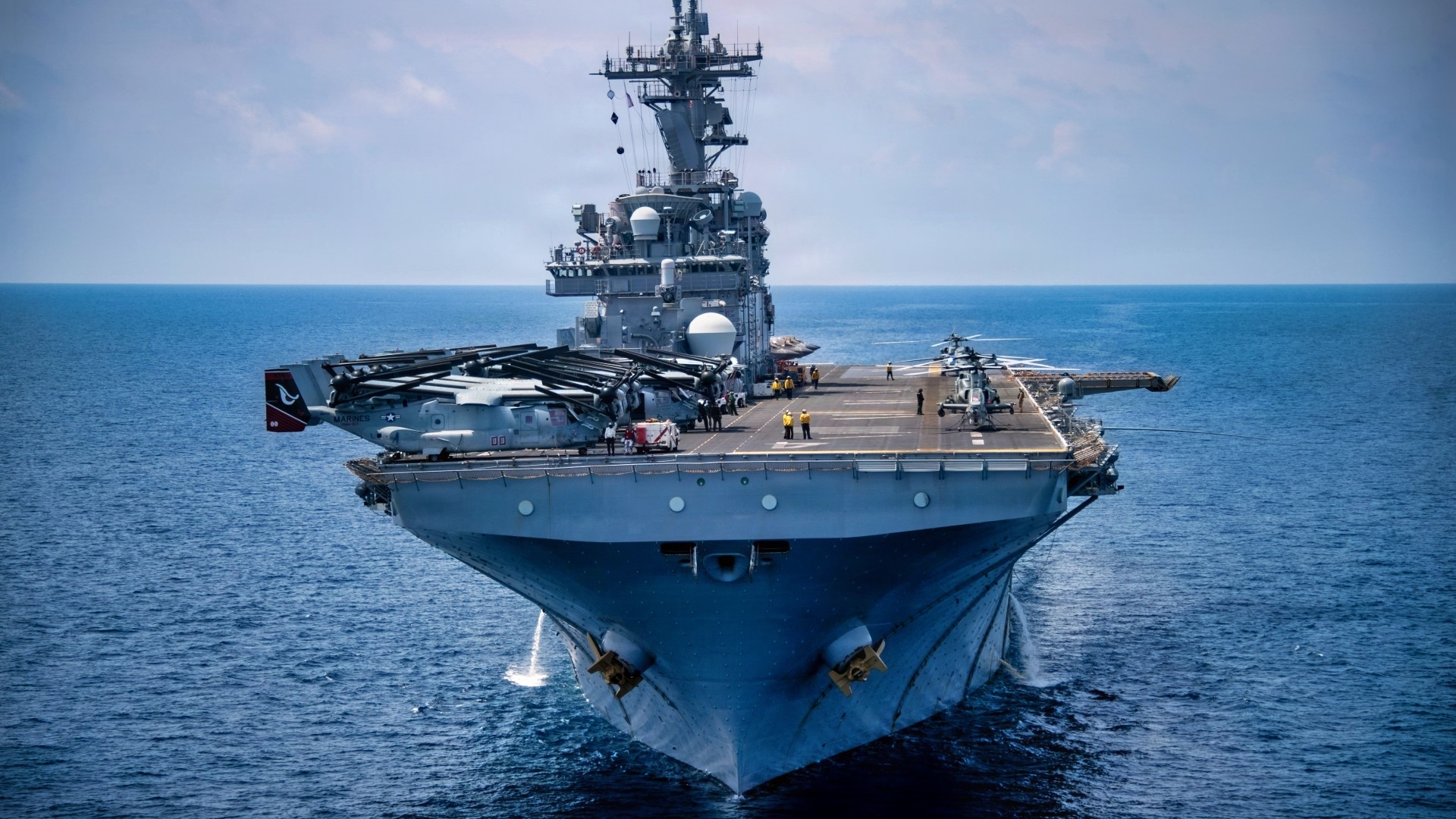
Wasp-class amphibious assault ship USS Boxer (LHD 4) transits the South China Sea, June 8, 2026. Boxer, flagship of the Boxer Amphibious Ready Group, is underway with the 11th Marine Expeditionary Unit in the U.S. 7th Fleet area of operations. U.S. 7th Fleet, the Navy’s largest forward-deployed numbered fleet, routinely interacts and operates with allies and partners to preserve a free and open Indo-Pacific. (U.S. Navy photo by Mass Communication Specialist Seaman Eliora Sims)
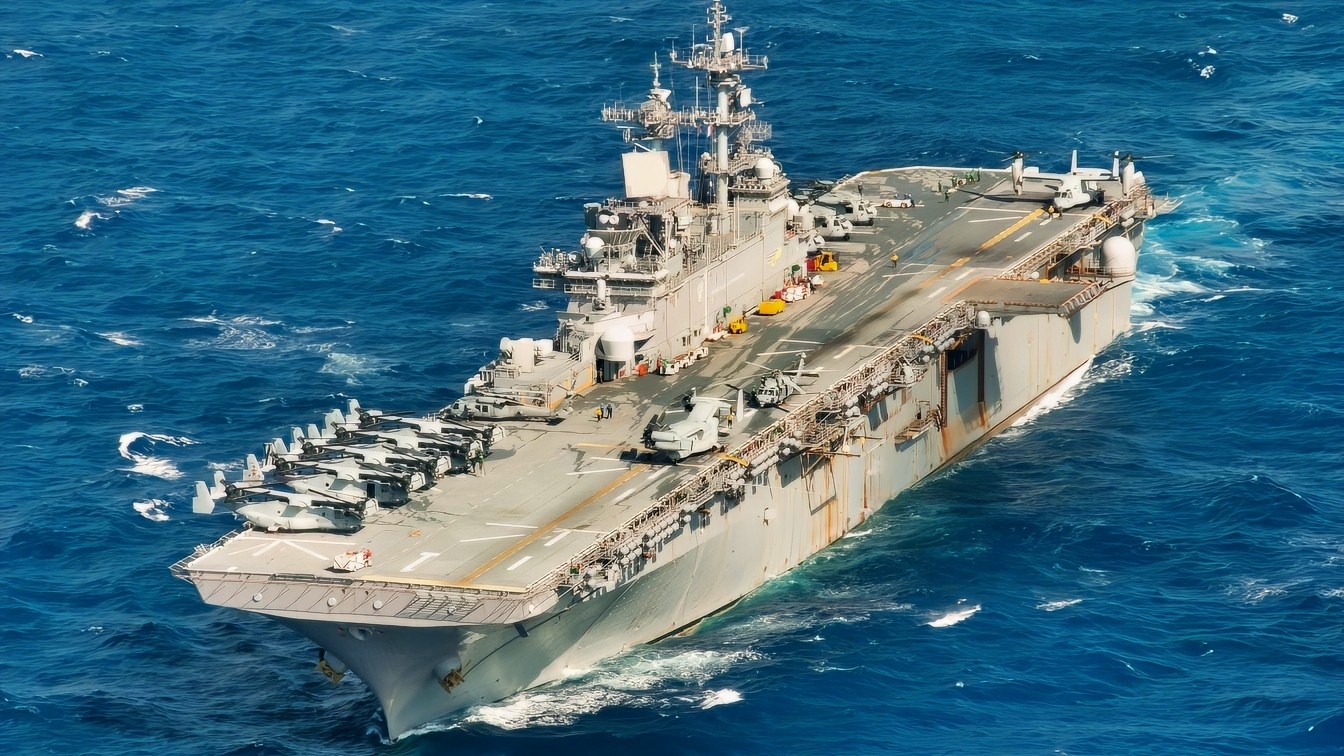
The amphibious assault ship USS Wasp (LHD 1) sails in the Philippine Sea Aug. 26, 2018 during a Passing Exercise (PASSEX) with the Japan Maritime Self Defense Force. PASSEX enabled the Wasp ARG and the JMSDF a chance to practice communications and maneuvering procedures. The Wasp Amphibious Ready Group is currently operating in the region to enhance interoperability with partners and serve as a ready-response force for any type of contingency. (U.S. Navy photo by Mass Communication Specialist 3rd Class Taylor King)
President Donald Trump said Monday that he planned to maintain the blockade on Iran, but hold off on further strikes in the meantime.
These assurances came after appeals from Qatar and other regional allies to allow breathing space for further diplomatic efforts.
“Iran militarily is effectively over,” Trump boasted to reporters at the White House on Monday. “We’re just keeping it the status quo,” he added, while warning that U.S. forces remained ready to act.
“I think, historically, this will be a very good decision. Is it a good decision for today and tomorrow? Maybe not,” Trump said in a 60 Minutes interview broadcast Sunday, defending his decision to attack Iran.
Rubio also stressed his confidence in Trump’s strategy, telling reporters that the U.S. does not “need to conduct military strikes if we’re achieving the same objective through economic means and economic pressure. That’s not a stalemate.”
Trump and Vance Meet Qatari PM
Qatar’s Prime Minister, Sheikh Mohammed bin Abdulrahman Al Thani, described his talks with Trump and Vice President JD Vance in Washington on Monday as positive.
On Tuesday, he met Saudi, British, French, German and Italian ministers in Paris to discuss de-escalation.
“I raised it. I didn’t get a response,” Rubio told reporters when asked how G7 counterparts reacted to his appeal for help protecting shipping in the Strait of Hormuz.
In a joint statement released Wednesday, the ministers called on Iran to “cease its persistent attacks against civilian vessels in the Strait of Hormuz.”
Iran says Washington must lift sanctions, end its naval blockade, unfreeze Iranian assets and halt hostilities across the region before negotiations can resume.
Tehran has also demanded an end to fighting in Lebanon.
Tehran’s ‘Two-Day’ Plan
“Iran’s two-day plan remains on the table and will lay the groundwork for a process,” Iranian Foreign Ministry spokesperson Esmaeil Baghaei said Monday.
Mohsen Rezaei, secretary of Iran’s Supreme National Security Council, said Tuesday that talks with Washington had not restarted.
On Wednesday, he told Al Mayadeen that Tehran would not allow any enriched nuclear material to leave Iran.
Rezaei remains subject to an Interpol Red Notice, due to his alleged links to the bombing of an Argentinian Jewish community center in 1994.
“We need the enriched material to design ships and submarines that work on nuclear energy,” Rezaei said, adding that Moscow had been informed that the material would remain in Iran.
Russia has previously offered to remove enriched uranium as part of a potential agreement.
Washington wants nuclear matters included in initial negotiations.
A senior Iranian official told Reuters last week that Tehran had submitted a nuclear proposal through Qatar, to be discussed once Washington met seven Iranian demands.
CENTCOM launches Task Force Iron Gate
U.S. Central Command announced Task Force Iron Gate on Saturday, November 7.
Under the operation, approximately 20 military and civilian personnel based in Tampa, Florida, will coordinate with other U.S. agencies to prevent the movement of advanced weapons, dual-use technologies, sanctioned materials and illicit revenue across Iran’s land borders and the Caspian Sea.
“The establishment of Task Force Iron Gate reinforces the success of our ironclad blockade against Iran at sea,” Adm. Brad Cooper said.
Iranian Deputy Foreign Minister Kazem Gharibabadi said Tuesday that he had discussed ways to counter the operation with Russia’s ambassador in Tehran.
Hegseth: We Control Hormuz
“We control the Strait of Hormuz,” Defense Secretary Pete Hegseth said Tuesday at the Pentagon. The House subsequently voted 211-204 to refer an impeachment resolution against Hegseth to the Judiciary Committee, effectively stalling the effort.
A tanker was struck by an unknown projectile 19 nautical miles northeast of Lima, Oman, on Tuesday, according to the United Kingdom Maritime Trade Operations agency. The crew was safe, with no environmental impact reported.
UKMTO reported a separate incident involving a tanker in the Strait of Hormuz on Wednesday, but said the crew’s status, damage and environmental impact were unknown. Iran’s navy separately claimed that a tanker had struck a mine and caught fire east of the strait. We cannot independently verify whether Wednesday’s reports concern the same vessel.
Brent crude futures were up 1.3% at $92.71 per barrel on Wednesday morning, while U.S. West Texas Intermediate crude was up 1.3% at $87.13.
“Oil prices are being supported by fading hopes of an imminent de-escalation,” UBS analyst Giovanni Staunovo said on Wednesday.
About the Author: Georgia Gilholy
Georgia Gilholy is a journalist based in the United Kingdom who has been published in Newsweek, The Times of Israel, and the Spectator. Gilholy writes about international politics, culture, and education.


