

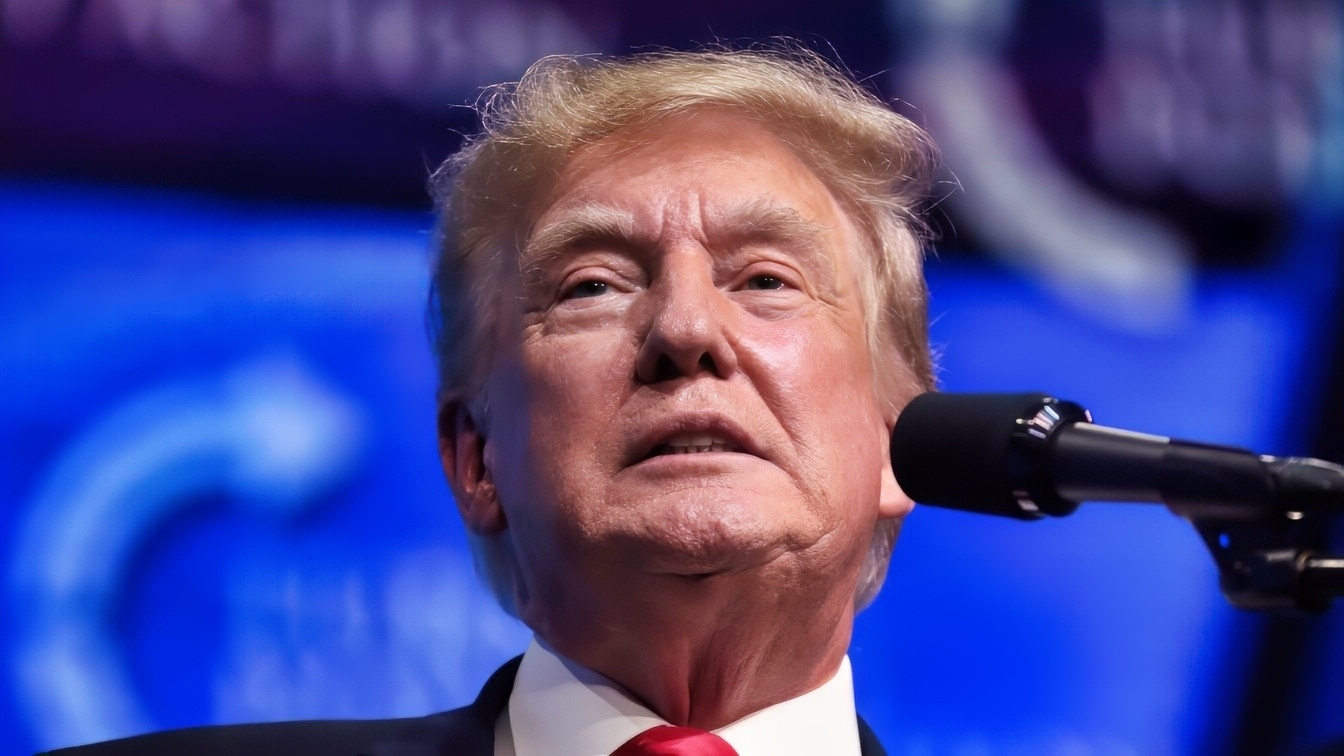
The Iran War has been defined by the swings between the Islamic Republic of Iran and the United States (and Israel), as well as by the swings of President Donald J. Trump. One day, the forty-seventh president threatens to annihilate the entire Persian civilization.
The next day, Trump shrugs off the need to continue fighting the war at all. And through it all, the Iranian regime has defied the US military and strengthened itself–while tightening its grip on the Strait of Hormuz (SoH) to maximize its leverage over the United States.
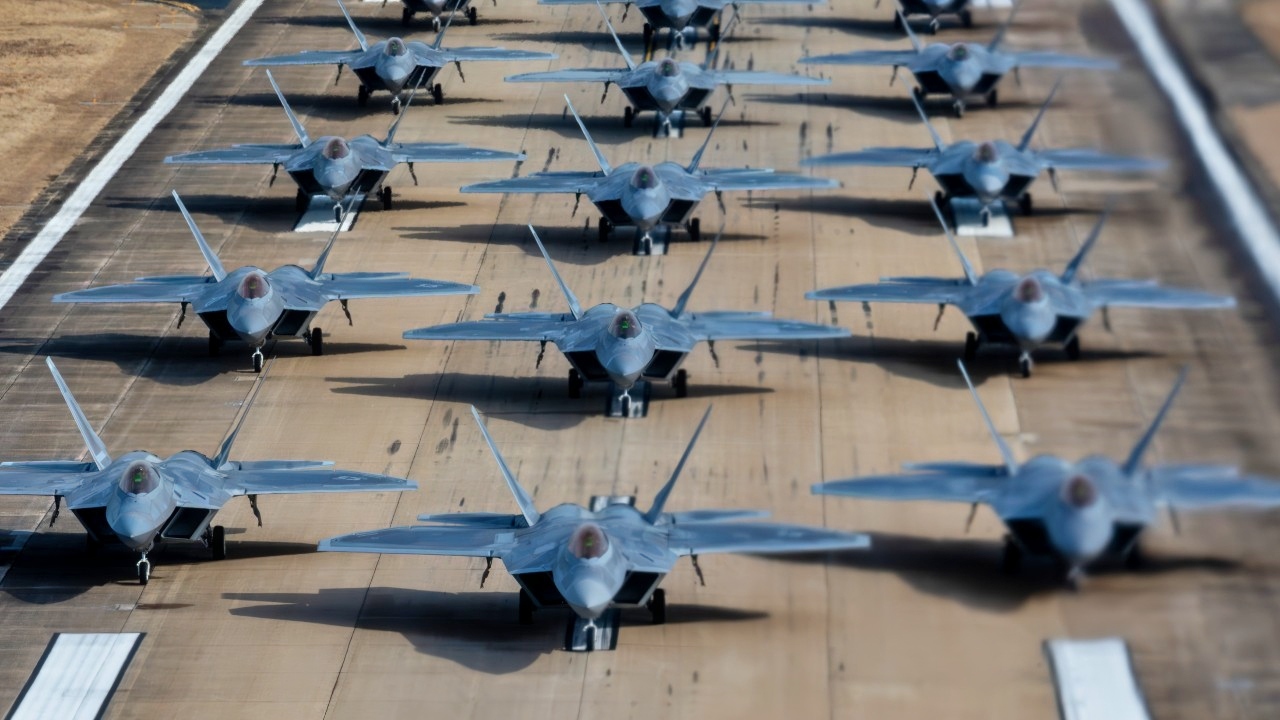
Aircraft from the 1st Fighter Wing conducted an Elephant Walk at Langley Air Force Base, Jan. 31, 2025, showcasing the wing’s readiness and operational agility. This demonstration highlighted the wing’s capability to mobilize forces rapidly in high-stress scenarios. The wing’s fleet includes F-22 Raptors and T-38 Talons. As Air Combat Command’s lead wing, the 1 FW maintains unparalleled combat readiness to ensure national defense at a moment’s notice. (U.S. Air Force photo by SrA Ian Sullens)
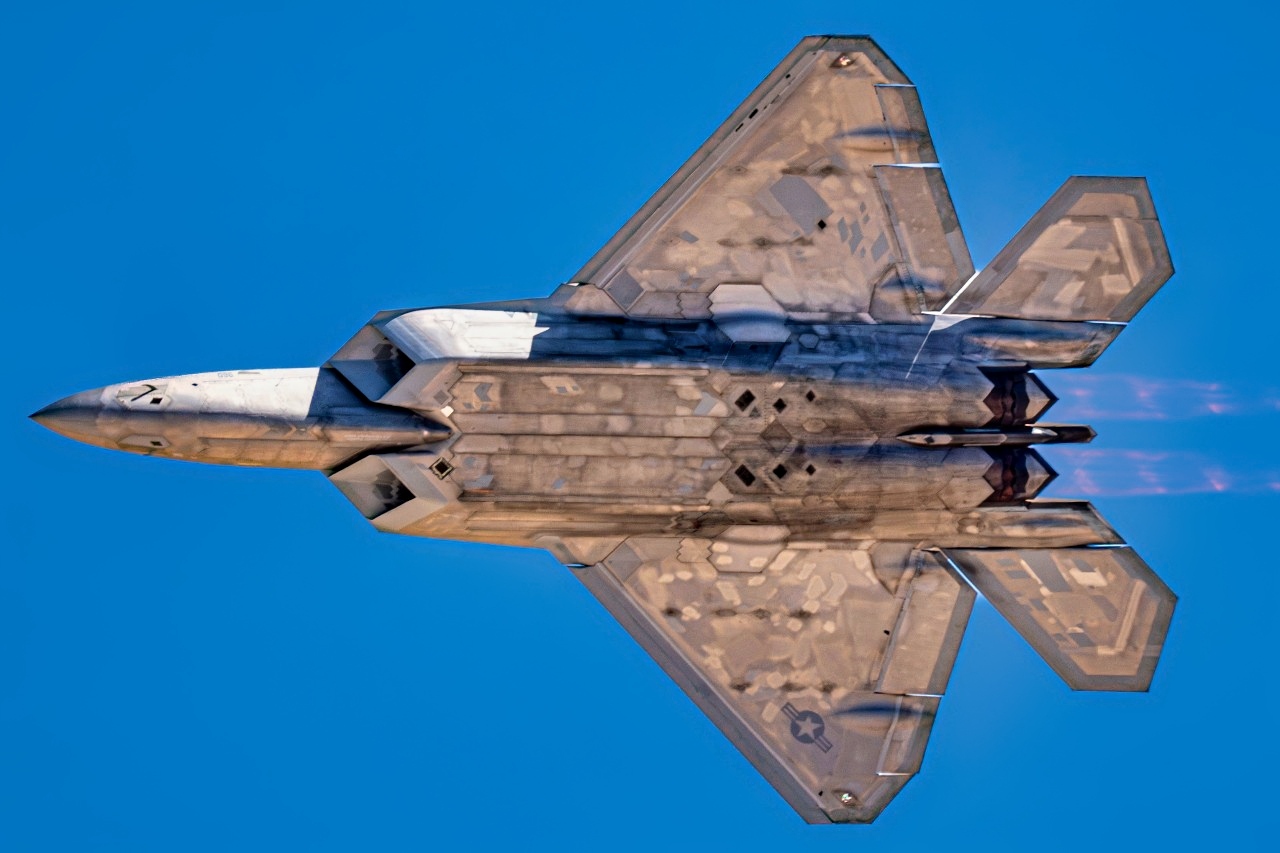
A U.S. Air Force F-22 Raptor performs an aerial demonstration during Aviation Nation 2025 at Nellis Air Force Base, Nevada, April 5, 2025. Aviation Nation is an airshow held at Nellis Air Force Base, showcasing the pride, precision and capabilities of the U.S. Air Force through aerial demonstrations and static displays. The F-22 Raptor performed there to highlight its unmatched agility and air dominance as part of the Air Force’s efforts to inspire, recruit and connect with the public. (U.S. Air Force photo by Staff Sgt. Lauren Cobin)
Since the Midterm Election catastrophe for the Republican Party and the Trump administration, and with the fact that the United States military has experienced the most significant drain of its critical arsenals in years, there is a serious reassessment occurring within the Trump administration.
Originally, it was assumed–and Trump vowed–that the Americans and Israelis would return to strikes against Iran. Now, that prospect has diminished between the pressures of domestic politics and, hopefully, the hard reality that the US military cannot accomplish the mission because of the logistical constraints imposed on it.
No More Appetite for War?
Speaking with reporters at the White House following a meeting with Qatari Prime Minister Sheik Mohammed bin Abdul Rahman Al Thani, President Trump said there was “positive momentum” behind negotiations aimed at ending the war, which began with joint American-Israeli strikes against Iran in February 2026.
Specifically, the president quipped that “Iran militarily is effectively over.” He then volunteered that further strikes against the Islamic Republic were “highly unlikely.” However, he wanted to remind everyone that the US military was “locked and loaded” should Iran resume the war against the US military.
The nub of Trump’s statement that indicates he won’t be escalating the war was when he claimed that “We’re just keeping it the status quo. And we’re doing that really at the behest of countries that are their neighbors.” That further highlights that the Trump administration is clearly looking for a face-saving measure, as the White House prepares for a different kind of war: the impending fight with overwhelming Democratic majorities in Congress heading into the new year.
Trump’s meeting with the Qatari prime minister showcased Doha’s growing importance in efforts to negotiate an end to the conflict.
Qatar maintains diplomatic relationships with both Washington and Tehran, making the tiny Gulf Arab monarchy the perfect go-between.
The Qatari prime minister told the press he enjoyed productive discussions with both the president and Vice President JD Vance.
The Qatari leader said the conversations focused on “reaching a deal and bringing peace to the region.”
Iranian officials, who have been burned repeatedly in negotiations with the Trump administration over the last year, have expressed doubt about Trump’s intentions.
Negotiations are proceeding indirectly.
Where things get dicey is in the terms for fully ending the war–or even ceasing hostilities while negotiations occur.
During this period of indirect talks between Iran and the US via intermediaries, like Qatar, both sides in the war have continuously traded attacks inside the SoH, further disrupting international shipping and damaging each other’s military presence there.
The Three Sides of the Equation
Three factions are vying for control and influence over the Iran War portfolio within the Trump administration.
The hawks include Secretary of War Pete Hegseth and CENTCOM commander Adm. Brad Cooper.
The middling economic warfare crowd is led by Treasury Secretary Scott Bessent and Secretary of State/White House National Security Adviser Marco Rubio.
And the doves are led by Vice President JD Vance. Joining Vance are Steve Witkoff and Jared Kushner. Floating around these factions is the newly minted White House Chief of Staff, Stephen Miller.
To get his job, Miller promised the Trump cabinet that he understood that the Iran War was the real reason the Republicans lost the Midterms and that he would work to help end the war.
Of course, publicly he maintains a fierce warmongering stance.
Yet his appointment suggests a likely shift toward domestic policy concerns by President Trump, who, again, is preparing to endure a seemingly endless assault on himself and his administration by the new Democratic majorities in Congress.
Vance, on the other hand, seems to have been given plenty of room to maneuver to seek de-escalation and, potentially, a longer-lasting deal.
Whether he can achieve this herculean task while a mercurial boss constantly hectors him from above remains to be seen.
The president is likely keen to maintain some semblance of military pressure in a modulated, tit-for-tat with Iran. At the same time, his vice-president seeks a negotiated end to the conflict.
International energy markets responded positively to Trump’s news. Brent crude declined more than one percent to around $91.50 per barrel during Asian Trading on Tuesday.
American benchmark crude fell 1.2 percent to around $85.82. Oil prices have been in a longer retreat since the Midterm elections.
Of course, the administration’s ongoing naval blockade of Iranian ports remains a sizable impediment to restoring the normal flow of goods and traffic through the SoH.
But the Trump administration is likely also using the blockade as leverage in the ongoing negotiations.
Thomas Massie Goes to War Against Pete Hegseth
Speaking of domestic concerns, there is increasing pressure even within the Republican-majority lame duck Congress to impeach Secretary of War Pete Hegseth. Rep. Thomas Massie (R-KY), who will not return to Congress in January, announced he would seek a House vote to impeach Hegseth over the Iran War.
Both Trump and Hegseth himself have dismissed Massie’s attempted impeachment.
All that the impeachment vote needs is a simple majority in the House, and given how bitter many Republicans are over their electoral defeats directly as a result of the unpopular Iran War and its knock-on economic impacts, there is a serious chance that Hegseth will be impeached.
A two-thirds majority in the Senate is needed to convict and remove Hegseth from his job.
With Democrats controlling both the House and the Senate in January, they could substantially increase pressure on Hegseth and the administration.
Toward a Lasting Peace or Protracted Ceasefire?
For Trump, the immediate challenge is translating military pressure and diplomatic optimism into a settlement that is acceptable to Iran and America’s regional partners.
Everyone is trying to ascertain whether Trump’s willingness to avoid further escalation will produce a negotiated end to the war.
Or will it merely create an extended standoff in which military operations diminish without resolving the underlying conflict?
The latter is likely for now.
But as time progresses and Trump seeks a win, that will likely change.
Trump could restart hostilities.
However, it would not have the strategic impact needed to make such strikes worthwhile.
Such strikes would also rapidly deplete whatever remained of America’s long-range, precision-guided standoff munitions and its all-important missile interceptors.
That would mean creating significant vulnerabilities for the US military everywhere else. That is why many hope there might finally be a resolution to the war this time.
About the Author: Brandon J. Weichert
Brandon J. Weichert is the Senior National Security Editor at 19FortyFive.com. He also manages The Weichert Brief on Substack. Weichert is the co-host of The Mario Nawfal Show on Twitter/X. He is the author of four bestselling national security books, most recently A Disaster of Our Own Making: How the West Lost Ukraine (Encounter Books). His next book, Fortress Americas: A New Monroe Doctrine (Tucker Carlson Books), is due out December 8. Follow him via Twitter/X @WeTheBrandon.


