
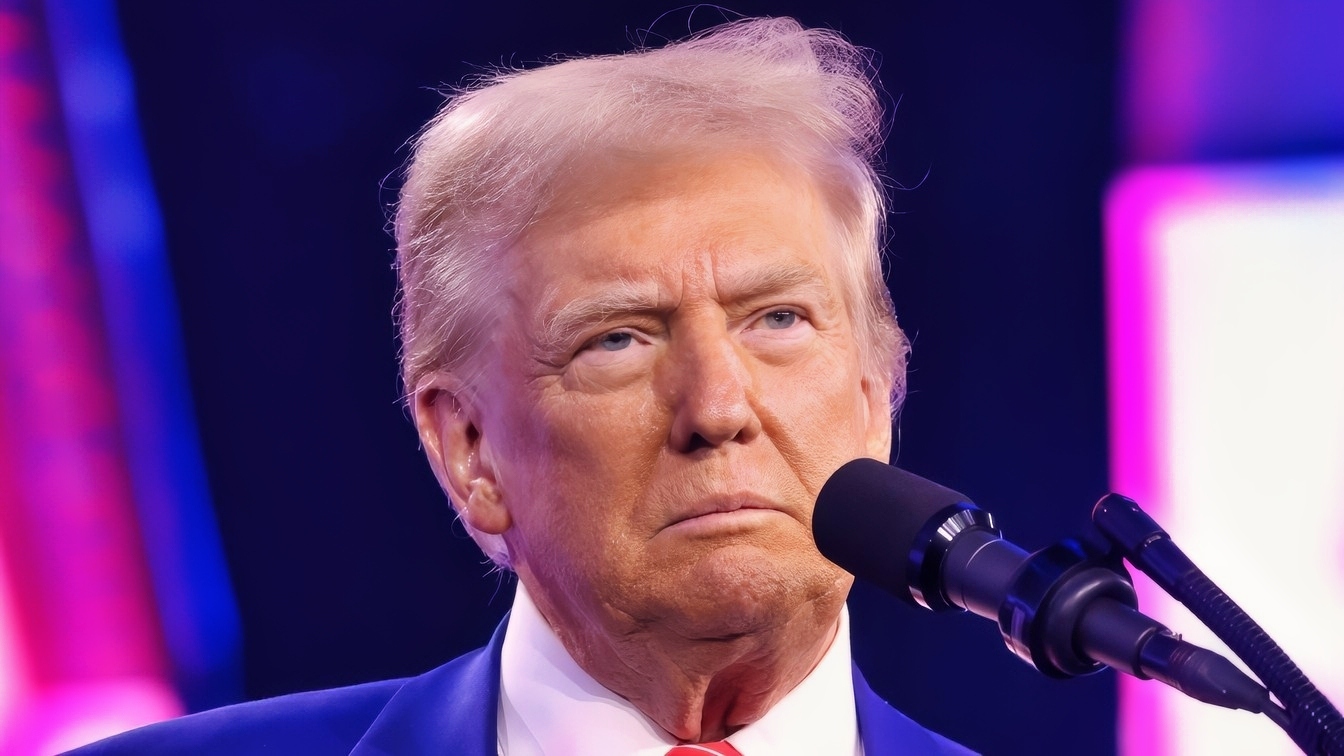
U.S. President Donald Trump said that the United States is no longer seeking a deal with Iran, suggesting that his administration may now be preparing to abandon negotiations with Tehran in favor of maintaining its naval blockade and economic sanctions campaign against the country indefinitely.
The president also announced that Vice President JD Vance, who has played a central role in diplomatic efforts with Iran, including the failed June “memorandum of understanding,” will now focus his energy on investigating alleged corruption in Democratic-run states.
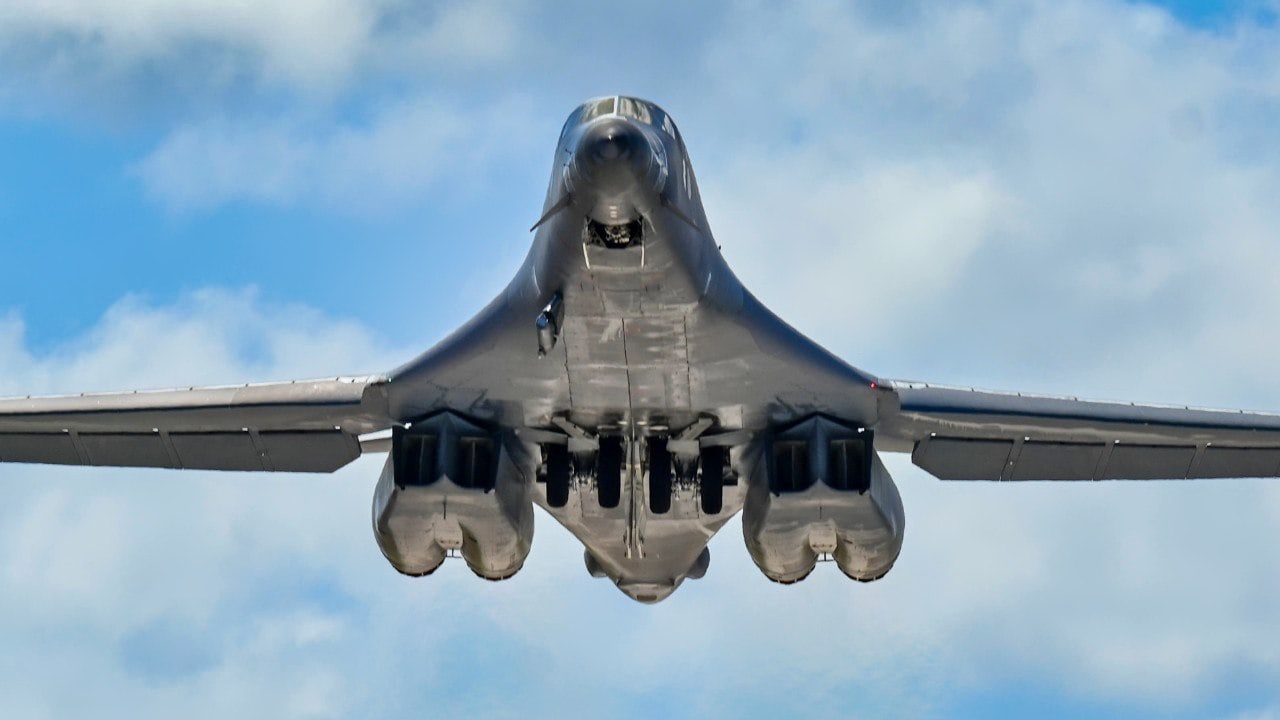
B-1B Lancer Bomber. Image Credit: Creative Commons.

B-1B Lancer Getting Closer. Image Credit: Creative Commons.
Writing in a Truth Social statement on Thursday, November 12, the president said that the United States controls the Strait of Hormuz and has Iran in an economic stranglehold.
It is a remarkable departure from the president’s position just earlier this week, when he said negotiations were progressing and further military strikes were not likely to be necessary.
The news also comes as reports reveal that Vice President Vance has been considering engaging in direct negotiations with senior Iranian security officials in a last-ditch effort to bring the war to an end.
What Trump Claimed
Writing on Truth Social, the president shot down reports that Vice President Vance was reportedly seeking to engage directly with Tehran to secure a deal.
“I have asked Vice President Vance to focus his complete and total attention on the Massive Corruption and Crime taking place in Democrat run Cities and States throughout the U.S.” he wrote.
“The Blue States, such as Minnesota, California, Illinois, and many more, are all poorly run, corrupt disasters. Billions of dollars are being stolen every month. Our Budget could be quickly BALANCED with the corruption of this large-scale criminal activity. CORRUPTION is in the Democrat Leadership’s blood!”
Trump then appeared to suggest that his orders to Vance were intended to ensure that the vice president ceases any effort to secure a deal with Iran.
“We don’t need a deal with Iran. Those days have long since passed. We’ve got their money, Hundreds of Billions of Dollars, and we’ve got their Strait!” he said.
Vance’s Negotiating Efforts Are Over
Reports this week revealed that the vice president recently began contacting hard-line Iranian officials to explore the possibility of negotiating a settlement that would reopen the Strait of Hormuz and place “meaningful” restrictions on Tehran’s nuclear activities.
Since his June memorandum of understanding failed, Vice President Vance has been working to secure a deal with Iran and even suggesting to the media that a deal could be made if Iran reduces its nuclear activity, rather than ending it entirely.
Some commentators have noted that the president and the vice president have been on somewhat different pages regarding the negotiations, and that became abundantly clear on November 4 when the vice president issued a statement blaming the Iran War for the Republicans’ losses.
Per Axios, Vance has been speaking almost daily with Qatari Prime Minister Sheik Mohammed bin Abdulrahman Al Thani and Pakistani Army Chief Field Marshal Asim Munir in recent weeks.
He also reportedly sent a letter to Mohsen Rezaei, the secretary of Iran’s Supreme National Security Council, proposing a return to direct negotiations.
November 11 reports also said the vice president was considering meeting with Rezaei in Qatar, but no date had been agreed.
President Trump’s announcement appears to have ended that possibility. For President Trump, it serves two purposes.
First, he can avoid expending more missiles defending against Iranian retaliatory strikes after a potential new round of U.S. strikes. Second, he shuts down the possibility that Vance secures a deal he sees as unfavorable, but that could also give him credit for ending a war the president started.
Oil Prices Rise as Deal Hopes Fade
Trump’s announcement means that the hopes of a deal have been slashed, and oil prices have risen in response. Brent crude climbed past $93.40 per barrel.
The news also comes as Iran continues its strikes on commercial vessels moving through the Strait of Hormuz, with the IRGC claiming that naval mines had disabled two supertankers after attempting to travel through an “unauthorized” route in the Strait of Hormuz.
Continued attacks on commercial shipping mean that, while Trump believes a deal is no longer necessary, the price of oil is likely to remain elevated.
Between the substantially reduced oil refining capacity triggered by both Ukrainian strikes on Russian facilities and Iranian strikes on Middle Eastern infrastructure, and the ongoing strikes in the Strait of Hormuz, oil supply is likely to remain constrained for as long as it takes to either topple the regime or force Tehran’s surrender.
Trump’s decision to abandon negotiations now may reduce the risk of a military confrontation in the short term, but at what long-term cost?
About the Author: Jack Buckby
Jack Buckby is a British researcher and analyst specializing in defense and national security, based in New York. His work focuses on military capability, procurement, and strategic competition, and he produces and edits analysis for policy and defense audiences. He brings extensive editorial experience, with a career output spanning over 1,000 articles at National Security Journal, and has previously authored books and papers on extremism and deradicalization.


