
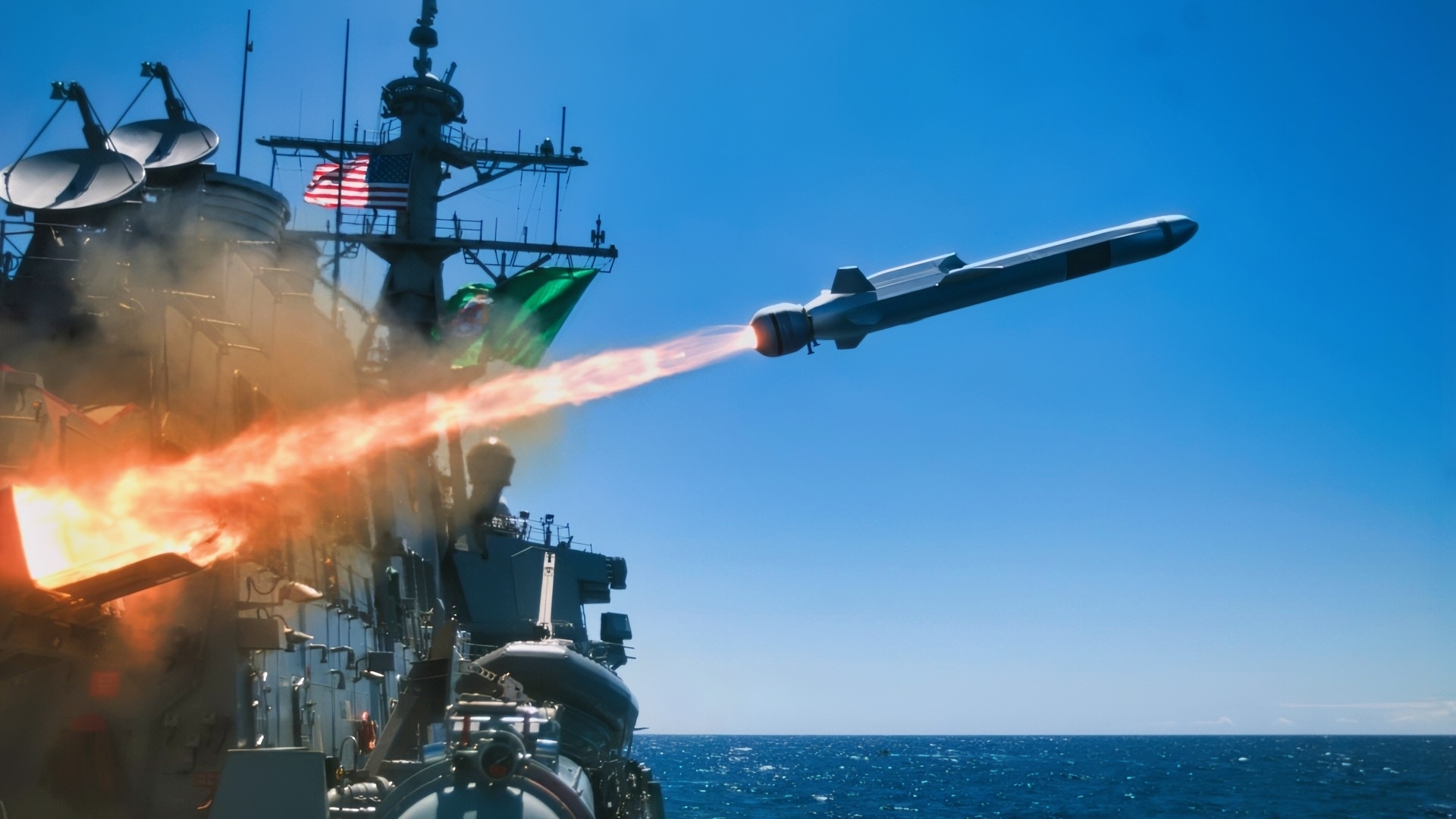
Iran’s Islamic Revolutionary Guard Corps Navy (IRGC) said on Thursday, November 12, that two oil supertankers had been struck by sea mines in the Strait of Hormuz.
The two tankers “exploded after hitting naval mines,” according to Iranian state media cited by Reuters. Iranian media also shared what it claimed to be footage of the incidents.
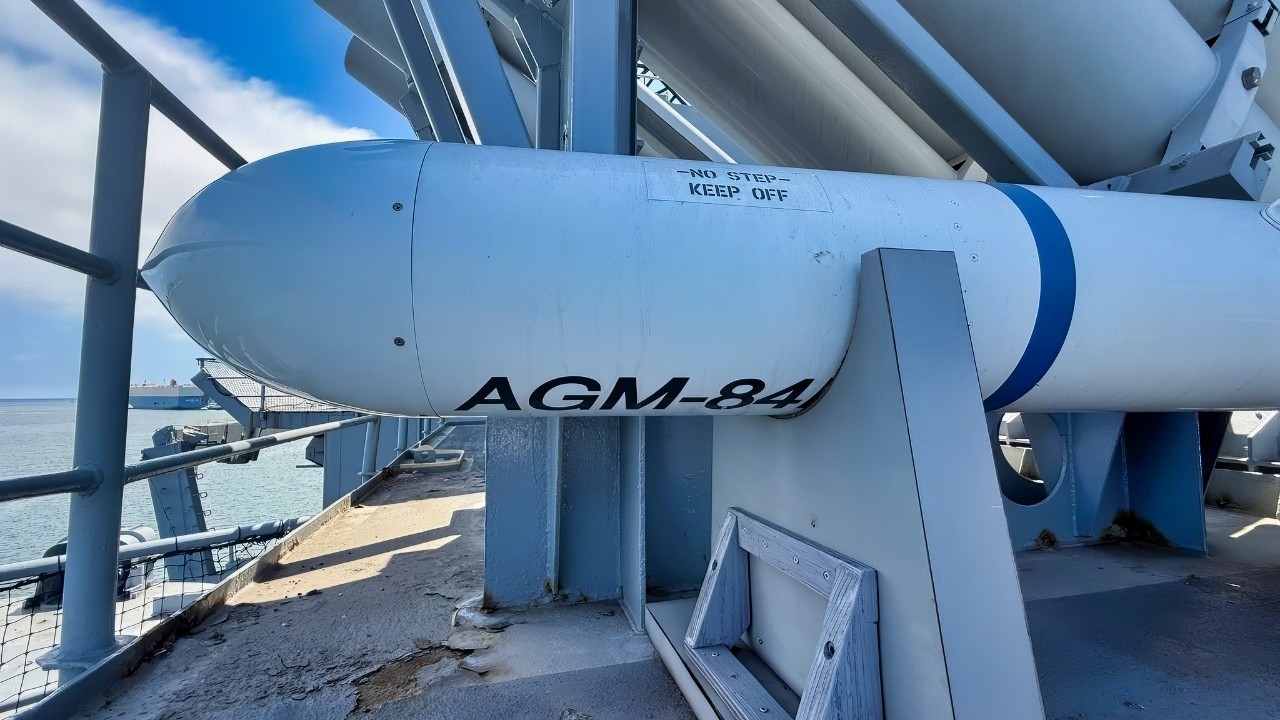
Harpoon Missile Onboard USS Iowa. Image Credit: National Security Journal.
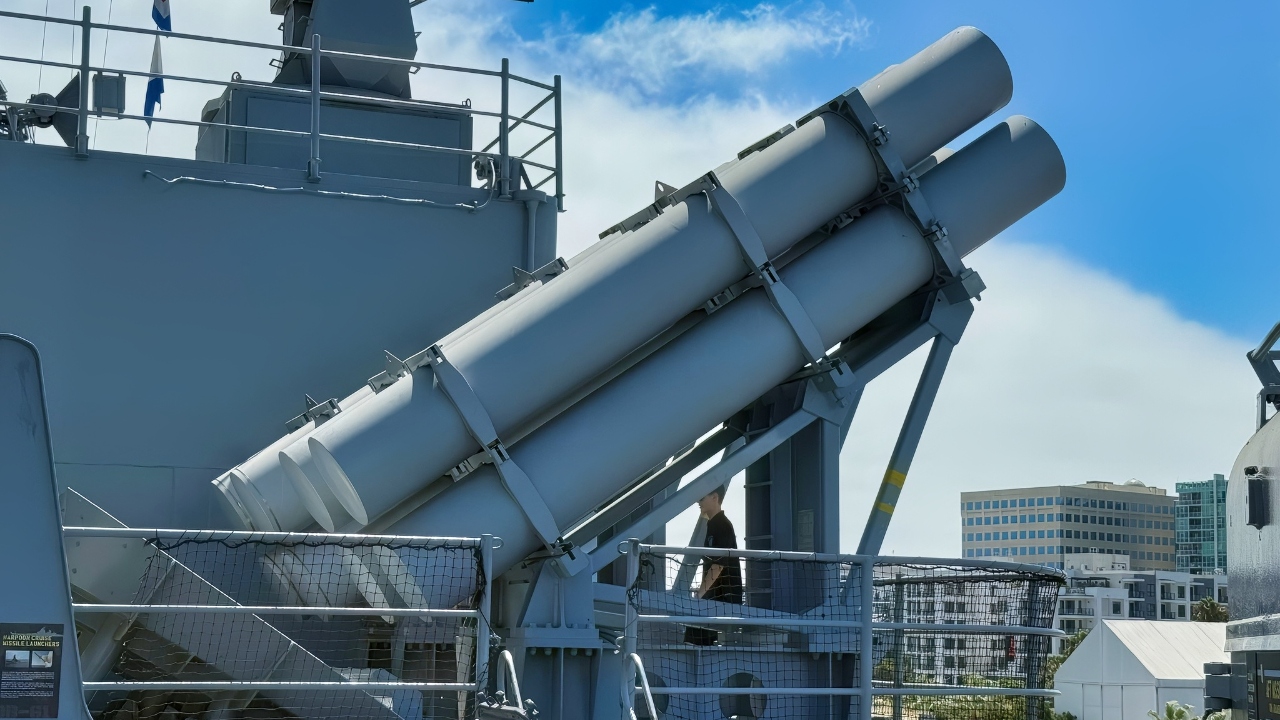
USS Iowa Harpoon Canister. Image Credit: Harry J. Kazianis/National Security Journal.
The announcement followed reports of attacks on navigation equipment on an Omani island.
New Incidents Follow a Month of Heavy Shipping Attacks
The latest Iranian claim follows repeated alerts from the United Kingdom Maritime Trade Operations agency (UKMTO) throughout the week.
No further information on the two supertankers struck on Wednesday night, including the fate of the crew and any environmental damage, is available as of 8 a.m. EST.
In the past week, Iranian state media, citing the IRGC, said three tankers had been hit for using “unauthorized routes” through the Strait of Hormuz.
Reuters verified footage posted Sunday, November 8, showing a Navig8 tanker burning near Oman, with confirmation of the damaged vessel coming from the European Union’s Copernicus Sentinel-2 satellite.
The vessel is managed by Navig8, although neither the company nor its majority owner, ADNOC Logistics and Services, replied to Reuters’ request for comment.
UKMTO reported another tanker strike on Tuesday, November 10, 19 nautical miles northeast of Lima, Oman. UKMTO added that the crew was safe and no environmental impact was reported.
Earlier on Wednesday, UKMTO issued another warning about a tanker incident in the Strait of Hormuz, with the crew’s status, damage, and environmental consequences initially unknown.
Intensified Attacks After Exports Rise
When the conflict began, Iran immediately closed the Strait of Hormuz to commercial shipping, threatening to strike any vessel that passed through what it claims to be a waterway under its jurisdiction.
The strait remains a key sticking point in negotiations between Washington and Tehran, with the latter refusing to reopen the waterway until its demands are met.
Increasingly, Gulf nations such as Qatar, which lack an alternative route for their exports, have relied on covert transit through the Strait of Hormuz via ship-to-ship cargo transfers.
These have often been conducted under the cover of darkness with trackers turned off, with transiting vessels staying close to the Omani coast protected by U.S. forces in the area.
With crude oil exports returning to pre-war levels at the end of September, Iran has intensified attacks on shipping since the start of last month, leading to 37 ships being attacked in October — the most in a single calendar month since the war began in February.
The previous record was 22, set in March.
Iran Attacks Navigation Systems Used for Shipping
According to three sources cited by Reuters, Iran attacked shipping navigation systems on the Omani island of Didamar in the Strait of Hormuz, Tehran claimed on Tuesday.
An initial damage assessment has not yet been released.
It is unlikely, however, that there will be a substantial impact on shipping through the strait, according to sources speaking to the publication.
Other navigational systems reportedly remain in place elsewhere.
U.S. Naval Blockade Continues with Vessel Struck
On Saturday, November 7, the U.S. Central Command said it had “disabled a vessel in the Gulf of Oman” after it had ignored “repeated warnings and attempted to violate the naval blockade against Iran multiple times.”
“A U.S. military aircraft fired precision munitions at the stern of St. Kitts-flagged M/V Huda, disabling the ship after CENTCOM forces directed the crew to abandon targeted spaces.
The cargo vessel tried to depart regional waters after visiting an Iranian port,” CENTCOM said in a press release.
It continued: “CENTCOM continues to strictly enforce America’s naval blockade against Iran. Enforcement actions since July have resulted in U.S. forces redirecting 147 commercial vessels that complied and disabling five merchant ships that refused to comply.”
CENTCOM added that it has so far destroyed 10 Iranian commercial oil tankers it claims were part of the IRGC’s “multibillion-dollar shadow network,” and advised vessels near Iranian coastal areas to heed blockade warnings.
Earlier this week, U.S. officials indicated that a major reescalation in the region, with President Donald Trump telling reporters on Monday that a return to full-scale combat was “highly unlikely.”
About the Author: Shay Bottomley
Shay Bottomley is a British journalist. He has written for the Western Standard, Business Insider, Maidenhead Advertiser, Slough Express, Windsor Express, Berkshire Live and Southend Echo.