

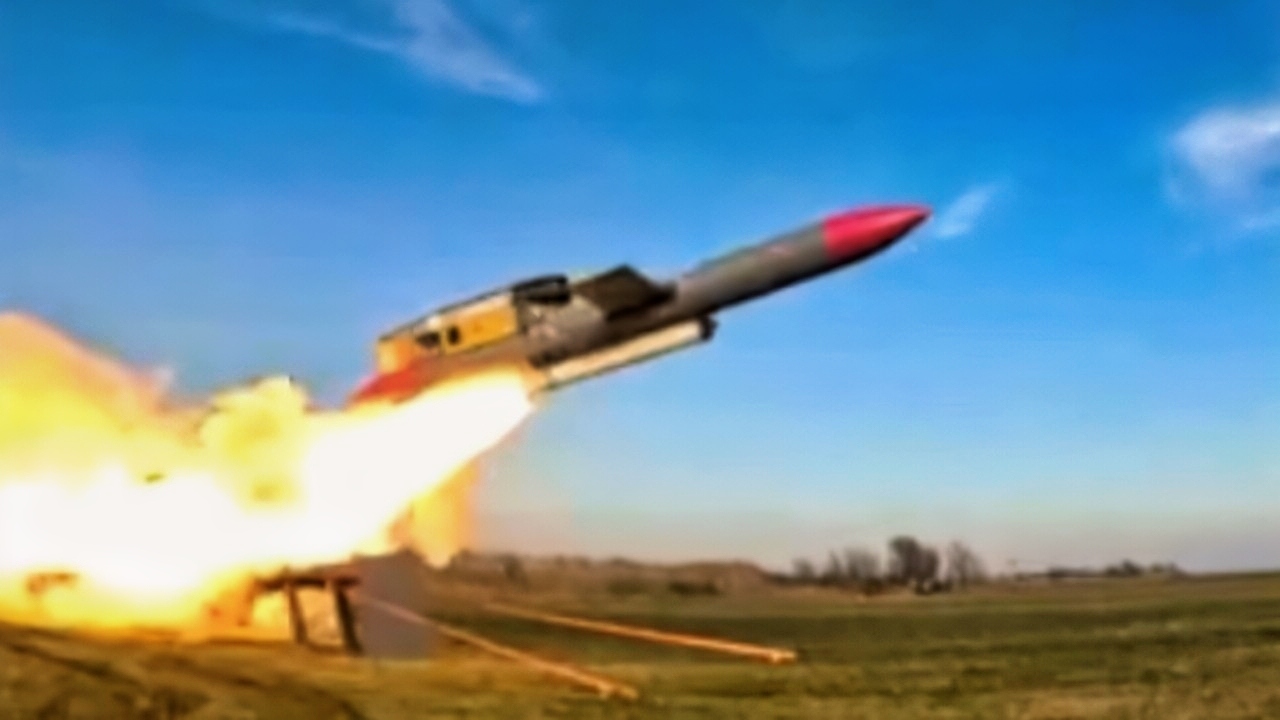
The Ukraine War continues seemingly in perpetuity, even after representatives from the United States, Russia, and Ukraine met in Abu Dhabi earlier this week. At a time when the Russians are pressing hard against Ukraine’s Fortress Belt in Eastern Ukraine, and the Russians are escalating their strikes on Kyiv as part of a wider campaign designed to break the will of the Ukrainians, Kyiv has again demonstrated its own capability to strike critical Russian infrastructure thousands of miles behind the front lines.
On November 11, the Ukrainian paper Kyiv Independent reported that Ukrainian drones targeted Russia’s largest oil refinery in the Siberian city of Omsk, approximately 1,550 miles from the Ukrainian border. That attack lasted more than eight hours. Russian authorities restricted mobile internet access and suspended operations at the local airport as air defenses attempted to repel the Ukrainian attack.
Putin on July 7, 2002 Image Credit from Creative Commons
Putin in March 2023 Image Credit: Creative Commons
Chaos Factory
Residents reported explosions and fires near the refinery. Emergency personnel were dispatched to the affected areas, and residents reported power outages in parts of the city.
The Omsk oil refinery produces around one-sixth of Russia’s gasoline and diesel and meets its K5 environmental standard. It also manufactures petroleum products used by the Russian military. Gazprom Neft owns the refinery, which has an annual processing capacity of about 22 million metric tons of crude oil (or 450,000 barrels per day).
The refinery’s production of products for the Russian Armed Forces is why Kyiv wanted to hit it. Over the summer, Ukrainian military officials outlined plans to wage war on Russia’s vast energy infrastructure as an indirect way to weaken Moscow’s ability to wage war and to undermine their economy.
Ukraine’s attack on the Omsk refinery is the third such attack Ukraine has conducted since July. The original July attack used upgraded FP-1 long-range drones. Reuters reports that the July FP-1 drone swarm was a significant improvement in Ukraine’s indigenous long-range strike capabilities. It helped overcome (to some degree) Russia’s immense geographic advantages, which Russia has historically used for greater protection against foreign rivals.
Because of Ukraine’s sophisticated drones, that geographic protection that Russia has long enjoyed was reduced. And that attack was just one of many Kyiv has carried out. Evoking Reuters again, Ukrainian attacks on Russian energy infrastructure have reduced Moscow’s oil-processing capacity by around 30 percent. Nine major Russian refineries experienced disruptions or emergencies within a single week.
Two days before the Omsk attack, Ukraine launched drones that struck Russia’s second-largest refinery at Kirishi, near St. Petersburg. That facility possesses an annual refining capacity of around 20 million metric tons. The International Energy Agency reported in September that Russian refinery throughput fell to 3.8 million barrels per day in June, its lowest level in 20 years. Russian gasoline production declined about 20 percent compared with 2025 levels, while diesel production fell nearly 30 percent.
Kyiv assesses that these attacks have forced Moscow to balance domestic fuel needs with military requirements and lucrative petroleum exports. These are interesting statistics, although it should be noted that the Russians continue fighting in intense battles on the front and conducting sizable strikes on Ukrainian infrastructure that have caused major problems for the Ukrainians going into Winter.
Permanent Sanctions
Ukraine’s President Volodymyr Zelensky believes that these attacks are more effective than the economic sanctions that the West has imposed upon Moscow because the long-range drone strikes on Russian energy infrastructure physically damage the systems underpinning Russia’s petroleum industry. Other reports highlight how Ukrainian forces attacked the Russian Baltic Sea port of Ust-Luga, damaging five petroleum storage tanks, with a combined capacity of 150,000 cubic meters, alongside several industrial installations.
The Russians engaged in similar attacks on Odesa, Ukraine’s only remaining port city, which the Russian Black Sea Fleet (which Kyiv insists Ukraine destroyed with drone warfare early in the war) has blockaded.
What you’re witnessing in the Ukraine War is the final act of the bloody geopolitical drama known as the war in Ukraine. It is not a victory for Ukraine. Nor is it one for Russia. Right now, both sides are positioning themselves for the final offensives, which are coming sooner than anyone thinks. Ukraine is doing its best to deter and shape Russia while Russia is doing what it must to change the military facts on the ground, so that Moscow can ultimately enjoy true victory over Ukraine.
Who Wins the War of Attrition?
Because it is a war of attrition, it becomes a war of endurance and mass. Ukraine has endured much and given as much as it can. But the numbers tell the story. The Ukrainians are far more exposed to the Russian attacks on Ukraine’s exposed energy and water infrastructure than is Russia to similar Ukrainian strikes on its territory. Yes, it’s an inconvenience for the Russians what the Ukrainians are subjecting their infrastructure to. No, Ukraine’s strikes have not stopped the Russian war machine in Eastern Ukraine — or dissuaded the Russian people from supporting the war in Ukraine.
The Ukraine War is a race against time for both sides. The side with greater numbers and strategic depth will inevitably win. That side is clearly Russia.
About the Author: Brandon J. Weichert
Brandon J. Weichert is the Senior National Security Editor. He also manages The Weichert Brief on Substack. Weichert is the co-host of The Mario Nawfal Show on Twitter/X. He is the author of four bestselling national security books, most recently A Disaster of Our Own Making: How the West Lost Ukraine (Encounter Books). His next book, Fortress Americas: A New Monroe Doctrine (Tucker Carlson Books), is due out December 8. Follow him via Twitter/X @WeTheBrandon.


