
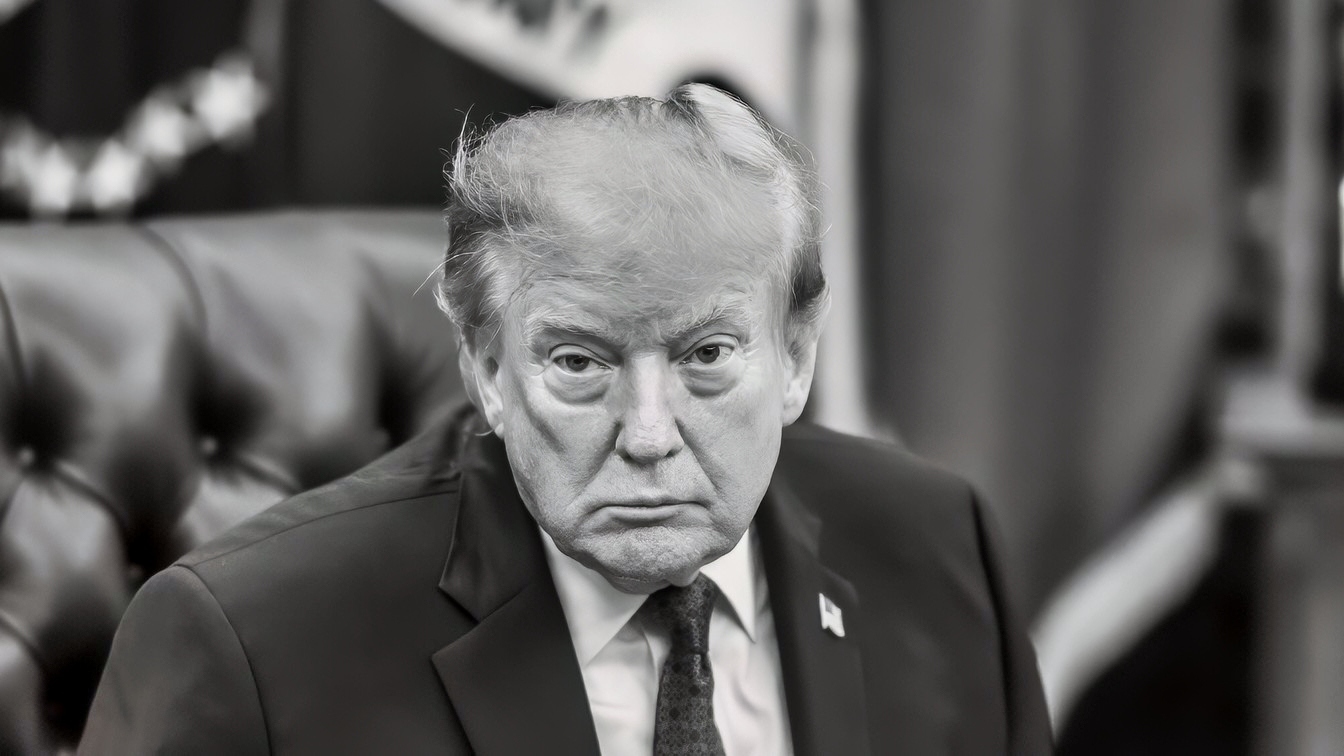
President Donald Trump has long been described as an egotist by his critics, but in recent weeks, some of his most vocal opponents have argued that he is unlikely to see out his final term.
With Democrats preparing to take control of both chambers of Congress in January 2027 and the president’s approval rating continuing to fall, some commentators argue he may simply resign before he leaves office in January 2029.
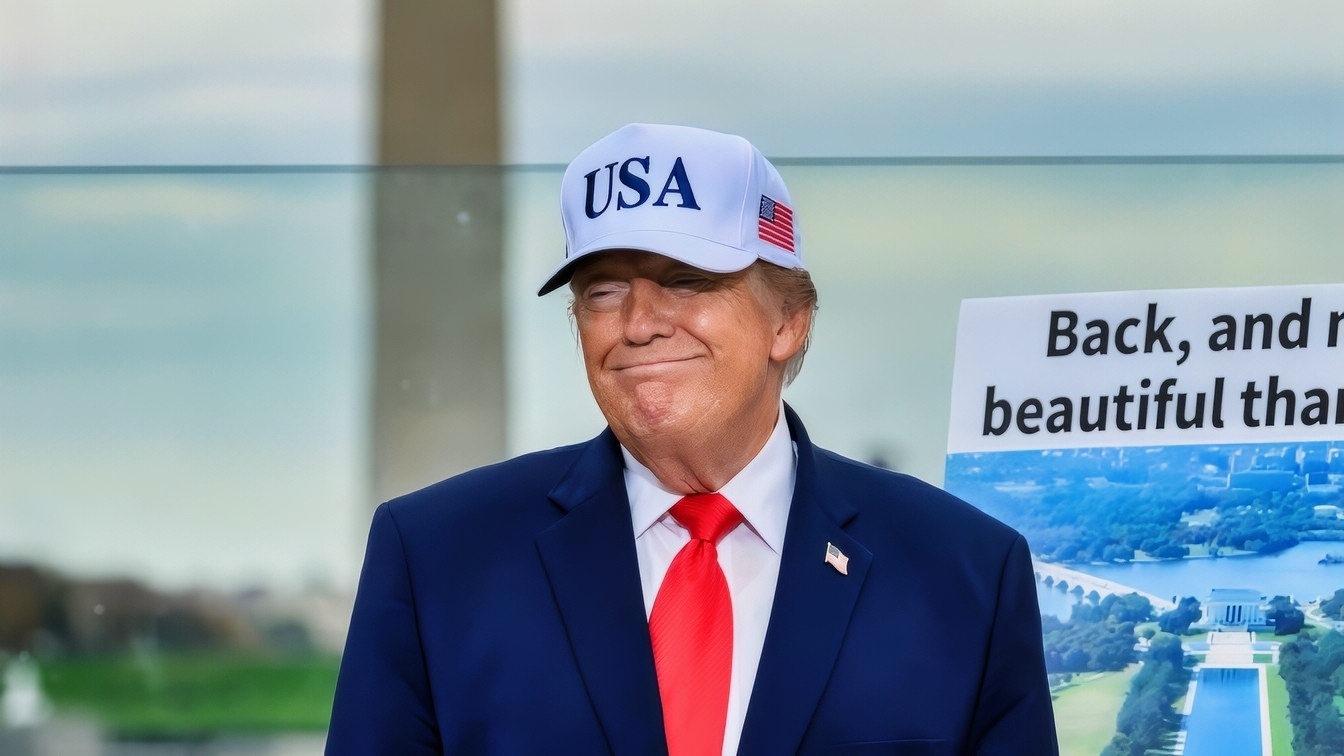
President Donald J. Trump delivers remarks the day before the midterm elections, Monday, November 2, 2026, at the Lincoln Memorial Reflecting Pool on the National Mall in Washington, D.C. (Official White House Photo by Joyce Boghosian)
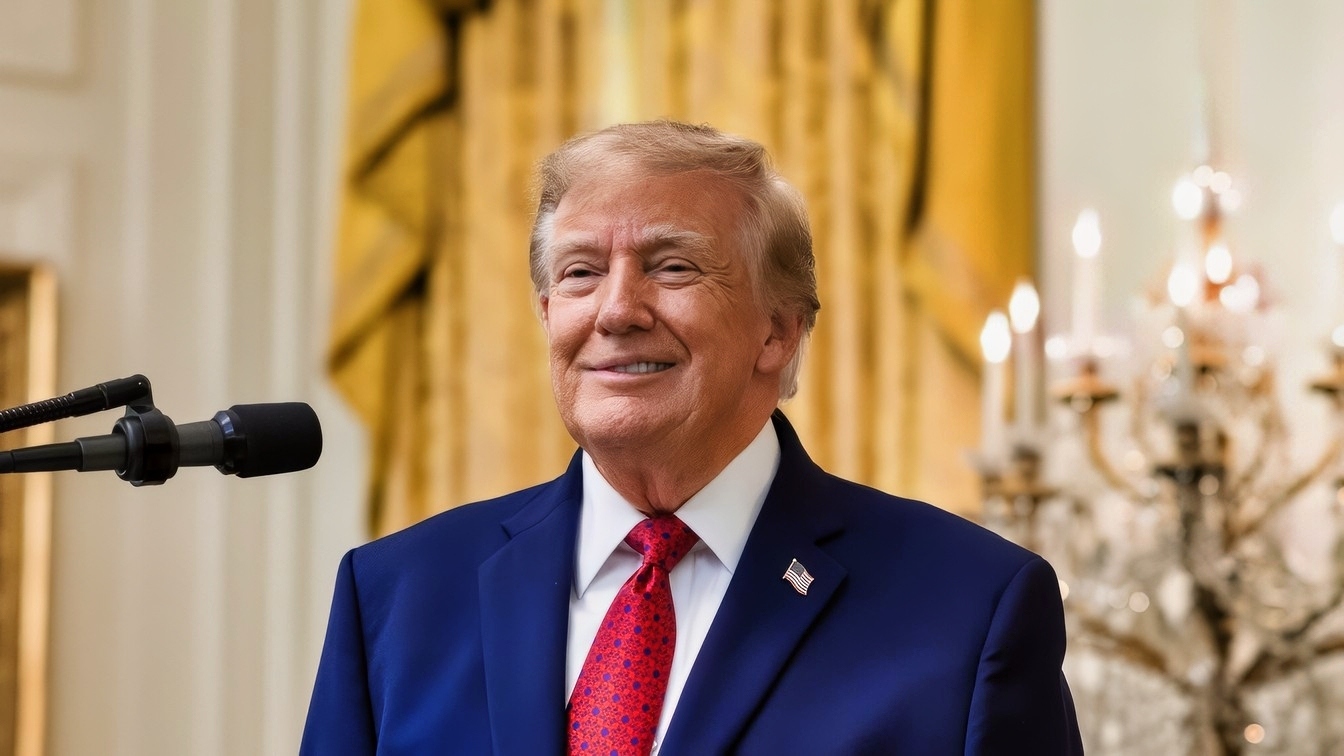
President Donald J. Trump makes remarks at a Hispanic Heritage Month Celebration in the East Room, Wednesday, September 30, 2026, at the White House. (Official White House Photo by Joyce Boghosian)
But there are several reasons to believe Trump will remain president, short of being impeached, convicted, and forcefully removed from office, even if congressional investigations and gridlock dominate his final two years.
The president has spent years trying to establish a positive political legacy, and stepping down early would mean surrendering control of that legacy to somebody else—and risking giving credit for anything positive that happens between now and 2029 to his successor.
What People Are Saying
In a September 21 article titled “Why Trump May Not Serve Out His Presidency,” The New Republic’s Timothy Noah argued that President Trump’s apparent cognitive decline and falling popularity could force the Republican Party to remove him.
There is no evidence that President Trump is suffering from cognitive decline.
Noah argued that Republicans may conclude that President Trump has become too politically damaging to remain in office, potentially leading to impeachment and conviction in the Senate during the first half of 2027.
The author also said that removing Trump would allow Republicans to enter the 2028 presidential election with Vice President JD Vance as the incumbent president.
That argument, though, assumes that Trump’s Republican allies would ultimately abandon him and that sufficient votes would be secured in the Senate to convict him.
Still, neither outcome is guaranteed, and there is no evidence whatsoever that the president is mentally or physically incapable of serving.
What’s more, Vance needs far more than simply being an incumbent to win in 2028 — he actually needs to be popular.
In short: the prediction is total fantasy.
Trump’s Legacy Is Too Important to Him
If Donald Trump is the narcissist his opponents say he is, then resigning would be the last thing he would ever consider.
For years, his critics have characterized the president as egotistical and obsessed with his public image, and unwilling to accept defeat.
If those descriptions are accurate, then the suggestion that he would voluntarily abandon the presidency following a humiliating defeat seems utterly contradictory.
In fact, President Trump has already demonstrated an extraordinary willingness to keep fighting politically and even to begin making deals with Democrats.
After demonstrating an extraordinary willingness to keep fighting, losing in 2020 and winning again in 2024, resigning from the presidency with two years left would be a truly extraordinary turn of events, and would effectively mean the last six years of the president’s life — four years out of office fighting to return to office, and two more years in the White House — were effectively a waste.
It would see Trump leave office with his legislative ambitions largely unfinished and his party struggling to recover from a major electoral defeat. It would even mean handing his opponents a political victory.
Trump Will Make Deals
The incoming Democratic-controlled Congress will undoubtedly cause major headaches for the president, but it doesn’t mean he will accomplish nothing.
If he can avoid being convicted in an impeachment trial and removed from office, Trump will attempt to make deals with Democrats where possible.
Speaking to The New York Times on election night, November 3, President Trump said as much.
“We’ll, you know, look forward to working with them,” he said. “We’ll probably work something out.”
During his recent interview with Ross Douthat on CBS’s 60 Minutes, President Trump reiterated his interest in reaching agreements with the Democrats, pointing to immigration as an area of possible compromise.
The president could also use his veto power to block Democratic legislation while negotiating compromises on issues where both parties have some overlapping interests. It would be a final opportunity for the president to show that he can be the “uniting” leader he has frequently promised to be, and to prove his credentials as the ultimate dealmaker.
Foreign Policy Ambitions
President Trump also has a lot of unfinished business to handle overseas.
The war with Iran is still ongoing, and the president will undoubtedly want to claim responsibility for ending the war on terms favorable to the United States.
And then there’s the war in Ukraine; President Trump is still attempting to secure a negotiated settlement between Russia and Ukraine, and has so far been unable to secure an agreement.
Significant progress has been made in pushing Ukraine to accept territorial losses, but the deal hasn’t quite been achieved yet.
Trump has also expressed his interest in liberating Cuba before the end of his term.
Resigning now would mean handing over complex geopolitical crises to JD Vance, whom he may see as incapable of securing the kind of deal he might secure before 2029. And then there’s another problem: he may end up handing victories to somebody else.
Does Trump Really Want Vance to Take Over?
Under the Constitution, Trump’s resignation would automatically make JD Vance president. But Vance has already begun to distance himself from Trump’s war with Iran.
Trump did not publicly rebuke Vance’s November 4 social media statement that blamed the war for the Republicans’ election losses. Still, the disagreement exists, and the president has already repeatedly refused to endorse Vance for 2028.
If Trump resigns, Vance would gain the presidency and credibility as the incumbent president.
He would also have an opportunity to establish his own political identity and build on progress made by President Trump in various areas—and if Vance signs off on deals with Russia or Iran that Trump started, he would also receive credit for much of the work already done.
In other words, Vance wins if things go well before 2029 — and Trump would be known as the man who resigned when things got tough.
Seems unlikely, doesn’t it?
About the Author: Jack Buckby
Jack Buckby is a British researcher and analyst specializing in defense and national security, based in New York. His work focuses on military capability, procurement, and strategic competition, and he produces and edits analysis for policy and defense audiences. He brings extensive editorial experience, with a career output spanning over 1,000 articles at National Security Journal, and has previously authored books and papers on extremism and deradicalization.


