
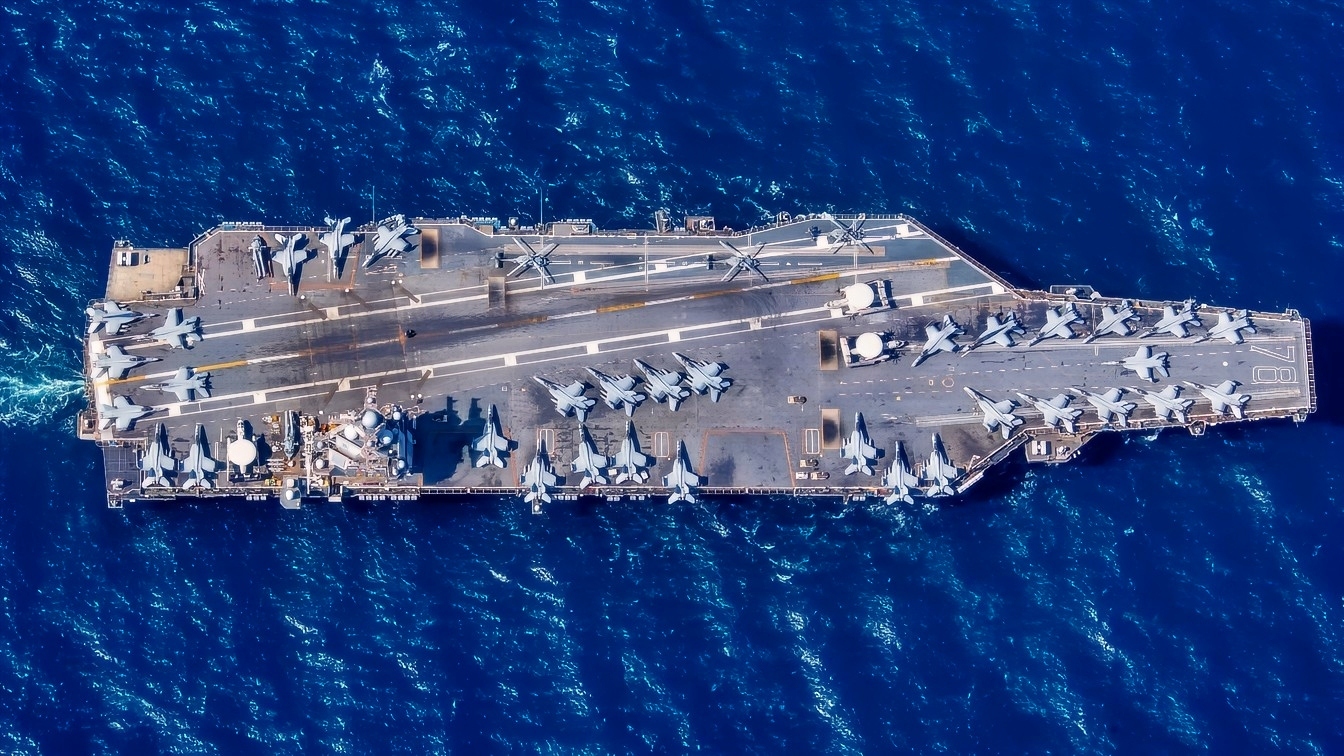
The United States has officially deployed a third aircraft carrier to the Middle East. The arrival of the USS Theodore Roosevelt comes as Washington and Tehran remain locked in a conflict over disagreements relating to the Islamic regime’s nuclear program.
U.S. President Donald Trump is also reportedly still weighing his options, with the possible resumption of U.S. military strikes against Iran still on the cards.
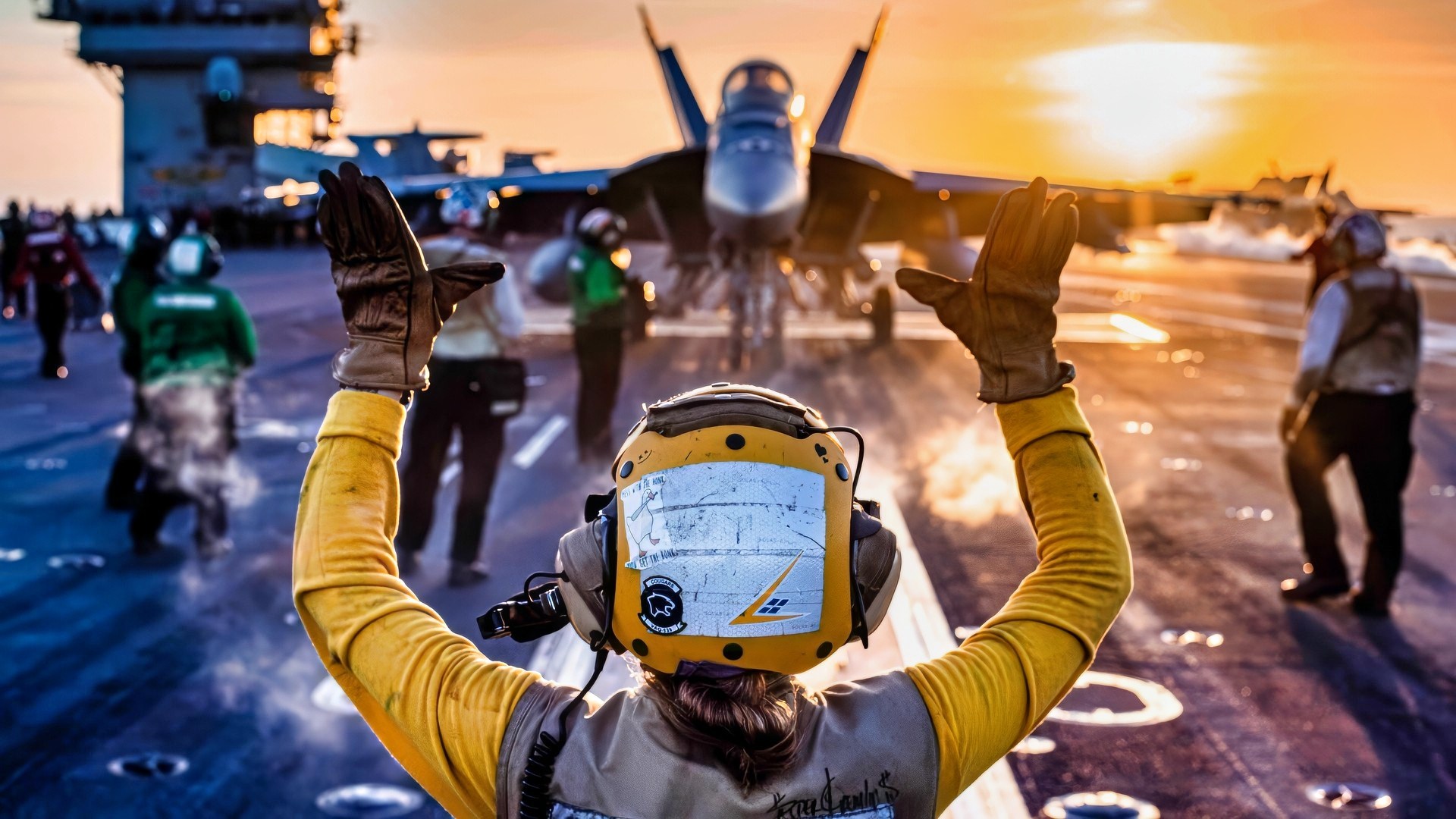
U.S. Navy Aircraft Carrier Training. Image Credit: Creative Commons.

USS Carl Vinson Aircraft Carrier. Image Credit: Creative Commons.
Meanwhile, Iran continues to threaten U.S. military installations, recently launching strikes against U.S. targets in Bahrain and continuing to strike commercial shipping in the Strait of Hormuz.
The USS Theodore Roosevelt joins two other American aircraft carriers already in the Middle East and supporting operations against Iran.
Three Aircraft Carriers in the Middle East
The arrival of the USS Theodore Roosevelt brings the number of American aircraft carriers operating in the Middle East to three. It’s the same number of carriers seen in the region in April 2026 — but before the recent Iran conflict, the Middle East had not seen three U.S. aircraft carriers at once since the invasion of Iraq in 2003.
Roosevelt is a nuclear-powered Nimitz-class aircraft carrier. It arrived in the region on Sunday, November 15.
The warship departed San Diego in September and now joins the USS George H.W. Bush and USS George Washington, which arrived in the region in April and August, respectively.
It means that the American fleet in the Arabian Sea now consists of three carriers, 13 guided-missile destroyers, two cruisers, and a littoral combat ship.
A further two destroyers are also operating in the Red Sea.
The Roosevelt brings with it thousands of American personnel and more than 60 aircraft, providing American forces with valuable additional capabilities to maintain sustained air operations against a range of Iranian targets.
The Roosevelt was expected to replace the George Washington, but both ships currently remain deployed in the region, with no confirmation of when one of the ships will depart.
The overlapping deployment may be temporary, but could also suggest that the United States is preparing an imminent attack against Iran.
Thousands More Troops
The deployment means that U.S. forces have access to substantially more military personnel, with Washington having spent the last several months building up U.S. presence in the region.
Before the arrival of Roosevelt, the United States already had tens of thousands of military personnel stationed across the Middle East, including forces supporting the ongoing campaign against Iran.
Before the Iran conflict started in February, there were as many as 50,000 American personnel stationed throughout the Middle East operating from airfields, naval installations, and various permanent military bases. Since the Iran war began, Washington has deployed thousands of additional troops, including Marines and soldiers from the 82nd Airborne Division.
The reinforcements give critical support to those already operating in the region, overseeing air operations and troop deployments.
The deployments also include a number of amphibious ready groups, consisting of warships that can transport everything from Marines to helicopters and landing craft.
The formations allow U.S. forces to conduct operations from the sea without relying on regional airfields.
The USS Makin Island Amphibious Ready Group carries approximately 2,000 Marines and is currently heading toward the region, too.
Those additional forces give President Trump more military options should he decide that his economic sanctions campaign is insufficient to bring Tehran back to the negotiating table or force the regime to make the necessary concessions to end the conflict.
Will Trump Resume Military Strikes Against Iran?
While U.S. military power builds in the waters around Iran, President Donald Trump is still weighing his options and sending mixed messages about his intentions.
Just last week, the president insisted that further strikes were unlikely, making the case that U.S. forces had already achieved their primary military objectives and that the ongoing economic sanctions campaign against Iran will eventually force Tehran to concede.
However, the president also warned that U.S. forces were prepared to resume operations if necessary.
U.S. Secretary of State Marco Rubio has also argued that Washington’s economic pressure campaign is working, and said that additional large-scale military operations may not be necessary to force Tehran to make concessions.
“The economic pain that is being inflicted on Iran right now is extraordinary, and it compounds. It’s growing every day,” Rubio told reporters in Paris following meetings with G7 allies.
Meanwhile, Iran’s parliamentary speaker and chief negotiator, Mohammad Bagher Ghalibaf, says that Tehran will not make concessions unless the United States meets seven conditions.
The conditions were communicated to Washington via Qatari mediators and include the lifting of the U.S. naval blockade, the removal of sanctions, the release of frozen Iranian assets, and the formal ending of the war.
At present, though, there is little reason for the United States to make those concessions, with the economic pressure campaign weakening Tehran’s hand by the day.
About the Author: Jack Buckby
Jack Buckby is a British researcher and analyst specializing in defense and national security, based in New York. His work focuses on military capability, procurement, and strategic competition, and he produces and edits analysis for policy and defense audiences. He brings extensive editorial experience, with a career output spanning over 1,000 articles at National Security Journal, and has previously authored books and papers on extremism and deradicalization.


