

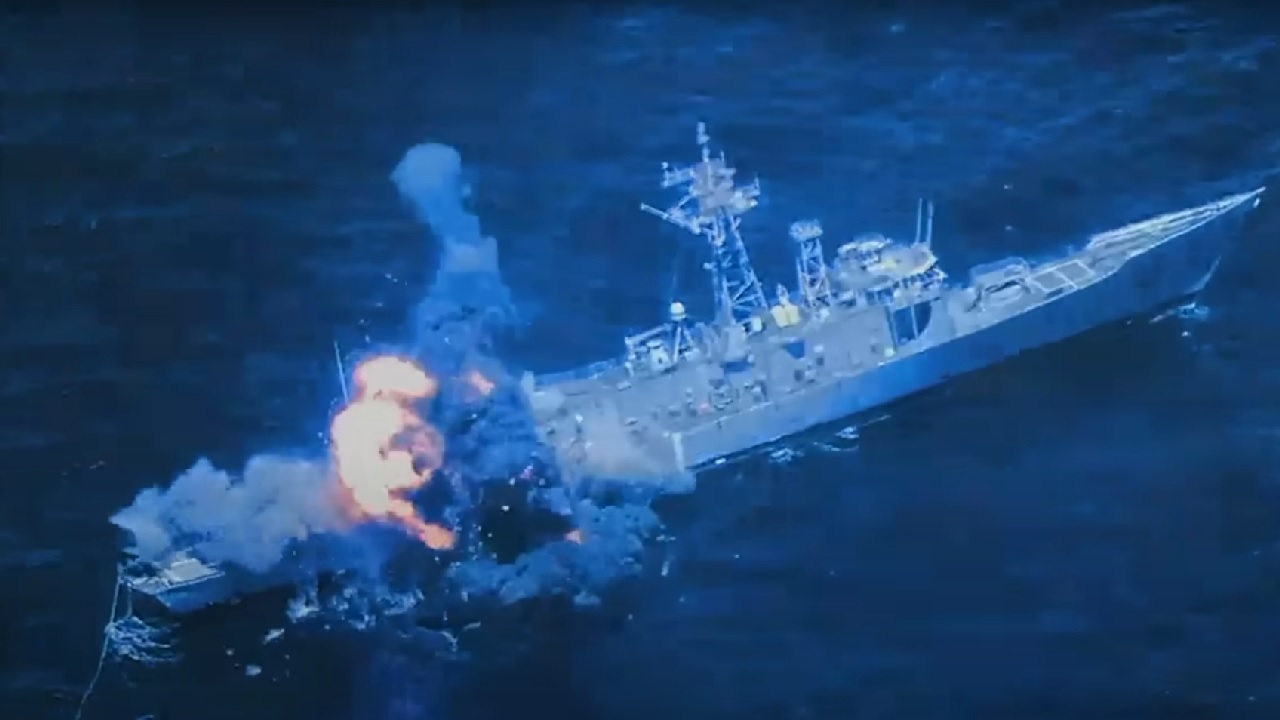
Almost nine months after the U.S. and Israel began joint strikes on Iran, the Islamic Republic could still have as many as 2,500 missiles at its disposal.
The Wall Street Journal reported on November 14 that U.S. intelligence agencies estimate Iran has between 1,500 and 2,500 missiles.

Capt. Karla Arango, 20th Bomb Squadron pilot, communicates to crew inside a B-52 Stratofortress during Global Thunder 2019 at Barksdale Air Force Base, La., Nov. 3, 2018. Global Thunder is an annual U.S. Strategic Command (USSTRATCOM) exercise designed to provide training opportunities to test and validate command, control and operational procedures. The training is based on a notional scenario developed to drive execution of USSTRATCOM and component forces’ ability to support the geographic combatant commands, deter adversaries and, if necessary, employ forces as directed by the President of the United States. (U.S. Air Force photo by Senior Airman Philip Bryant)
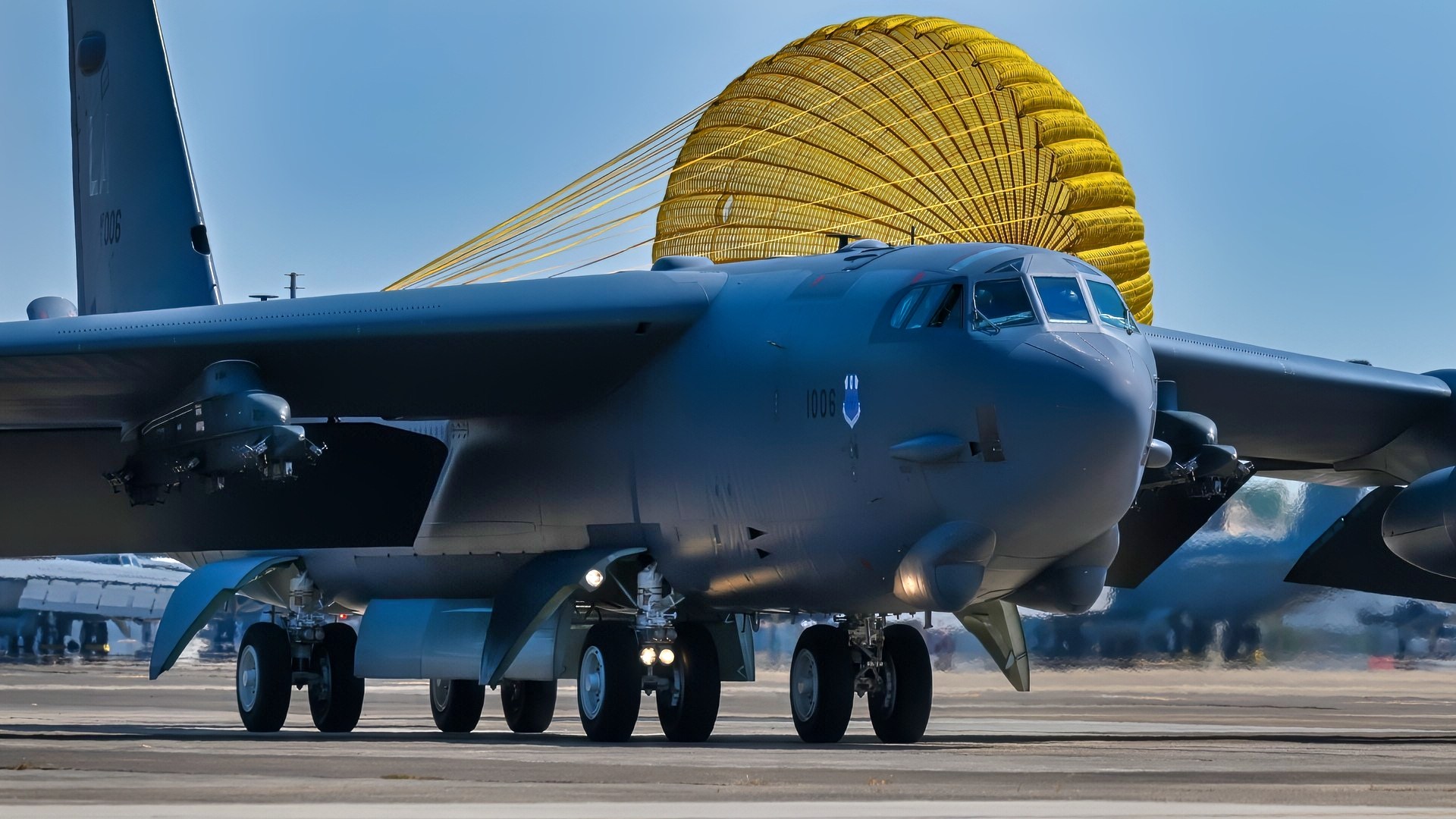
A B-52 Stratofortress from the 2nd Bomb Wing returns home to Barksdale Air Force Base following a Bomber Task Force mission at Andersen Air Force Base, Guam, Aug. 20, 2023. BTF missions demonstrate the credibility of the United States forces to address a global security environment that is more diverse and uncertain than at any other time in history. (U.S. Air Force photo by Airman 1st Class Seth Watson)
The Journal’s coverage described the estimate as a “low-confidence assessment.” That figure, however, is presumably entering the White House’s calculations as President Donald Trump considers a possible return to large-scale military action.
Missile Arsenal Being Rebuilt
While the U.S. and Israeli military strikes have damaged Iran’s missile production facilities, the Islamic Republic is repairing its missiles using stockpiled parts. It still also has a significant arsenal of drones and short-range missiles, the Journal said.
“They are rebuilding, rearming,” an Israeli military official said.
A Western official familiar with intelligence reporting said Iran still had at least 1,700 ballistic missiles at its disposal.
The official said Iran could also produce about 50 missiles a month.
Iran has also reportedly regained access to some underground missile facilities damaged or blocked by earlier strikes.
“It’s how Iran uses it, and its commanders have learned a few tricks to be more effective,” Bilal Saab, senior managing director at consultancy Trends US, said.
U.S. Claims Victory as Intelligence Shows Iran Rebuilding
Defense Secretary Pete Hegseth said on November 10, “In Operation Epic Fury, by every measure, we achieved a historic military victory.” He also noted that more than 80% of the Islamic Republic’s nuclear industrial base had now been decimated by targeted strikes.
Recent intelligence analyses, however, suggest that Tehran has managed to keep more military capacity than Washington has previously admitted, or been aware of. President Donald Trump said on Veterans Day at Arlington National Cemetery: “We won, just a question of when we want to end it.”
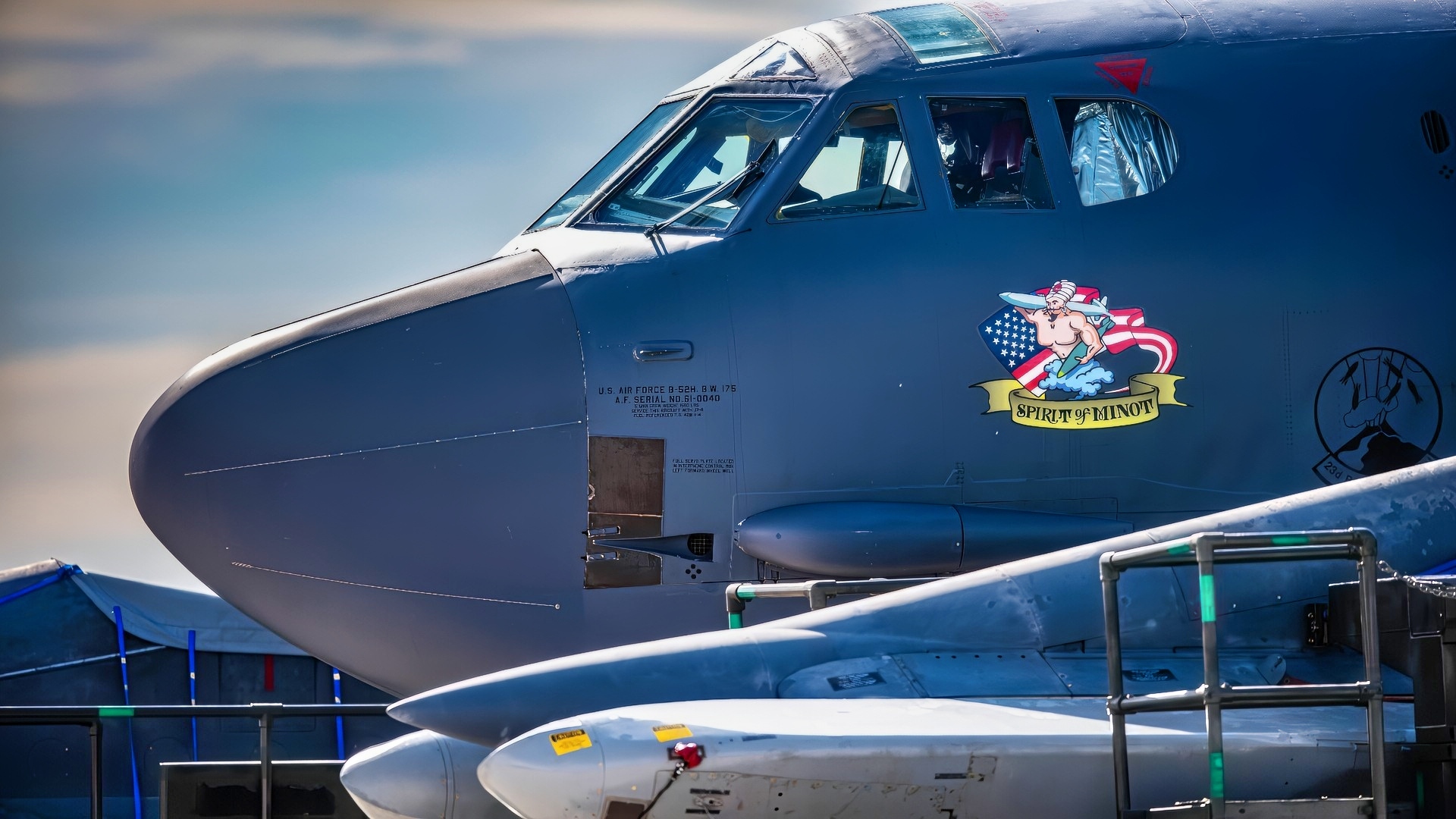
A U.S. Air Force B-52H Stratofortress assigned to the 23rd Bomb Squadron sits on the flightline during exercise Prairie Vigilance 25-1 at Minot Air Force Base, North Dakota, April 12, 2025. Vigilance series exercises are conducted with a focus on the safe and secure handling of equipment. (U.S. Air Force photo by Senior Airman Kyle Wilson)
“A total victory, not a 93 percent victory,” he said, adding Iran would take 25 years to restore its military to pre-war levels.
“We don’t need to conduct military strikes if we’re achieving the same objective through economic means and economic pressure,” Secretary of State Marco Rubio also said after G7 meetings in Paris.
Iran Warns of Long-Range Capabilities
Meanwhile, Tehran is also issuing its own threats.
Speaking about Iran’s erstwhile ballistic missile range rules, which were self-imposed, Islamic Revolutionary Guard Corps (IRGC) spokesman Gen. Hossein Mohebbi confirmed at a November 7 press conference: “That restriction has been lifted for us.”
Washington, London and the European Union list the IRGC as a terror group. It arms and trains numerous proxy groups across the Middle East, including Hamas, Hezbollah and the Houthis.
Iran would “demonstrate these capabilities in practice,” he added. There is no independently verified evidence that Iran has deployed missiles that exceed its former 2,000-kilometer range limit.
On Monday, Deputy Foreign Minister Kazem Gharibabadi said that Iran “will not wait for the US to attack first.”
“Iran is not Cuba that you can blockade, nor is it Venezuela that you can force to surrender,” he added.
Attacks Resume in Bahrain
The ominous remarks come as Iran also claimed a new drone attack in Bahrain, where the U.S. Navy’s Fifth Fleet is based. The IRGC claimed to have launched six drones at U.S. radar systems at the Al-Riffa helicopter base on Sunday.
However, Bahrain said its air defenses had intercepted the attacks, “preventing them from reaching their intended targets.” The Foreign Ministry also said Bahrain “rejects turning its territory into an arena for settling scores,” according to AFP.

A B-52H Stratofortress assigned to the 5th Bomb Wing, prepares to take-off at Minot Air Force Base North Dakota, July 14, 2021. Strategic bomber missions enhance the readiness and training necessary to respond to any potential crisis or challenge across the globe. (U.S. Air Force photo by Senior Airman Jesse Jenny)
Washington also denied Tehran’s claims that it had successfully struck U.S. radar systems in a separate incident on Friday.
Two inbound drones had been intercepted.
The U.S. Central Command said, “Both were shot down by U.S. forces.”
While there is uncertainty over how many missiles Iran now has, it is unknown if they would realistically be able to successfully launch them.
It is unclear how many of these missiles are still in working condition and can be launched from functioning launchers.
Earlier this month, the Financial Times reported that Moscow would ship some 90 advanced missile launchers to Iran–the same type Russia uses to launch long-range attacks on Ukraine.
Still, this is unlikely to plug such a wide gap in Iran’s requirements.
About the Author: Georgia Gilholy
Georgia Gilholy is a journalist based in the United Kingdom who has been published in Newsweek, The Times of Israel, and the Spectator. Gilholy writes about international politics, culture, and education.


