
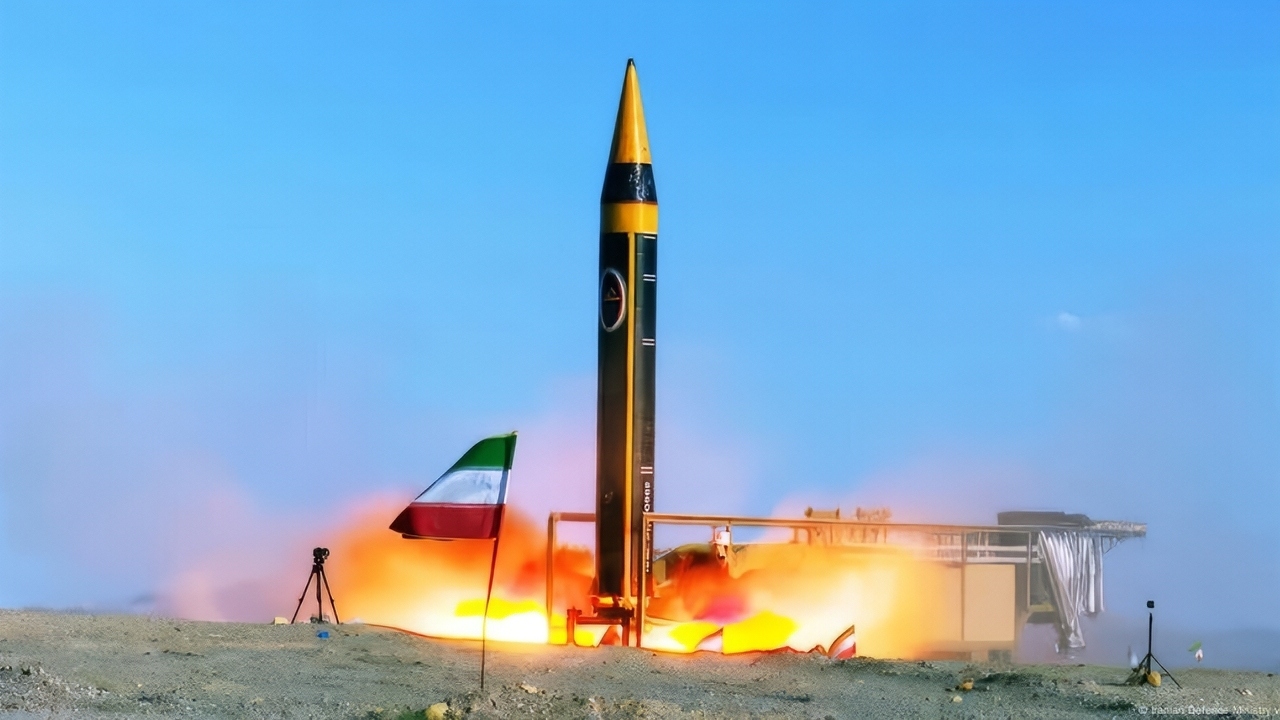
This Is Iran’s New Underground “Missile City” – Despite months of U.S. and Israeli strikes and blows to Iran’s missile production rate, the country’s missile capability remains largely in place — and Iran just released new footage of a massive underground missile facility described as a “missile city.” The video footage shows a massive stockpile of missiles and a new launcher capable of firing two liquid-fueled ballistic missiles at once.
It comes as President Donald Trump weighs a new round of major strikes against Tehran, and as Israel pushes Washington to authorize a campaign that could last as long as seven days.
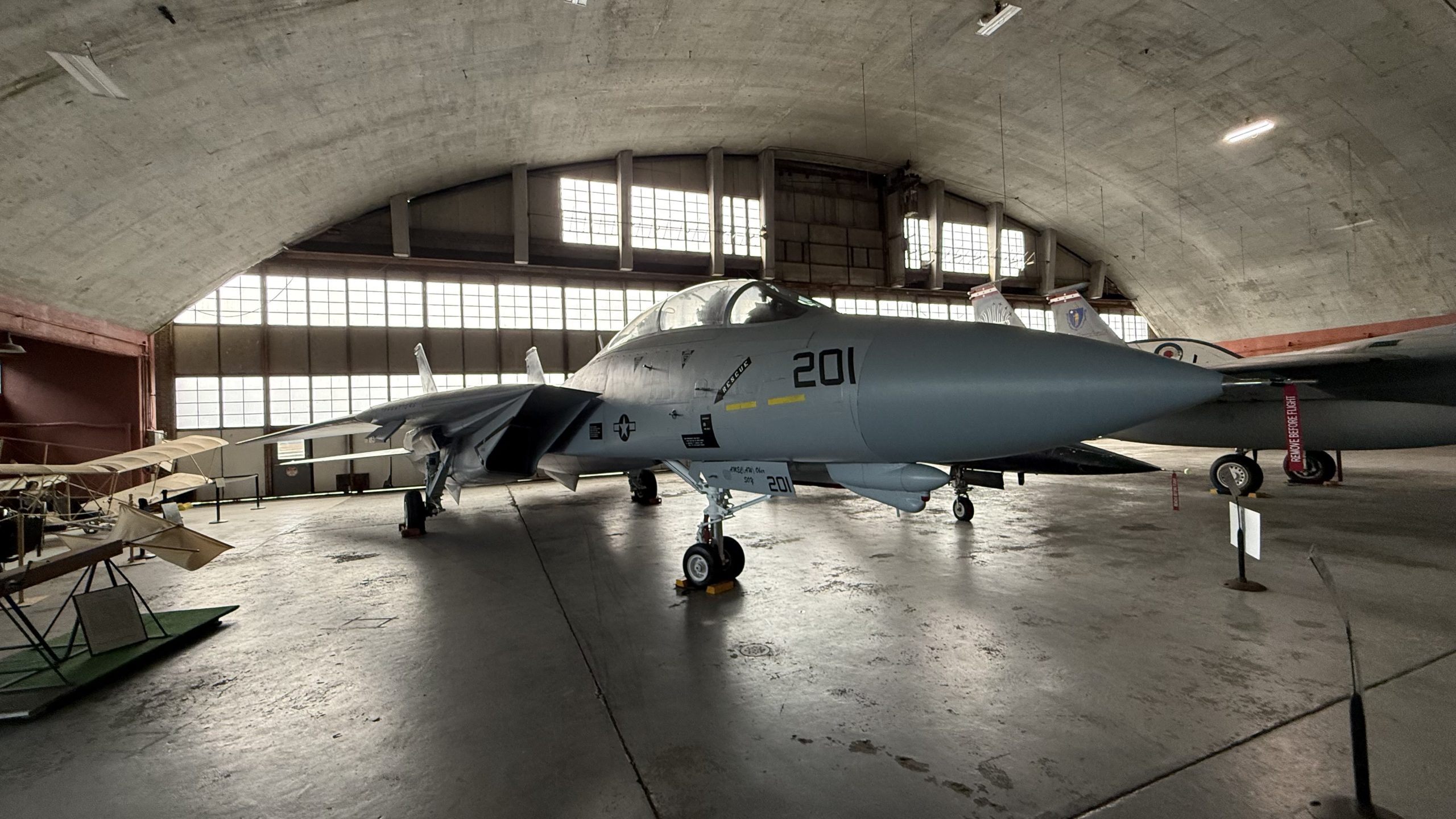
F-14 Tomcat like flown by Iran. 19FortyFive.com photo taken by staff.
On Saturday, November 21, Iran’s Islamic Revolutionary Guard Corps (IRGC) unveiled the new launcher during a visit to an underground base by IRGC commander Maj. Gen. Ahmad Vahidi. Al Jazeera shared the footage on November 22 and reported that the facility contained extensive tunnel networks and hundreds of missiles and launchers.
Iran, meanwhile, continues to strike targets across the Persian Gulf and is reportedly considering a plan that would see a convoy of its oil tankers attempt to break the U.S. naval blockade.
Iran Reveals Underground City
The new footage was released by Iranian state media outlet IRIB and shows senior IRGC commanders traveling through a large underground military complex, passing by missile launchers and weapons in reinforced tunnels. Vahidi was joined by Brig. Gen. Seyyed Majid Mousavi, the commander of the IRGC Aerospace Force, who briefed him on the country’s missile capabilities and the force’s preparedness. The site’s location, however, is undisclosed, and it is unclear whether the facility is entirely new or already established.
Another underground missile installation was also revealed earlier in November by the IRGC. The facility houses ballistic and cruise missiles, including the Fattah and Khorramshahr systems. The latest video shows just how far Iran is going to protect its military infrastructure from aerial strikes. Per Al Jazeera, the IRGC claims to have moved its missile and drone manufacturing operations entirely underground to protect its production capacity as the U.S. and Israel prepare new strikes.
Why It Matters
The development is significant for several reasons, but chief among them is that the new launcher shown in the video appears capable of carrying and launching two liquid-fueled ballistic missiles at the same time. Iran has previously demonstrated dual-launch technology for these missiles — in April — but the latest system appears to be a different configuration. That’s major news for Iran, because the IRGC’s ability to launch large numbers of missiles depends on the availability of those operational launchers, and not just the number of missiles it keeps in its arsenal.
Are Dual Launchers That Useful?
A vehicle capable of launching two missiles could increase the number of missiles fired in a single attack without requiring additional launch vehicles. But liquid-fueled missiles generally require more preparation before launch than their solid-fuel counterparts, potentially making them more vulnerable to detection and attack by U.S. forces.
On November 22, defense analyst Eva Renon questioned whether the new system will actually constitute a real improvement in its capabilities.
“It is not an increase in capability,” Renon told The Telegraph, noting that liquid-fueled missiles sometimes take hours to prepare for launch.
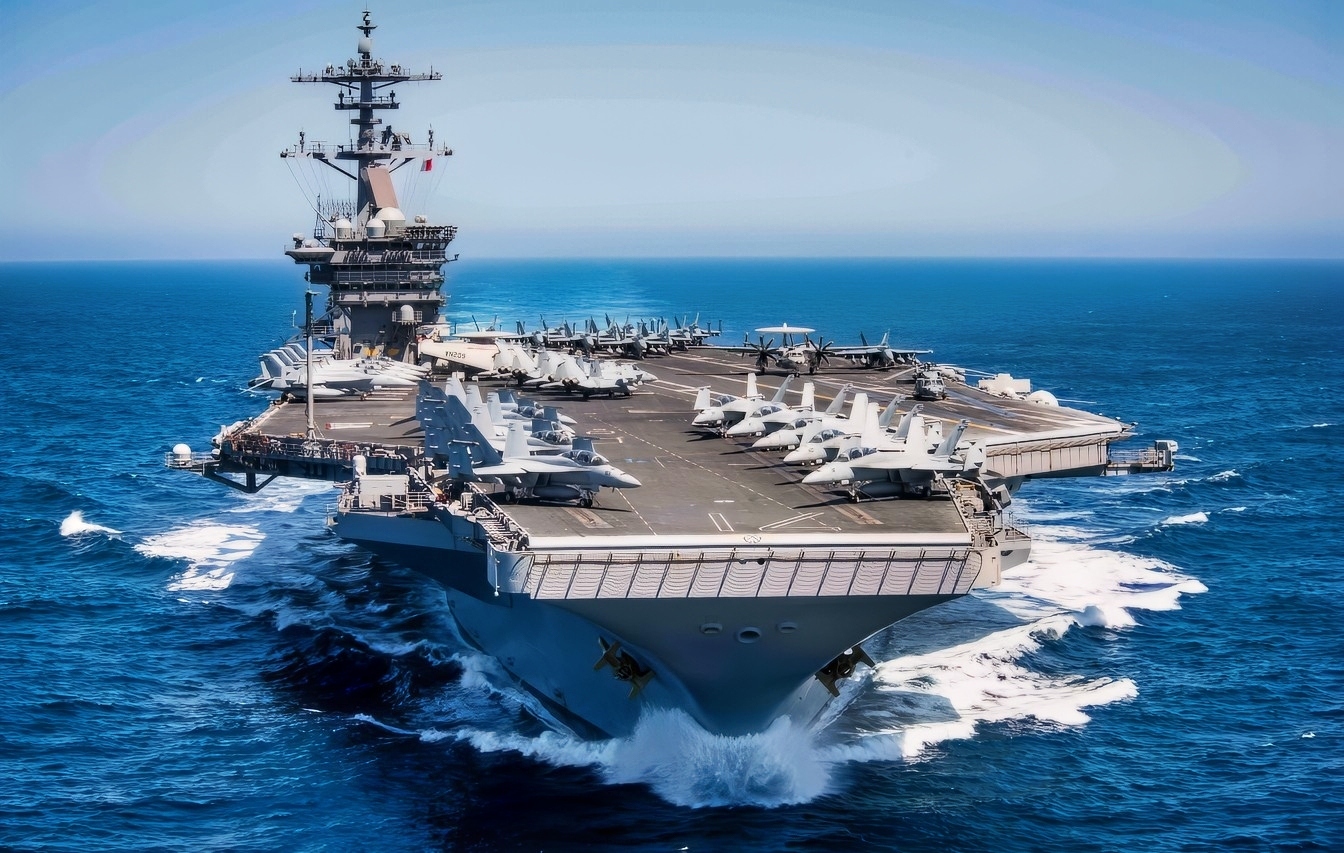
US Navy Nuclear Aircraft Carrier Creative Commons
She also noted that the weapons performed poorly during Iranian attacks on Israel in 2024.
“About half failed, and almost all the others were intercepted,” she also said.
Iran Warns Trump
As Iran flaunts its remaining missile capabilities, the regime also continues to warn the Trump administration against resuming military strikes against Iranian targets. Reports described on November 19 that the White House had sought analysts’ assessments of how Iran is likely to respond to different U.S. strike options, including whether American strikes could avoid triggering attacks against energy infrastructure in the Gulf. On November 23, Iran issued a new warning against the plans, with Iranian Foreign Ministry spokesman Esmail Baghaei warning that Mousavi’s missile forces would respond to a new round of attacks. Baghaei said that Mousavi “will certainly deliver it to them at the appropriate time, neatly and elegantly packaged.”
“Then they understand,” he said.
Why Iran Released the Footage
Sharing the footage of Iran’s new underground facility serves multiple important purposes for Iran. It may intimidate Iran’s neighbors, particularly the United Arab Emirates, which has been targeted by Tehran repeatedly during the war. It also demonstrates to the United States that aerial strike campaigns will not necessarily be able to take out its remaining missile launch infrastructure and stockpiles.
Defense analyst Renon told The Telegraph that the display was, however, aimed primarily at Gulf governments rather than Washington.
“It is addressed to the Gulf, and above all to the UAE,” she said. “The purpose, I think, is to discourage the UAE from carrying the war on as American protection diminishes.”
About the Author: Jack Buckby
Jack Buckby is a British researcher and analyst specializing in defense and national security, based in New York. His work focuses on military capability, procurement, and strategic competition, and he produces and edits analysis for policy and defense audiences. He brings extensive editorial experience, with a career output spanning over 1,000 articles at National Security Journal, and has previously authored books and papers on extremism and deradicalization.


