

When the Iran war started on February 28, it was done while the United States and the Islamic Republic of Iran were engaged in negotiations over their suspected nuclear weapons program.
Qatar, a major regional player and close ally of President Donald Trump, served as an intermediary.

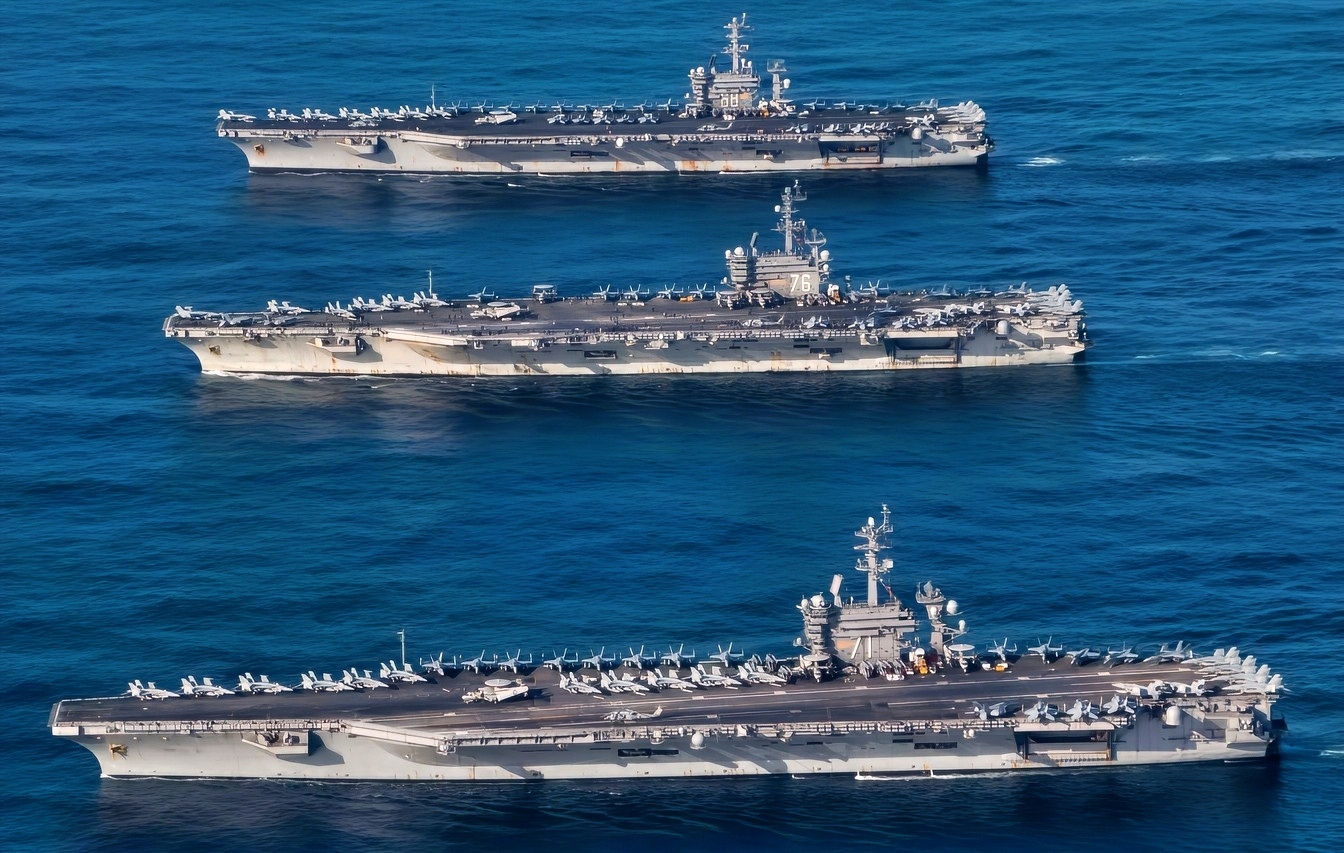
The guided-missile destroyer USS Donald Cook (DDG 75) steams behind the aircraft carrier USS Theodore Roosevelt (CVN 71) in the Persian Gulf on Jan. 31, 2006. The Roosevelt Carrier Strike Group is conducting maritime security operations in the Persian Gulf.
(DoD photo by Airman Apprentice Nathan Laird, U.S. Navy. (Released))
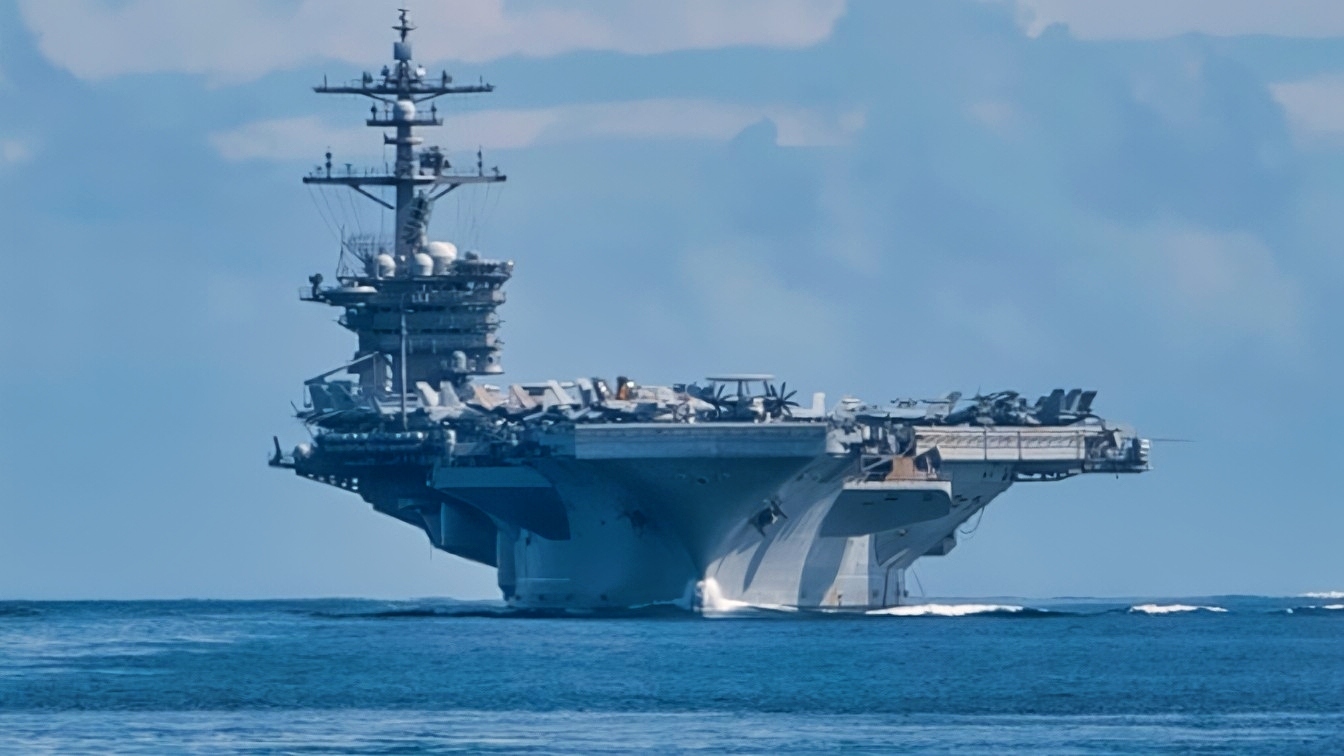
SIBUTU PASSAGE (Feb. 6, 2025) – The Nimitz-class aircraft carrier USS Carl Vinson (CVN 70), left, and the Ticonderoga-class guided-missile cruiser USS Princeton (CG 59) transit the Sibutu Passage Feb. 6, 2025. The Carl Vinson Carrier Strike Group is underway conducting routine operations in the U.S. 7th Fleet area of operations. (U.S. Navy photo by Mass Communication Specialist 3rd Class Brianna Walker)
But the negotiations did not get too far. War would begin.
The result was that multiple leaders in the Islamic Republic were assassinated, including the Shiite spiritual leader, Ayatollah Ali Khamenei, and some of his family members who were staying with him.
More than 100 schoolgirls at the Minab school were also killed, the result of a supposed mistake in targeting intelligence.
The decapitation strikes were intended to send the regime into such chaos that, as the people of Iran were protesting, they would overthrow their confused and weakened government.
Here’s What Really Happened
What happened was that enough of the regime survived, including Khamenei’s son, for it to survive. More than that, the people who rose to replace the assassinated Iranian leaders turned out to be more hardline than what came before.
That includes Mojtaba Khamenei, who recently ordered the Iranian military to end the state of “No War, No Peace” with the Americans.
And the Islamic Republic not only survived the first phase of the Iran War, but it was able to give back as good as it got–so much so that the US military’s arsenals are now dangerously depleted.
The American military bases that once ringed the region have been degraded to the point that there are real concerns the Americans won’t be reconstituting them (meaning US military power has been permanently severely degraded in the region).
Still, the Islamic Republic has been hit hard by the economic sanctions and naval blockade that the US has imposed upon them.
Their economy is in tatters.
The remaining regime leadership has enacted the Mosaic Doctrine, spreading them out across multiple sites in the country to make it harder for US and Israeli warplanes to target them as the US and Israel did at the start of the war.
If war does restart, though, the Iranians appear well prepared.
The country’s massive underground missile and drone arsenals have also been replenished since the war began.
While we do not know the exact extent of those arsenals, US intelligence sources believe the Iranians have enough advanced missiles and drones in their underground stockpiles that the country could easily launch devastating retaliations that will break the back of the US military presence in the region and threaten the energy and water infrastructure of the Gulf.
Just as Iran’s new ayatollah, Mojtaba Khamenei, wants to end the “No War, No Peace” uneasy stasis that has defined the US-Iran conflict since the breakdown of the Memorandum of Understanding (MOU) this summer, Trump also wants greater leverage over the Islamic Republic.
The forty-seventh president has already stated he does not intend to restart the full war with Iran until at least the new year, giving whatever diplomacy is occurring more time.
Another Round of Assassinations
Nevertheless, NBC News and other outlets report that Trump is again talking about launching decapitation strikes at the Islamic Republic.
The idea would be to lop off the new top layer, creating chaos and either allowing real negotiations that favor the United States to take place (fat chance at that point) or inspiring the people of Iran to rise against their hated government (even less likely).
Proponents of this plan in Washington assert that killing these Iranian leaders would effectively end the war in America’s favor, without the need to undertake a prolonged military campaign.
But if the past is prologue, then killing more Iranian regime leaders is just as likely to strengthen the besieged regime as the last round did.
In fact, it would give the Islamic Republic all the license it needs to retaliate massively, destroying the remaining US bases in the region, obliterating the energy and water infrastructure of the Gulf Arab states, and possibly leading to a serious strike on sensitive targets in Israel, notably the Dimona nuclear power plant that could generate the equivalent of a small nuclear explosion in southern Israel if an Iranian missile strike breached its containment.
Missing the Mark
The fact is that since February 28, the US military’s actions against Iran have had the opposite intended effect. Attacks on Iranian infrastructure prompted the Islamic Republic to shut down the Strait of Hormuz (SoH), cutting off 20 percent of the world’s energy flows and one-third of other critical supplies that either emanate from, or pass through, the region.
Assassinating top Iranian leaders–including Ayatollah Ali Khamenei–steeled Iranian resolve against the Americans and saw the elevation of even more hardline people from the Islamic Republic.
Meanwhile, US military strikes resulted in sweeping drone and missile swarm attacks across the Middle East.
These attacks drained seemingly irreplaceable (in the near term) stockpiles of critical US military weapons and weakened America’s standing in the region, possibly forever.
Another round of attacks would not destroy the Iranian regime.
It’d just supercharge it again and ensure Iran could irrevocably damage the regional order, likely kicking the Americans out, annihilating the Gulf Arab states, and isolating Israel.
Whatever happened next to Iran, the immediate shocks felt by the Americans and their allies as a result of restarting this war would fundamentally weaken the US-led system and ensure the rise of a new order sans the United States.
About the Author: Brandon J. Weichert
Brandon J. Weichert is the Senior National Security Editor. He also manages The Weichert Brief on Substack. Weichert is the co-host of The Mario Nawfal Show on Twitter/X. He is the author of four bestselling national security books, most recently A Disaster of Our Own Making: How the West Lost Ukraine (Encounter Books). His next book, Fortress Americas: A New Monroe Doctrine (Tucker Carlson Books), is due out December 8. Follow him via Twitter/X @WeTheBrandon.


