
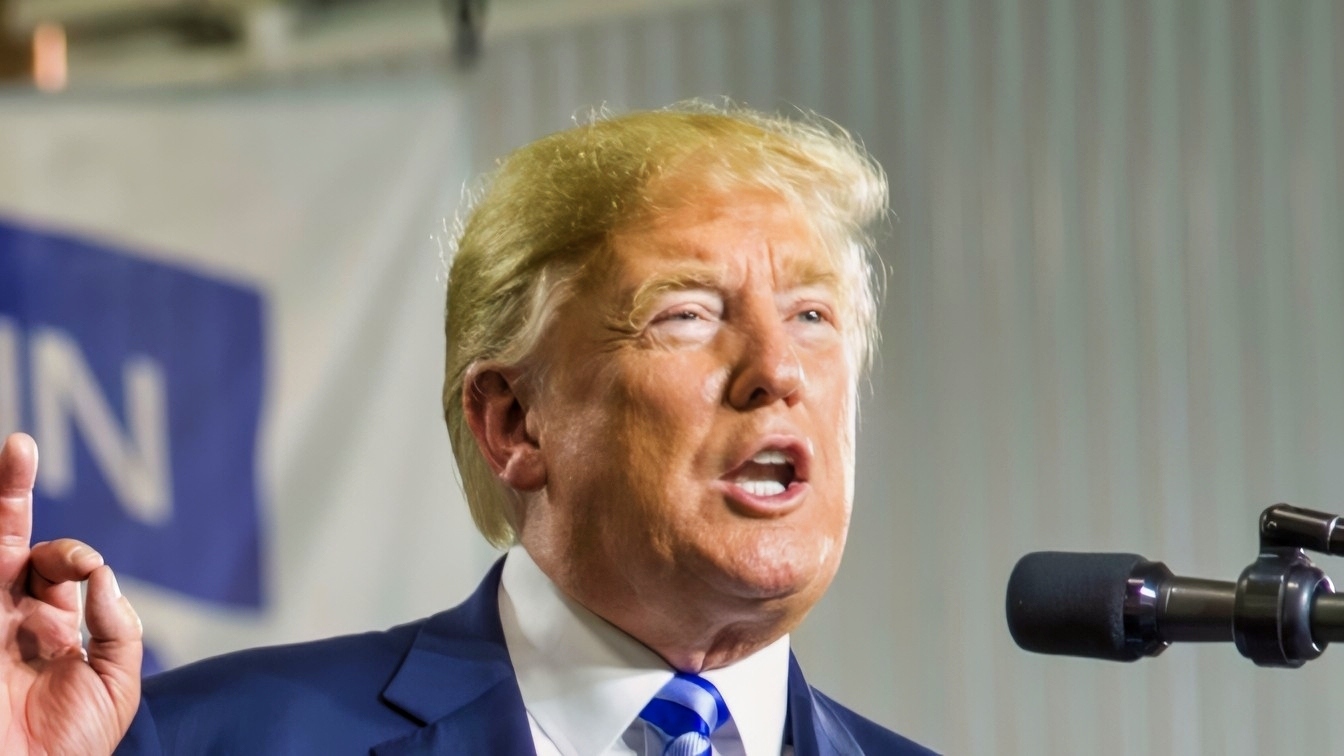
Even after the November 3 midterms, in which the Republicans lost control of historically right-leaning states, President Trump is doubling down on the policies that pushed voters back to the Democrats. This week, the Trump administration announced plans to impose new tariffs on some of the United States’ biggest trading partners.
The proposals, which would affect goods imported from China, Japan, the European Union, and other major economies, come as the Trump administration scrambles to restore many of the tariffs the U.S. Supreme Court struck down earlier this year.
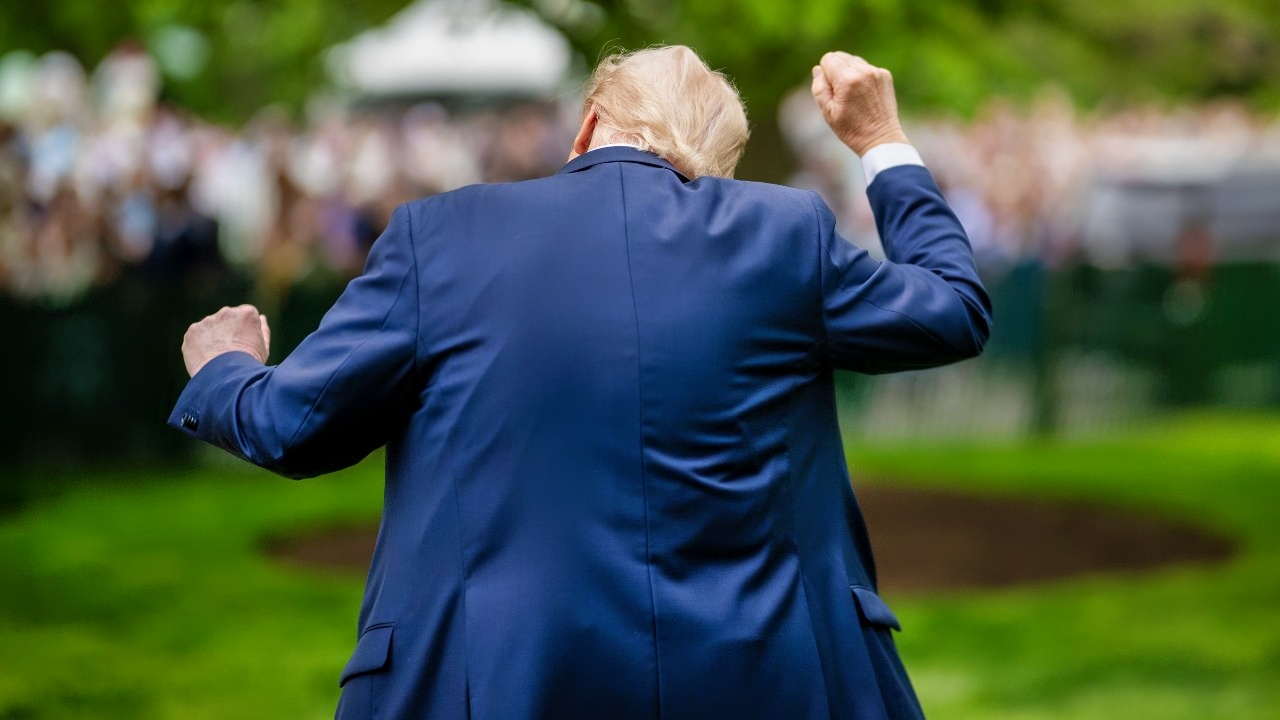
President Donald Trump departs the White House Easter Egg Roll on the South Lawn, Monday, April 21, 2025. (Official White House Photo by Daniel Torok)

President Donald Trump participates in the swearing-in ceremony for Administrator of the Centers for Medicare and Medicaid Services Mehmet Oz, Friday, April 18, 2025, in the Oval Office. (Official White House Photo by Molly Riley)
On Wednesday, November 25, the Office of the United States Trade Representative (USTR) published the findings of investigations into foreign industrial policies that the Trump administration says undermine American manufacturers.
What Trump Proposed
U.S. Trade Representative Jamieson Greer announced in a statement published on the USTR website on Wednesday that his office had identified industrial policies in 14 of America’s trading partners that are hurting American businesses.
The findings, he said, are the result of a series of investigations launched by Greer on March 11. The investigation included testimonies from almost 140 witnesses and received 1,070 public comments.
The USTR also published individual reports outlining how each of the 14 economies in question has implemented policies that the Trump administration believes have contributed to declining investment and job losses in the U.S. manufacturing sector.
Among the many claims is the accusation that China provided financial assistance to its state-owned businesses, and that the European Union offered preferential loans to manufacturers.
Japan is also accused of providing financial support to businesses that would otherwise be unprofitable.
Greer outlined a series of proposals in response to the findings, including increasing tariff rates on goods imported to the United States from Japan, South Korea, Taiwan, Switzerland, and the European Union. Rates are expected to reach 15%, accounting for some existing duties.
The Trump administration is also proposing tariff rates of up to 18% on goods imported from Thailand, Malaysia, Indonesia, Cambodia, and Bangladesh
Some of the countries in question may secure lower tariff rates if they reach agreements with Washington in the coming months.
India, for example, could see its rate reduced from 25% to 17%, while Vietnam may see rates reduced from 35% to 20%. Singapore, the update says, could negotiate a reduction from 20% to 10%.
Greer has yet to announce the findings of investigations into trade with Mexico and Norway, despite the two countries being among the 16 economies that were originally investigated.
A Reignited Trade War With China?
The proposals could create problems for the Trump administration as it tries to establish stable economic relations with China and negotiate an extension of its existing trade agreement, which is set to expire on January 10.
The agreement between Washington and Beijing prevents the Trump administration from increasing tariffs on Chinese goods during Trump’s second term beyond 20%—although Chinese imports are still subject to tariffs imposed during Trump’s first term.
The Trump administration says it intends to honor the agreement for as long as it is in effect. Still, tariffs could be increased substantially if the countries fail to negotiate an extension.
President Trump is expected to meet with Chinese President Xi Jinping at the G20 summit in Miami next month, where the deal is likely to be discussed.
Chinese Foreign Ministry spokesperson Guo Jiakun rejected accusations from the Trump administration about Chinese industrial policies while speaking to reporters on Wednesday.
“The so-called ‘overcapacity’ is a false issue, and China opposes using it as an excuse for political manipulation,” Guo said.
“Both China and the United States should jointly implement the important consensus reached by their heads of state and maintain the stable development of bilateral economic and trade relations,” he continued.
Why It’s Happening
The proposals are part of the Trump administration’s effort to restore its tariff policies after the United States Supreme Court ruled in February that the president lacked the authority to impose them under the International Emergency Economic Powers Act of 1977.
The ruling didn’t stop the president from imposing tariffs using other legislation, however.
Immediately after the Supreme Court struck down the tariffs, President Trump imposed temporary tariffs of 10% under Section 122 of the Trade Act of 1974.
The measure allowed the duties to remain in effect for 150 days without congressional approval, meaning that if Trump plans to maintain his tariff policies, he would need to impose them under different legislation.
The latest round of tariffs is now being proposed under Section 301 of the same legislation, which allows the USTR to impose tariffs in response to foreign trade practices deemed to be harmful to American commercial interests.
About the Author: Jack Buckby
Jack Buckby is a British researcher and analyst specializing in defense and national security, based in New York. His work focuses on military capability, procurement, and strategic competition, and he produces and edits analysis for policy and defense audiences. He brings extensive editorial experience, with a career output spanning over 1,000 articles at National Security Journal, and has previously authored books and papers on extremism and deradicalization.


