

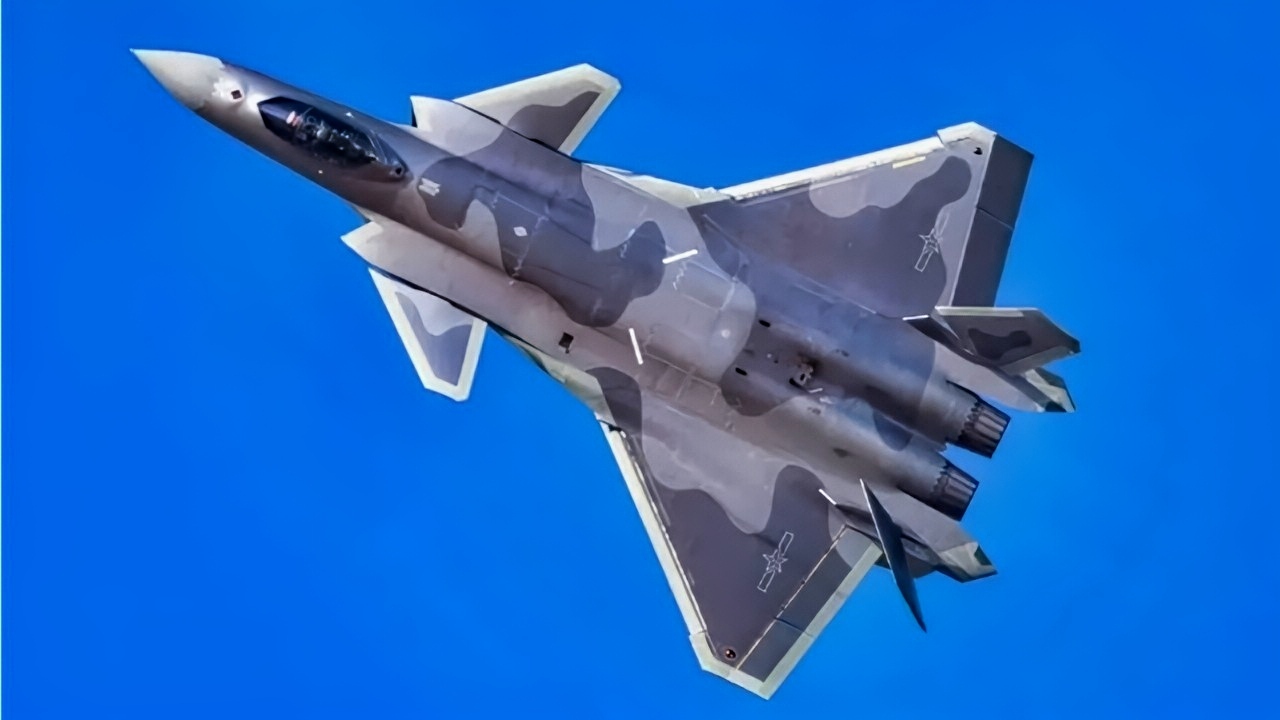
Stealth maintenance may be just as important as stealth design. That’s the takeaway from a new Chinese laboratory study, first reported by the South China Morning Post, which found that stripping away just 10 percent of a radar-absorbing coating nearly doubled the microwave energy reflecting toward a radar.
The headline puts the Chinese Chengdu J-20 Mighty Dragon in the crosshairs. However, the details are more nuanced and, arguably, more interesting than the headline.

J-20 Fighter Weibo Screenshot.
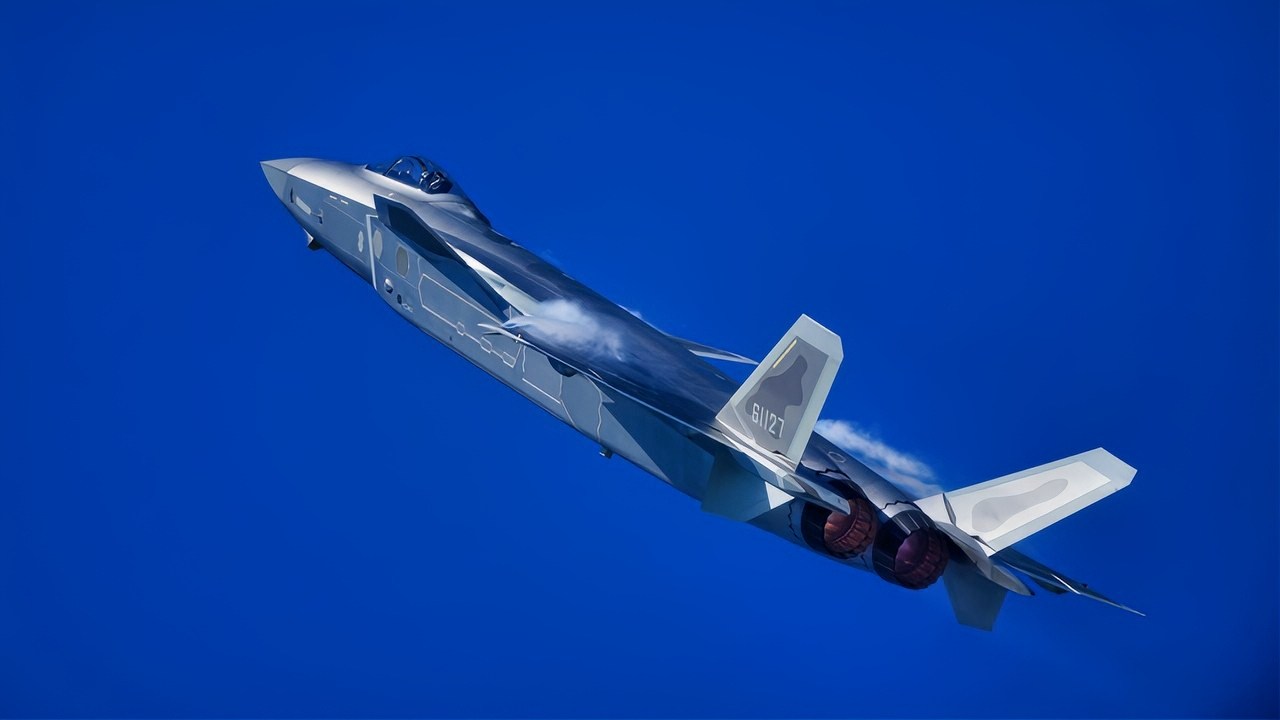
J-20 Stealth Fighter in 2024. Image Credit: Creative Commons.
What The Researchers Actually Tested
According to Asia Times, the work comes from Zheng Xuan and Qing Yuchang of Northwestern Polytechnical University in Xi’an and was published in October in the Chinese Journal of Inorganic Materials.
The team sprayed a 1 mm (0.04-inch) layer of carbonyl iron powder mixed with silicone resin onto titanium alloy plates. They measured microwave reflection from 2 to 18 GHz, which spans the S, C, X, and Ku bands where most fire-control and airborne intercept radars operate.
Then they started breaking it down. Scratches, surface wear, and complete coating detachment, in varying sizes, depths, and locations.
Removing 10 percent of the coating pushed minimum reflection from -12.73 dB to -9.78 dB. That 2.95 dB jump works out to roughly 1.97 times the reflected power, per Interesting Engineering.
Strip half the coating from the center of the panel and reflection climbed to -2.91 dB.
Scratches barely mattered, even across 50 percent of the surface, since most of the absorbing material stayed put. Mild wear down to 0.4 mm over 20 percent of the panel was tolerable too.
However, wear 0.6 mm deep across half the surface drove reflection to -7.37 dB. The thinner layer no longer matched the wavelengths it was designed to absorb.
Panel Seams Are The Worst Areas For Damage
Central and strip-shaped bare patches did far more harm than damage along the edges. Exposed titanium reflects strongly, and the boundary between coating and bare metal adds its own diffraction and scattering.
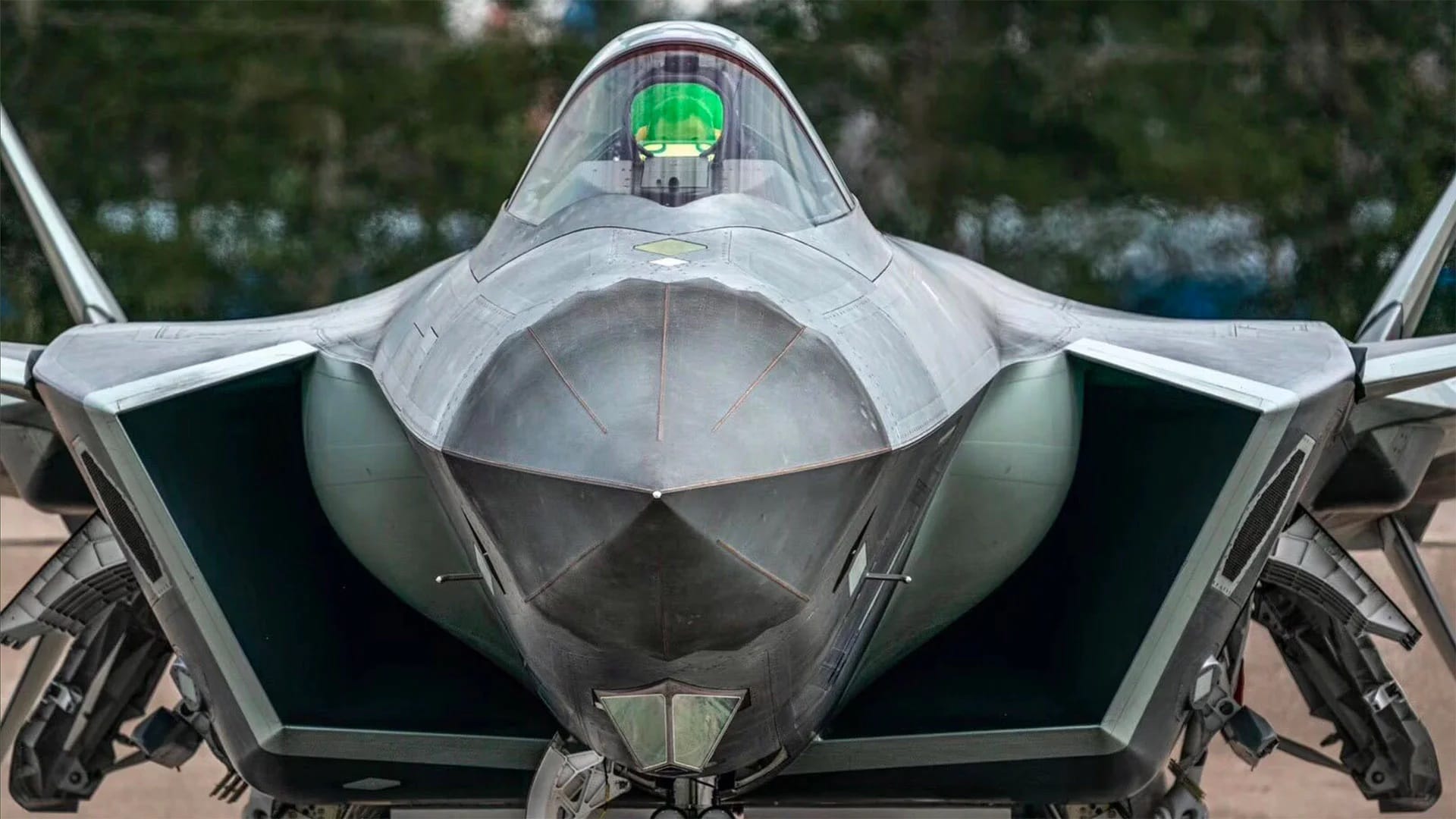
J-20 Fighter Image. Image Credit: Creative Commons.
A long strip of missing material along a panel seam is the worst case. That’s also exactly where coatings tend to fail on real aircraft.
Fifth- and sixth-generation stealth aircraft require specialized maintenance to preserve the low-observable features that make them difficult to detect via radar.
The same issues apply to China.
Coating wear, peeling, and labor-intensive maintenance are well-known challenges across fifth-generation stealth aircraft, including the US Air Force’s F-22 Raptor and F-35.
Lockheed Martin notes that roughly 50 percent of F-22 maintenance goes toward preserving stealth coatings.
A Question Of Coatings
It should be noted that it hasn’t been confirmed that this composite even matches the J-20’s proprietary coatings. Carbonyl iron in silicone is an older-generation absorber.
Modern fifth-generation fighters rely first on shaping to deflect radar energy, with radar-absorbent material (RAM) cleaning up what’s left.

J-20 Stealth Fighter Landing. Image Credit: Chinese PLAAF.
China and American Stealth Fighters Share the Same ‘Problem’
The physics applies equally to the F-22. A 2018 GAO report flagged the Raptor’s coatings as a drag on availability, and the jets need climate-controlled hangars just to keep them intact on the ground.
Air & Space Forces Magazine reported the fleet’s mission-capable rate fell to 40.19 percent in fiscal 2024, down from 57.4 percent two years earlier. Not all of that is RAM. Plenty of it is.
Beijing has spent the last two years touting cures, from silk jacquard-woven absorbers to a 0.1 mm metasurface it claims survives 1,000°C.
Why 500 J-20s Is A Maintenance Issue
Longtime PLA aviation analyst Andreas Rupprecht told The War Zone that around 500 J-20s had likely been delivered by mid-2026.
Scale is China’s answer to questions about quality.
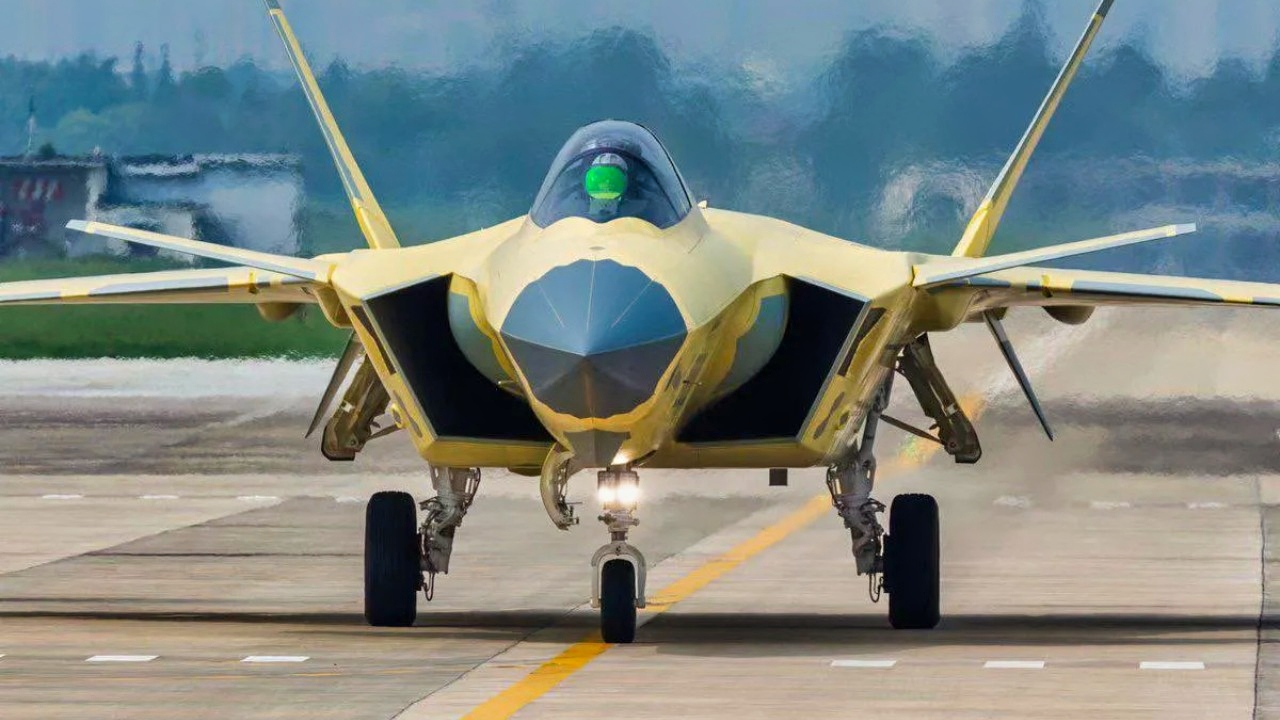
J-20 Fighter. Image Credit: Chinese Weibo.
However, the number of stealth aircraft also multiplies the maintenance bill. Every one of those J-20’s flying from humid coastal bases opposite Taiwan and along the South China Sea fights the same salt, heat, and rain that chew up American coatings.
It is arguably that the stealth debate spends too much time on the airplane and not enough on the hangar. A fighter that is stealthy on delivery day and leaks radar energy after six months of hard flying is a maintenance issue. While this isn’t a popular talking point, it is an important one.
About the Author: Steve Balestrieri
Steve Balestrieri is a National Security Columnist. He served as a US Army Special Forces NCO and Warrant Officer. In addition to writing on defense, he covers the NFL for PatsFans.com and is a member of the Pro Football Writers of America (PFWA). His work was regularly featured in many military publications.


