

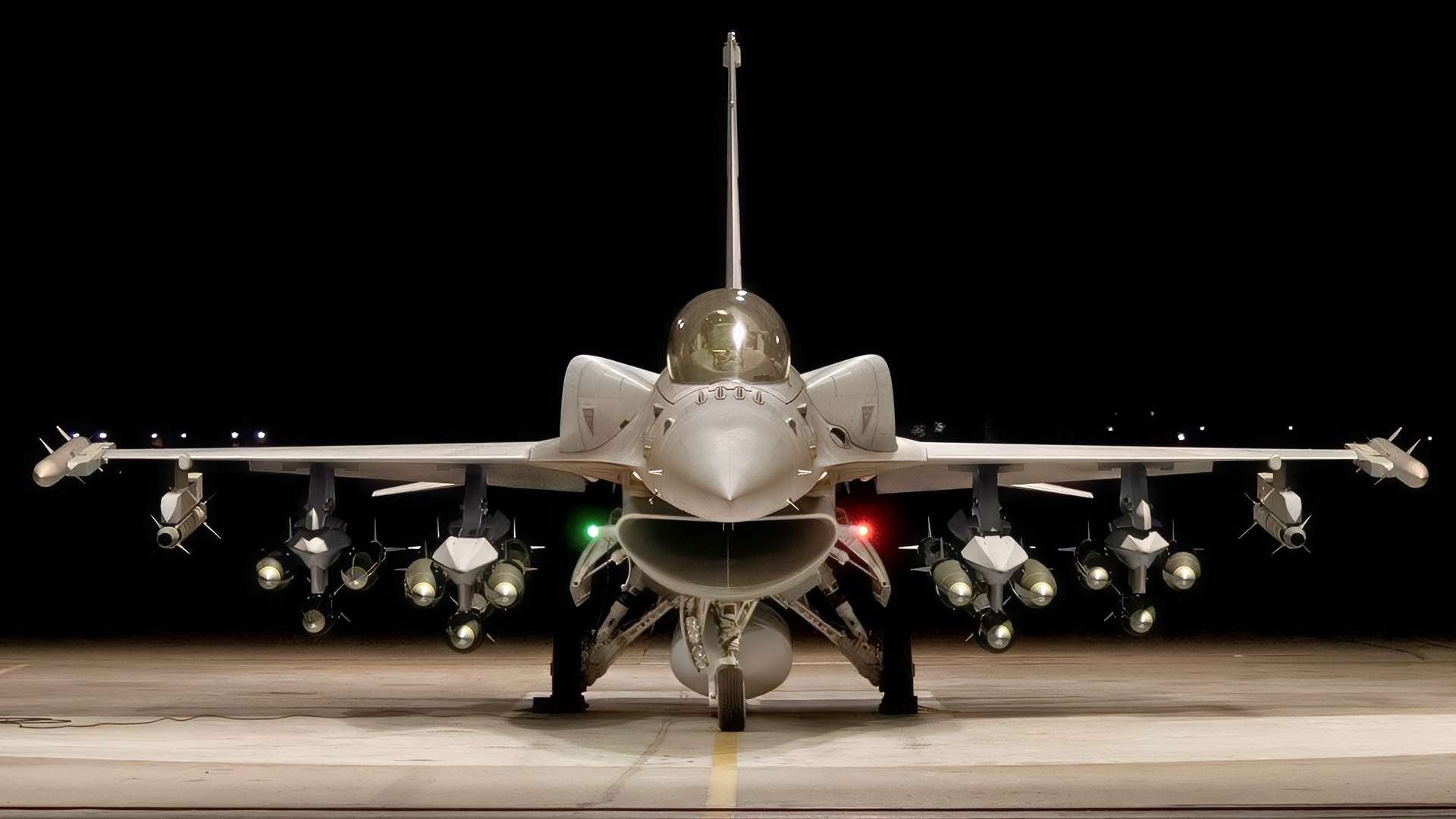
Summary and Key Points: The F-16V is the most advanced fighter Taiwan currently fields, equipped with the AN/APG-83 AESA radar, the Viper Shield electronic warfare suite, and components shared with the F-22 and F-35. But against China’s Chengdu J-20 Mighty Dragon — the PLAAF’s first fifth-generation stealth fighter — the F-16V is outmatched in nearly every scenario.
-The J-20’s PL-15 missiles reach more than 200 kilometers, compared to the AIM-120 AMRAAM at roughly 120 kilometers, and the J-20’s radar-absorbing materials, internal weapons bays, and shaped airframe allow it to detect and engage Taiwan’s fighter before the F-16V’s pilot is even aware of the threat.
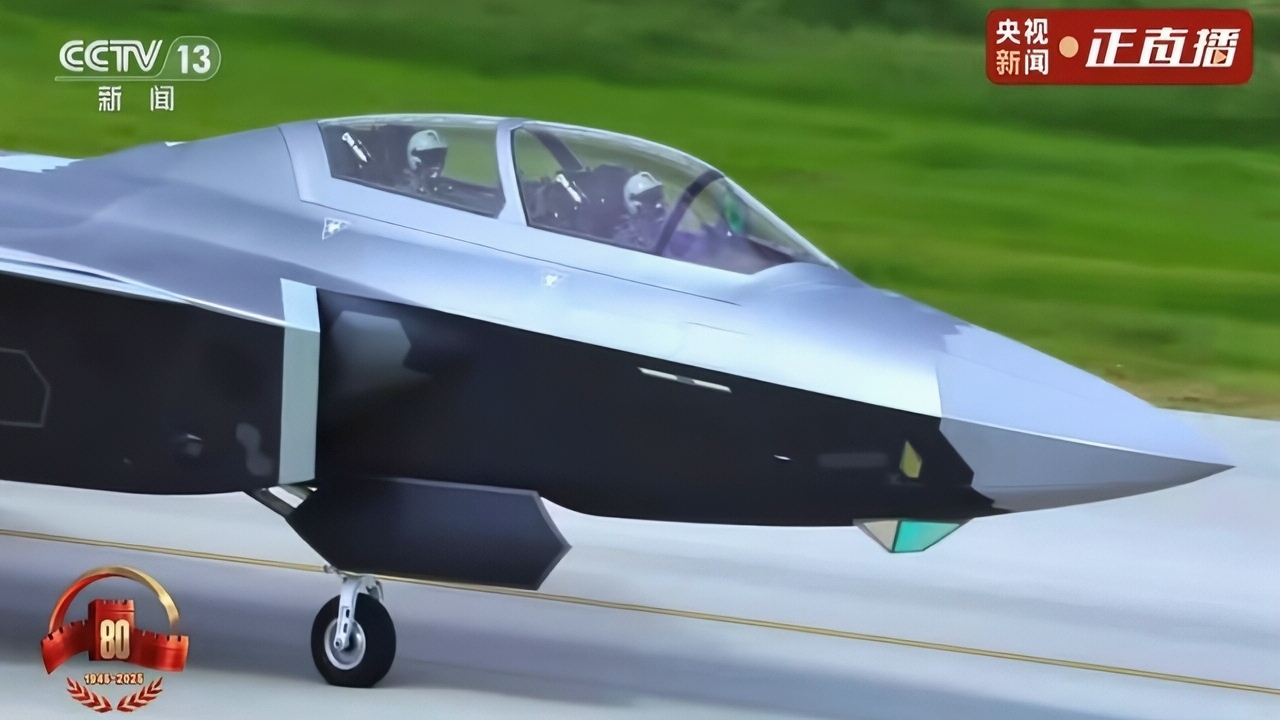
J-20 Fighter CCTV Screen Pull. Imave Credit: Creative Commons.

J-20 Fighter from Chinese PLAAF. Image Credit: Creative Commons.

J-20 Stealth Fighter Landing. Image Credit: Chinese PLAAF.
China’s J-20 Fighter vs. Taiwan’s New F-16V
The F-16V is the most advanced variant of the F-16 Fighting Falcon. It is also the most advanced aircraft currently fielded by Taiwan. The F-16V is a multi-role aircraft that incorporates many advanced avionics and improvements, putting it firmly in the 4.5-generation category.
Going against the numerically superior PLAAF, however, the F-16V has a herculean task ahead of it.
The Chengdu J-20 Mighty Dragon is China’s first fifth-generation stealth fighter, and currently the PLAAF’s most formidable fighter. Does the F-16V have what it takes to take on the J-20, or will China dominate the skies over Taiwan?
Stealth Capabilities
Stealth is the elephant in the room permeating any discussion of modern aviation.
The F‑16V, despite its many upgrades, lacks true stealth shaping and carries weapons externally, which increases its radar signature.
Its survivability depends on electronic warfare systems, speed, maneuverability, and support from external assets such as airborne early warning aircraft.
This makes it more susceptible to enemy radar and tracking systems, making it especially vulnerable in a war with China. While stealth is not inherently decisive, the lack of stealth systems puts the F-16V at a distinct disadvantage.
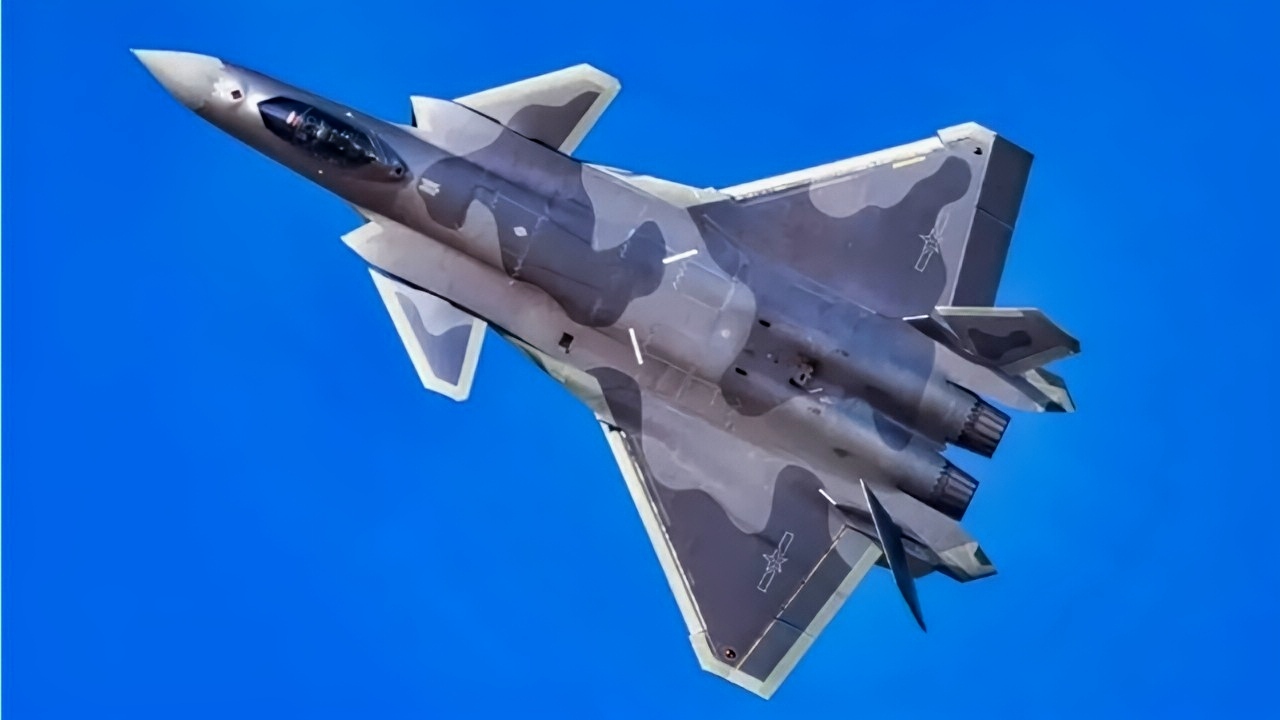
China J-20 Mighty Dragon in 2021. Image Credit: Chinese Internet.
By comparison, the J‑20 is a stealth fighter through and through. It incorporates radar-absorbing materials, internal weapons bays, and carefully shaped structures like diverterless supersonic inlets to minimize radar detection.
This allows the J‑20 to approach enemy aircraft with a much lower risk of detection, giving it greater control over the timing and positioning of an engagement. The canard layout on the J-20 has long been a point of criticism against the aircraft.
However, the canards on the aircraft are blended seamlessly into its structure. With proper edge treatment, the canards do not appear to produce spikes in radar returns, at least according to simulations.
Sensors and Avionics
In terms of sensors and avionics, both aircraft are well equipped. The F‑16V’s AN/APG‑83 AESA radar is a significant improvement over earlier systems, offering strong target tracking, resistance to jamming, and the ability to engage multiple targets while still performing other mission tasks.
It also uses the AN/ALQ-254(V)1 Viper Shield electronic warfare suite, which provides the aircraft with a degree of survivability despite lacking any form of stealth. The Viper Shield serves as an electronic shield, using digital decoys to confuse tracking radars and jam incoming missiles.
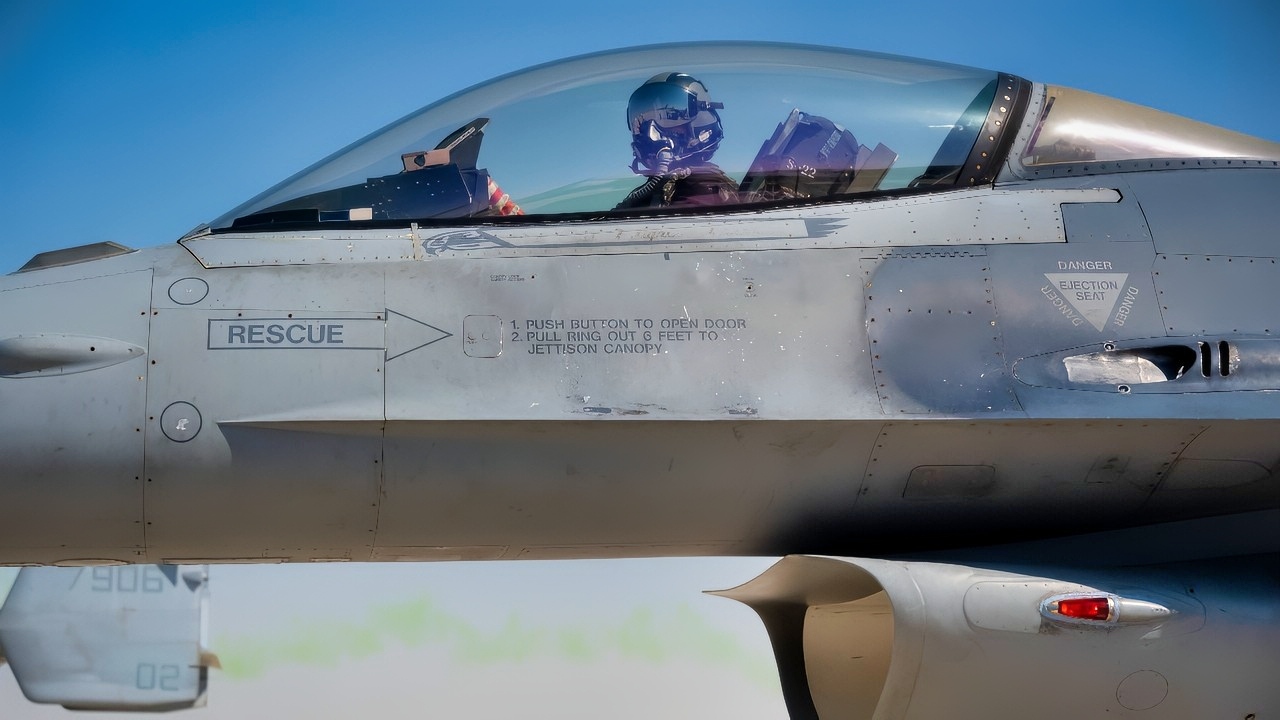
U.S. Air Force Maj. Josiah “Sirius” Gaffney, Pacific Air Forces Demonstration Team commander, prepares to fly a practice sortie before the Dubai Airshow in Dubai, United Arab Emirates, Nov. 11, 2021. In addition to the PACAF F-16 Demonstration Team routine, the air show will highlight a variety of U.S. Air Force, Navy and Marine Corps aircraft showcasing the range of U.S. military airpower capabilities. (U.S. Air Force photo by Staff Sgt. Matthew Kakaris)
The F-16V also shares components with fifth-generation aircraft such as the F-22 and F-35, meaning it leverages fifth-generation technologies despite using a fourth-generation platform.
Less is known about the J-20’s avionics. The aircraft utilizes a broader sensor suite that includes an AESA radar, infrared search-and-track (IRST) systems, and sensor fusion technologies that combine data from multiple sources into a single tactical picture.
This enables the J‑20 to detect threats passively, without emitting radar signals, thereby reducing its exposure while maintaining high situational awareness. In modern aerial warfare, where information dominance often determines the outcome before weapons are even fired, this capability is a decisive factor.
Weaponry and Flight Performance
In this specific matchup, weapons are just as important to consider.
The F‑16V typically carries AIM‑120 AMRAAM missiles for beyond-visual-range combat, with an effective range of around 120 kilometers, as well as AIM‑9X missiles for close-range engagements. While these are highly capable and combat-proven weapons, the J‑20 carries PL‑15 long-range missiles with estimated ranges exceeding 200 kilometers, as well as PL‑10 short-range missiles.
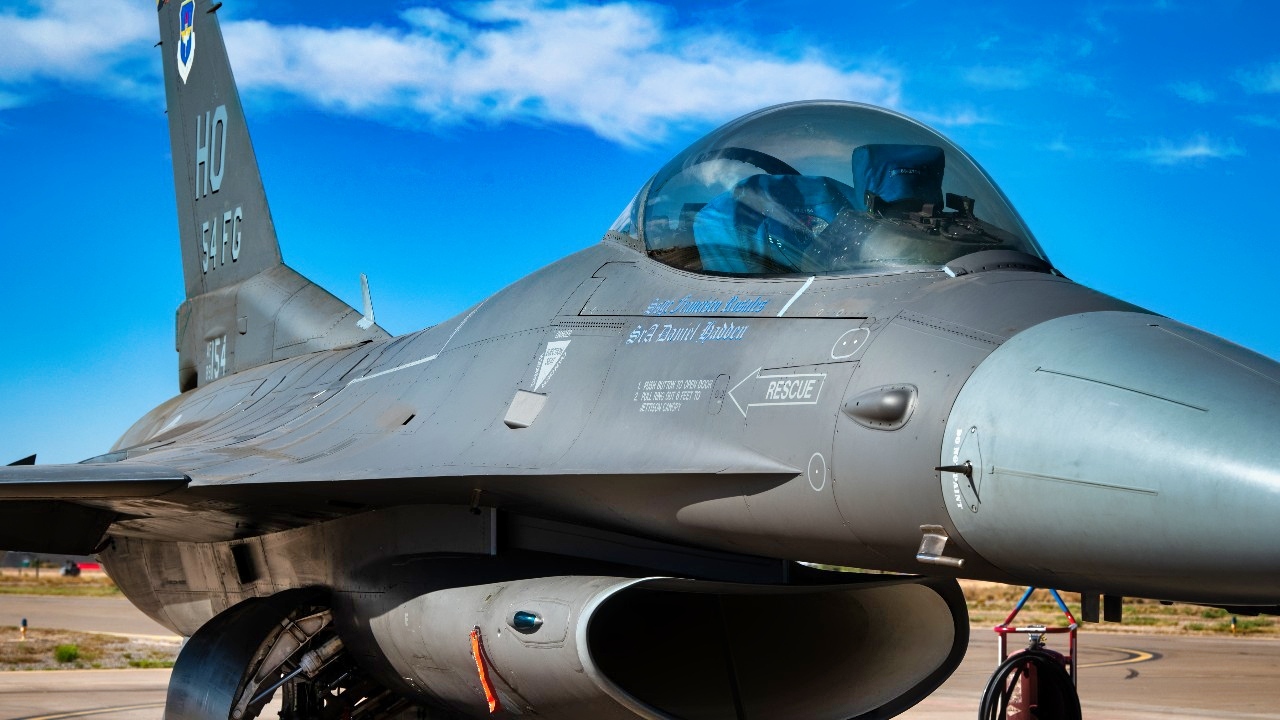
An F-16 Fighting Falcon assigned to the 54th Fighter Group sits on the flightline at Holloman Air Force Base, May 1, 2025. The F-16 was the first production aircraft with a fly-by-wire flight control system, meaning it’s controlled electronically instead of with direct mechanical linkages, allowing for more precise and safer maneuvers. (U.S. Air Force photo by Staff Sgt. Gaspar A. Cortez)
Because the J‑20 stores its weapons internally, it can maintain its stealth profile while armed, unlike the F‑16V, which becomes more visible when fully loaded. This difference allows the J‑20 to potentially engage adversaries from greater distances while remaining difficult to detect.
In terms of raw performance, both aircraft are comparable in some respects but diverge in others. Their top speeds are roughly the same, each around Mach 2. The F‑16, however, has long been known for its exceptional maneuverability, capable of sustaining high‑G turns and performing well in close-combat scenarios.
The J‑20, being a larger and heavier aircraft with a design optimized for stealth and long-range operations, is not as much of an acrobat, although improvements in engine technology and potential thrust-vectoring may be narrowing that gap. At the same time, the J‑20 benefits from a larger fuel capacity and longer combat radius, allowing it to operate farther from its base and remain on station longer.
Which Fighter Wins?
The F-16V is a highly capable fighter, but it is outmatched compared to the J-20 in most scenarios. In a long-range engagement, the J‑20’s stealth and superior missile reach would likely allow it to detect and fire on the F‑16V first, potentially before the latter is even aware of the threat.
This “first look, first shot” dynamic defines much of modern air combat and gives the J‑20 a clear advantage.
However, if the F‑16V manages to survive long enough to close the distance and enter a dogfight, its agility, high off-boresight weapons, and pilot visibility could allow it to compete effectively or even gain the upper hand.
About the Author: Isaac Seitz
Isaac Seitz, a Defense Columnist, graduated from Patrick Henry College’s Strategic Intelligence and National Security program. He has also studied Russian at Middlebury Language Schools and has worked as an intelligence Analyst in the private sector.


