
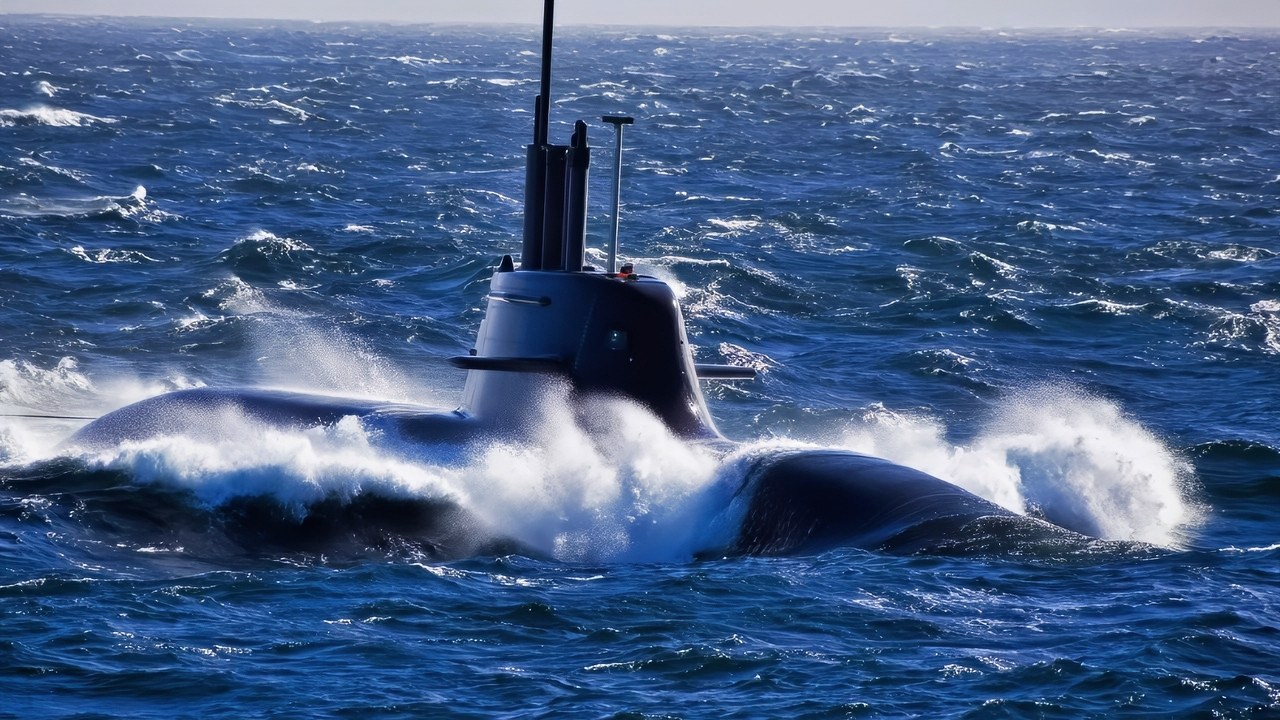
A Greek Hellenic Navy Type-214 submarine surfaced in the Aegean Sea after becoming entangled — or potentially nearly entangled — with the nets of a civilian fishing trawler. The incident occurred during the Kataigis 26 (“Storm 26”) naval exercise on Thursday. The submarine was operating submerged in waters between Andros and Tinos when it detected a nearby fishing vessel.
A Greek Submarine Has a Fishing Net Problem
A Hellenic Navy submarine participating in one of Greece’s largest annual military exercises was forced to surface in the Aegean Sea on Thursday after becoming entangled, or potentially nearly entangled, with the nets of a civilian fishing trawler operating near the island of Andros.
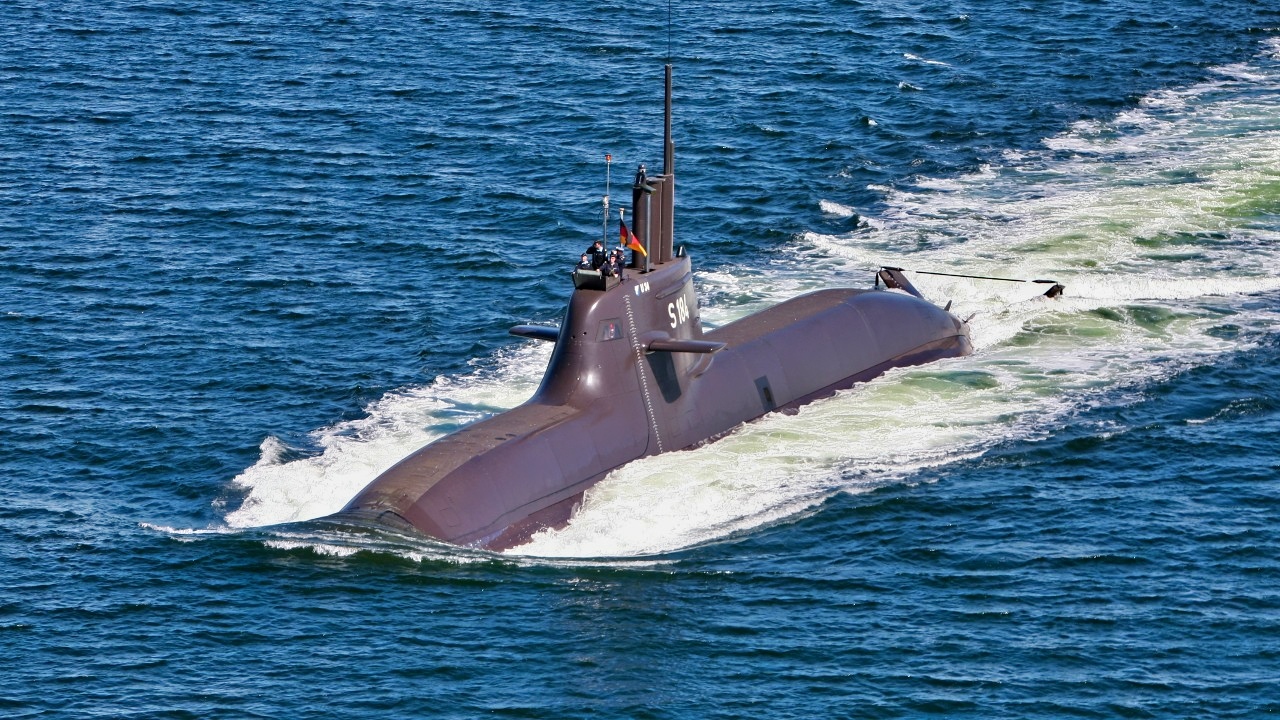
Type 212A. Image Credit: Creative Commons.
The unusual incident occurred during the ongoing Kataigis 26 (“Storm 26”) naval exercise and immediately attracted national media attention in Greece because of both the rarity of the event and the strategic importance of the submarines involved.
Greek naval officials later confirmed the submarine returned to operations after inspections found no apparent damage to its propulsion system.
According to the Hellenic Navy, the submarine was operating submerged Thursday morning in waters between Andros and Tinos in the Cyclades island chain when it detected the presence of a nearby fishing vessel and “took all required security actions.”
Initial Greek media reports suggested the submarine’s propeller or screw had become caught in the fishing nets of a trawler operating in the area, temporarily immobilizing the vessel before it surfaced for inspection.
“The submarine resumed its participation in the exercise as normal,” the Navy said in a statement reported by Greek media.
The statement also said that Kataigis 26 involves “realistic scenarios in areas with heavy shipping traffic” – a detail that is particularly relevant given the location of the incident in one of the Mediterranean’s busiest maritime corridors.
Submarine Surfaced for Inspections Near Andros
The incident reportedly occurred north of Tinos, near Andros, an area frequently used by both civilian fishing vessels and commercial maritime traffic in the central Aegean.
According to local reports, the submarine surfaced following concerns that netting may have become trapped around the vessel’s propulsion system.
Divers and inspection teams reportedly examined the submarine externally after it surfaced, and later inspections allegedly showed it was free of cables and fishing gear, allowing it to continue operations.
The local media reports also confirmed that no injuries were recorded among either the submarine crew or the fishing vessel’s personnel.
Authorities also reported no significant damage to the submarine itself.
Although unusual, the incident highlighted a longstanding operational challenge for submarines operating in enclosed or crowded waters.
Everything from fishing nets and undersea cables to civilian shipping and maritime congestion all create hazards for submerged vessels, particularly in regions like the Aegean, where commercial, fishing, tourism, and military traffic frequently overlap in confined waters.
Modern submarines rely heavily on sonar and navigational data while submerged, but physical objects remain a constant concern in real-world operations.
The Andros region itself has already seen several maritime incidents this month. On May 6, reports described how a Vanuatu-flagged cargo ship carrying baking soda sank off Andros after reportedly striking rocks, prompting a large Greek coast guard rescue and anti-pollution operation.
Greece’s Submarine Fleet Is Central to Aegean Deterrence
While Greek officials have not publicly identified the submarine involved in the incident – which should come as no surprise – much of the reporting surrounding the incident focused on Greece’s advanced Type-214 submarines, also known as the Papanikolis class, which form one of the Hellenic Navy’s most strategically important naval assets.
Greece currently operates four Type-214 submarines: HS Papanikolis, HS Pipinos, HS Matrozos, and HS Katsonis.
The submarines were designed by Germany’s ThyssenKrupp Marine Systems and incorporate air-independent propulsion technology, allowing them to remain submerged for longer periods while operating far more quietly than many older diesel-electric submarines.
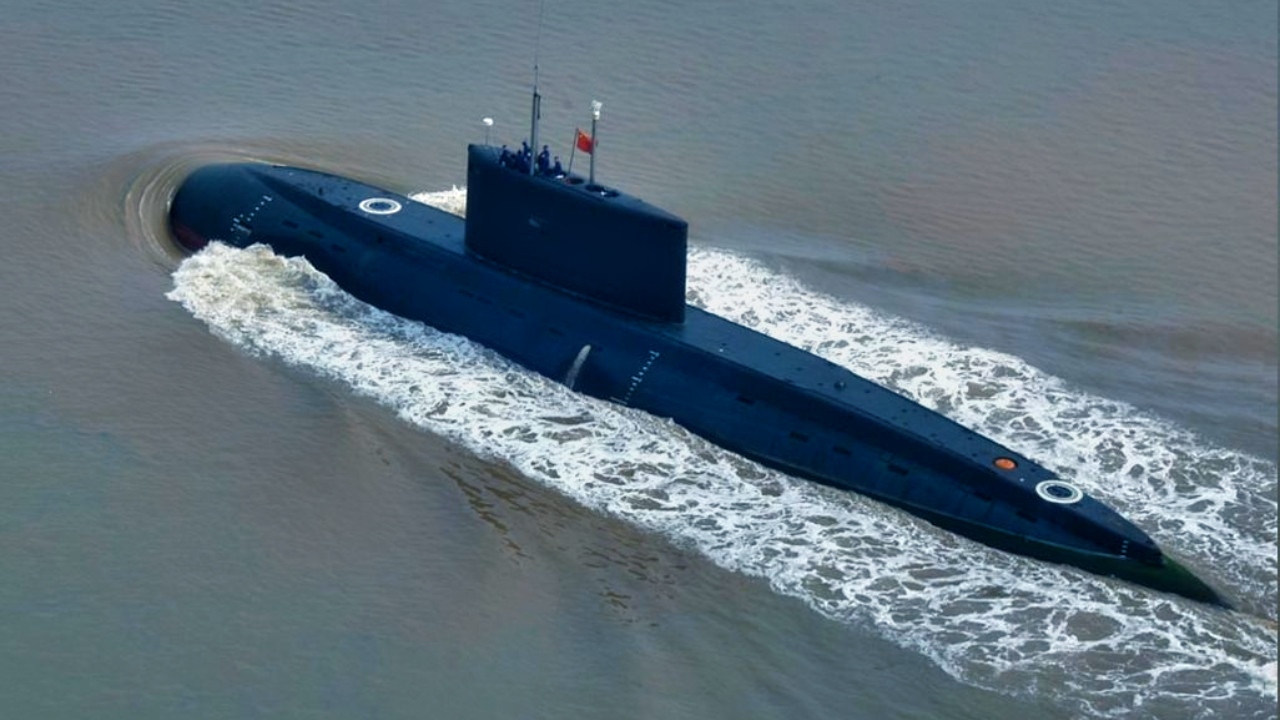
Kilo-Class Submarine. Image Credit: Creative Commons.

Russian Kilo-Class Submarine. Image Credit: Creative Commons.
The design is particularly well-suited to the geography of the Aegean Sea, where narrow waterways, island chains, and shallow waters complicate anti-submarine warfare operations.
Submarines are also among Greece’s primary asymmetric military advantages against neighboring Turkey, with whom Athens maintains disputes over territorial waters and energy exploitation rights in the Aegean and the eastern Mediterranean.
Naval competition between the two NATO members has intensified significantly in recent years as both countries continue to modernize their fleets.
What’s Next
The Hellenic Navy is currently undergoing one of its largest modernization programs in decades.
Greece formally commissioned its first French-built Kimon-class frigate earlier this year, part of a broader naval expansion effort designed to strengthen both anti-air and anti-submarine warfare capabilities in the eastern Mediterranean.
The Kimon-class ships are based on France’s FDI HN frigate design developed by Naval Group and are expected to become some of the most heavily armed warships ever operated by Greece.
The vessels will carry Sea Fire active electronically scanned array radars, Aster-30 surface-to-air missiles, Exocet anti-ship missiles, MU90 torpedoes, and advanced anti-submarine warfare systems.
They will also support MH-60R Seahawk helicopters acquired from the United States. Athens plans to procure at least three Kimon-class frigates under its current agreement with France, with the lead vessel, HS Kimon, expected to become fully operational later this decade as regional naval competition intensifies across the eastern Mediterranean.
About the Author: Jack Buckby
Jack Buckby is a British researcher and analyst specializing in defense and national security, based in New York. His work focuses on military capability, procurement, and strategic competition, producing and editing analysis for policy and defense audiences. He brings extensive editorial experience, with a career output spanning over 1,000 articles at 19FortyFive and National Security Journal, and has previously authored books and papers on extremism and deradicalization.


