

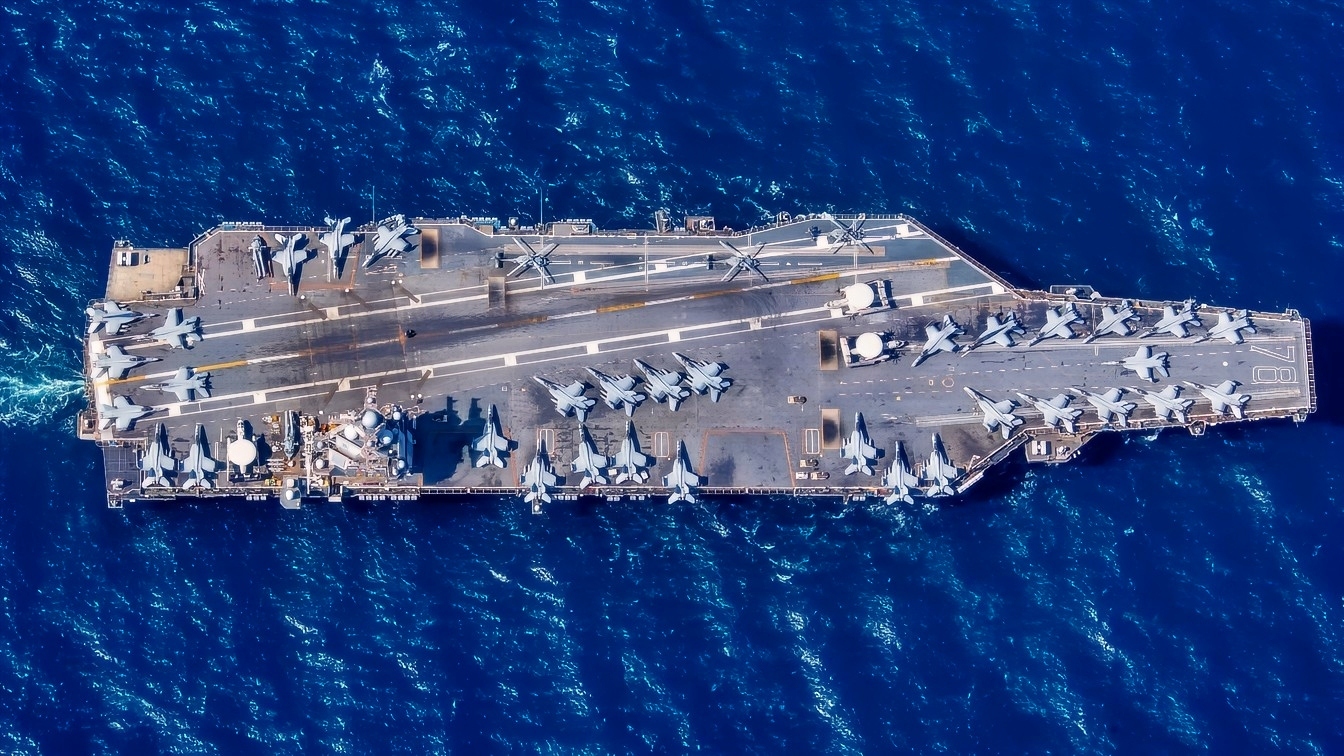
Iran Has Effectively Closed the Strait of Hormuz Again. Just 3 Commodity Ships Crossed in One Day: Iran has again reduced commercial traffic through the Strait of Hormuz to a near-standstill, despite competing claims from Washington and Tehran over who controls the waterway. A CNBC report on the renewed shutdown described shipping as stalled after Iran declared the strait closed again during the latest round of fighting.
Only three commodity vessels crossed the strait on Thursday, July 16, the lowest daily number since May, according to ship-tracking data reviewed by Reuters. Before the war, an average of roughly 125 vessels crossed each day. No very large crude carriers or liquefied natural gas tankers passed through for a second consecutive day.
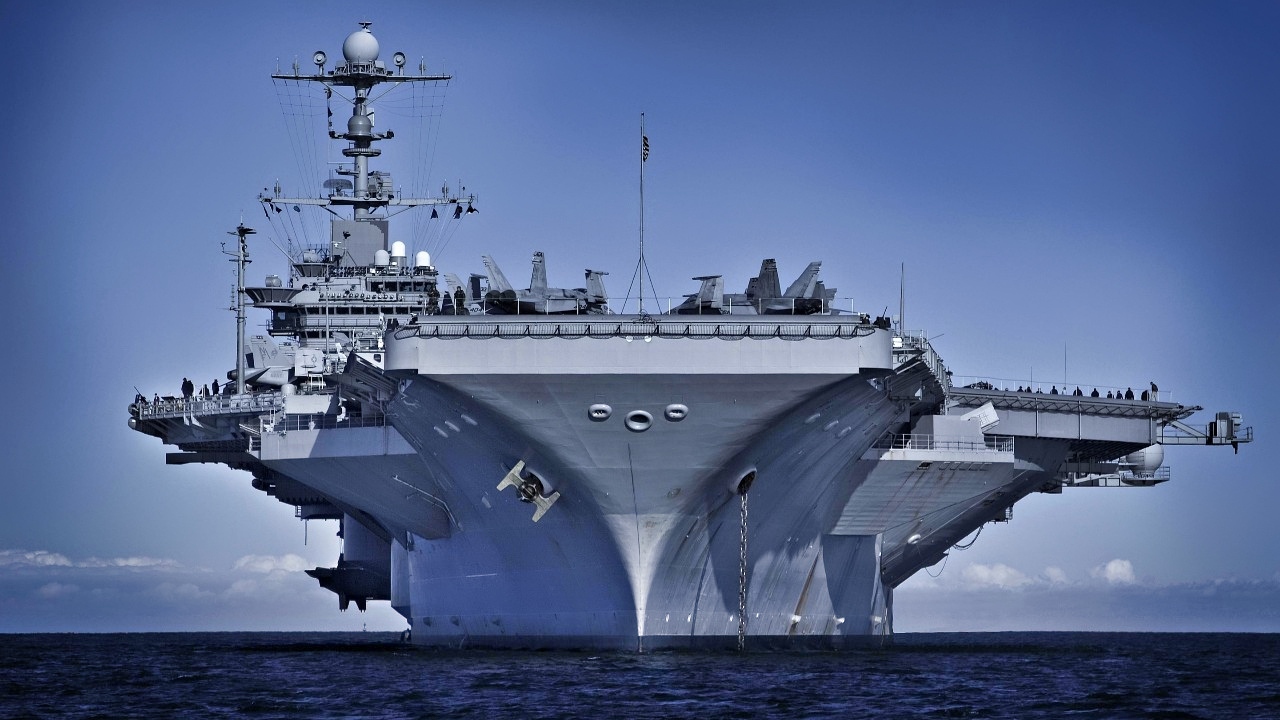
NRL is currently working with Naval Sea Systems Command, Naval Systems Engineering Directorate, Ship Integrity & Performance Engineering (SEA 05P) to transition the new pigment combination into a military specification. The most recent vessel to receive it was USS George Washington (CVN 73).
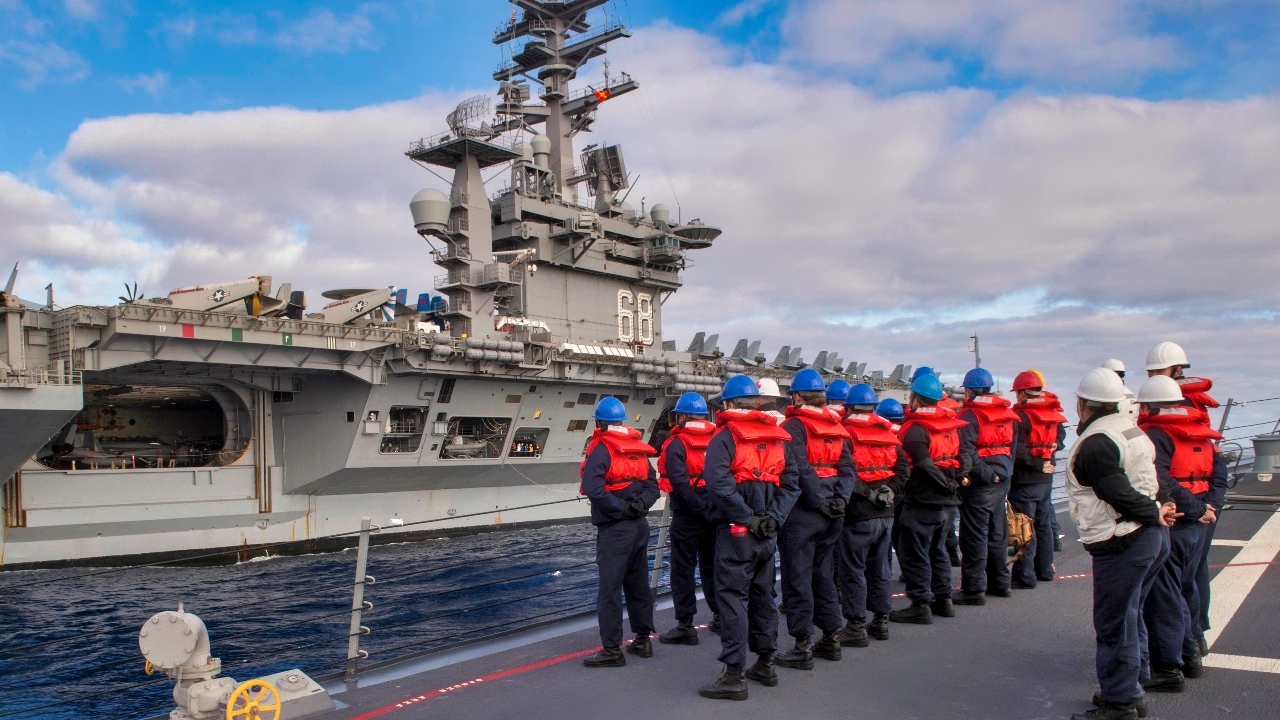
(June 11, 2017) Sailors aboard the Arleigh Burke-class guided-missile destroyer USS Pinckney (DDG 91) stand in formation as the ship pulls alongside the aircraft carrier USS Nimitz (CVN 68) to conduct a replenishment-at-sea. The Pinckney is currently underway as part of the Nimitz Carrier Strike Group on a regularly scheduled deployment to the Western Pacific and Indian Oceans. (U.S. Navy photo by Mass Communication Specialist 2nd Class Craig Z. Rodarte/Released)
The vessels that did move offered little evidence of normal trade. Two ships exited via the Iranian route and then stopped in the Gulf of Oman. Another tanker carrying Iraqi fuel oil turned around and headed back into the Persian Gulf. Iran’s Revolutionary Guards said no oil or gas would leave through Hormuz while U.S. attacks continued.
Several shipping companies are also refusing U.S.-guided passages. Reuters reported that operators rejected military-assisted transits after five vessels were attacked beginning July 7, judging that the danger to crews and tankers remained too high.
Iran Does Not Need a Formal Closure to Stop Shipping
The practical condition of Hormuz is set by shipowners, captains, insurers, and charterers rather than by declarations from either government.
The International Maritime Organization had recorded 58 confirmed regional maritime incidents and 17 seafarer deaths by July 17. A waterway can remain technically open while commercial operators decide that crossing it is unacceptable.
That was already visible when daily traffic fell from about 130 ships to approximately 10 during the earlier phase of the crisis. Brief recoveries never restored the old rhythm. Even when oil began moving through Hormuz again, mines, insurance costs, stranded vessels, and uncertain security guarantees continued to restrict traffic.
Iran’s leverage comes from treating each transit as a separate risk decision. Tehran does not need to seal the strait completely when the possibility of a mine, missile, drone, or boarding operation is enough to stop a multibillion-dollar flow of energy.
The United States Can Strike Iran Without Reopening Hormuz
U.S. forces have targeted Iranian coastal radars, missile facilities, air defenses, naval capabilities, and logistics sites. CENTCOM’s July operational releases describe the campaign as an effort to reduce Iran’s ability to threaten commercial shipping and enforce the renewed blockade on Iranian trade.
Those attacks can destroy launchers and surveillance systems. They cannot guarantee that a civilian tanker will complete a passage without being targeted. The United States cannot remove the geography of Hormuz through airstrikes, and escorting every commercial vessel would demand far more naval capacity than Washington has assigned to the mission.
The limits of the escort effort were visible before the current collapse. A claimed operation involving hundreds of vessels still represented only a fraction of normal Hormuz oil traffic. The current refusal of some operators to join escorted groups shows that naval presence does not automatically restore commercial confidence.
Hormuz Is Again Driving Oil and Shipping Costs Higher
The Strait of Hormuz is the world’s most important oil transit chokepoint. The U.S. Energy Information Administration says Gulf exporters depend on the passage for large volumes of crude oil, refined products, and liquefied natural gas moving toward Asian and global markets.
Brent crude rose to a one-month high as U.S.-Iran attacks intensified and shipping fell, with Reuters reporting prices above $84 per barrel earlier in the week. Freight rates, war-risk insurance, and delays add costs even to cargoes that eventually make it through.
Alternative pipelines reduce exposure, but they do not replace the full Hormuz capacity. Terminals outside the strait can also become targets. The ongoing danger explains why large-scale protection of all commercial transit is beyond the available fleet’s capacity.
Iran and the United States Are Moving Further From Normal Traffic
The immediate trend points away from reopening. The United States launched an eighth consecutive night of strikes after Iranian attacks killed two American service members in Jordan. Iran has continued launching missiles and drones against U.S. forces and regional infrastructure while threatening additional action against energy exports.
Traffic could recover quickly after a durable agreement, but a political announcement would not be enough. Tanker owners would need credible passage rules, lower insurance premiums, functioning navigation systems, and evidence that attacks had ended. The success of any future settlement will be visible in tanker schedules, insurance rates, and sustained traffic, not competing statements from Washington and Tehran.
Three commodity ships in a day are not a functioning international energy corridor. Until large crude and LNG carriers resume regular crossings without turning back, Iran will retain the ability to disrupt Hormuz even while the United States says the strait is open.
About the Author: Harry J. Kazianis
Harry J. Kazianis (@Grecianformula) was the former Senior Director of National Security Affairs at the Center for the National Interest (CFTNI), a foreign policy think tank founded by Richard Nixon based in Washington, DC. Harry has over a decade of experience in think tanks and national security publishing. His ideas have been published in the NY Times, The Washington Post, The Wall Street Journal, CNN, and many other outlets worldwide. He has held positions at CSIS, the Heritage Foundation, the University of Nottingham, and several other institutions related to national security research and studies. He is the former Executive Editor of the National Interest and the Diplomat. He holds a Master’s degree focusing on international affairs from Harvard University.


