

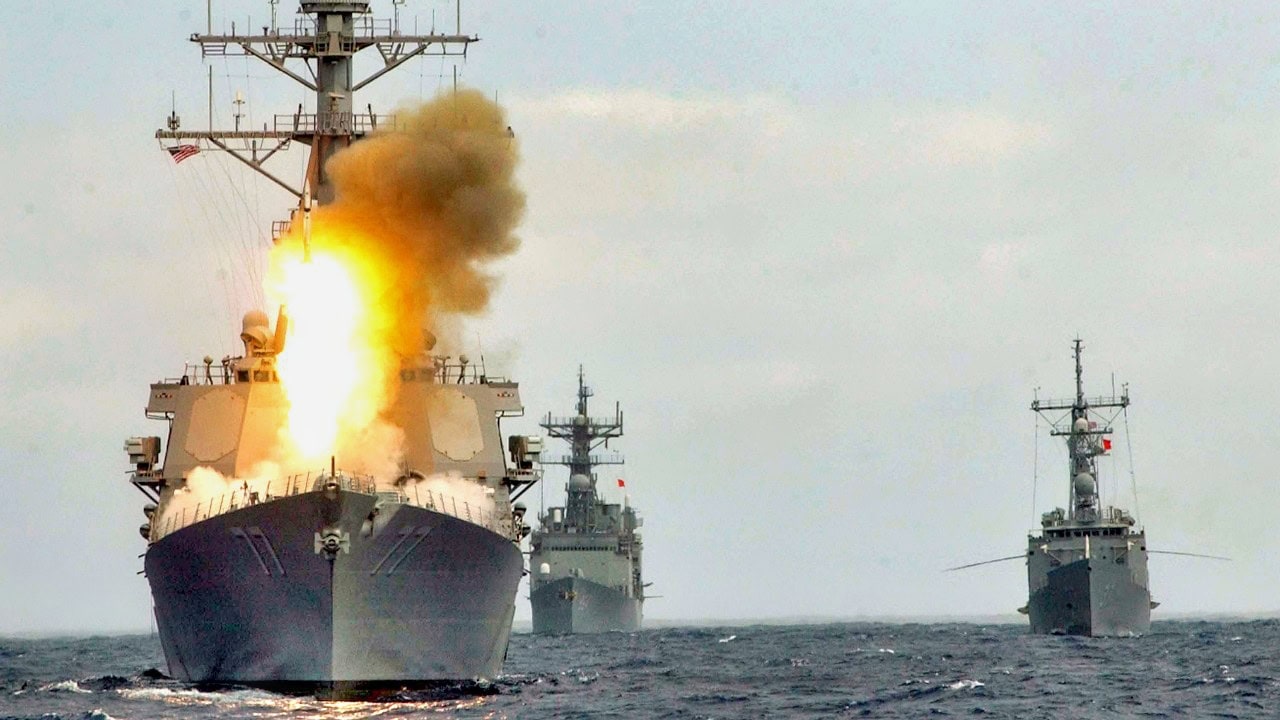
The Islamic Republic of Iran has continued to demand that any ship passing through the narrow Strait of Hormuz must pay the Iranian government a toll.
The ISW reported that “Iran continues to try to frame the Islamic Revolutionary Guards Corps (IRGC) ‘management’ of transit through the Strait of Hormuz as the new status quo.” Tehran threatens to target any non-compliant vessels or Western military forces operating in the critical waterway.
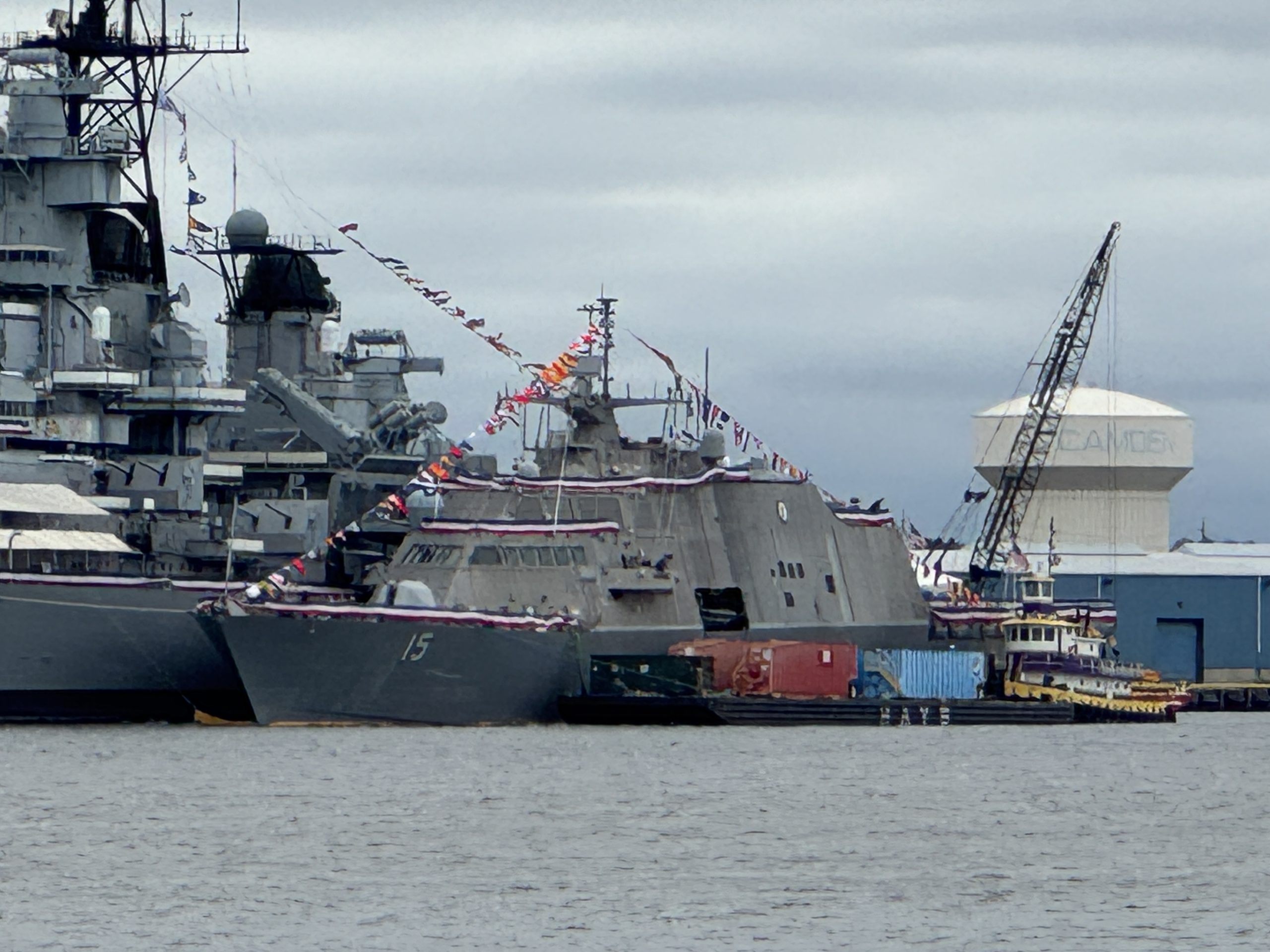
USS Billings. National Security Journal Original Photo.
While the common misconception is that no traffic has passed through the Strait, many ships have done so, with two-thirds of them sneaking past Iranian defenses by “going dark.”
The ships are essentially switching off their Automatic Identification System (AIS) before and after transiting the strait, protecting themselves against Iranian missiles.
But many ask, “Why doesn’t the United States Navy just escort all of the tankers through the Strait of Hormuz?” The answer to that is both simple and complicated.
The Strait Is The Conduit For 20 Percent Of the World’s Oil
The strait is a vital choke point for roughly 20 percent of global oil and liquefied natural gas. Blocking it caused immediate spikes in global fuel prices, with certain crude grades soaring well over $100 a barrel.
Under international law, nations must permit the peaceful passage of the strait. By refusing to give it up, Iran has sought to establish state agencies that compel commercial ships to navigate designated northern vetting lanes near the Iranian coast, requiring them to pay fees and tax their cargo.
When Iran refuses to allow passage through the Strait of Hormuz, it triggers an international crisis featuring cascading global shortages, blockades, and the threat of renewed military escalation.
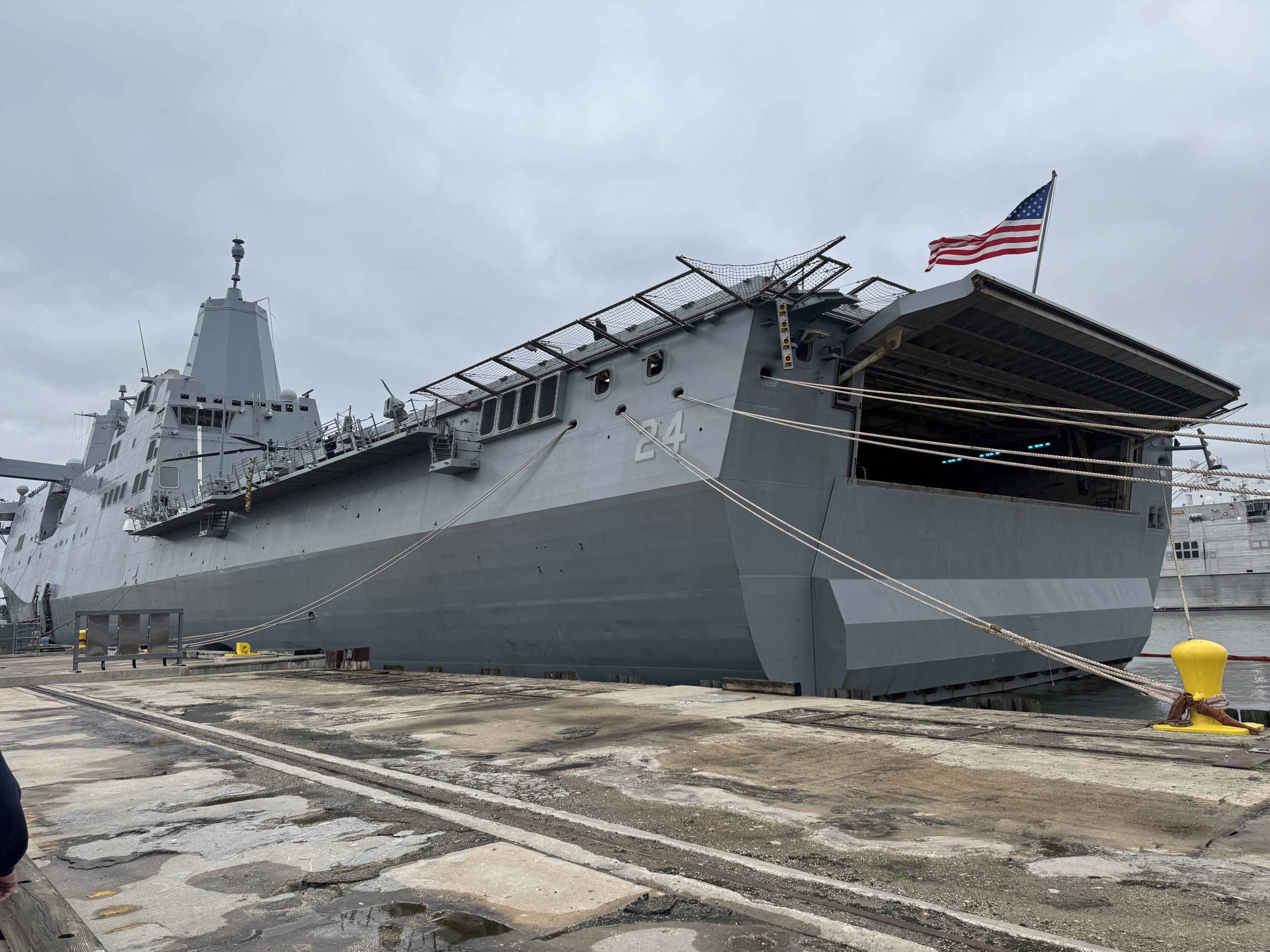
USS Arlington. National Security Journal Original Photo.
Iran’s Navy and Islamic Revolutionary Guard Corps (IRGC) have utilized small fast-attack craft, submarines, and anti-ship missiles in attempts to close the Strait. However, the most effective method has been to lay sea mines, making the route too dangerous for commercial oil tanker traffic.
Why Doesn’t The US Navy Provide Escorts Through The Strait?
While the Navy has intermittently conducted escort operations, such as “Project Freedom,” to protect commercial and neutral vessels navigating the Strait of Hormuz during the ongoing conflict, the U.S. military has noted that continuous, widespread escorts are heavily constrained by the high-threat environment and logistical challenges.
However, over 40 stranded tankers are quietly coordinating with the US Navy to try to safely navigate, as the Navy will work to intercept any Iranian missiles fired at the tankers.
“Transit decisions remain solely with ship operators,” Richard Meade, the editor-in-chief of Lloyd’s List Intelligence, said. “Industry operators tell us that they are not being centrally coordinated.”
The Navy Lacks The Number Of Ships To Escort All Tanker Traffic
Escorting commercial ships through heavily contested chokepoints, like the Strait of Hormuz, would exceed the capacity of the US Navy in the Gulf.

Littoral Combat Ship Gun Close. Image Credit: Stephen Silver/National Security Journal.
The Navy lacks the fleet capacity to handle the sheer volume of global traffic, and placing warships in narrow waterways makes them highly vulnerable targets.
An average of 100 to 135 tankers pass through the Strait of Hormuz daily. Escorting all of them would require 40 to 50 guided-missile destroyers, which is a significant portion of the entire US Navy fleet. The Navy’s Chief of Naval Operations has stated that this demand would vastly exceed the Navy’s capabilities.
“There are many things we can continue doing to enhance the blockade, but to actually start doing something where I’m providing escort services through a contested Strait will, in my military opinion, exceed the capacity of the Navy to do that effectively,” Chief of Naval Operations Adm. Daryl Caudle told members of the Senate Appropriations Committee back in late May.
“If we go try to do an escort with that, we have looked into that,” Caudle added. “That’s a very challenging mission in that narrow strait when it’s contested, and so when you’re in a contested environment to de-mine the Strait of Hormuz or to do escort duty, it’s not something that’s easy to do.
“So we’re going to have to get to a place where the Strait is open with a generally accepted ceasefire before that can be turned on en masse.”
Iran’s Missile Threat In The Strait
The Strait is extremely narrow, meaning predictable shipping lanes place large, slow-moving merchant vessels and naval escorts well within the striking distance of Iranian coastal artillery, drones, and anti-ship missiles.
Military destroyers actually face a high risk of catastrophic damage should they strike a single naval mine.
Because Iran controls the narrow waterway’s northern coastline, its mobile anti-ship cruise and ballistic missiles, alongside a massive arsenal of drones and naval mines, pose a credible threat.
Defense officials note that shore-based missiles are the largest direct threat to merchant shipping in the Strait. These missiles are easily dispersed, hidden in mountainous terrain, and launched from mobile platforms, making them significantly difficult for U.S. and allied forces to completely neutralize.
NATO Members May Help Escort Tankers Through The Strait
NATO members are currently discussing the deployment of a multinational naval mission to escort commercial ships through the Strait of Hormuz, though a formal, unified alliance operation has not yet been finalized.
The idea is gaining wider international support, as both NATO members and non-NATO partners such as Japan, South Korea, Australia, New Zealand, and the UAE are considering participating in the escorting and demining of the Strait.
While NATO nations pledged to remain out of the current US/Israel/Iran conflict, the economic hardships, coupled with the price of oil, have them rethinking the opening of the Strait to tanker traffic.
NATO members will meet in Ankara, Turkey, on July 7-8 to discuss this. The
U.S. Strategy Has Been More Deterrence Than Escort-Based
The US military’s focus has been focused on broad strategic deterrence and degrading Iran’s offensive capabilities rather than individual vessel escorts. Sending high-value warships to escort tankers in the narrow Strait can backfire, potentially drawing US forces into avoidable, short-range engagements.
Due to the close proximity to the shore, the Navy’s ships would have little reaction time to counter missile attacks. The US Navy doesn’t want to, nor needs to, place its warships unnecessarily in danger.
About the Author: Steve Balestrieri
Steve Balestrieri is a National Security Columnist. He served as a US Army Special Forces NCO and Warrant Officer. In addition to writing on defense, he covers the NFL for PatsFans.com and is a member of the Pro Football Writers of America (PFWA). His work was regularly featured in many military publications.


