

Key Points and Summary – A retrospective on a 2013 NATO exercise highlights a stunning simulated victory for the U.S. submarine force.
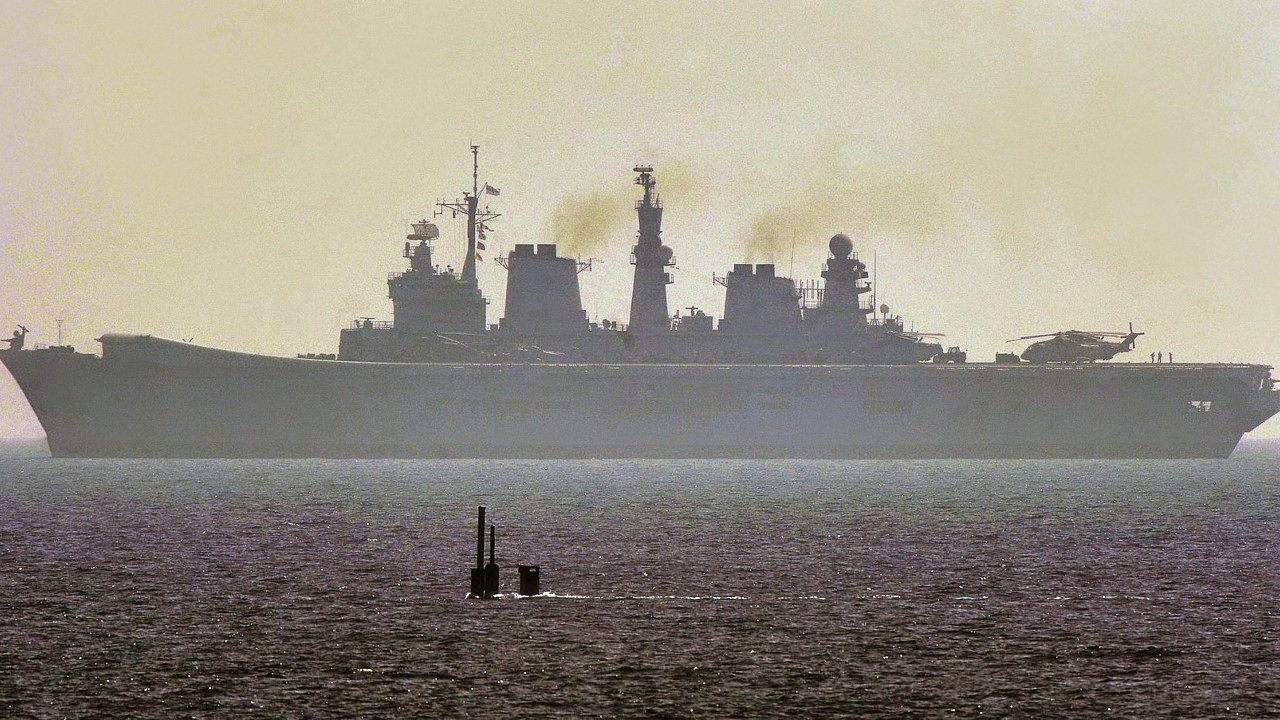
-In the drill, the Los Angeles-class attack submarine USS Dallas was tasked with penetrating a dense anti-submarine screen protecting the British aircraft carrier HMS Illustrious.
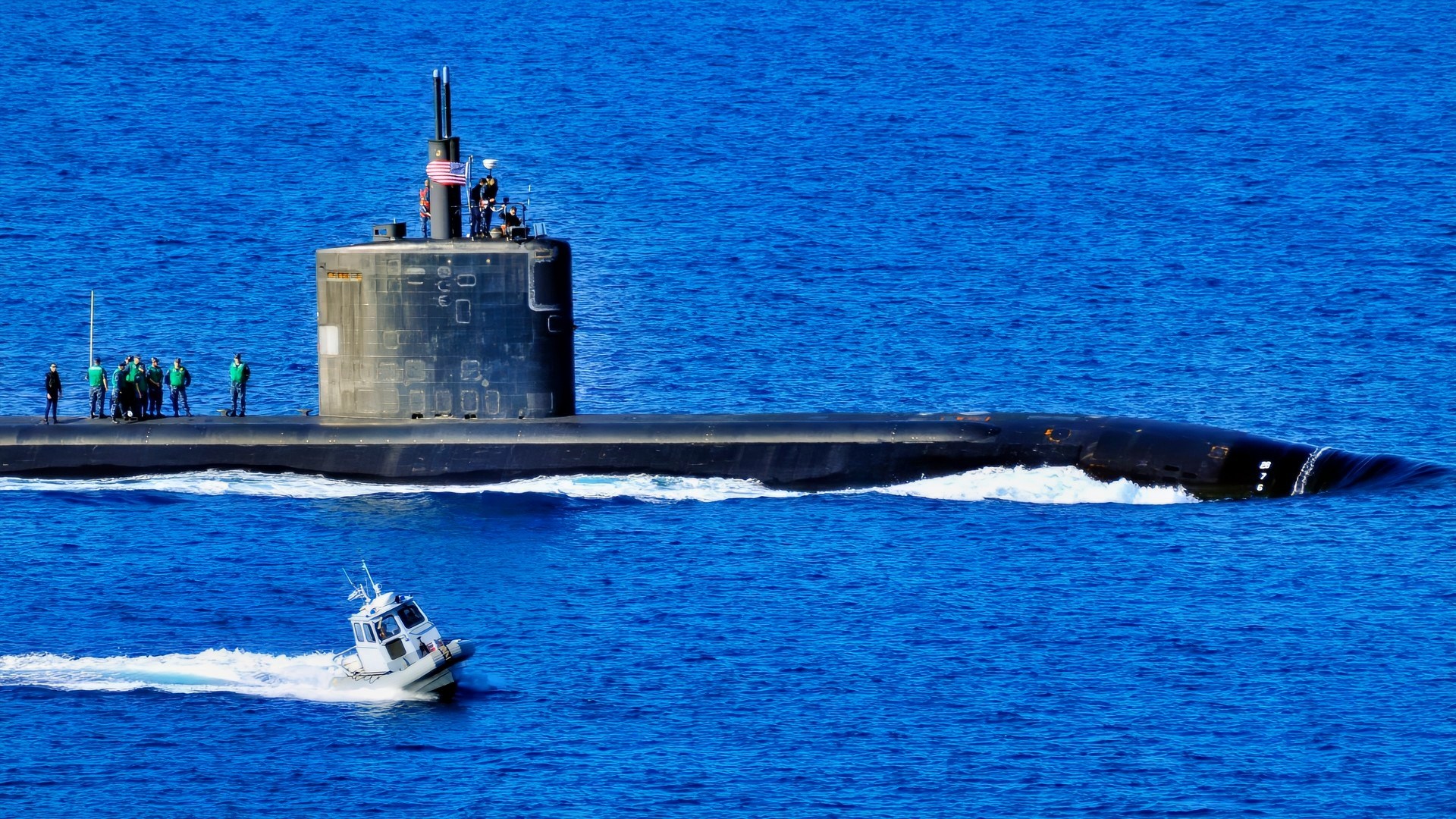
Los Angeles-Class Submarine USS Dallas. Image Credit: Creative Commons.
-Despite the defenders’ massive advantage, the American crew successfully slipped past the warships and helicopters undetected.
-The Dallas then scored notional torpedo “hits,” effectively “sinking” the carrier. The outcome is celebrated as a testament to the elite training and professionalism of the U.S. Navy’s “Silent Service.”
The Time an American Submarine ‘Sank’ a British Aircraft Carrier
High-quality combined arms and joint training are exemplified by military exercises involving NATO countries.
Many partner militaries gain valuable experience by participating in drills involving the armies, navies, and air forces of the alliance. Some of the most harrowing “battles” result from NATO simulations that provide this kind of realistic training.
The following example caught our attention and should be viewed as a bellwether case of two notional adversaries engaging in a water-based conflict, both underwater and on the surface.
I’m referring to an encounter that involved a British aircraft carrier and an American submarine. The boat got the best of the flat-top and “sank” it in a NATO drill. It happened in 2013 in the Arabian Sea. The “winner” was the Los Angeles-class submarine USS Dallas, and the “loser” was the HMS Illustrious.
The People Involved Were Some of the Best In the Business
The crew and command team of the USS Dallas used every advantage the Los Angeles-class fast attack boat could muster. They needed all hands at battle stations in a gripping experience that showed the Americans performed at the highest level. Meanwhile, the sailors of the HMS Illustrious were some of the best of the Royal Navy.

Los Angeles-Class. Image Credit: Creative Commons.

APRA HARBOR, Guam (Jan. 17, 2023) – The Los Angeles-class fast-attack submarine USS Key West (SSN 722) departs Apra Harbor, Guam, Jan. 17. Key West is one of five submarines assigned to Commander, Submarine Squadron 15. Commander, Submarine Squadron 15 is responsible for providing training, material and personnel readiness support to multiple Los Angeles-class fast attack submarines and is located at Polaris Point, Naval Base Guam. (U.S. Navy photo by Lt. Eric Uhden)

PERSIAN GULF (March 20, 2009) The Los Angeles-class attack submarine USS Hartford (SSN 768) is underway in the Persian Gulf after a collision with the amphibious transport dock ship USS New Orleans (LPD 18). Hartford sustained damage to her sail,
but the propulsion plant of the nuclear-powered submarine was unaffected by
this collision. (U.S. Navy photo/Released)
The mission of the USS Dallas was to determine if a submarine could sneak through a gauntlet of anti-submarine assets, including sonobuoys, sonar searches from the carrier strike group, and anti-submarine aircraft. The Americans collectively took a deep breath and cracked on with their endeavor against the HMS Illustrious. Could the USS Dallas emerge victorious, or would the carrier get to declare a sunken submarine?
The US Navy Has Trained an Elite Silent Service
American submarine sailors are trained to the highest standards and are true silent service professionals, having passed rigorous tests at the prestigious basic Naval Submarine School in Groton, Connecticut. Officers and enlisted personnel attend the grueling advanced Nuclear Power School, which includes challenging mathematics and physics programs.
Many wash out and do not get the coveted undersea warfare qualification and rate.
But Could They Win When the Chips Were Down?
Now it was time for the enlisted personnel and officers to show their stuff.
The name of the game was stealth. Would the USS Dallas be quiet enough to sneak through the anti-submarine screen? The pressure was on. One mistake could lead to an embarrassed commander who would have to call no joy and admit that his sub was notionally destroyed with all hands lost.
Carrier Strike Group Ships Were Worthy Adversaries
The Illustrious was not the only ship the USS Dallas had to defend against. Replenishment vessels like the RFA Fort Victoria and RFA Fort Austin were playing an anti-submarine warfare role. British Merlin helicopters were in the sky to listen closely for enemy submarines.
The Fort Austin in this exercise was simulating a moored ship for easy pickings to draw the Dallas in.
The USS Bulkeley guided missile destroyer was also part of the defensive team, offering its own extensive anti-submarine capabilities, especially with one of its Seahawk helicopters.
This was going to be a tough competition, favoring the defenders with their extensive screening and detection force.
Finally, the USS Dallas was able to pierce this screen by running as quietly as a baby dolphin into firing range and scored “hits” with a notional torpedo strike.
It revealed that the British had some work to do in terms of anti-submarine warfare.
Also, the Americans on the USS Dallas should be given credit for performing at a high level in an attack that is likely studied at training schools to this day.
More About the Los Angeles-class
Los Angeles-class submarines are the “working class” of the undersea warfare community. They put the “fast” in fast attack, with a top speed of 28 knots, and can also deliver Tomahawk cruise missiles using Vertical Launch System tubes.
These boats are an improvement over the earlier Sturgeon-class boats built during the 1960s. The Los Angeles-class subs are 50 percent larger and, in addition, are stealthier and faster than the previous group. Forty-one Los Angeles-class boats are on active duty.
Los Angeles-class subs can infiltrate and exfiltrate SEALs, collect intelligence, surveillance, and reconnaissance data, serve as presidential assets when the White House calls for devastating Tomahawk attacks, and destroy surface vessels like the HMS Illustrious.
They can also lay sea mines.
Twenty-three of the Los Angeles-class subs specialize in patrolling under ice. Called the “Improved 688s,” these are perfect for keeping an eye on the strategic Arctic region and the North Atlantic. They can also fire Tomahawks.
The Los Angeles-class boats are excellent, but Virginia-class subs will eventually replace them. What’s the secret behind the USS Dallas’ “win” versus the Illustrious? The Dallas is undoubtedly a quality boat that is stealthy and runs true.
However, I like to focus on the human element of warfare that I highlighted in my book Humans, Machines, and Data: Future Trends of Warfare. The first line of that volume is “War is a human endeavor.” I went back to the training that American submarine personnel undergo just to serve on a sub.
These sailors are the best in the business and part of an elite community. It takes a special person to live in cramped quarters, never seeing the light of day for weeks, if not months, at a time. These sailors remain calm and keep their wits about them during the most challenging missions.
The simulated victory against the HMS Illustrious shows just how these individuals can rise to the occasion and win when the deck is stacked against them.
The USS Dallas’ crew did a remarkable job, and lessons learned from this exercise assuredly became a case study for further examination in training schools – maybe even the Naval War College.
Let’s hope the Los Angeles-class subs can be successful someday against Russian and Chinese ships if there is a real conflict. That’s why these NATO exercises are so important. Look for the alliance to have even more realistic training drills to simulate undersea warfare in the future.
About the Author: Brent M. Eastwood
Brent M. Eastwood, PhD is the author of Don’t Turn Your Back On the World: a Conservative Foreign Policy and Humans, Machines, and Data: Future Trends in Warfare plus two other books. Brent was the founder and CEO of a tech firm that predicted world events using artificial intelligence. He served as a legislative fellow for US Senator Tim Scott and advised the senator on defense and foreign policy issues. He has taught at American University, George Washington University, and George Mason University. Brent is a former US Army Infantry officer. He can be followed on X @BMEastwood.
More Military
Merkava: The Best Tank on Earth (Not Made in USA)
The U.S. Air Force’s Big B-21 Raider Stealth Bomber Mistake Still Stings
The U.S. Navy’s Big Ford-Class Aircraft Carrier Mistake Still Stings
Russia’s Admiral Kuznetsov Aircraft Carrier Can’t Stop Pumping Out Toxic Black Smoke
India’s Big Blunder Purchase of Russia’s ‘Mothball’ Aircraft Carrier Still Stings


