

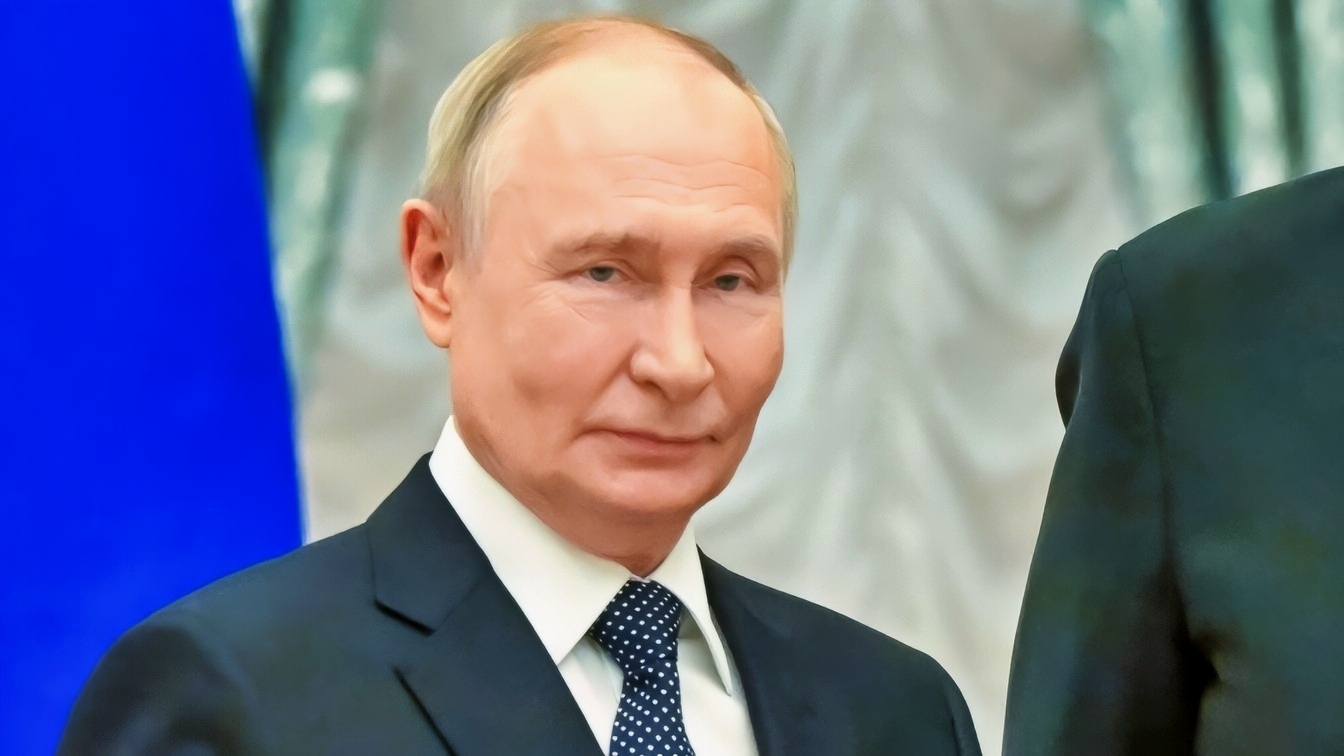
Russian President Vladimir Putin has used the threat of being “encircled” by NATO as a justification for his initial invasion of Ukraine in 2022.
This has led to occasional fears that Putin could attempt some sort of military invasion on NATO’s Eastern flank, something that has not happened thus far in the war, although on a couple of occasions Russian drones have crossed the border into the airspace of Poland and Romania, which are NATO member states.
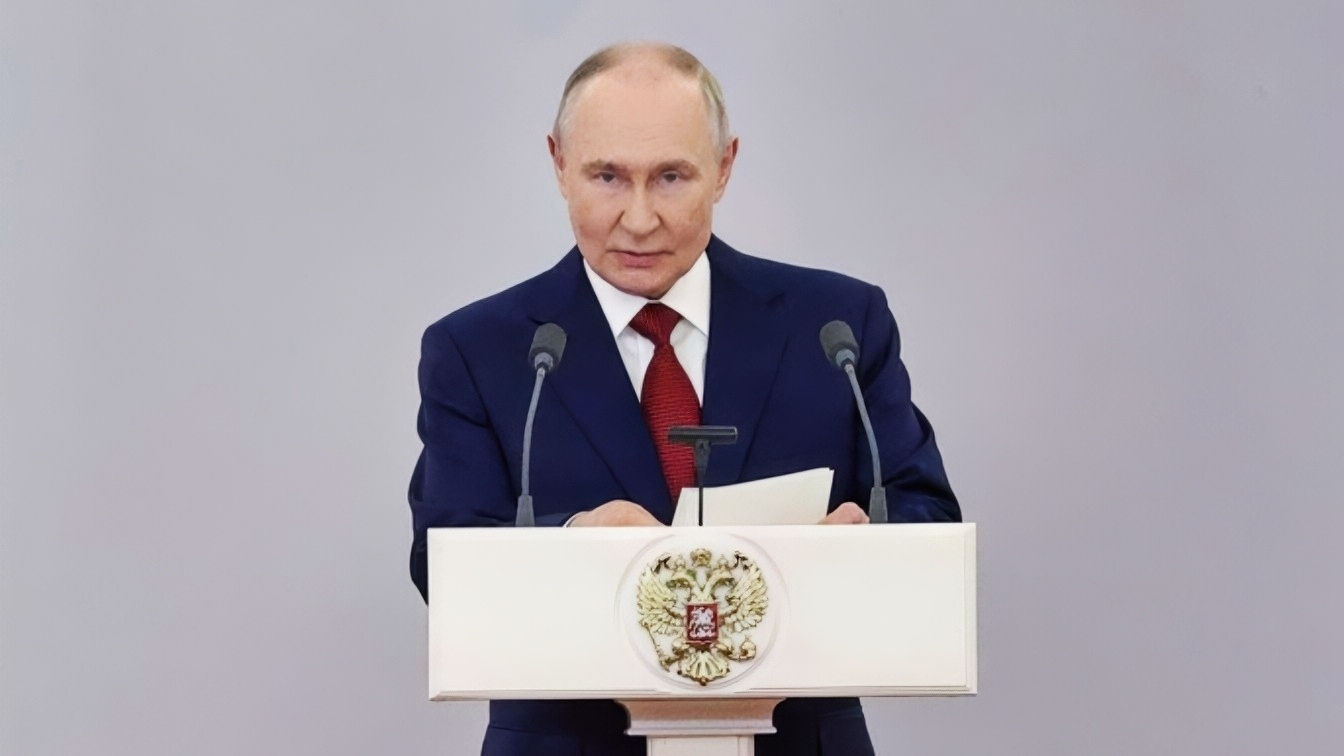
Putin Speaking in July 2026 Creative Commons Photo
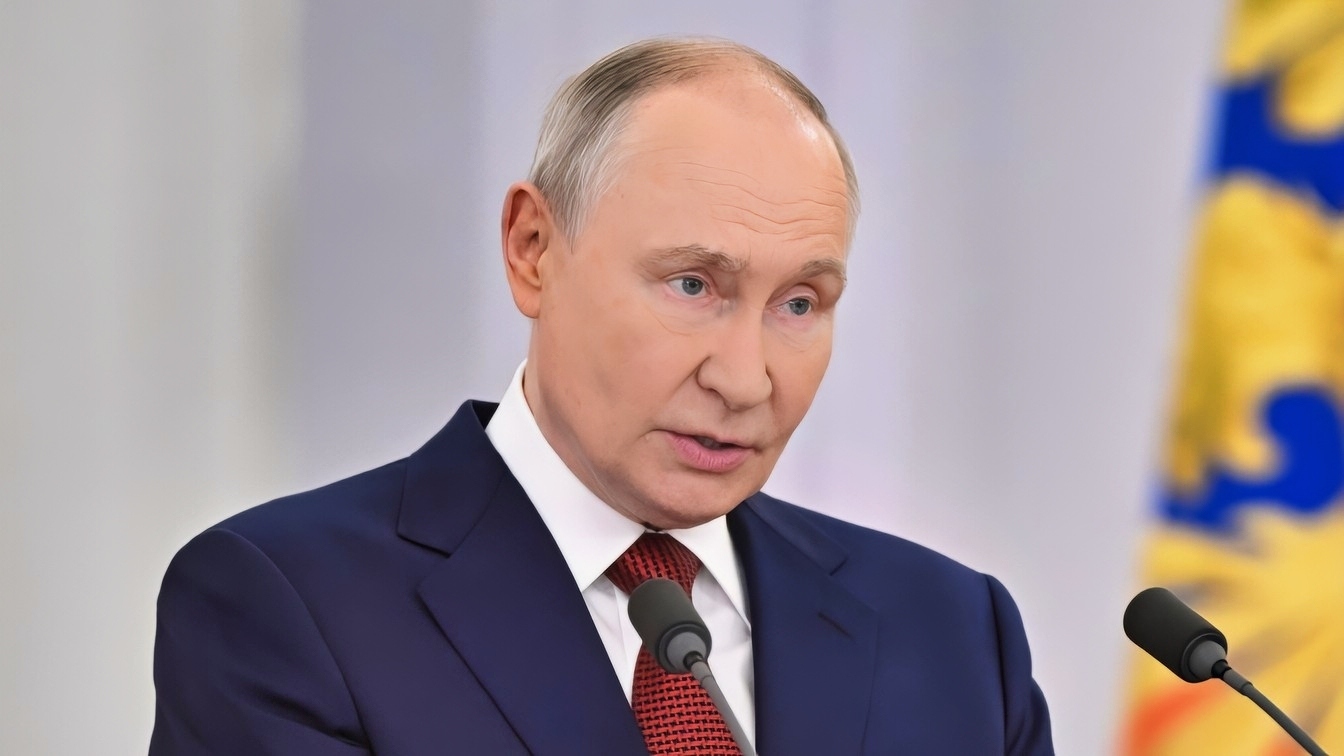
Putin in July of 2026 Creative Commons Photo
Now, a new report says U.S. intelligence has looked into that possibility and found it more likely than previously believed.
According to the Wall Street Journal, U.S. intelligence reports show that Putin “could try to test NATO’s resolve with a limited assault on an allied country in the next few years.”
Such scenarios might include a cyberattack or a “small-scale land incursion,” including the possibility of sending unmarked troops into a NATO member state.
The U.S. had assessed in the past that Putin would probably not provoke a NATO country while still fighting in Ukraine. But that intelligence assessment changed earlier this year, the Journal said, “as Putin is squeezed in Ukraine and under pressure at home to secure a victory.”
The newspaper said that U.S. intelligence sees the land-incursion scenario as unlikely, but more likely over time. And if a move is made, the report said, it would likely happen between this fall and 2029.
Testing Article 5
Article 5 of the North Atlantic Treaty, which governs NATO, states that an attack on one NATO member is seen as an attack on all. The only time in history that Article 5 has been invoked was after the 9/11 attacks in 2001, when the other members of NATO came to the defense of the United States.
Should Russia invade a NATO member state, it would be seen, under Article 5, as an attack on the entire alliance, the United States included.
The Journal story noted that it’s unclear what the implications of Article 5 would be for a cyberattack or other forms of nontraditional warfare, since Article 5 was written before such threats existed.
“This has always been NATO’s challenge to respond to a sub-Article Five attack, and it’s been very true that to this point, NATO allies have preferred not to escalate,” Heather Conley, senior fellow with the American Enterprise Institute, told the newspaper.
There is one past example, as pointed out by the Journal: the NATO member state Estonia suffered a cyberattack in 2007, allegedly from Russia, although the incident was handled bilaterally rather than through NATO.
Putin’s Goal
Why would Putin engage in such a risky action? According to the Journal, the goal would be to “fracture” the NATO alliance and possibly cleave off the United States from its European allies.
This is especially true with Donald Trump, who is much more of a NATO skeptic than any other recent U.S. president in the White House.
“The question mark is how the United States would respond in that case,” Conley told the Journal of the possibility that Russia could further test NATO states.
“It has always been a goal [of Russia’s] to challenge the credibility of NATO and to separate the United States from its allies.”
U.S. intelligence personnel, the Journal reported, are concerned that the Russian leader could “become more dangerous when backed into a corner.”
This is especially a concern amid ongoing reports that the U.S. is running low on munitions, which has raised questions about whether the U.S. can continue to fight in Iran while also leaving it possibly unable to help Ukraine with its own considerable needs for air defenses.
That could pose an even bigger problem should Putin attack a NATO ally in the near future.
The View From NATO
The Journal asked NATO for comment on the report that the U.S. intelligence assessment had changed.
“We are always thinking through and preparing for any number of scenarios. NATO is watching, and we are ready to deter and defend as necessary, which we continue to demonstrate,” Col. Martin O’Donnell, a spokesman for the alliance, told the newspaper.
About the Author: Stephen Silver
Stephen Silver is an award-winning journalist, essayist, and film critic, and contributor to the Philadelphia Inquirer, the Jewish Telegraphic Agency, Broad Street Review, and Splice Today. The co-founder of the Philadelphia Film Critics Circle, Stephen lives in suburban Philadelphia with his wife and two sons. For over a decade, Stephen has authored thousands of articles that focus on politics, national security, technology, and the economy. Follow him on X (formerly Twitter) at @StephenSilver, and subscribe to his Substack newsletter.


