

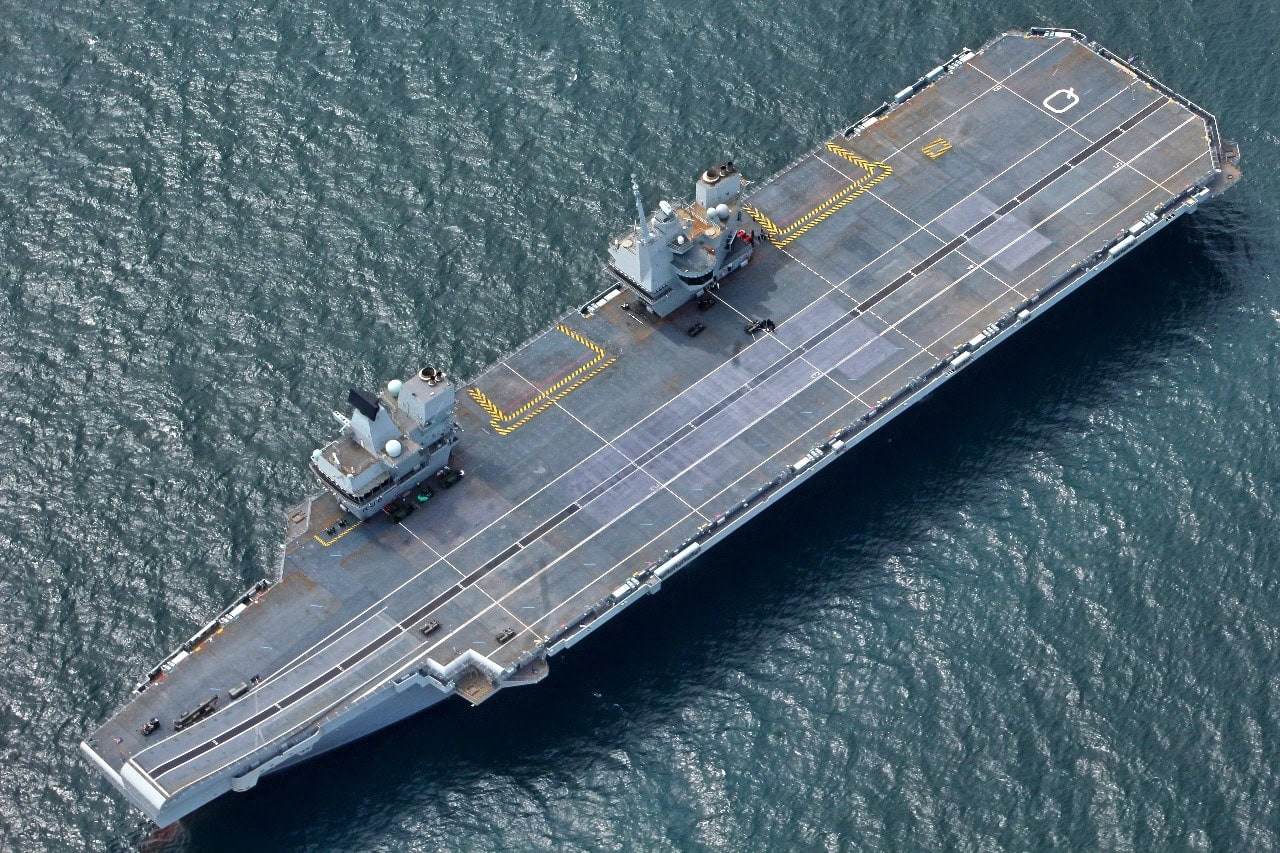
Key Points and Summary – The Royal Navy has embarked a record 24 F-35B Lightnings on HMS Prince of Wales for Exercise Falcon Strike, the first time a UK carrier has met its 24-jet strike requirement without USMC backfill.
-Jets from 809 NAS and 617 Squadron join Italy, the US, and Greece as the UK Carrier Strike Group returns from an eight-month, 26,000-nautical-mile deployment.
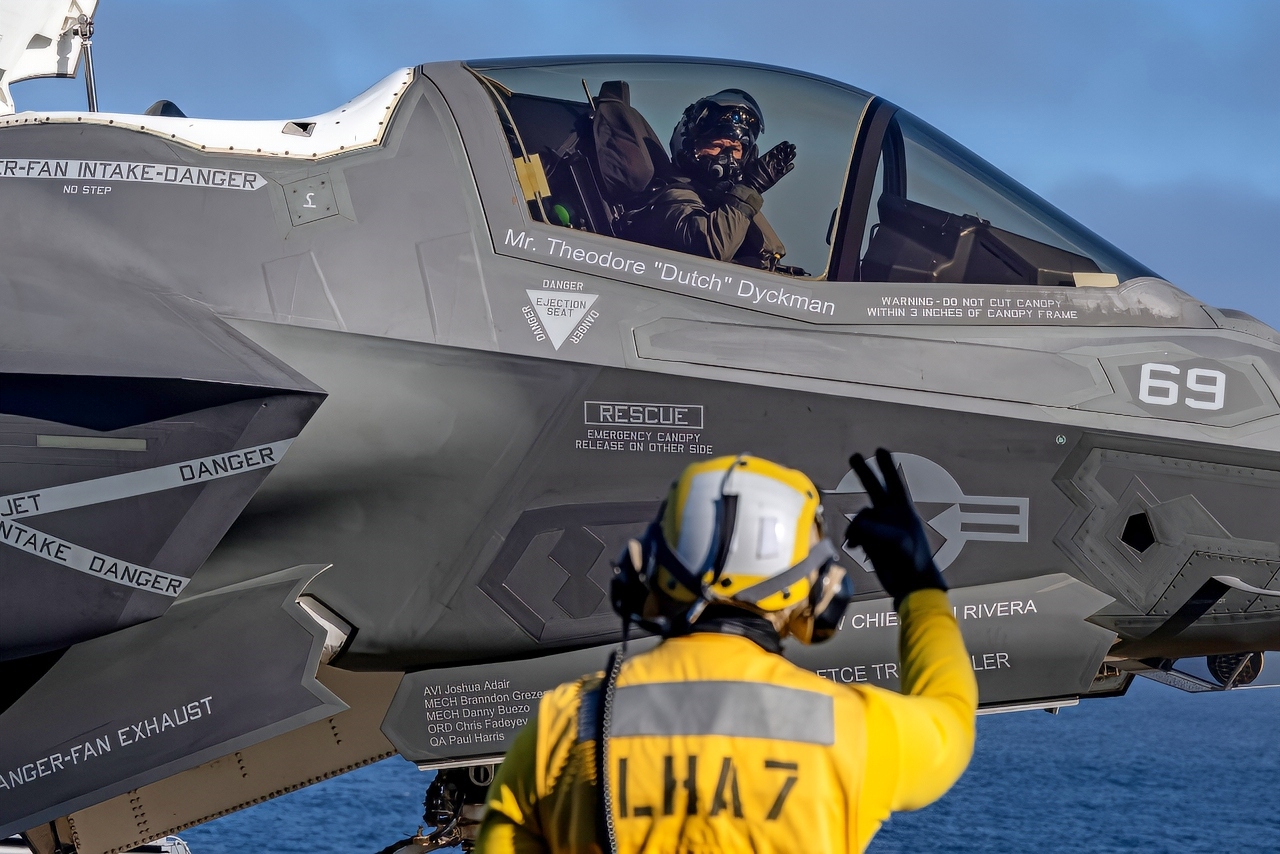
A joint team consisting of F-35 Patuxent River Integrated Test Force flight test members, U.S. Sailors and Marines, and the crew of the Japan Maritime Self-Defense Force Izumo-class multi-functional destroyer JS Kaga (DDH-184) are executing developmental sea trials in the eastern Pacific Ocean to gather the necessary data to certify F-35B Lightning II short takeoff and vertical landing aircraft operations. While aboard the MSDF’s largest ship, the Pax ITF flight test team has been gathering compatibility data for analysis in order to make recommendations for future F-35B operational envelopes, further enhancing the Japanese navy’s capabilities. The results of the testing will contribute to improved interoperability between Japan and the United States, strengthening the deterrence and response capabilities of the Japan-U.S. alliance and contributing to peace and stability in the Indo-Pacific region. Japan is an F-35 Joint Program Office foreign military sales customer planning to purchase 42 F-35Bs. The F-35 Joint Program Office continues to develop, produce, and sustain the F-35 Air System to fulfill its mandate to deliver a capable, available, and affordable air system with fifth-generation capabilities.

A joint team consisting of F-35 Patuxent River Integrated Test Force flight test members, U.S. Sailors and Marines, and the crew of the Japan Maritime Self-Defense Force Izumo-class multi-functional destroyer JS Kaga (DDH-184) are executing developmental sea trials in the eastern Pacific Ocean to gather the necessary data to certify F-35B Lightning II short takeoff and vertical landing aircraft operations. While aboard the MSDF’s largest ship, the Pax ITF flight test team has been gathering compatibility data for analysis in order to make recommendations for future F-35B operational envelopes, further enhancing the Japanese navy’s capabilities. The results of the testing will contribute to improved interoperability between Japan and the United States, strengthening the deterrence and response capabilities of the Japan-U.S. alliance and contributing to peace and stability in the Indo-Pacific region. Japan is an F-35 Joint Program Office foreign military sales customer planning to purchase 42 F-35Bs. The F-35 Joint Program Office continues to develop, produce, and sustain the F-35 Air System to fulfill its mandate to deliver a capable, available, and affordable air system with fifth-generation capabilities.
-The milestone comes as London plans to add 12 F-35As and join NATO’s nuclear mission, but a Parliamentary committee has condemned engineer shortages, deferred investments, and slow infrastructure, urging a more radical plan to sustain availability and readiness.
HMS Prince of Wales Packs 24 F-35Bs: Britain Finally Hits Its Carrier Number
The United Kingdom has long been a big part of the F-35 fighter jet’s story. Per the F-35 official website, the UK is among the “original partners” in the F-35 program.
“While the F-35 Lightning II now provides game-changing 5th Generation capability to the UK Armed Forces, our legacy was forged more than eight decades ago when RAF pilots took to the skies in the Lockheed Hudson and Martin Marauder,” the F-35 website says. Numerous British companies, including BAE Systems, Rolls-Royce, and Martin-Baker, are among the suppliers of the F-35.
A new report says that a UK aircraft carrier is now carrying a record number of F-35s.
A New Exercise
Per The War Zone, 24 British F-35Bs are now on the HMS Prince of Wales, the British Navy’s flagship. This makes it the largest number of those jets ever on an aircraft carrier, in Britain or any other country.
TWZ stated that the previous largest number was the USS Tripoli, which hosted 20 jets for a test in 2022.
Per the British Navy’s official announcement, “the largest number of UK F-35B Lightning jets ever assembled on either of the Royal Navy’s new aircraft carriers has been deployed to the Mediterranean for a major allied exercise.” The exercise, titled Exercise Falcon Strike, will involve the air forces of Italy, the US, and Greece.
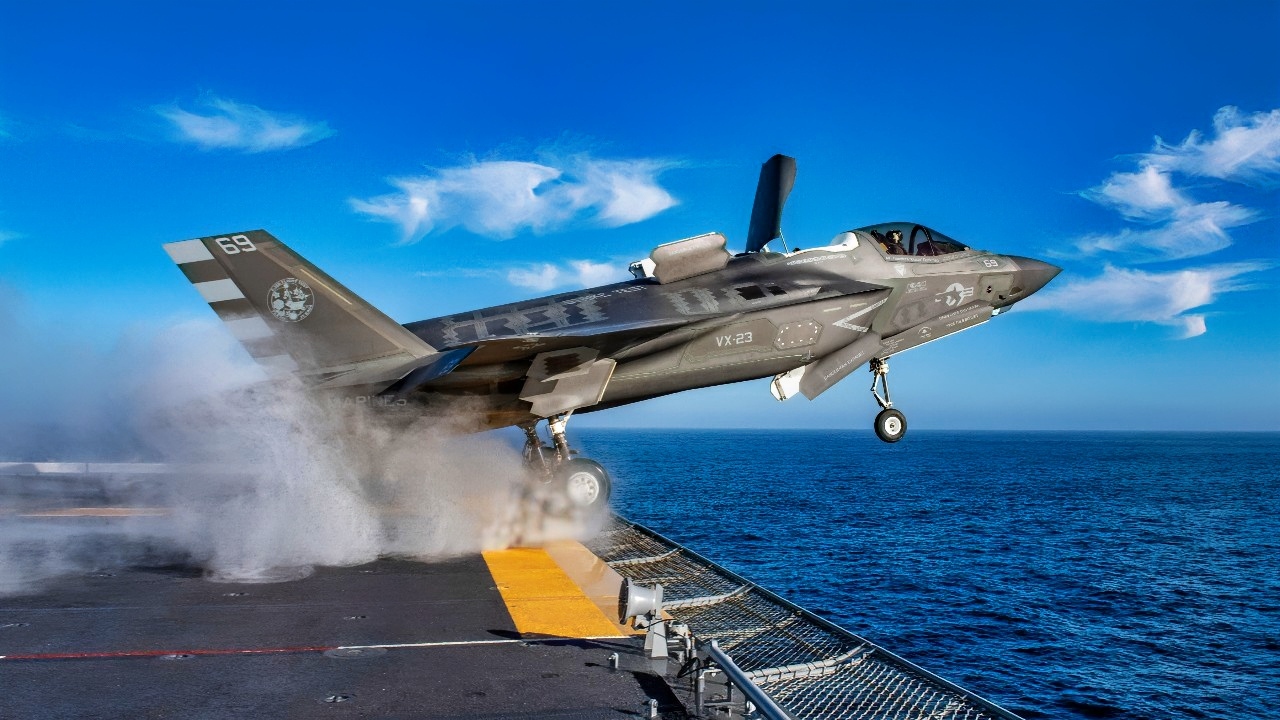
A joint team consisting of F-35 Patuxent River Integrated Test Force flight test members, U.S. Sailors and Marines, and the crew of the Japan Maritime Self-Defense Force Izumo-class multi-functional destroyer JS Kaga (DDH-184) are executing developmental sea trials in the eastern Pacific Ocean to gather the necessary data to certify F-35B Lightning II short takeoff and vertical landing aircraft operations. While aboard the MSDF’s largest ship, the Pax ITF flight test team has been gathering compatibility data for analysis in order to make recommendations for future F-35B operational envelopes, further enhancing the Japanese navy’s capabilities. The results of the testing will contribute to improved interoperability between Japan and the United States, strengthening the deterrence and response capabilities of the Japan-U.S. alliance and contributing to peace and stability in the Indo-Pacific region. Japan is an F-35 Joint Program Office foreign military sales customer planning to purchase 42 F-35Bs. The F-35 Joint Program Office continues to develop, produce, and sustain the F-35 Air System to fulfill its mandate to deliver a capable, available, and affordable air system with fifth-generation capabilities.
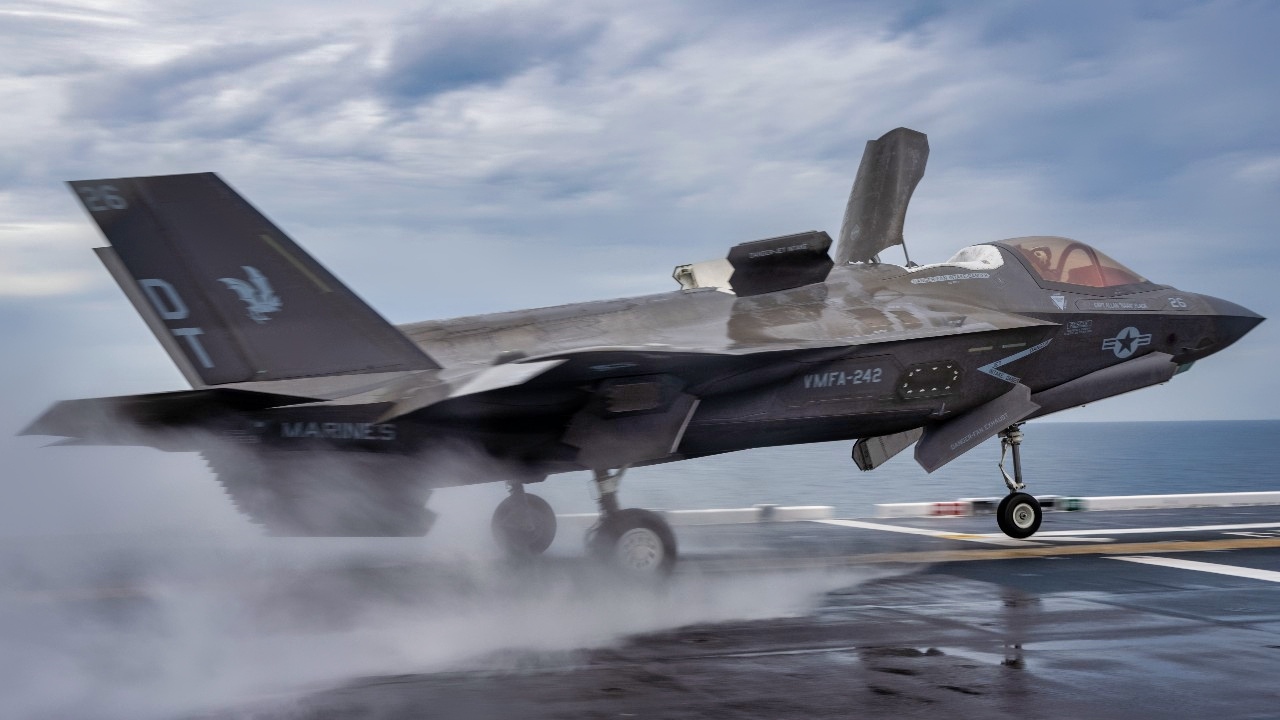
(July 6, 2025) A U.S. Marine Corps F-35B Lightning II aircraft assigned to Marine Fighter Attack Squadron (VMFA) 242, 31st Marine Expeditionary Unit, takes off from the flight deck of the forward-deployed amphibious assault ship USS America (LHA 6) while conducting flight operations in the Coral Sea, July 6. America, lead ship of the America Amphibious Ready Group, is operating in the U.S. 7th Fleet area of operations. U.S. 7th Fleet is the U.S. Navy’s largest forward-deployed numbered fleet, and routinely interacts and operates with allies and partners in preserving a free and open Indo-Pacific region. (U.S. Navy photo by Mass Communication Specialist Seaman Sam McNeely)

250520-N-TW227-1112 EAST CHINA SEA (May 20, 2025) An F-35B Lightning II fighter aircraft from Marine Fighter Attack Squadron (VMFA) 242, prepares to land on the flight deck of the forward-deployed amphibious assault ship USS America (LHA 6) while conducting flight operations in the East China Sea, May 20. America, lead ship of the America Amphibious Ready Group, is operating in the U.S. 7th Fleet area of operations. U.S. 7th Fleet is the U.S. Navy’s largest forward-deployed numbered fleet, and routinely interacts and operates with allies and partners in preserving a free and open Indo-Pacific region. (U.S. Navy photo by Mass Communication Specialist 3rd Class Kenneth Melseth)
The conventionally powered Prince of Wales now leads the UK Carrier Strike Group in the Mediterranean, after spending five months in the Indo-Pacific. It entered the Mediterranean through the Suez Canal.
The jets being used in the exercise come from the 809 Naval Air Squadron and 617 Squadron.
“The upcoming exercises with NATO allies will be a real demonstration of the warfighting readiness of the UK Carrier Strike Group,” Commodore James Blackmore, Commander of the Carrier Strike Group, said in the Navy’s release.
“The eight-month deployment covers over 26,000 nautical miles and engages with 40 nations, reinforcing the UK’s position as a leading European power delivering fifth-generation aircraft and carrier capabilities assigned as a primary contribution to NATO.”
Why It’s Significant
According to The War Zone, this deployment is a significant development, given past doubts about its feasibility.
“All 24 of the jets are British, a significant achievement for the British F-35 force, which has long faced questions about the feasibility of deploying a meaningful number of the short takeoff and vertical landing (STOVL) jets at sea, without U.S. Marine Corps aircraft making up the numbers,” TWZ said.
The site also noted that in the past, “larger F-35B complements on UK carriers were assisted by detaching US Marine Corps aircraft during these cruises.” This included a 2021 deployment.
Greg Bagwell, a former RAF senior commander and now president of the UK Air & Space Power Association, congratulated the Navy in an X post.
“Well done to everyone at Marham for making this happen,” Bagwell wrote. “Whilst it did require the rather unprecedented deployment of the OCU to achieve a totemic milestone, it has readily demonstrated that our Carriers can be reinforced anywhere in the NATO region in a matter of hours.”
TWZ also noted that a carrier deployed with 24 F-35Bs means the British have met a key requirement of the UK Carrier Strike capability declaration. That declaration had listed 24 as the minimum amount.
F-35 Skepticism From Parliament
The UK had announced earlier this year that it planned to purchase 12 F-35As, while also joining the NATO nuclear mission, with the jets to be based at RAF Marham.
“In an era of radical uncertainty, we can no longer take peace for granted, which is why my government is investing in our national security, ensuring our Armed Forces have the equipment they need and communities up and down the country reap the benefits from our defence dividend,” Prime Minister Keir Starmer said in that June announcement.
But all is not entirely rosy with the British F-35 program.
The carrier achievement arrived shortly after the UK Parliament’s Public Accounts Committee released a report on October 31, which criticized the UK’s handling of the program.
“The F-35 is the best fast jet the UK has ever had—but the Ministry of Defence’s (MoD) cost-cutting approach has caused significant problems in its use,” the Parliamentary report’s summary said. “In a new report on the UK’s F-35 capability, the Public Accounts Committee (PAC) calls for a more radical plan to address an unacceptable personnel shortage, while raising questions over the costs of introducing F-35As in their nuclear weapons role.”
The report contained several criticisms of how the Ministry of Defence has handled the F-35 program. These included delayed investment in the facility that handles the jets’ stealth capability, the 2010 decision to postpone some aircraft to save money, and infrastructure delays for the 809 Naval Air Squadron.
“The programme suffers from an unacceptable shortage of engineers, which poses an obstacle to the jets flying more often,” the report continued. “While this shortage reflects wider challenges across the armed forces, the MoD worsened the situation for F-35s by miscalculating how many engineers would be needed per plane, through failing to take into account staff taking leave and performing other tasks.”
The Parliamentary committee recommended additional investment in the program going forward.
“Making short-term cost decisions is famously inadvisable if you’re a homeowner with a leaky roof, let alone if one is running a complex fighter jet programme—and yet such decisions have been rife in the management of the F-35,” Sir Geoffrey Clifton-Brown MP, Chair of the Public Accounts Committee, said in the report.
Additionally, last week, the UK Defence Journal reported that the British role in the overall F-35 program has shifted from “tier one” to more of a “specialist ally.” The report referenced testimony last week before the House of Lords’ International Relations and Defence Committee.
Dr Justin Bronk of the Royal United Services Institute testified in the hearing that Italy, Japan, Norway, and the Netherlands now operate more of the jets than the UK does, and “Australia is increasingly competing with the UK for the most preferred partner spot … it has more aircraft, flies them nearly twice as much, and is a constant presence in the Indo-Pacific.”
About the Author: Stephen Silver
Stephen Silver is an award-winning journalist, essayist, and film critic, and contributor to the Philadelphia Inquirer, the Jewish Telegraphic Agency, Broad Street Review, and Splice Today. The co-founder of the Philadelphia Film Critics Circle, Stephen lives in suburban Philadelphia with his wife and two sons. For over a decade, Stephen has authored thousands of articles that focus on politics, national security, technology, and the economy. Follow him on X (formerly Twitter) at @StephenSilver, and subscribe to his Substack newsletter.
More Military
Europe’s New 6th Generation GCAP Stealth Fighter Looks Unaffordable
49 ‘New’ M1A1 Abrams Tanks Were Sent to Ukraine by Australia and America Doesn’t Approve
The U.S. Marine Corps Is Facing a Tough Drone Reality
‘300 Percent More Lethal’: The U.S. Army Is Putting China and Russia on Notice


