

Key Points and Summary – A new analysis argues that European nations (like Spain, Switzerland, and Portugal) are “reconsidering” their F-35 purchases not just because of political friction with the U.S., but because of “the deeper issue” of “sovereignty.”
-Citing “disastrous” cost overruns, poor mission-capable rates (51% in 2023), and a U.S. “monopoly” on “black box” software, parts, and mission data, these countries are pivoting.

FCAS Fighter Mock Up. Image Credit: Creative Commons.
-Spain has “formally ruled out” the F-35 entirely to invest in its own defense industry and the multi-national FCAS program to ensure “strategic autonomy.”
The Real Reason Europe Is Reconsidering the F-35
A growing number of European nations that once viewed the F-35 Lightning II as the cornerstone of their future air forces are now reconsidering.
Cost overruns, operational limitations, political pressure, and questions about industrial sovereignty are all coming into play, driving a wave of skepticism towards the world’s best stealth fighter platform.
The F-35 was once hailed as the ultimate symbol of NATO interoperability—and it still is—but it is quickly becoming the center of a significant, continent-wide debate.
From Switzerland’s procurement scandal to Germany’s internal political debates, many European governments are now asking whether continued reliance on an American platform is strategically sound.
And while some will have you believe it’s all because of President Trump, the reality is that political polarization is really only a small part of a bigger puzzle.
Why Europe Bought the F-35
The F-35’s appeal is obvious – and it has been from the outset. It boasts unmatched stealth capability, advanced sensor fusion, and seamless integration with U.S. and NATO forces.
Lockheed Martin marketed it as a cost-efficient and interoperable platform that would tie allies together through shared maintenance and software networks.
And that vision has come true.

Finland with F-35 fighter. Image Credit: Lockheed Martin.
The F-35 is the best, most successful, and most broadly adopted platform of its kind in the world—and even today, as next-generation platforms begin to emerge, it continues to receive upgrades and is being adopted by countries that have never previously used it.
By the early 2020s, at least ten European countries had either ordered or evaluated the F-35. For smaller nations like Denmark and Belgium, joining the U.S.-led program seemed the fastest way to modernize fleets and ensure NATO compatibility.
But as deliveries began, cost and dependency concerns followed. Maintenance expenses exceeded forecasts, spare parts were delayed, and U.S. control over software and mission data became controversial sticking points.
Europe Reconsiders
So, what’s happening in Europe? Let’s start with Switzerland. In 2021, Switzerland signed a deal for 36 F-35A jets worth 6 billion Swiss francs.
By mid-2025, the purchase had turned into a national controversy. A government audit revealed that total costs could exceed 7 billion francs, including infrastructure and maintenance.
Critics argued that Swiss officials had misrepresented the nature of a “fixed-price” agreement—and the political backlash was immediate.
Opposition lawmakers accused the government of undermining Switzerland’s neutrality by tying the nation’s air defense systems to U.S. oversight, too.
Because core software updates, diagnostics, and mission data are all managed via American servers, some claimed that the aircraft effectively gave Washington veto power over operations.
Meanwhile, in Portugal, which was once expected to follow other NATO members into the F-35 program, plans have begun to slow.
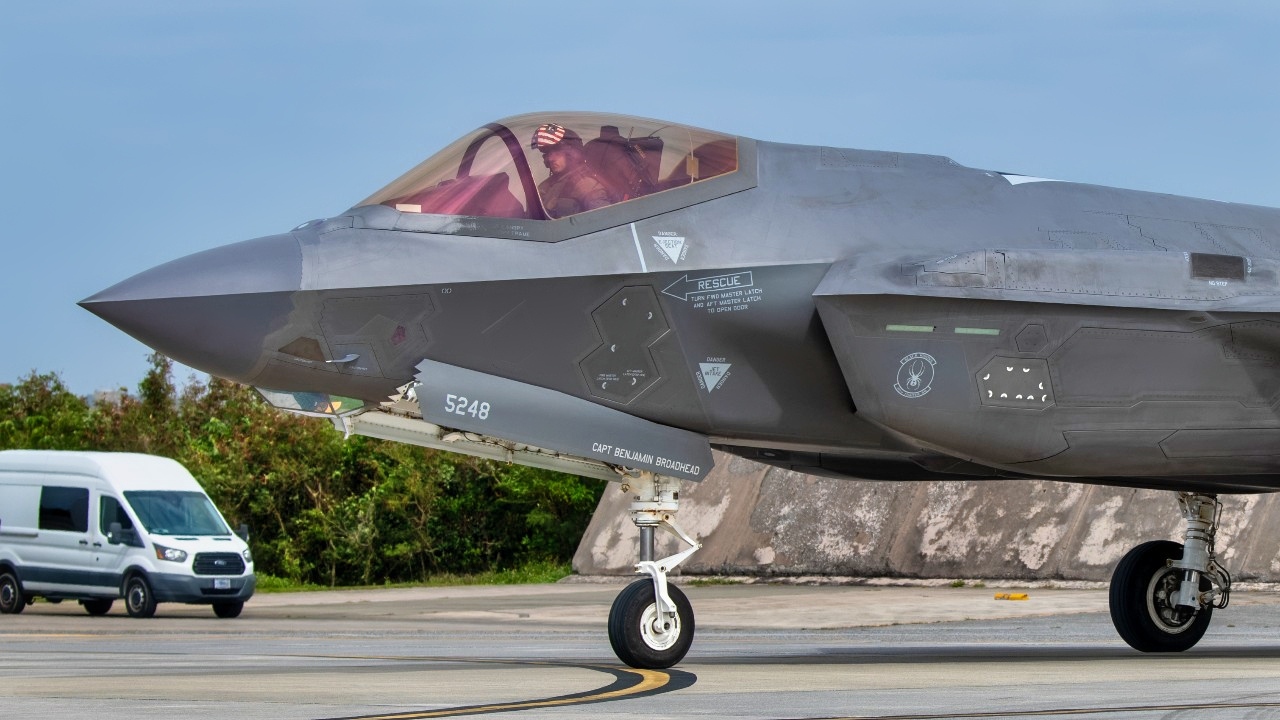
An F-35A Lightning II assigned to the 4th Fighter Squadron, Hill Air Force Base, Utah, taxis into position in front of two U.S. Air Force Airmen with the 18th Logistics Readiness Squadron for forward area refueling point operations during a FARP demonstration at Kadena Air Base, Japan, Feb. 14, 2024. FARP allows operators to transfer fuel from one aircraft to another; this process enables fighter aircraft to land, refuel or re-arm before returning to air-battle operations rapidly in contested environments. (U.S. Air Force photo by Airman 1st Class Jonathan R. Sifuentes)
Defense Minister Nuno Melo announced in March 2025 that Lisbon was reassessing future fighter purchases owing to cost concerns and “geopolitical unpredictability” in Washington.
In other words: nobody could predict what Trump might do next – or perhaps more accurately, what world events may prompt the U.S. president to take unconventional action.
The statement came amid reports that Portuguese officials were exploring European-built alternatives, including the next-generation aircraft emerging from the Franco-German-Spanish Future Combat Air System (FCAS) initiative. Behind the scenes, officials reportedly cited nervousness about long-term access to parts and software under a potential second Trump presidency, which has since arrived.
Spain is reconsidering, too. However, that’s probably an understatement. This year, Madrid formally ruled out buying the F-35 in its entirety, doubling down on its participation in FCAS.
Spanish defense officials said that the country’s goal was to protect the domestic industry and ensure access to mission-critical systems that the F-35 program keeps under American control.
The F-35’s “black box” software architecture, which restricts access to flight and mission data, has become a sticking issue for European partners and potential partners.
Spain’s Air Force chief argued that long-term sovereignty requires European-made fighters that can be modified without U.S. approval—a view that has since been echoed by many in the EU defense establishment.
Countries like Norway, Denmark, and the Netherlands have embraced the F-35 but face their own challenges as well. From readiness shortfalls and rising maintenance costs, these European countries risk being lost as other nations look inwards.

U.S. Air Force Capt. Melanie “MACH” Kluesner, F-35A Lightning II Demonstration Team pilot and commander, flies an aerial demonstration certification flight at Hill Air Force Base, Utah, Feb. 22, 2024. Upon the 388th Fighter Wing commander certification, the F-35 Demo Team pilot is required to complete the Air Combat Command Heritage Flight Training Course. (U.S. Air Force photo by Staff Sgt. Kaitlyn Ergish)
So, what’s going on?
Well, Europe’s F-35 doubts aren’t really about Trump – which is what some outlets would have you believe. While Washington’s politics certainly add uncertainty, the deeper issue here is sovereignty.
Europe wants to design, build, and maintain its own next-generation fighters, such as FCAS and Tempest, without depending on U.S. approval for software, upgrades, or mission data.
Rising tensions in the Indo-Pacific are also reinforcing the need for self-sufficient defense industries, capable of sustaining operations if NATO cohesion ever falters. And there’s reason to believe it could, given President Trump’s past comments.
For now, though, the F-35 is a stable platform that many allied nations depend upon. But it’s also a core problem for the alliance.
The long-term trend should be clear by now, however. Europe is looking to ensure its security isn’t contingent on American hardware or political will.
About the Author:
Jack Buckby is a British author, counter-extremism researcher, and journalist based in New York. Reporting on the U.K., Europe, and the U.S., he works to analyze and understand left-wing and right-wing radicalization, and reports on Western governments’ approaches to the pressing issues of today. His books and research papers explore these themes and propose pragmatic solutions to our increasingly polarized society. His latest book is The Truth Teller: RFK Jr. and the Case for a Post-Partisan Presidency.
More Military
Europe and Canada Are Finally Saying No to the F-35 Stealth Fighter
The Exact Day Navy Battleships Became Obsolete Is Clear
The X-44 Manta Has a Message for Every Air Force on Earth


Krystal cane
November 9, 2025 at 2:28 pm
When you deal with a drunk and his idiot boss the same idiot who’s now wanting to push 50 year mortgages on the American people. I can’t believe anyone would have voted for Donald Trump more than once He’s a complete failure and a buffoon of a man
Nat X8
November 9, 2025 at 3:03 pm
Spain, Italy, France Japan, even the UK with specialist lenders have 50 yr mortgages.
Americans shouldn’t listen to the deeply propogandised Europeans regarding trump. I have watched twice whilst media briefs from the Democrats are picked up by friends in the NYT, transmitted to British outlets and retransmitted as independent thought here. In other words most Europeans have been fed Democratic party spin since 2016 as though it’s reasoned and balanced analysis. There’s very, very little wider reading. They’re so credulous and uncritical they’ll now believe any anti Trump messaging at all. Most are totally gullible.
But the sentiment of the author isn’t wrong.
I’m quite pro US but I want less and less to do with the country. We have our problems but the US is bipolar.
When Biden came to power he acted like a child towards the UK, “I’m Irish” he declared. Well you know what USA, half of Britain is actually half Irish. Everyone has a mum or dad or grandad who is Irish, North or South. And no one cares. We are so mixed it’s crazy.
But that just showed the quality of the man.
So I wasn’t surprised but I was disappointed that when he pulled his troops out of Afghanistan, after 20 years of British, Aussie, Canadian et al peacekeeping standing and dying beside our US cousins-he gave us 24 hrs notice. Thanks uncle Sam.
Then Trump comes to power and treats his friends like trash. Power plays and arm locks with China…ok. But not the ones who follow you into battle. Not the ones who share nuclear missiles, not the ones who give you all their intel and open their back gardens to your early radar etc.
What I’ve realised is, the US is heading back into isolation. And isn’t any longer a reliable partner. One day our pilots are flying off your carriers, the next you’re crippling Canadian industry or pulling troops out without any consultation.
Then add the F35s obvious flawes and I would rather we didn’t invest in it any more. It costs an absolute fortune to maintain, software updates take an aeon and European weapons aren’t getting integrated. Add into this a US which might throw a temper tantrum in the future and deprioritise UK and European field support and the F35:is no longer the package it was supposed to become….sadly.
David
November 9, 2025 at 3:54 pm
America should pull out of NATO and let the Europeans fend for themselves. We’ve spent enough for their defense while they’ve been enjoying the free ride for decades.
Michael Middleton
November 10, 2025 at 6:22 pm
“The F-35 is the best, most successful, and most broadly adopted platform of its kind in the world”. When it isn’t in the shop. European countries are wise to develop their own weapons systems. The US has become as reliable as- well, the F-35.
Muzaffar Syed
November 11, 2025 at 6:54 am
F-35 reliability 53% in-operability due to maintenance. Cost overrun, very high cost to fly, US $46000 per hour. Mission data owned by the US,which means sovereignty compromised. The Chinese can identify, track from 400 KMs away and probably can do soft kills as well. The EU should invest jointly in surveillance systems, Radars and anti-aircraft defense systems rather focusing on F-35s.
JamesGold
November 12, 2025 at 7:28 pm
I believe the reason some European nations are reconsidering the F-35 is the utter weakness of the Russian military that the war in Ukraine has revealed. Remussia is no longer feared by nations other than the Baltics, Poland and couple other nations in Central / Eastern Europe.
Western Europe now believes it has a grace period where they can get by on what they have and develop their own 5-Gen plane – while, of course, they continue to rely on the U S. security umbrella.