

Canada’s CF-18 Hornets are aging and obsolescent. The Royal Canadian Air Force (RCAF) has needed a replacement for the Hornets for many years.
Since 2010, the Canadian government has been arguing the merits and reasons against procuring the fifth-generation aircraft. However, the actual process began in 1997.
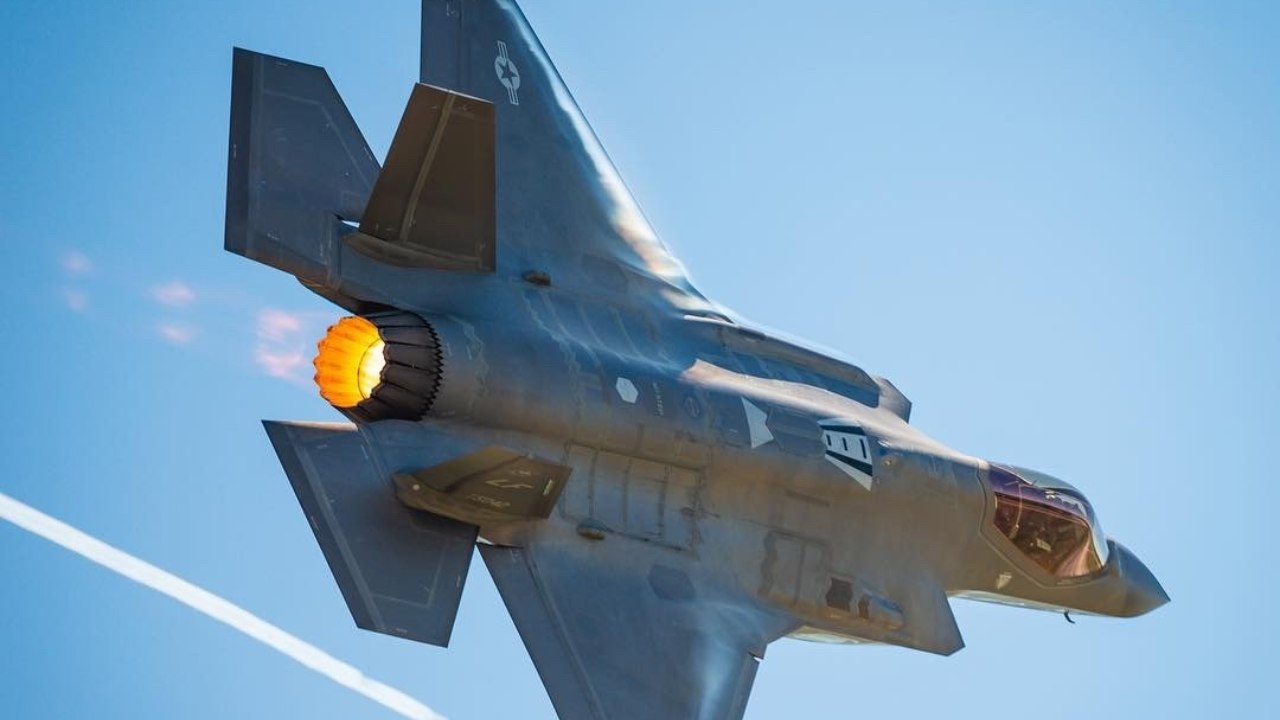
The United States Department of Defense conceived the Joint Strike Fighter program, which produced the F-35. This program required participation from many countries, which either contributed to its manufacturing or procured it for their own armed forces.
F-35 Joint Strike Fighter Program in 1997
Since 1997, Canada has been involved in the Joint Strike Fighter Program (JSF) through the Department of National Defence (DND), Public Works and Government Services Canada (PWGSC), and Industry Canada (IC).
This early involvement allowed Canadian industry to join the F-35 JSF supply chain.
Canada’s initial participation required a $10 million (in US dollars) investment to be an “informed partner” during the evaluation process. Once Lockheed Martin was selected as the JSF’s primary contractor, Canada elected to become a level-three participant (along with Norway, Denmark, Turkey, and Australia) in the project.
In 2002, an additional $100 million US from DND over 10 years and another $50 million from IC were dedicated.
This allowed Canadian companies to compete for work on the JSF program, including the airframe, systems, engines, and associated services.
Opportunities include manufacturing and services in major structural assemblies, electronic systems, advanced composites, high-speed machining, simulation and training, tooling, and sustainment.
Timeline Of Canada’s F-35 Purchase
On July 16, 2010, Prime Minister Stephen Harper‘s Conservative government announced that it intended to procure 65 F-35s to replace the existing 80 McDonnell Douglas CF-18 Hornets for $9 billion Canadian ($16 billion Canadian with all ancillary costs, such as maintenance, included) with deliveries planned for 2016.
In April 2012, the release of a highly critical Auditor General of Canada report on the failures of the government’s F-35 program prompted the media to label the procurement a national “scandal” and “fiasco.” Canadian political parties and the media were bickering over the F-35 program between the two timelines.
In September 2013, Lockheed Martin announced that if Canada did not decide to buy the F-35, then Canadian industry would lose $10.5 billion in potential future F-35-related aerospace contracts.
Company Executive Vice-President Orlando Carvalho indicated that Lockheed Martin would honor existing contracts with Canadian firms but that future contracts would go to companies in nations that buy the F-35.
In August 2014, Industry Canada released a report showing that 32 Canadian companies had received $587 million US in contracts for work on the F-35 program, an increase of $83 million US since 2013.
The F-35 Becomes A Key Point In The Federal Election of 2015
The Conservative Party and the Labor Party used the F-35 as a key issue in the upcoming election. Justin Trudeau, the leader of the Liberal Party, promised that an “open and transparent competition” would take place to choose a more affordable aircraft than the F-35.
In late October 2015, Trudeau won the election for Prime Minister by a large margin. A year later, his administration announced that Canada would purchase 18 Boeing F/A-18E/F Super Hornets as “interim” fighters, stating that flying CF-18 Hornets past their lifespan “would be imprudent and irresponsible.” (Note: 10 years later, Canadian pilots are still flying the CF-18).
In early 2017, the government announced it would not pursue the Super Hornet deal.
On June 7, 2017, the new Strong, Secure, Engaged Canada’s Defence Policy reaffirmed the government’s commitment to procuring 88 new advanced fighter aircraft for the RCAF.
The government of France and its commercial partner, Dassault Aviation, officially withdrew from the competitive process in November 2018. The UK government and its commercial partner, Airbus, followed in August 2019.
Canada Adopts The F-35 Again
On January 9, 2023, the Canadian government announced that it had finalized an agreement with the United States Government and Lockheed Martin with Pratt & Whitney to acquire F-35 fighter jets for the Royal Canadian Air Force (RCAF).
“Canada is confident that the F-35 represents the best fighter jet for our country at the best price for Canadians,” the government said.
Initially, the first eight aircraft would be delivered to the F-35A Pilot Training Center in Luke Air Force Base (AFB), Arizona, to enable the training of RCAF pilots. At the same time, the Department of National Defence completes the necessary infrastructure to support aircraft delivery in Canada.
The first aircraft is expected to be delivered to Luke AFB in 2026 and arrive in Canada in 2028.
After the war of words between President Trump and Canadian government officials, on March 14, 2025, Defense Minister Bill Blair announced that Canada was looking at potential alternatives to the F-35 due to American tariffs and talk of annexation.
This would necessitate another decade of proposals, bids, etc, and it would set the RCAF back even further. This is a fiasco entirely of its own making. This bickering over the F-35 has already stretched 15 years. What’s next?
About the Author
Steve Balestrieri is a National Security Columnist. He served as a US Army Special Forces NCO and Warrant Officer. In addition to writing on defesne, he covers the NFL for PatsFans.com and is a member of the Pro Football Writers of America (PFWA). His work was regularly featured in many military publications.


Pingback: The F-35 and JAS 39 Gripen Fighters Could Both Fly for One Country - National Security Journal
Pingback: Forget Trump's Threats: Canada Needs the F-35 Stealth Fighter - National Security Journal