


Will China Double Down On The H-20 Bomber After Seeing The B-2’s Success?
China is facing significant challenges in developing its H-20 stealth bomber, with the program appearing to be “frozen in time” rather than speeding up.
While the demonstrated lethality of the US B-2 Spirit stealth bomber in the 2025–2026 Iran conflict has highlighted the importance of such aircraft, reports indicate that the H-20 faces major engineering hurdles, with service entry unlikely until the 2030s.
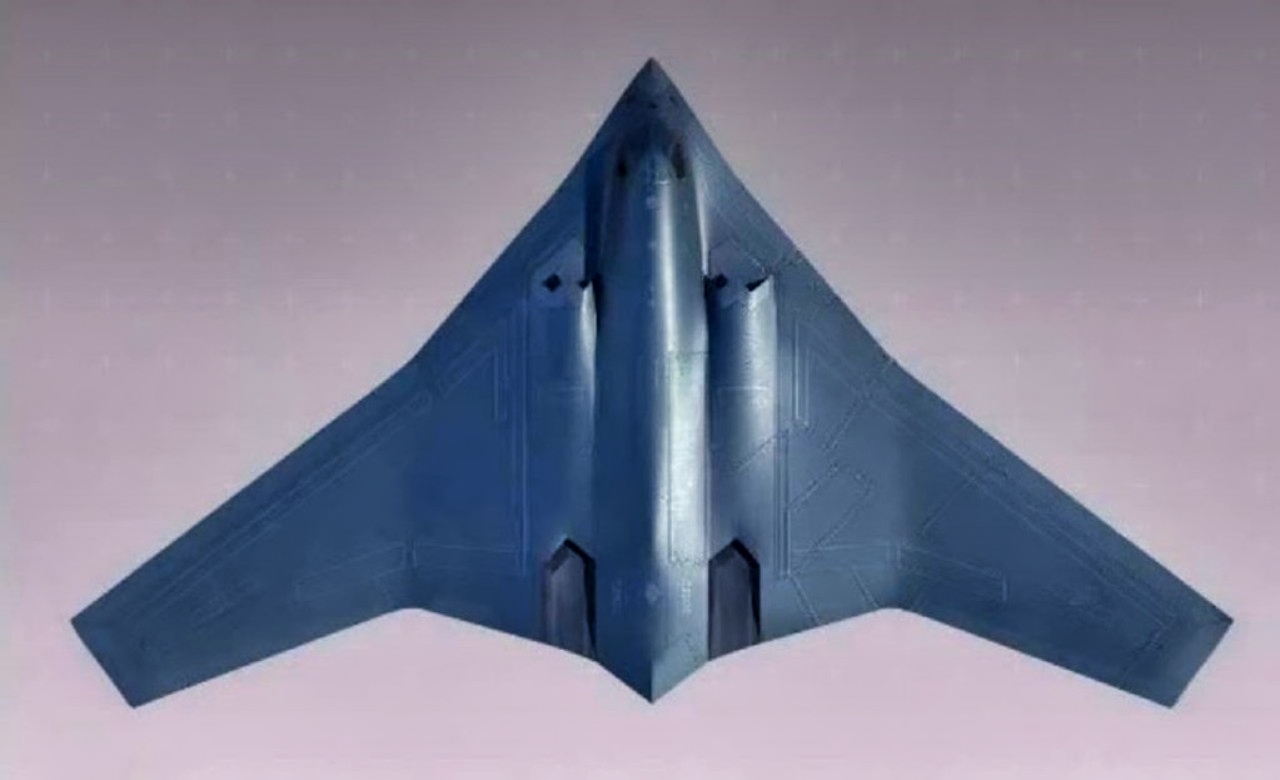
H-20 Bomber from China Artist Rendition. Creative Commons.

China’s H-20 Stealth Bomber. Image Credit: Creative Commons.
The use of B-2 bombers to destroy hardened Iranian facilities in 2025–2026—described by US officials as a successful, unchecked operation—reportedly left Chinese observers “stunned” and in awe of the aircraft’s effectiveness.
Despite the shock, this has not led the Chinese to immediately accelerate the H-20. Instead, it has intensified Beijing’s urgency to develop a credible, long-range stealth capability to achieve parity.
During the American air operations over Iran, China’s Strategic Support Force and surveillance ships closely monitored the operations to collect intelligence on US stealth performance.
The H-20 Remains “Frozen in Time”
China is actively developing, not yet mass-producing, the H-20 stealth bomber, with government officials continuing to indicate it is nearing its public debut.
While prototypes have likely been produced for testing, the aircraft has not officially entered operational production or service as of early 2026. The Xian Aircraft Industrial Corporation is developing this flying-wing, long-range strategic bomber.
U.S. Air Force Global Strike Command (AFGSC) commander General Stephen Davis told TWZ that China is aggressively pursuing the H-20 bomber, but for the present remains a “regional bombing force.”
“I can certainly understand their [the Chinese] desire to have a long-range strike capability like the United States, and I know that they’re pursuing it aggressively,” Davis said.
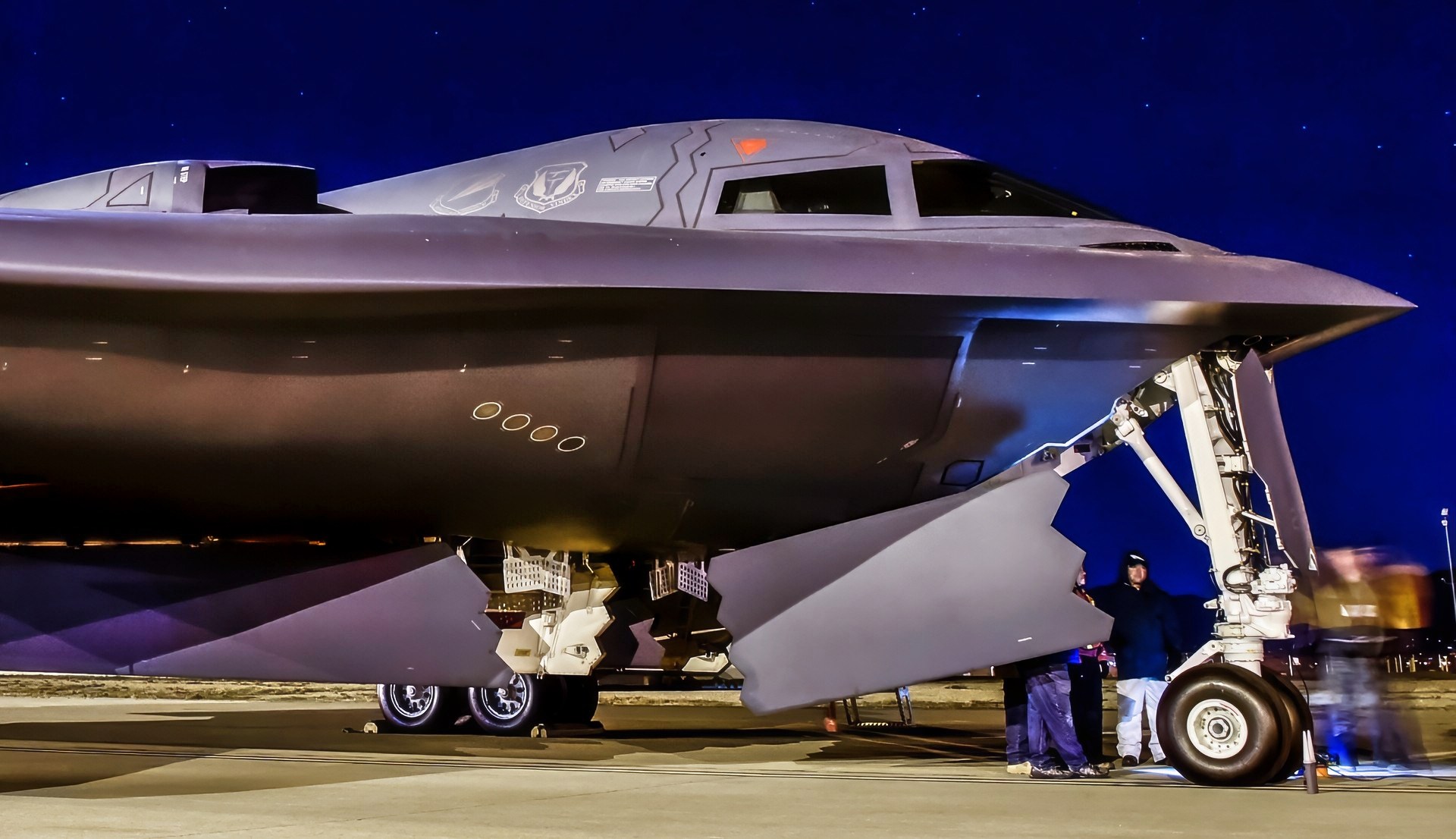
B-2 Spirit Stealth Bomber on Runway. Image Credit: Creative Commons.
“What I can tell you is they’re just not there yet,” Davis continued. “I think our adversaries look at our long-range strike capabilities, and … want to mimic them, but they can’t.
H-20 Bomber Is… “Not Really A Concern”
One US defense official told Breaking Defense that he’s confident that the Chinese bomber will not match up to American-designed bombers.
“The thing with the H-20 is when you actually look at the system design, it’s probably nowhere near as good as U.S. LO [low-observable] platforms, particularly more advanced ones that we have coming down,” the official said.
“They’ve run into a lot of engineering design challenges, in terms of how do you actually make that system capability function in a similar way to, like, a B-2 or a B-21,” he added.
Many experts believe the JH-XX, also known as the JH-36, is a medium-range fighter bomber. The Pentagon mentioned it in the annual report on China’s military power. Since 2019, the annual report has mentioned a “JH-XX” medium bomber under development.

JH-XX Mock Up. This was an early Mock Up. Image Credit: Creative Commons.

JH-XX Bomber Image from X Screenshot. Image Credit: X.
A Game Changer For Beijing…When It Is Ready
The H-20 represents a new strategic capability for China, allowing it to project power and threaten U.S. interests across long distances.
The Chinese have been developing the H-20 stealth bomber for a decade. The Chinese want a modern stealth bomber that can survive in a contested environment and has the range to operate in the Second Island Chain and beyond.
As a long-range, stealth bomber, it could bypass traditional defenses to strike targets deep within allied territory, such as Guam, or even the U.S. mainland.
This development could compel the U.S. and its allies to allocate more resources to defense, deploy their forces more widely, and reassess their strategic approach to military sanctuaries.
What Is Known About China’s H-20 Stealth Bomber
There is no official photograph of the H-20, but a photo posted on Chinese social media showed a new large combat aircraft on a test flight, which was speculated to be China’s new secret H-20 stealth bomber. The location and exact date of the imagery were not disclosed.
The aircraft was a “flying wing” design, followed by a chase plane. The indistinct image closely resembles a 2022 photo from a Chinese wind-tunnel test that featured a bomber similar to the one depicted in Air and Space Forces magazine.
It also resembled the American B-2 Spirit stealth bomber remarkably closely.
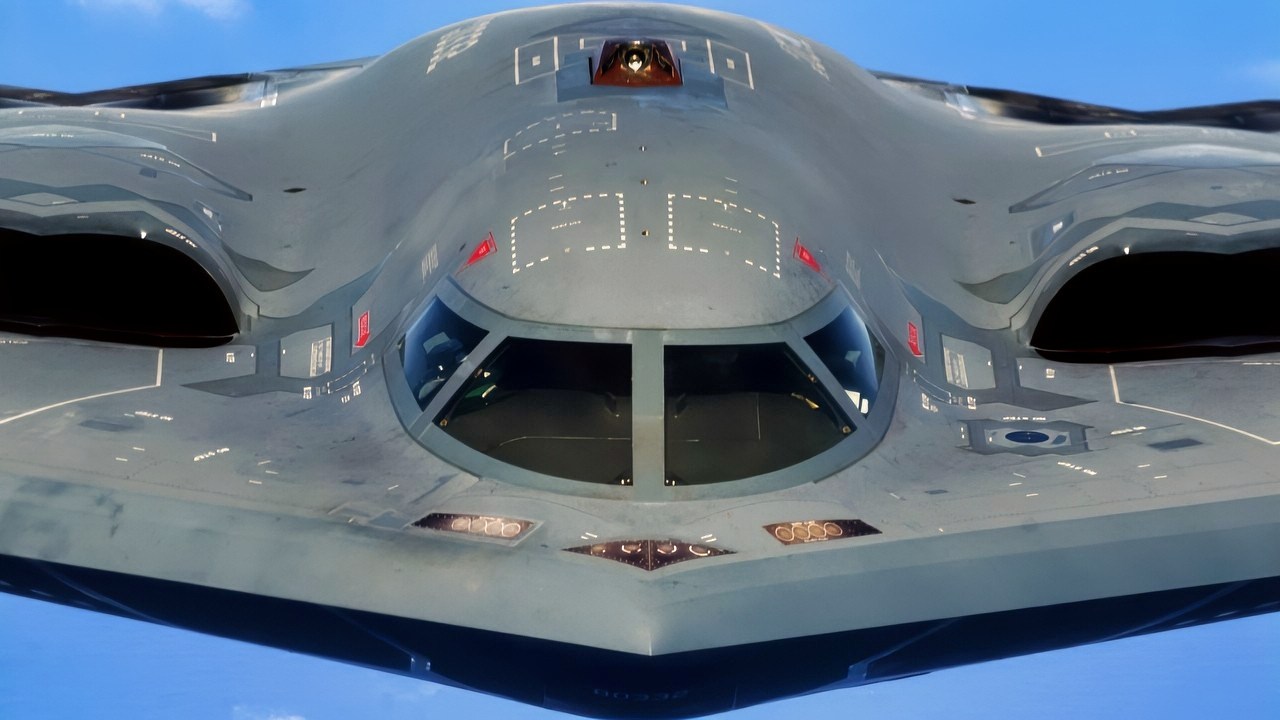
B-2 Spirit Stealth Bomber Flying. Image Credit: Creative Commons.
The H-20’s focus is to enhance China’s power-projection capabilities and to secure its interests in the Asia-Pacific region. In contrast, the US B-21 is designed for global power projection, ensuring the U.S. can maintain its strategic deterrence and respond to threats anywhere in the world.
Long-range Strike Capability
The H-20 is expected to have a range of up to 8,500 kilometers, allowing it to operate far from China’s shores.
However, other US government analysts believe the bomber could have an unrefueled range of over 10,000 km.
The Chinese have released a picture with a plethora of weapons arrayed in front of the aircraft. Still, China has only mentioned “multi-ton internal storage bays,” without providing a specific number.
It Is Still Several Years Away
The bomber’s existence was first mentioned in 2016. In 2018, in a short cryptic message, the Chinese said the aircraft was “making great progress.”The H-20 was reportedly scheduled for unveiling in 2019, marking the 70th anniversary of the PRC’s founding in 1949. But that passed as well.
A 2021 video briefly mentioned the H-20, but nothing more.
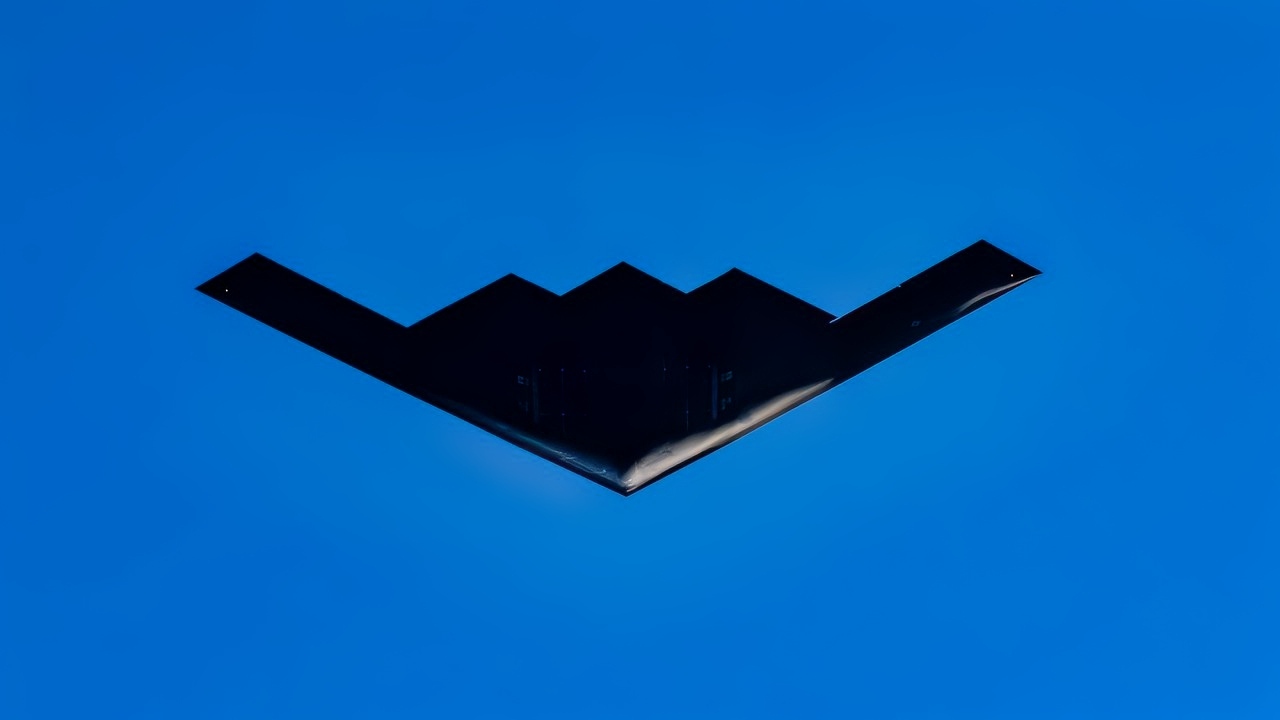
The B-2 Spirit flies over the Rose Parade at Pasadena Ca., Jan. 1, 2024. The Rose Parade is a parade of flower covered floats, marching band, and equestrian units that is produced by the Tournament of Roses. (U.S. Air Force photo by Airman 1st Class Bryce Moore)
In July 2022, Chinese state media reported that the bomber was nearing its maiden flight. By March 2024, during the second session of the 14th National People’s Congress, Vice Commander of the PLAAF Wang Wei indicated that the H-20 would be revealed: “very soon.”
The Chinese military has now stated that the aircraft will debut in the 2030s.
The U.S. military states that it still does not expect China’s long-awaited H-20 bomber to make its “debut” – unclear whether this refers to its entrance into operational service or its public emergence – until sometime in the next decade.
Building a stealth bomber takes time and extensive testing. The Pentagon publishes an unclassified report on China’s military every year. And the H-20 was mentioned.
“The PRC is developing a new generation of long-range bombers, likely named the H-20. The H-20, which may debut sometime in the next decade, will have a range of more than 10,000 km [nearly 6,214 miles], enabling the PLAAF to cover the Second Island Chain and into the western region of the Pacific,” the report added.
“The H-20 bomber’s range could be extended to cover the globe with aerial refueling. It is expected to employ conventional and nuclear weaponry and feature a stealthy design.”
The H-20 As A “Campaign-shaping Platform”
Once operational and paired with supporting infrastructure like aerial refueling tankers, the H-20 could be a decisive weapon that shapes the outcome of a conflict, forcing adversaries to react to its presence.
Much of the H-20’s exact capability remains secret, fueling anxiety and speculation about its potential to surpass or match current U.S. stealth bombers.
Once the H-20 is operational in the PLAAF’s arsenal, it would significantly enhance China’s ability to project power and conduct anti-access/area-denial (A2/AD) strategies, particularly in regions like the South China Sea and Taiwan Strait.
This could threaten US bases far from Chinese shores, and alter the strategic calculus in any potential military confrontation or deterrence scenario in the Indo-Pacific region. However, there are still improvements to be made in China’s tanker fleet, further testing, and then applying all that they have learned.
China Knows The Value Of A Dedicated Strategic Bomber
China has recognized the need for a strategic stealth bomber after seeing the US airstrikes on Iran in the past eight months.
“A dedicated strategic bomber is irreplaceable, even in an era when other long‑range strike options exist, ”Song Zhongping, a military analyst and former People’s Liberation Army instructor, stated in the SCMP report.
“A strategic bomber can carry out both nuclear and conventional attacks. It is a vital weapon for any major military power, and one that cannot be sacrificed for another.”
“That is the essence of a strategic weapon – the ability to operate across continents,” Song said. “The B‑2, B‑1B, and B‑52 all fulfil this role for the US. At present, China still lacks this long‑range strategic strike capability.”
About the Author: Steve Balestrieri
Steve Balestrieri is a National Security Columnist. He served as a US Army Special Forces NCO and Warrant Officer. In addition to writing on defense, he covers the NFL for PatsFans.com and is a member of the Pro Football Writers of America (PFWA). His work was regularly featured in many military publications.


