


There was a great hubbub after purported images of the J-36 fighter circulated on the Chinese internet. The jet aircraft, potentially a bomber, demonstrated extensive attention to stealth features. While perhaps the J-36 will not be considered a sixth-generation aircraft, it could certainly qualify as a fifth-generation platform.
New images of the J-36 have reached the public eye, and these give more insight into what could prove to be a heavy fighter, or a bomber.
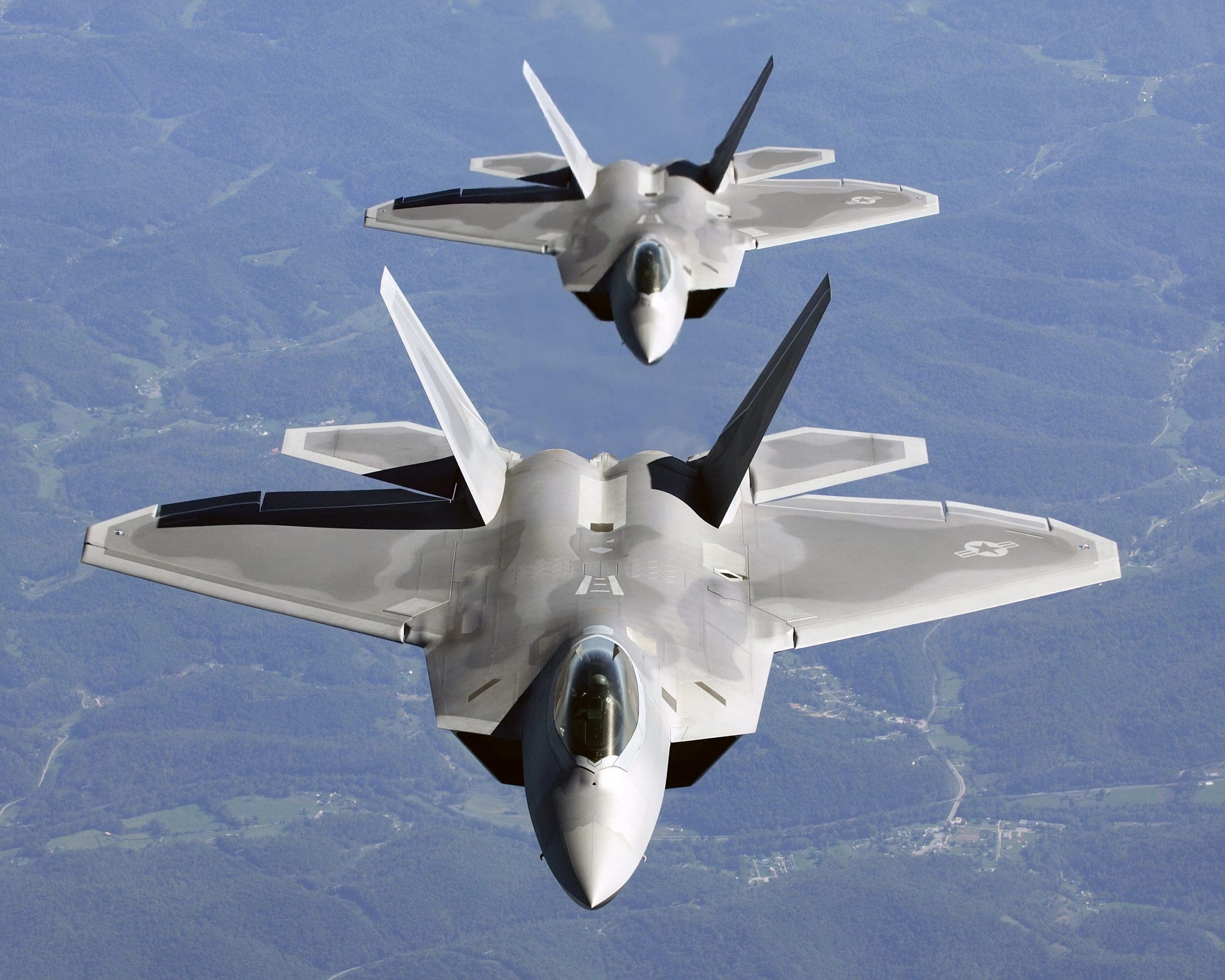
Lt. Col. James Hecker (front) and Lt. Col. Evan Dertein line up their F/A-22 Raptor aircraft behind a KC-10 Extender to refuel while en route to Hill Air Force Base, Utah. Colonel Hecker commands the first operational Raptor squadron — the 27th Fighter Squadron at Langley Air Force Base, Va. The unit went to Hill for operation Combat Hammer, the squadron’s first deployment, Oct. 15. The deployment has a twofold goal: complete a deployment and to generate a combat-effective sortie rate away from home. [U.S. Air Force photo by TSgt Ben Bloker]
The J-36: What We Can Guess
At first blush, one of the most notable aspects of the J-36 is its size. Compared to American stealth fighters such as the F-22 Raptor or the F-35 Joint Strike Fighter, China’s J-36 appears to be significantly larger.
An additional unique feature of the J-36 is its apparent three-engine design, which would be highly unusual during an age in which virtually all fixed-wing combat aircraft with more than one engine have even numbers of engines—from the F/A-18 Super Hornet, with two engines, to the B-52 Stratofortress, which sports a whopping eight.

A B-52H Stratofortress taxis down the runway at Minot Air Force Base, N.D., Sept. 16, 2021. The bomber is capable of flying at high subsonic speeds at altitudes up to 50,000 feet. (U.S. Air Force photo by Airman 1st Class Zachary Wright)
While running on three engines could offer thrust and speed advantages, this design consideration could be attributed to weakness in China’s domestic aviation industry. Though it is not a lightweight in terms of aerospace technology, one area in which China’s industry has struggled is in the design and production of jet engines.
Though China has relied on Soviet and then Russian jet-engine designs, the country is making some progress in getting its own engines off the ground. However, the recent images of the J-36 could indicate that while progress is being made, a third engine is necessary to meet the aircraft’s desired performance requirements.
This has significant implications for fuel consumption.
The Indo-Pacific
Any combat in the Indo-Pacific would occur over great distances: wide stretches of bluewater ocean wastes cross thousands of miles in every direction. Those distances are surmountable for surface vessels, given enough time, but all except the most long-ranged aircraft would struggle. Their combat radii are measured in hundreds of miles, rather than thousands.
Internal storage space for aircraft would be of high importance. More internal space equals more fuel, which grants greater range.
Hence, the J-36 is relatively large. With the addition of a third engine, the J-36’s fuel consumption could be considerably higher than a dual-engine design.
Long-Range Strike and Strategic Reach
Whether the J-36 is a heavy fighter or a bomber of some sort is indiscernible at the moment. However, what can be surmised with some degree of certainty is that the jet places a premium on both stealth and range, as do many aircraft.
Take, for example, the U.S. Air Force’s upcoming Next-Generation Air Dominance program or F-47. If all goes according to plan, the Air Force would eventually introduce a larger, heavier fighter-like platform that shares some traits with the J-36.
The NGAD would eschew a tail, like its Chinese counterpart, in an effort to reduce the jet’s radar cross-section.

NGAD. Image Credit: Creative Commons
It would likely be optionally manned and able to function essentially as a command-and-control node, able to work with other extendable, attritable aircraft.
And like the J-36, the Next-Generation Air Dominance is expected to have the combat radius required to operate effectively in the Indo-Pacific—flying significantly farther than fighters such as the stealthy F-22 and F-35, or even the F-15.
What Happens Now on J-36?
The development of the J-36 and its anticipated long range points out a potential deficiency in the U.S. arsenal: air-to-air refueling.
While the United States operates the largest tanker fleet in the world, the majority of those aircraft are modified civilian airframes.
And while they have served well in uncontested environments, those aircraft are not as survivable in highly contested airspace.
During a war in the Indo-Pacific, tanker aircraft will be of incredibly high importance to keeping American jets in the sky, but they will likely be under great strain. Take, for example, the upcoming B-21 Raider bomber.
Its range is expected to be lower than that of the B-2 Spirit bomber—and the Air Force would like to acquire at least 100 B-21s, potentially more. The strain on the tanker fleet will be significant.
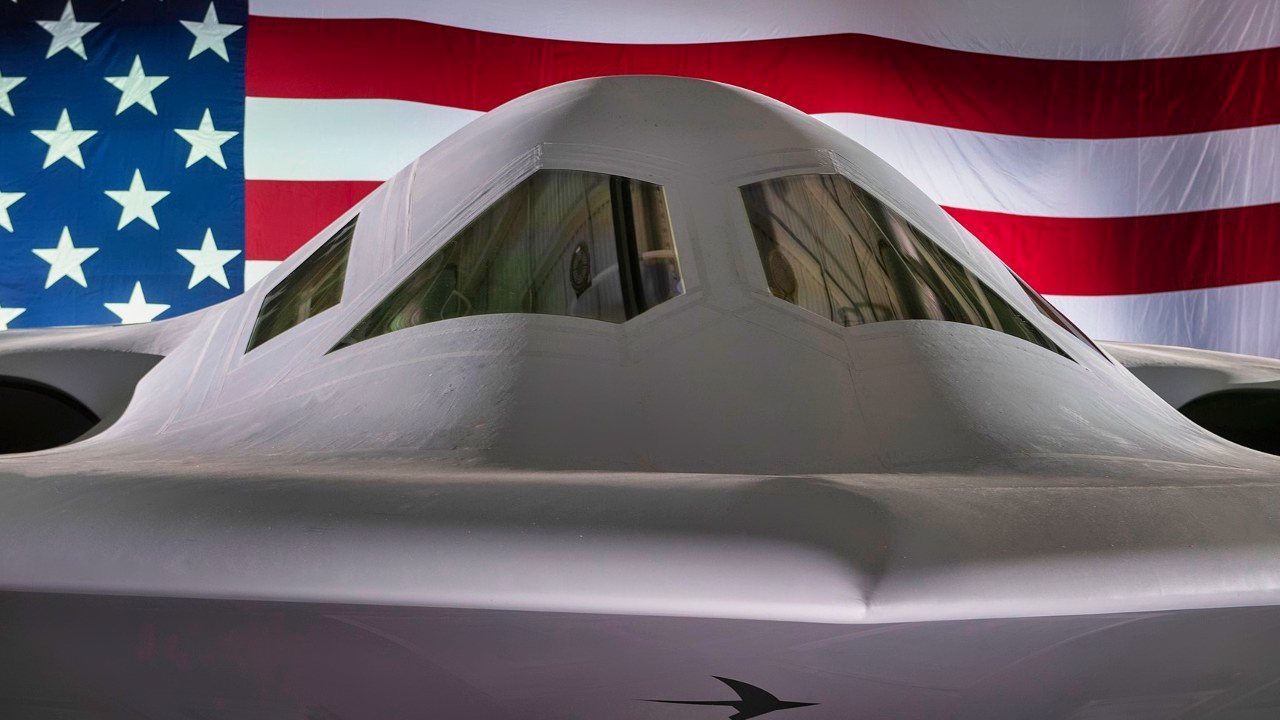
The B-21 Raider was unveiled to the public at a ceremony December 2, 2022 in..Palmdale, Calif. Designed to operate in tomorrow’s high-end threat environment, the B-21 will play a critical role in ensuring America’s enduring airpower capability. (U.S. Air Force photo)
Fielding aircraft with a high combat radius could make the difference, and in the J-36, China appears to have taken note of that lesson.
About the Author: Caleb Larson
Caleb Larson is an American multiformat journalist based in Berlin, Germany. His work covers the intersection of conflict and society, focusing on American foreign policy and European security. He has reported from Germany, Russia, and the United States. Most recently, he covered the war in Ukraine, reporting extensively on the war’s shifting battle lines from Donbas and writing on the war’s civilian and humanitarian toll. Previously, he worked as a Defense Reporter for POLITICO Europe. You can follow his latest work on X.


pagar
March 30, 2025 at 6:48 am
This j-36 issa ruse. By the chinese nation.
Actual aim is to spend the warmongerous DoD into oblivion.
Why.
Because day and night, and also night and day, the DoD and various other agents of the deep state vigorously plan for the destruction and balkanization of the chinese nation.
To prevent that happening, the chinese nation cleverly came up with the ‘j-36’ and the jh-xx.
Now, the DoD is in dixes and sevens, ploughing mountains of dough into the f-47 and the NAVY F/A XX NGAD.
HELL, hegseth is gonna pawn his house very very soon.