

Key Points and Summary: China’s stealth air force has exploded from a small, elite capability into a massive and rapidly growing fleet designed to challenge American air power.
-With hundreds of J-20s in service, the new J-35 entering production, and three different sixth-generation prototypes already flying, Beijing’s ambition is clear.
-This formidable force, supported by a growing fleet of new tankers and AWACS aircraft, is specifically tailored to counter the U.S. in the Pacific by hunting key support assets and penetrating defenses.
-While the U.S. retains advantages, China’s progress presents a serious and evolving threat.
China’s Growing Stealth Air Force
A decade ago, the People’s Liberation Army Air Force (PLAAF) inducted its first Chengdu J-20 stealth fighters into service. It was a major technological achievement. But the PLAAF’s nascent stealth fighter component amounted to an elite, small-scale capability. It was a tiny fraction of an air force that still included hundreds of dated second- and third-generation Cold War-era types such as the J-6 and J-7, both of which are based on Soviet designs from the 1950s.
True, a second stealth jet design also emerged from manufacturer Shenyang at that time, but Beijing did not procure it.
This state of affairs was bound to change. Annual production allegedly reached 70 to 100 J-20s per year in 2023. The PLAAF may end 2025 with at least 300, and perhaps more than 400, J-20s in service, according to various estimates. Those numbers include an unprecedented two-seater stealth fighter, the J-20S.
It’s worth noting the J-20 is significantly larger and heavier than an American F-35 jet and is seemingly designed for greater speed and longer-distance operations; that latter quality is vital for western Pacific operations. However, Shenyang’s lighter, more F-35-like stealth jet, after years of iteration, is now entering service as the J-35A and J-35 in the PLA Air Force and Naval Air Force respectively (the latter is a carrier-based variant). Procurement of at least a few hundred of these airframes is expected.
Perhaps unintentionally, the PLAAF is seemingly replicating the U.S. Air Force’s so-called high-low mix of combat aircraft. The U.S. pairs a larger number of less expensive jets (such as F-16s and stealthy F-35s) with a smaller fleet of more expensive elite fighters (F-15s and stealth F-22s, as well as, eventually, F-47s). That said, China may end up procuring more J-20s than J-35s.
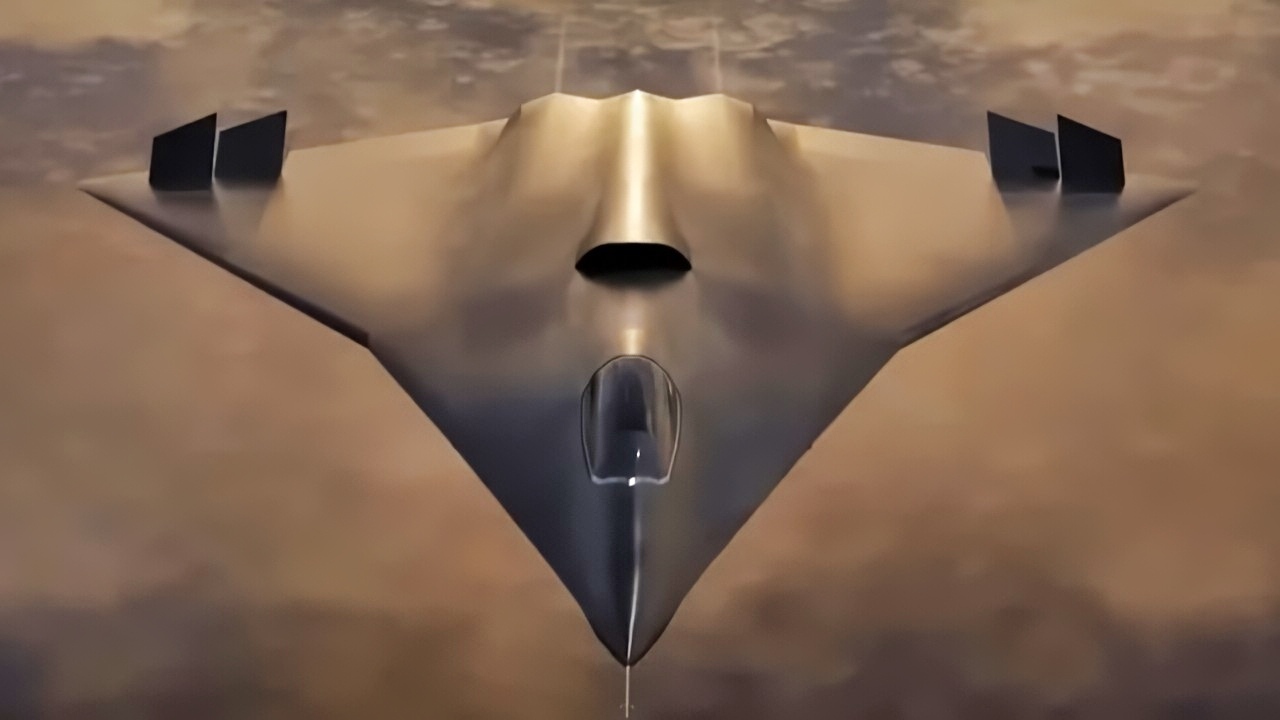
China is also moving aggressively forward with sixth-generation stealth designs. Three new tailless sixth-generation fighter prototypes have been recorded flying in the last nine months: the Shenyang J-50 or J-XD; the bigger, three-engine Chengdu J-36; and a third, still-nameless design this August.
Additionally, Harbin Aircraft Corporation is developing a B-2-like H-20 stealth bomber that could threaten U.S. Pacific bases. Despite rumors the bomber would be unveiled in 2022, lack of recent news regarding the H-20 may reflect significant development delays or problems.
China is also a major drone producer, including loyal wingman-style drone fighters, and stealth combat prototypes such as the CH-7 flying wing and supersonic Dark Sword aircraft. It is not clear that any of these are progressing towards operational service at scale, but it’s prudent to anticipate China will adopt some kind of stealth combat drone, much much the same as the U.S. Air Force.
Enablers/Force Multipliers
The PLAAF stealth fleet’s capabilities are greatly enhanced by parallel improvements to support assets. In 2012, the PLAAF had only some 10–16 each of tankers, airborne early warning and control (AWACS), and large electronic warfare aircraft. It now musters 50 or more aircraft in each of these categories, and the new aircraft are of better quality. Especially notable is the YY-20, which is able to transfer around 50–75 tons of fuel, compared to the older HY-6’s 20 tons.
The PLAAF’s more robust support assets mean a greater share of stealth aircraft can benefit from them operationally. Tankers make possible longer-range, longer-duration missions. This is key to the J-20’s anticipated role. Electronic warfare aircraft can degrade enemy radars, reducing the range from which stealth jets are detected. AWACS aircraft allow fighters to maintain situational awareness while keeping their own radars inactive – and silent.
Lastly, the superior range of China’s beyond-visual range (BVR) missiles – particularly the PL-15 – is a notable advantage that was vividly illustrated in a recent air battle between Pakistani and Indian fighters.
Whether the U.S. can regain a lasting lead with new AIM-174B and AIM-260 BVR missiles remains to be seen.
Why is China Focusing on Stealth aircraft?
China’s embrace of stealth aircraft reflects its preparation for potential conflict with the U.S. and/or its allies in the western Pacific. This is no small task for China, as the U.S. has by far the largest and most advanced air force on the planet. Bolstering its domestic capabilities, the U.S.’s allies in the western Pacific boast some combination of American fourth-generation jets and stealthy F-35s, as well as formidable ground-based and naval anti-aircraft defenses such as Patriot, SM-2, and SM-6 missiles.
The task for China’s military was to develop, mass-produce and field warplanes and support aircraft to reduce the U.S. air power advantage so that its military may successfully execute regional missions, including an invasion of Taiwan, or assert China’s expansive claims in the South China Sea.
While stealth aircraft aren’t invincible, the available evidence from military exercises suggests they heavily overmatch non-stealth aircraft in air-to-air combat. The air war in Ukraine also revealed the dominance of BVR missiles in combat between non-stealth fighters – and the low probability of scoring a kill using long-range missiles, due to the early warning afforded the target.
An air force seeking to destroy enemy aircraft – not merely drive them away – may employ stealth fighters to creep closer (and from unexpected angles) before attacking, maximizing the likelihood of surprise and minimizing the window to evade.
Stealth fighters can also be used to slip around fighter screens to hunt key support aircraft they rely upon- – airliner-based aerial tankers, early warning and electronic warfare jets – which will all have a harder time evading long-range missiles. Destroying support planes could cripple the effectiveness of U.S. fighters, and downed tankers could even result in losses of jets as they run out of fuel over the ocean. This has long seemed like a role the J-20 is intended for.
Israel’s recent war with Iran also demonstrated how stealth aircraft can penetrate defended air space on day one of a conflict to locate and destroy air defenses and other priority targets such as ballistic missile launchers. (The stealth aircraft need not necessarily attack itself if it can relay targeting data to other platforms armed with precision standoff weapons.) This too is key for China, as a Taiwan invasion necessitates suppressing the island’s dense integrated air defense system as rapidly as possible, while simultaneously striking numerous other critical targets in the war’s opening days.
Mitigating Factors
On the qualitative side, U.S. military aviation benefits institutionally from far more combat experience (the PLAAF has had virtually none since the 1960s), and superior pilot training in realistic scenarios, particularly in joint operations with other services.
Additionally, stealth aircraft are not all created equal. It is not certain how much Chinese designs have reduced radar cross-section from various aspects, as photos cannot assess the effectiveness of radar absorbent materials, precision-manufacturing of tiny subcomponents, and other measures that generate stealth. It’s believed the J-20 surpasses Russia’s Su-57 in stealthiness but remains less stealthy than the F-35 and F-22. However, the J-20’s stealth doesn’t have to be absolutely superior to be useful.
On the other hand, the U.S. also retains a big quantitative edge, with more than 3,300 manned warplanes, including around 700 stealth jets. The F-35 may achieve a scale of production unmatched by any current Chinese fighter. The U.S. also will maintain an aerial refueling capacity many times greater than the PLAAF’s for the foreseeable future, despite the latter’s improvements.
However, the U.S. quantitative edge is offset by geographic challenges. In most plausible conflict scenarios, Chinese fighters will be operating in their “backyard,” while U.S. squadrons will rely on carriers and a small number of island bases far from the U.S. that are vulnerable to China’s land-based ballistic missiles.
Thus deployed, U.S. warplanes will have to transit many more hundreds of miles to reach the battlespace compared to Chinese adversaries, severely constraining their window of combat effectiveness. And remember, existing tankers can’t follow fighters into contested airspace.
Overall, China’s enlarged stealth aircraft fleet compels the U.S. and its allies to adopt tactics that are a bit less chess and a bit more poker-like – uncertainty prevails.
Aerial formations and ground-based air defenses must be prepared for threats that may pop up with little early warning from unexpected vectors. Mission planning for non-stealth combat and support aircraft may require larger buffer zones, relying on additional buddy stealth aircraft and loyal wingman drones for screening threats and offensive lunges into dangerous areas.
Just as Russia and China have developed counter-stealth techniques, the PLAAF’s adversaries must devise new tactics and technologies, including more advanced defensive countermeasures for support aircraft, multi-sensor kill chains, and more use of both low-band radars and longer-distance non-radar sensors.
Above all, China’s air force is making a case against complacency, showing rapid progress and ambition in its advanced capabilities.
About the Author: Defense Expert Sebastian Roblin
Sebastien Roblin writes on the technical, historical, and political aspects of international security and conflict for publications including The National Interest, NBC News, Forbes.com, and War is Boring. He holds a Master’s degree from Georgetown University and served with the Peace Corps in China. Roblin is also a National Security Journal Contributing Editor.
More Military
Su-57 vs. J-20 Fighter: Who Wins?


bishnoi-noi
August 20, 2025 at 10:11 am
Americans constantly confuse backyard with frontyard. Or Perhaps it’s the other way round.
Like confusing ogre with asmodeus.
In may 1940, fdr moved the pacific fleet from san diego to hawaii. Now, hawaii is the true backyard.
Hawaii, according to james otto richardson, was a sort of primitive backwater compared to the well-known sleazy-sleazed west coast.
Hawaii, was where you rear ducks, and other water-lovin’ poultry.
Thus sending US Latest massive warships to the backyard was a mistake, it would only irritate japan and put US on a direct collision course, said richardson.
Back to present.
The huge outpouring of latest new stealth designs is useless without the presence or introduction of spaceplanes and spacebombers.
Though recently, in june, the feitian vessel flew successfully, and put US on notice of the real introduction of the holy grail bearer.
What’s that, you might ask.
The bearer of the holy grail of hypersonic flight. The seamless transition from moving at mach 5 to moving at mach 10.
Kevin
August 21, 2025 at 12:28 am
Heads up, typically have “much” written twice in the following sentence:
“It is not clear that any of these are progressing towards operational service at scale, but it’s prudent to anticipate China will adopt some kind of stealth combat drone, much much the same as the U.S. Air Force.“