

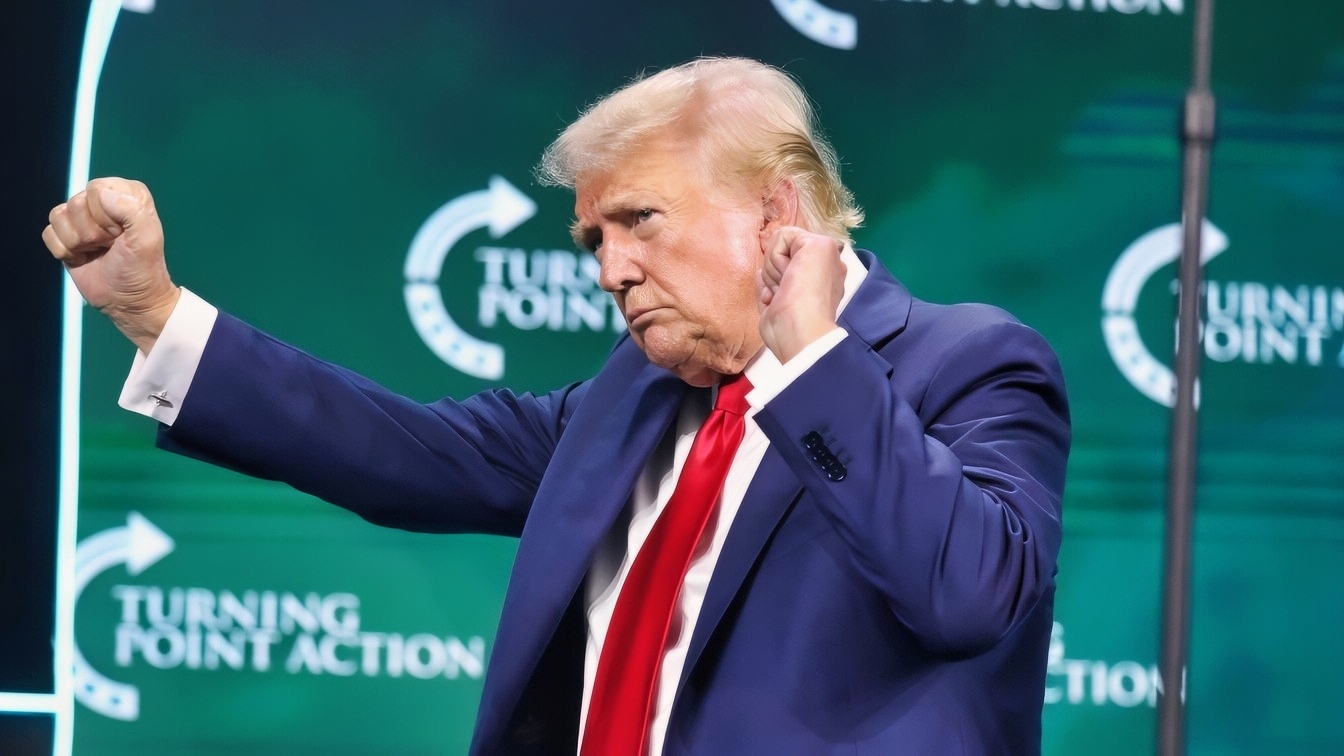
Even as the Trump administration and the incoming Democratic majorities in the United States House of Representatives and United States Senate circle each other, President Donald Trump has indicated a willingness to work with the Democratic Party to cap credit card interest rates at ten percent, potentially opening a rare area of bipartisan cooperation amidst what is likely to be an era of tumult between Congress and White House once the Democrats are sworn into office in January.
Aggravation Among the People
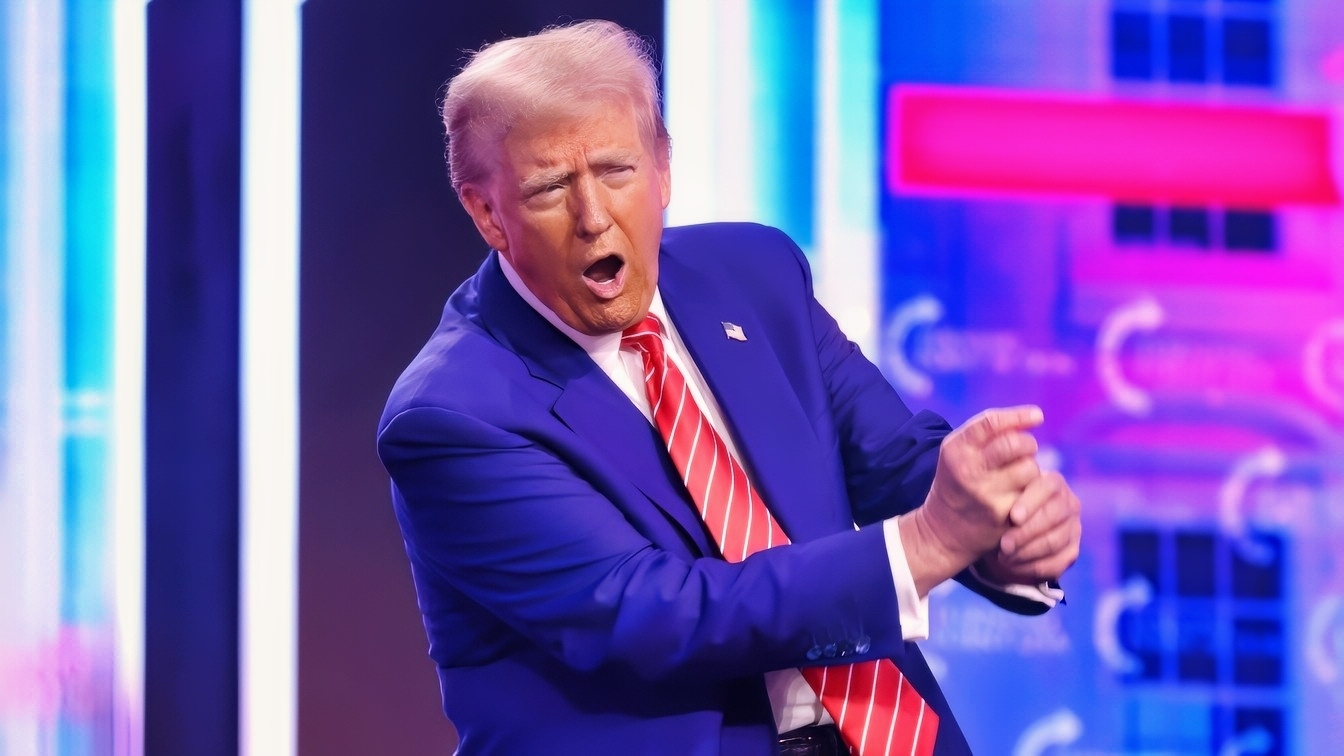
Donald Trump Taking a Swing. Creative Commons Photo.
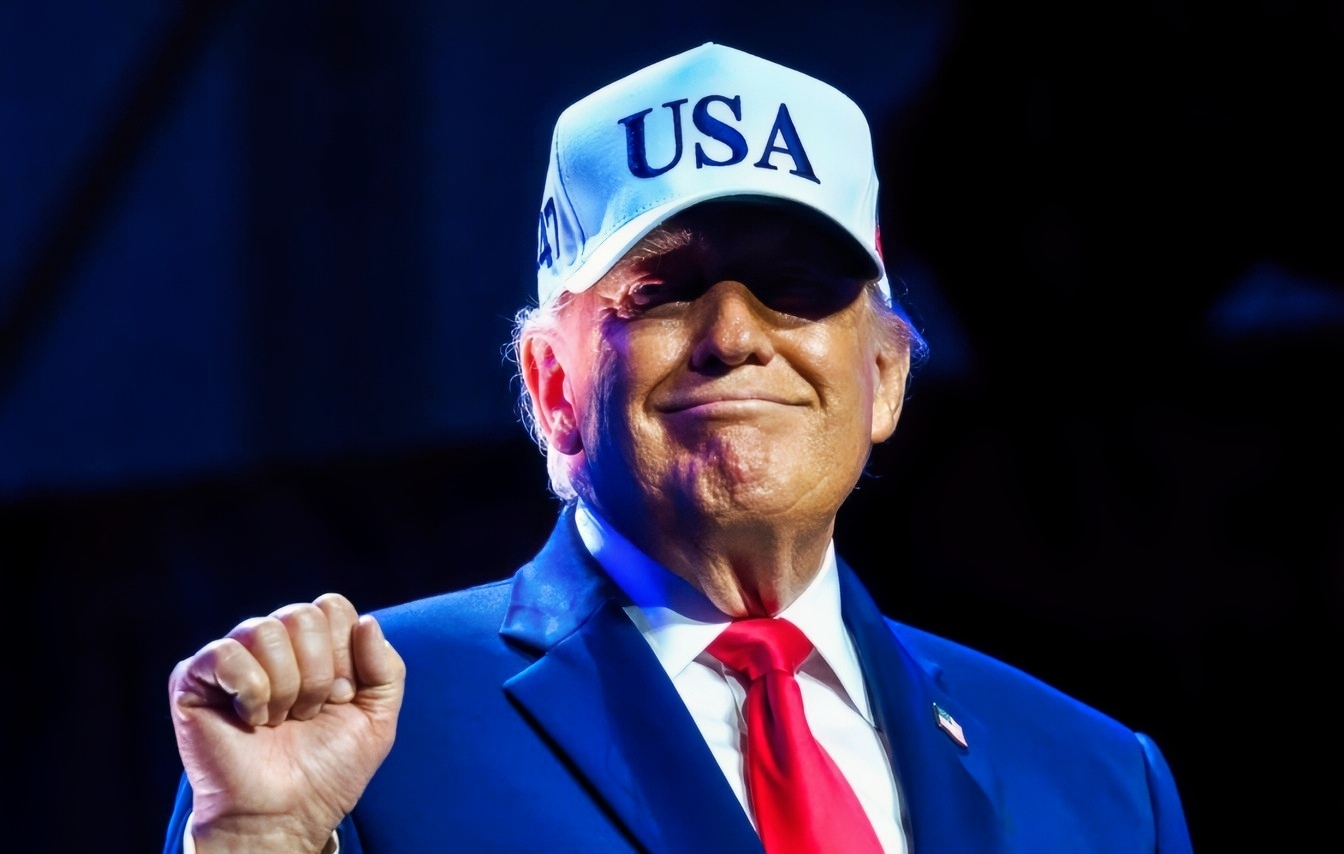
President Donald J. Trump delivers remarks at the UP Summit technology showcase at NASA’s Kennedy Space Center at Cape Canaveral, Florida, Friday, November 6, 2026. (Official White House Photo by Patrick Witty)
Of course, such a move would aggravate Trump’s Republican supporters–notably the big donors who have funded Trump’s political operation for years.
Such a proposal would represent a significant intervention in the consumer credit market, where interest rates frequently exceed 20 percent. What’s more, it puts Trump alongside Progressive Democrats who have long advocated major restrictions on credit card lending practices.
Some argue that disrupting the credit market could significantly harm the US economy, which depends heavily on easily available credit.
But others say that the credit card companies are exploiting consumers and setting them up for financial failure.
To be clear, Trump isn’t saying anything new.
He previously proposed a ten percent ceiling on credit card interest rates during his 2024 presidential campaign.
He again made the same calls in January of this year, as part of his administration’s effort to address rising household expenses (although that was before Trump decided the affordability crisis faced by most Americans was just a Democrat hoax).
Bankers Resist
The bankers were the most vociferously opposed to Trump’s proposal.
By restricting interest rates, the government would undermine their ability to extend credit to consumers with lower credit scores. Higher interest rates compensate lenders for the higher probability of default among borrowers with weaker credit histories.
Banks argue that a 10% cap makes such risky lending financially unattractive.
Lower-income borrowers who rely on credit cards to cover unexpected expenses could be most harmed by these changes.
However, supporters of the move argue otherwise.
They believe credit card companies could remain profitable under a 10% ceiling, but their earnings would decline, and consumer benefits would shrink.
Republican congressional leaders have repeatedly expressed concerns about government intervention in the lending markets.
That’s why the Trump proposal never made it beyond the proposal stage. The Republican-controlled Congress didn’t want to do it.
Democrats Want It
Once Congress becomes overwhelmingly Democratic, though, that all changes. Massachusetts Democratic Sen. Elizabeth Warren, expected to become the next chairwoman of the Senate Banking Committee, has expressed support for legislation that would impose a 10% ceiling.
Meanwhile, Republican Sen. Josh Hawley of Missouri supported similar legislation limiting credit card interest rates. So, this proposal actually has bipartisan support.
The Federal Reserve reports that credit card balances reached $1.29 trillion in the third quarter of 2026 alone; Americans are increasingly living off credit cards.
The average annual percentage rate on credit cards runs at 22.36 percent. This means borrowing costs are high, exacerbating the financial burdens of American households carrying month-to-month balances.
Most researchers believe that Americans could save $100 billion per year in interest payments if the credit card interest rates were capped.
The Consumer Financial Protection Bureau (CFPB) states that just under 200 million Americans have credit cards, and consumers pay roughly $160 billion in interest annually.
Toward Bipartisanship?
The current system is utterly unsustainable. But the biggest reason behind the explosive growth in credit card use is likely the spike in the price of all goods since the pandemic era.
Trump and the Democrats might be missing these larger trends to favor what amounts to a superficial political fix to an economic and financial crisis (brought about at least in part by bad government policy).
Despite the brewing constitutional crisis over executive power with the incoming Democratic majorities in Congress, the Trump administration seems willing to make a deal on this most sensitive issue affecting so many Americans.
The question is whether the president and Congress can make it happen–and whether the solution really helps.
About the Author: Brandon J. Weichert
Brandon J. Weichert is the Senior National Security Editor at 19FortyFive.com. He also manages The Weichert Brief on Substack. Weichert is the co-host of The Mario Nawfal Show on Twitter/X. He is the author of four bestselling national security books, most recently A Disaster of Our Own Making: How the West Lost Ukraine (Encounter Books). His next book, Fortress Americas: A New Monroe Doctrine (Tucker Carlson Books), is due out December 8. Follow him via Twitter/X @WeTheBrandon.


