

In the latest escalatory bout in Ukraine, Ukrainian drones struck a Russian corvette while it was moored off the coast of Benghazi, Libya.
The incident follows a Ukrainian drone attack against a Russian tanker in the Baltic Sea and an attack against Russia’s Kaliningrad region.
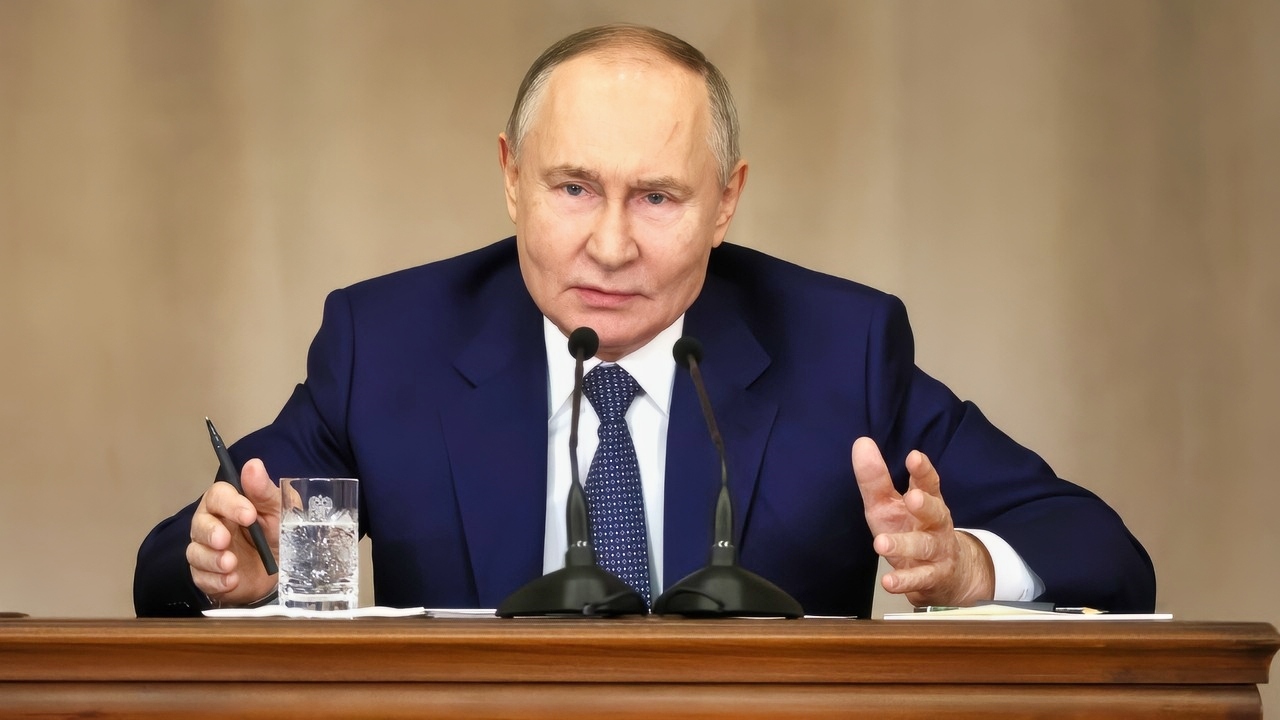
Putin Speaking in 2025. Image Credit: Creative Commons.
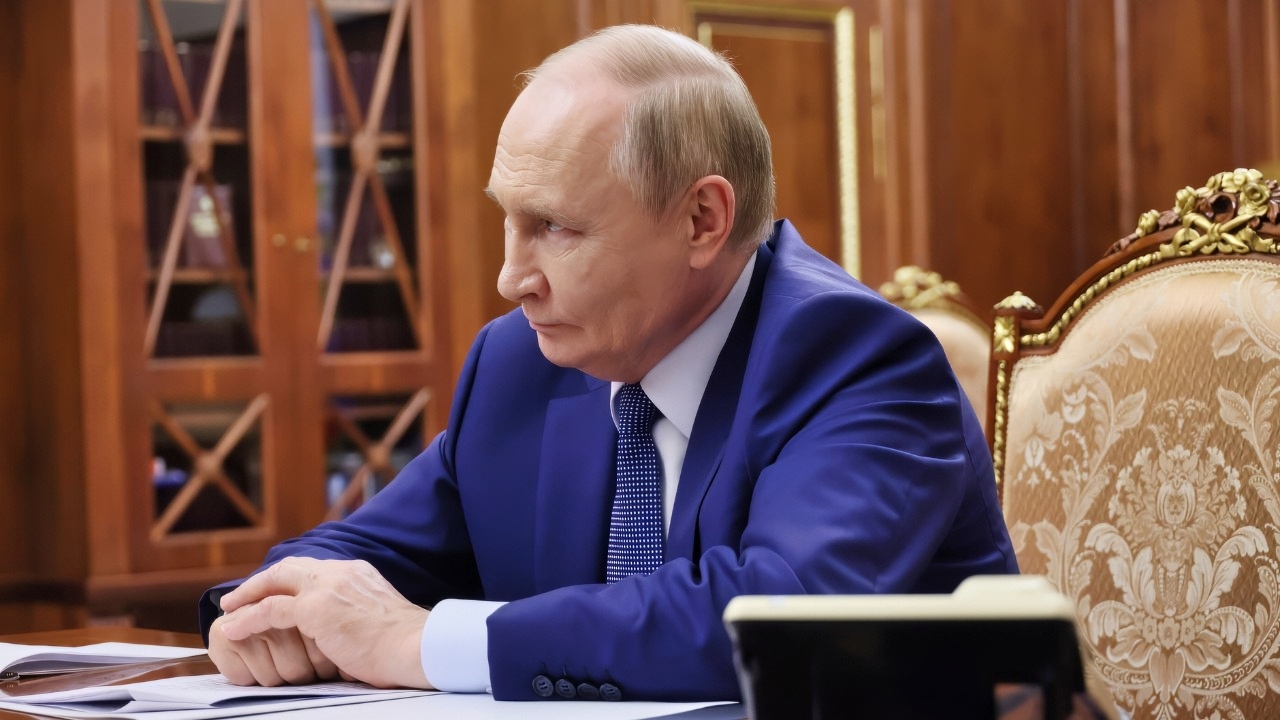
Putin in 2025 Looking Stern. Image Credit: Creative Commons.
This territory has not previously seen any military action.
These latest attacks, which were almost certainly conducted from NATO territory and with Western assistance, present Moscow with a strategic dilemma.
Does it strike Ukrainian forces based on foreign territory and risk escalation, or does it absorb the strikes on foreign territory and make itself look weak?
Russia will likely try to respond to the recent attacks, but what that response will look like is currently unknown.
Russian Warship Struck in the Mediterranean
In a social media post, Zelenskyy confirmed that Ukrainian drones had struck a Russian Steregushchiy-class corvette, “Mercury,” while it was moored off the coast of Libya.
According to the Ukrainian president, the corvette was used to escort military cargo ships. He also confirmed that Ukraine’s security service, the SBU, attacked a Russian cargo ship, the “MV ANGARA.” Zelenskyy claimed the cargo ship was being used to transport military equipment for the Russian armed forces. “Both vessels were legitimate military targets for Ukraine, as they worked directly for Russia’s military capabilities,” the SBU said on its official Telegram channel.
The corvette Mercury was reportedly struck by seven uncrewed surface vessels (USVs) and subsequently sunk, likely being lost for good. Libyan authorities confirmed that several USVs were detected in their national waters and that they sent helicopters to intercept them.
The Libyan National Army forces were evidently unsuccessful. Interestingly, an Iranian vessel was also struck by USVs off the coast of Benghazi.
The cargo vessel “Alvan” was struck, presumably by Ukrainian drones, while operating off the coast of Libya.
Ukraine had previously attacked Iranian vessels, but stopped when Tehran threatened to retaliate.
It is unclear whether Ukraine intentionally hit the Iranian vessel or simply mistook it for a Russian cargo ship. Russia has since threatened a “painful response” to the attack.
Did the West Assist Ukraine’s Operation?
As of now, it is still unclear where exactly the Ukrainian USVs were launched from.
Ukraine retains a minor military presence in western Libya to counter the Russian-backed Libyan government.
However, some reports say the attack was organized and launched from a Mediterranean port outside Libya. According to the Turkish-based outlet Clash Report, the attack may have been staged and launched from Albania.
The outlet claims that reports that the attack originated in western Libya were a diversion by Ukrainian channels.
Albanian authorities have since denied any reports of their involvement in the attacks, stating that such claims “do not reflect the facts.” Other sources suggest that the attack may have been launched from a Turkish Mediterranean port.
However, neither claim has been confirmed.
The launch point for the USVs remains unknown.
Did NATO Help? Well…
Regardless of where the attack originated, the operation likely received some sort of support and intelligence from NATO.
NATO, particularly the U.S., has been very open about its intelligence support for Ukraine.
American officials have publicly stated on numerous occasions that Washington provides targeting data and intelligence on Russian troop movements and locations to Kyiv.
According to some claims, NATO, particularly the Baltic nations, also allows Ukraine to use its airspace when launching long-range drone attacks against Saint Petersburg.
Although authorities from NATO’s Baltic states have denied such claims, Ukraine likely uses Baltic airspace to avoid Russian air defenses and carry out attacks. Similarly, NATO authorities likely also informed Ukraine about the corvette Mercury’s position and may have allowed Ukraine to launch the attack from their territory.
Granted, this is not confirmed, but given how open the alliance has been in its support for Kyiv, it is not unreasonable to assume that Ukraine was not alone in carrying out this operation.
Moscow in Uncertain Waters
These latest attacks put Russia in a rather uncomfortable position. Assuming that NATO is assisting with these operations far beyond the line of contact, Russia’s options for responding are limited without risking major escalation.
Although Western officials grow hysterical at the mere mention of Russian hybrid warfare, in reality, the Russians likely do not have the will to launch any meaningful operations to deter NATO.
Despite Moscow’s accusation of Western involvement in the war, the Kremlin has taken no meaningful steps to deter NATO or Ukraine from launching operations like the one in Libya.
Russia’s options for deterring future attacks are limited, and neither of them is particularly good for Moscow. The Kremlin can either respond in kind and launch irregular operations against Ukraine and NATO, or refrain from doing so.
However, this option is exceptionally risky and could, depending on the West’s response, draw NATO into a full-blown conflict with Russia.
The alternative is to carry on as usual and try to prevent or thwart irregular attacks as they occur, with the usual rhetoric about a “painful response.” This option is safer and avoids any potential escalation, but it makes Moscow look incredibly weak and leaves the door open to further attacks and escalations.
This has been the option the Kremlin has taken so far, and as a result, its naval vessels in the Mediterranean are now under threat from Ukrainian drones, and the Russians have no one to blame but themselves for their current predicament.
About the Author: Isaac Seitz
Isaac Seitz, a Defense Columnist, graduated from Patrick Henry College’s Strategic Intelligence and National Security program. He has also studied Russian at Middlebury Language Schools and has worked as an intelligence Analyst in the private sector.


