
President Trump’s ongoing effort to restrict birthright citizenship in the United States has faced another legal setback, as a federal judge in Washington, D.C. blocked enforcement of an executive order signed in August.
The ruling came almost five months after the U.S. Supreme Court struck down the president’s first attempt to restrict birthright citizenship.
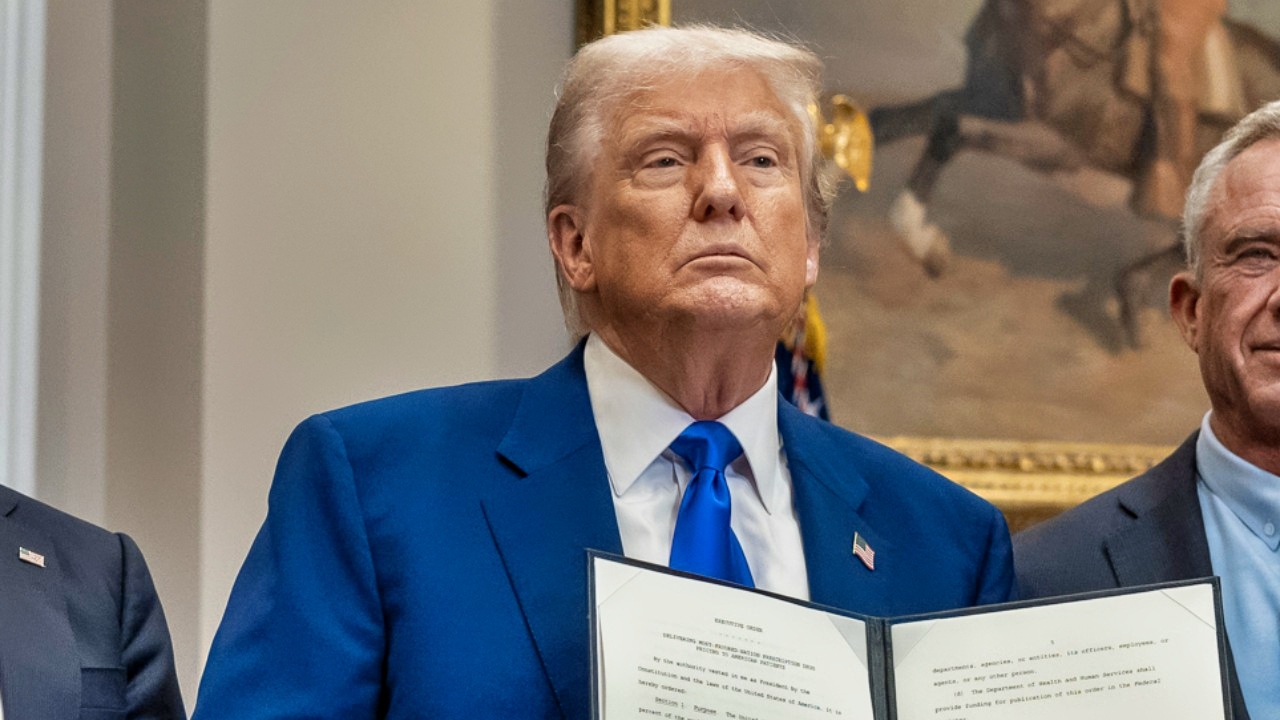
President Donald Trump signs an executive order on Delivering Most-Favored-Nation Prescription Drug Pricing to American Patient at a press conference with Health and Human Services Secretary Robert F. Kennedy Jr., Monday, May 12, 2025, in the Roosevelt Room. (Official White House Photo by Joyce N. Boghosian).

President Donald Trump signs an executive order on Delivering Most-Favored-Nation Prescription Drug Pricing to American Patient at a press conference with Health and Human Services Secretary Robert F. Kennedy Jr., Monday, May 12, 2025, in the Roosevelt Room. (Official White House Photo by Joyce N. Boghosian)
The news makes Judge Christopher Cooper the second federal judge to block the president’s plans.
President Trump signed the new executive order on August 6 to establish more narrowly defined exceptions to birthright citizenship.
The order targeted the children of foreign government employees and those whose parents have engaged in “birth tourism” — the practice of flying into the United States while pregnant and deliberately giving birth on U.S. soil to guarantee the child citizenship.
The White House condemned the November 25 ruling and maintains that the administration’s latest order is consistent with the Supreme Court’s June decision.
With two federal judges now ruling against the administration, however, President Trump faces yet more hurdles in implementing one of his most significant promised immigration reforms.
What Trump’s Second Executive Order Would Do
When President Trump signed Executive Order 14418 in August, the president sought to build on exceptions to birthright citizenship that have long existed.
For example, birthright citizenship is already denied to those born to foreign diplomats.
Under the order, children born to foreign nationals who work for foreign governments or international organizations could also be denied citizenship, even if their parents do not have full diplomatic immunity.
The policy would theoretically impact the children of employees of organizations like the United Nations and the International Monetary Fund.
The executive order did something else too: it directed federal agencies not to recognize the citizenship of children whose parents are members of foreign terrorist organizations, or those whose parents have engaged in commercial surrogacy arrangements.
It also directed agencies not to recognize the citizenship of children whose parents fraudulently entered the United States to obtain citizenship for their children, effectively retroactively undoing the damage done by years of birth tourism.
The restrictions would apply in cases where neither parent is an American citizen, meaning that the children of legal permanent residents could also be affected by the rule.
And despite running and winning on the issue, among other immigration pledges, the president’s efforts to solve this growing problem have been met with legal challenges at every step.
Why the Judge Blocked the Order
In a 67-page ruling on Wednesday, Cooper, who was appointed by former President Barack Obama, argued that the Supreme Court’s decision earlier this year established that the president did not have the authority to introduce additional exceptions to the Citizenship Clause of the 14th Amendment.
The judge also granted class-action status in the lawsuit, meaning his ruling will protect children who meet the criteria set out by the court, rather than just the children named in the lawsuit.
The case was brought in September 2026 with the support of the American Civil Liberties Union (ACLU) and a number of legal advocacy organizations.
One of the children represented in the suit, identified as “Nathan” in court documents, was born in Washington, D.C. to parents who work for international organizations and reside in the United States under G-4 employment visas.
The White House Speaks Out
The White House has responded to the ruling and maintains that its August executive order complies with the Supreme Court’s interpretation of the 14th Amendment.
White House spokesperson Lauren Bis condemned the ruling this week Cooper’s ruling constituted political bias.
“This is just another ruling from an activist judge appointed by Obama attempting to thwart President Trump’s commonsense agenda,” Bis said. “The birthright citizenship executive order is consistent with the holdings and analysis set forth by the Supreme Court.”
ACLU attorney Cody Wofsy, however, said in a statement that the president should accept the legality of birthright citizenship. Wofsy represented the plaintiffs in the lawsuit.
What the Supreme Court Rules In June
In its 6-3 decision on June 30, the Supreme Court ruled that children born to parents who reside in the United States temporarily or illegally were entitled to American citizenship under the Constitution.
The Supreme Court cited precedent from its 1898 ruling in United States v. Wong Kim Ark, which recognized that a man was legally an American citizen after being born in San Francisco to Chinese parents.
The Trump administration, in this case, argued that the language of the 14th Amendment is on its side.
The amendment requires that a person be subject to the jurisdiction of the United States to obtain citizenship at birth, but the White House says the language could be interpreted more narrowly.
The Supreme Court rejected that interpretation.
About the Author: Jack Buckby
Jack Buckby is a British researcher and analyst specializing in defense and national security, based in New York. His work focuses on military capability, procurement, and strategic competition, and he produces and edits analysis for policy and defense audiences. He brings extensive editorial experience, with a career output spanning over 1,000 articles at 19FortyFive and National Security Journal, and has previously authored books and papers on extremism and deradicalization.


