
President Donald Trump appears to be preparing for a significant political confrontation with the Democrats after Republicans suffered incredible defeats in last week’s midterm elections.
After initially accepting the results, the president is now questioning the legitimacy of the results, and his administration is warning Democratic lawmakers against launching investigations into White House officials.
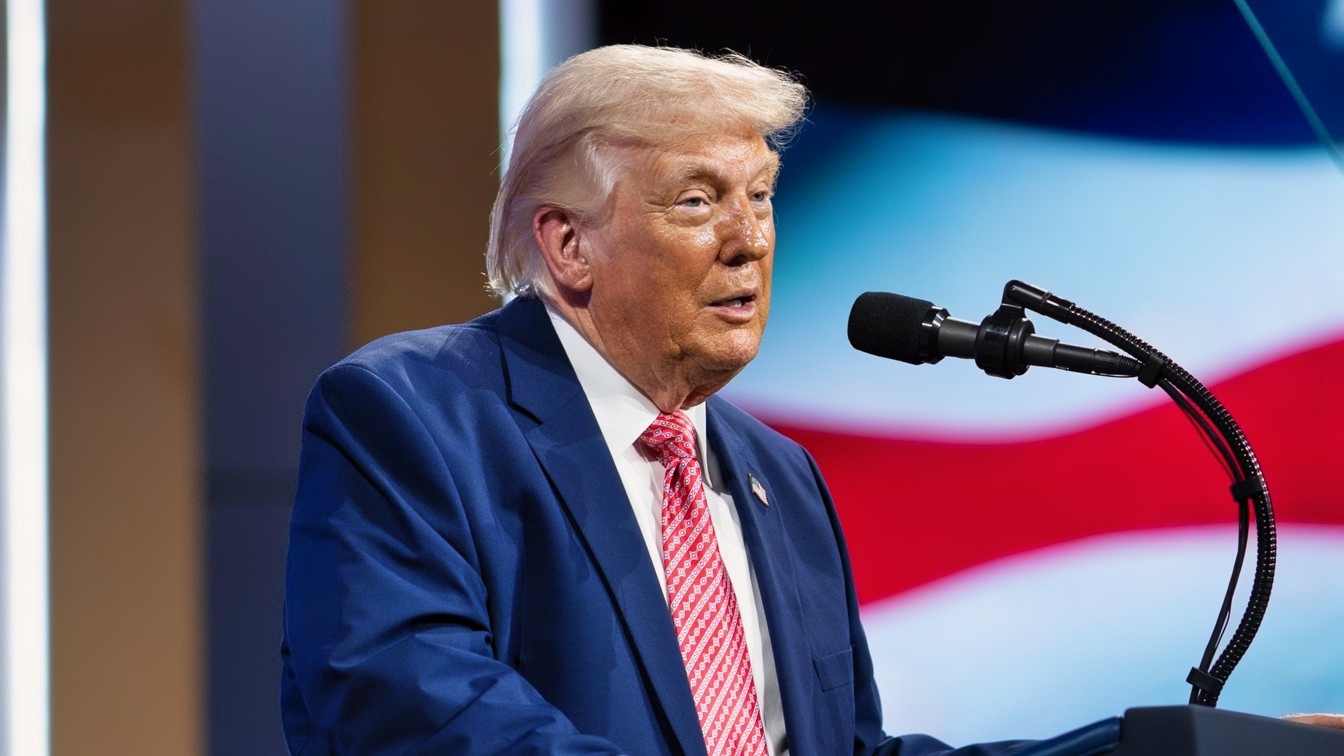
Donald Trump Flickr/White House Photo
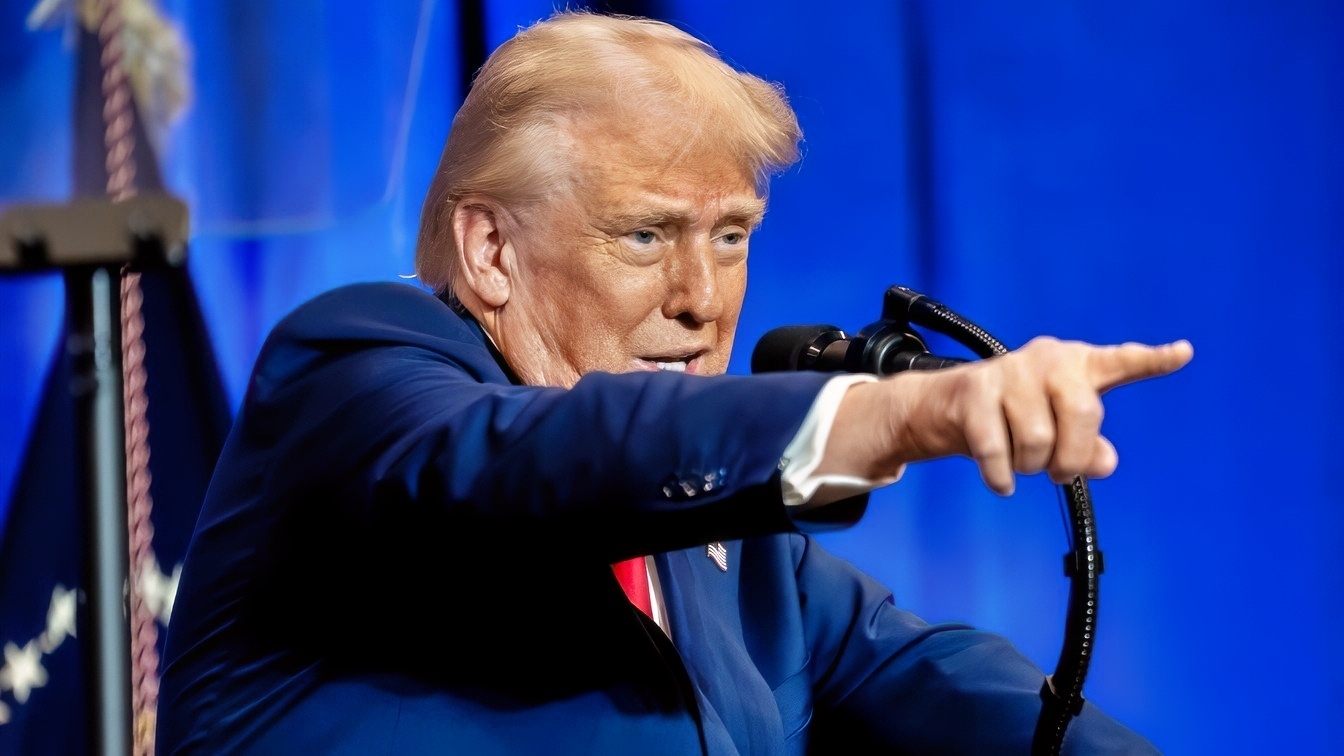
President Donald Trump delivers remarks at the Department of Justice in Washington, D.C., Friday, March 14, 2025. (Official White House Photo by Joyce N. Boghosian)
The president’s claim that the elections were not honest, which was made on Monday, November 9, comes as Congress returned to Washington for its final legislative session of the year.
Republican legislators may be forced to vote on impeaching Defense Secretary Pete Hegseth in the coming weeks.
And despite the scale of the Republicans’ losses last Tuesday, the appointment of Stephen Miller as White House chief of staff suggests President Trump has little intention of moderating his administration’s agenda during his final two years in office.
While he has publicly suggested, including during his recent 60 Minutes interview with CBS, that his immigration enforcement may have gone too far, the president himself says he is prepared to veto legislation that comes from the incoming Democratic-controlled Congress.
Trump Questions Election Results
On Monday morning, President Trump published a statement on Truth Social questioning the legitimacy of the November 3 midterm elections.
“Does anybody really believe that this ‘Election’ was honest? How could the Polls be so wrong???” he said.
“Some early voting ‘dumps’ were so large that it was impossible to win, no matter how many people went to vote. It’s all about the machines, which are far more important than the voter!” he said.
The claims are similar to those made after the 2020 presidential election, when the president claimed that the vote was rigged and “dumps” of votes had disadvantaged his campaign in several states.
Some of the president’s claims about election integrity have since proven real, with genuine fraud already proven in the 2020 election — but there remains insufficient evidence to suggest that the 2020 election was rigged and that Trump actually beat President Joe Biden.
The comments also represent a significant departure from President Trump’s response immediately after the elections. Speaking to The New York Times last week, the president said that he was “absolutely willing” to accept the outcome.
No evidence of widespread electoral fraud in the midterm elections currently explains the Democrats’ historic victories, and the president’s suggestion that the polls were wrong is difficult to unpick.
All major national polls agreed before the midterms that Republicans were at a significant disadvantage and that Democrats were on track to at least win the House of Representatives and potentially the Senate as well.
The polls proved accurate in that Democrats took control of Congress, but arguably inaccurate in that few predicted the scale of the Democrats’ victory.
Trump’s Justice Department Warns Democrats
The Trump administration is preparing to push back against the new Democratic-controlled Congress over plans to investigate Trump officials from January.
On Sunday, November 8, Attorney General Todd Blanche told CNN that Democratic legislators could face criminal investigations over what he has described as threats against administration officials and Republican supporters.
Blanche specifically pointed to Representative Robert Garcia, expected to chair the House Oversight Committee, after warnings to administration officials to prepare for investigations.
Garcia has outlined plans to investigate the president’s family’s business interests, including those of Donald Trump Jr. and Jared Kushner.
The Washington Post also reported that the Democrats are considering launching an investigation into Elon Musk’s Department of Government Efficiency and its access to government data.
The investigations are likely to involve congressional subpoenas and public hearings, and there will no doubt be extensive legal disputes over whether administrations can be forced to comply with testimony requests.
Hegseth Impeachment Could Be Trump’s First Test
Even before the Democrats arrive in January, Trump faces a major test from a Republican-led effort to impeach Defense Secretary Pete Hegseth.
On Monday, Republican Representative Thomas Massie announced that he was forcing a House vote on eight articles of impeachment against Defense Secretary Pete Hegseth.
Massie alleges that Hegseth has committed several impeachable acts, including conducting military operations without congressional authorization.
House Democratic Leader Hakeem Jeffries has confirmed his support for the impeachment effort, although Democrats are expected to discuss the resolution at a party meeting on Tuesday.
With 214 Democrats currently in the House, the measure would require three additional Republican votes to pass the impeachment, assuming every member participates.
Several Republicans have also already expressed their reservations about Hegseth, meaning the impeachment may well pass — but conviction would require a two-thirds majority in the Senate, making his removal less likely.
Even so, impeaching Hegseth would be just another unwelcome hurdle for the president as he attempts to wind down the war with Iran.
About the Author: Jack Buckby
Jack Buckby is a British researcher and analyst specializing in defense and national security, based in New York. His work focuses on military capability, procurement, and strategic competition, and he produces and edits analysis for policy and defense audiences. He brings extensive editorial experience, with a career output spanning over 1,000 articles at National Security Journal, and has previously authored books and papers on extremism and deradicalization.


