
U.S. President Donald Trump has threatened to hit Iran “very hard” if it turns out that Tehran played a role in the attempted crash of a Flydubai passenger jet that was carrying more than 170 people to Israel.
Investigators in the United Arab Emirates are examining the incident as a potential terrorist attack.
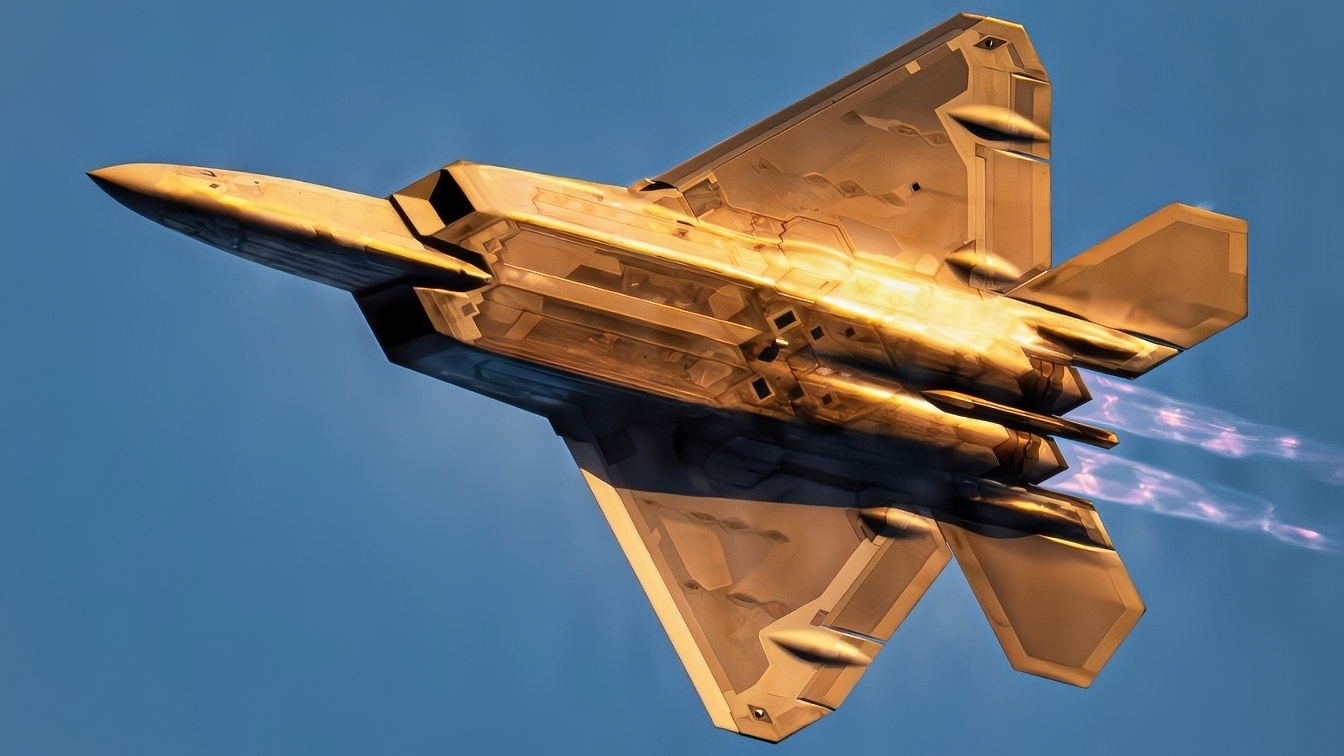
U.S. Air Force Capt. Nick “Laz” Le Tourneau, pilot and commander of the F-22 Raptor Aerial Demonstration Team, performs an aerial demonstration during the 52nd Annual SUN ‘n FUN Aerospace Expo in Lakeland, Florida, April 15, 2026. Capt. Le Tourneau showcased the unmatched capabilities of the F-22 to the SUN ‘n FUN crowds by performing multiple series of combat maneuvers. (U.S. Air Force photo by Staff Sgt. Mary Bowers)
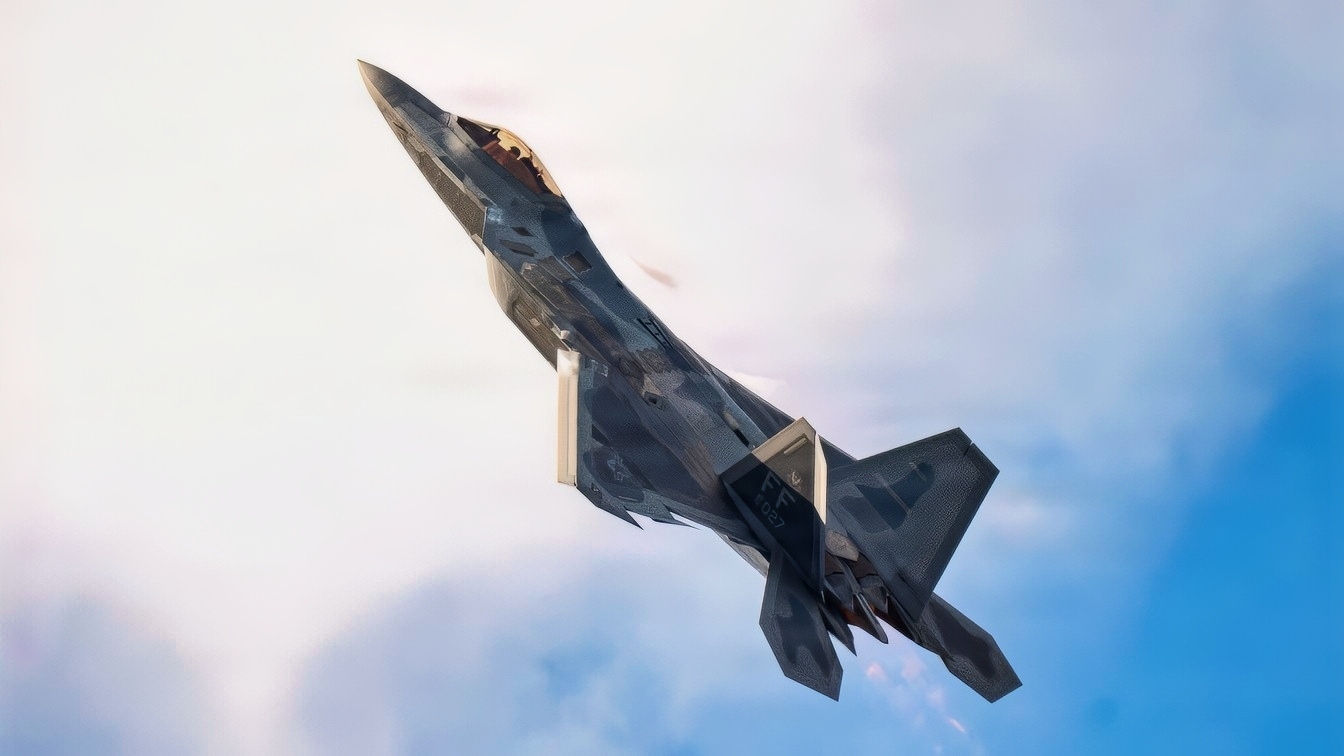
U.S. Air Force Capt. Nick “Laz” Le Tourneau, pilot and commander of the F-22 Raptor Aerial Demonstration Team, performs an aerial demonstration during the 52nd Annual SUN ‘n FUN Aerospace Expo in Lakeland, Florida, April 14, 2026. Capt. Le Tourneau showcased the unmatched capabilities of the F-22 to the SUN ‘n FUN crowds by performing multiple series of combat maneuvers. (U.S. Air Force photo by Staff Sgt. Mary Bowers)
The possible hijacking occurred on September 30, when the co-pilot of the Flydubai Flight FZ1073 allegedly stabbed the captain while the Boeing 737 was flying from Dubai to Tel Aviv.
As the pilot lost control, the aircraft rapidly lost thousands of feet of altitude before passengers and crew busted into the cockpit, subdued the co-pilot, and helped regain control of the aircraft.
Incredibly, the aircraft eventually landed safely in Tabuk, Saudi Arabia, and the passengers were later flown to Israel.
Exactly why the co-pilot allegedly attacked the captain is still being investigated, and there has been no publicly confirmed evidence that links Iran to the incident, although many analysts and government officials have warned that Iran could be responsible.
On October 1, President Donald Trump also said that, based on what he was hearing from advisers and other leaders, Iran may have been involved. He said there would be major consequences for Tehran if that turns out to be true.
Trump Threatens Iran
Speaking to reporters at the White House on Thursday, President Trump was asked directly whether he believed Iran was behind the incident.
“We’re working on it right now,” Trump said on the White House South Lawn.
“They’re being very open with us. I would say the answer, based on what I’m hearing, is yes. But we’re working on it right now.”
When asked whether the United States would retaliate against Iran if it is revealed that Tehran had a role to play in the hijacking, President Trump said yes.
“Oh, they’ll be hit very hard, don’t worry,” Trump said.
He did not, however, explain what information led him to suspect possible Iranian involvement, and no U.S. official has publicly presented any evidence establishing a connection between the co-pilot and Tehran.
Israeli Prime Minister Benjamin Netanyahu has publicly indicated that the intelligence he has seen suggests that the incident was a suicide attempt rather than a hijacking.
He also told Fox News that Israel was aware that the co-pilot had been exposed to “Islamist radical indoctrination.”
What Happened On the Plane?
Flydubai Flight FZ1073 departed Dubai shortly after 7 a.m. local time on September 30 and was traveling toward Tel Aviv with 174 people onboard when the incident occurred.
Passengers and Israeli officials have said that the plane’s co-pilot attacked Captain Smit Machchhar, an Indian national, stabbing him inside the cockpit.
A passenger using the bathroom at the time reportedly heard the incident and alerted others to the struggle.
The aircraft then began descending rapidly as passengers struggled to take control.
Flight tracker data from Flightradar24 showed the aircraft suddenly fell thousands of feet as it flew through Jordanian airspace.
The plane then transmitted the 7700 emergency transponder code before switching to 7500, the international code used to indicate unlawful interference with an aircraft.
Despite being injured, Machchhar was able to open the cockpit door, allowing passengers and other crew members to enter.
The co-pilot was then overpowered, while another flydubai crew member traveling aboard the flight helped regain control of the aircraft.
Passengers Helped Save the Plane
Passengers have since described the chaos they experienced as the plane suddenly began to descend and people realized something was seriously wrong.
Miryam Shira Ohayon, a passenger, said the aircraft was “pretty much out of control,” and other passengers described forcing their way into the cockpit after realizing the aircraft was diving toward the ground.
Yitzhak Lieber, a passenger who helped overpower the attacker, also said that he and others restrained the attacker after they forced their way into the cockpit.
After breaking in, the crew stabilized the aircraft and diverted to Tabuk in northwestern Saudi Arabia, where it landed safely around 9:45 am local time.
Who Flew the Plane Home?
Passengers did not fly the plane home.
Two additional Flydubai pilots were traveling onboard as relief crew, reportedly because regional diversions likely extended the flight beyond the original crew’s permitted duty time.
After the injured Machchhar opened the cockpit door, passengers and crew restrained the co-pilot, allowing the two reserve pilots to take control of the Boeing 737.
The co-pilot has since been transferred to the UAE, where prosecutors are investigating whether the attack involved prior planning or involvement from Tehran or other state actors.
About the Author: Jack Buckby
Jack Buckby is a British researcher and analyst specializing in defense and national security, based in New York. His work focuses on military capability, procurement, and strategic competition, and he produces and edits analysis for policy and defense audiences. He brings extensive editorial experience, with a career output spanning over 1,000 articles at National Security Journal, and has previously authored books and papers on extremism and deradicalization.


