


Almost four years into Russia’s war in Ukraine, and more than a decade after Russia’s annexation of Crimea, the U.S. is faced with a dilemma.
On the one hand is the urge to continue to support Ukraine diplomatically and militarily. On the other is the push to stop a war that neither side can win.
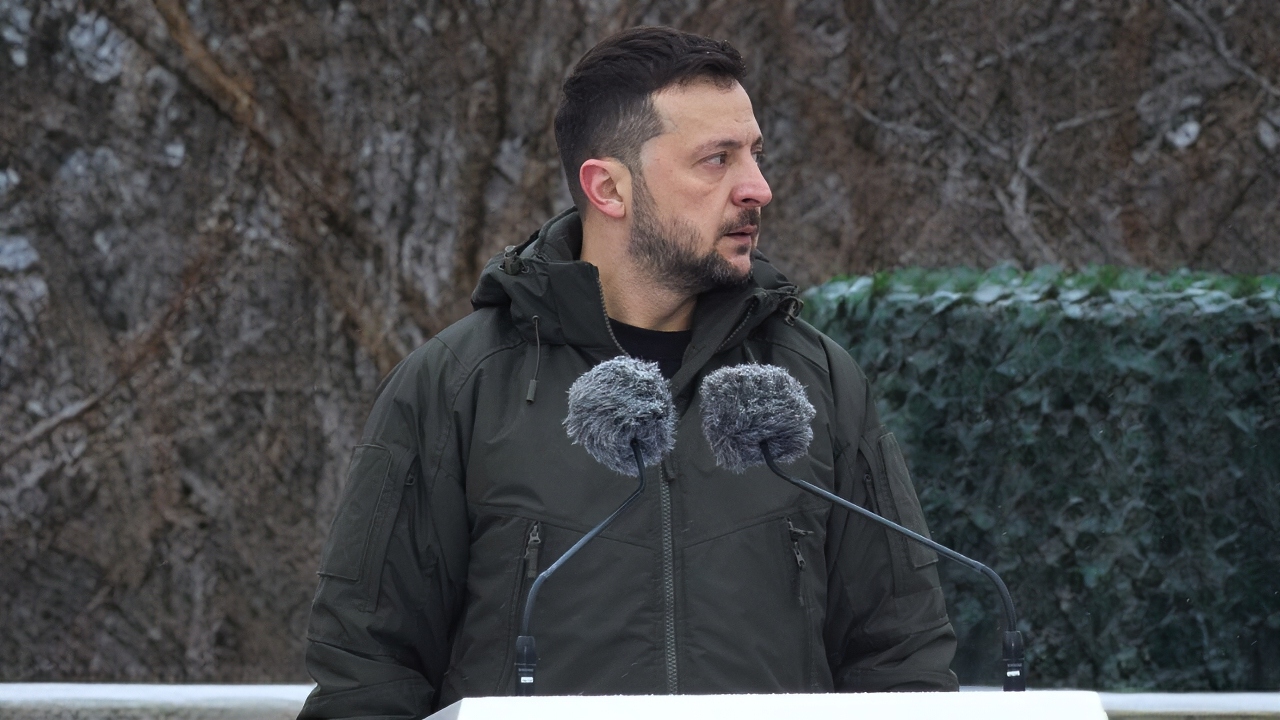
Image Credit: Office the the President, Ukraine.
The urge to support Ukraine doesn’t just stem from a sense of solidarity with Kyiv. It is based on the understanding that Ukraine is fighting for the West as a whole against Russia’s broader onslaught on Europe. And it is not just America supporting Ukraine: Ukraine is doing the fighting in the West’s confrontation with Putin’s imperial ambitions.
But it is also clear that Ukraine will not succeed in restoring control over its internationally recognized borders anytime soon, barring a complete collapse of Vladimir Putin’s Russia. Neither is Russia likely to achieve its war aims of completely subduing Ukraine and erasing its distinct identity. If anything, Putin has done more than anyone to strengthen a Ukrainian identity that will remain deeply hostile to Russia for decades to come.
This is why the Administration’s urge to seek peace makes sense. Yet in doing so, details matter. Media reports suggest the U.S. may soon recognize Crimea as part of Russia in order to break the current diplomatic impasse. That, however, would be a grave mistake. Just look back to the fateful decision of the Bush administration seventeen years ago.
Back then, the U.S. faced growing demands to recognize the independence of Kosovo, a breakaway province of Serbia that had fought a war against the authorities in Belgrade in the late 1990s. After brutal Serbian repression of the Kosovo Albanian population, the U.S. led a bombing operation in 1999 that forced Serbian forces back. Kosovo was then administered by the United Nations for a decade. Sensing an opportunity with the Bush administration, Kosovo leaders demanded they be granted independence.
This, however, was a problem. It would fly in the face of a key principle of international relations: that you cannot use force to change international borders. If America recognized Kosovo, what would stop others from carving up states and redrawing boundaries?
But the Bush administration was unbothered by such questions. In announcing America’s recognition for Kosovo, Secretary of State Condoleezza Rice declared that Kosovo was a “unique case” and had no bearing on any other conflict.
But saying so did not mean it was so. Russian President Vladimir Putin made it clear that if America recognized Kosovo, Russia would respond in the Caucasus. Only months later, it did. Russia invaded Georgia and took control of two Georgian territories near the Russian border. Seeing little pushback from Washington, Putin made his gambit for Crimea five years later.
Would all this have happened had the Bush administration not recognized Kosovo? Given how strongly Putin was motivated by what happened in Kosovo, that seems unlikely.
Of course, every situation is different. Some might argue that the U.S. needs to bring the war in Ukraine to an end because it is a distraction from America’s real challenge, the confrontation with China. If the price is to accept reality – that Russia will likely hold on to Crimea for a very long time – then should it not do so?
Yet China is precisely the reason why the U.S. cannot put its stamp of approval on Russia’s armed takeover of another country’s territory.
We now know that the American withdrawal from Afghanistan signaled weakness, and led Putin to conclude he could move ahead with invading Ukraine. The United States, he thought, would not have the stamina to oppose him for very long.
If the U.S. now recognizes Crimea as Russian, Putin will have been proven right. And the first person to connect the dots will be Xi Jinping. China’s leader will doubtless conclude that Washington is indeed weak – and that Beijing can put into action its plans to take over Taiwan, by force if needed. If it does, he will reason, won’t America eventually just accept reality?
The question for the Trump administration, then, is whether it wants to repeat the mistakes of the Bush and Biden administrations in Kosovo and Afghanistan.
But is there an alternative? Here, history provides an answer as well. After World War II, America accepted the fact that the USSR had taken control over the three Baltic states. But the U.S. never recognized this legally, meaning it could help the Baltic states regain independence when the political situation changed five decades later. That should be the blueprint for Crimea and Ukraine today. Their future depends on it.
About the Author: Svante E. Cornell
Svante E. Cornell is a Senior Fellow at the American Foreign Policy Council and co-founder of the Institute for Security and Development Policy in Stockholm, Sweden.


