


Russia launched a large drone and missile strike on Ukraine overnight on Wednesday, in an attack that struck a residential building in Pryluky, located in Ukraine’s northern Chernihiv region.
The strikes, which killed at least 18 people, coincided with the 74th birthday of Russian President Vladimir Putin.
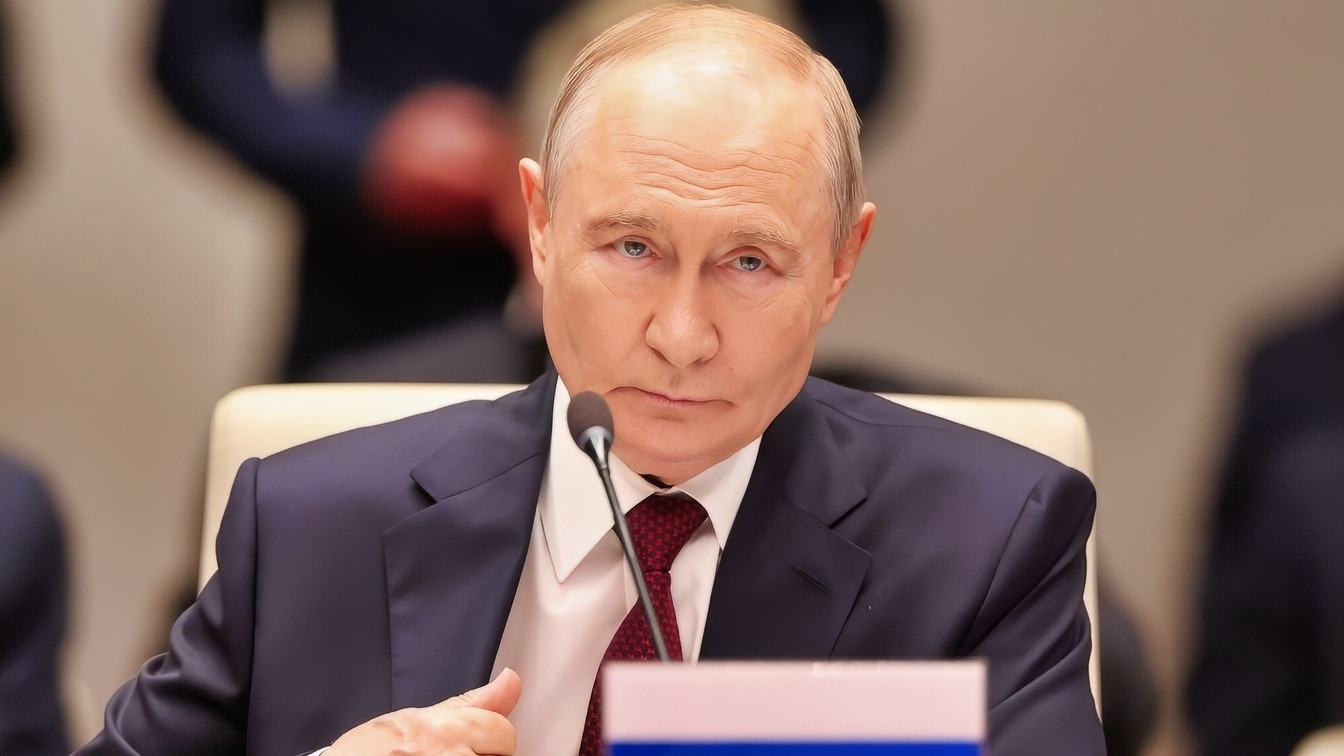
Putin at SCO Conference Creative Commons Image
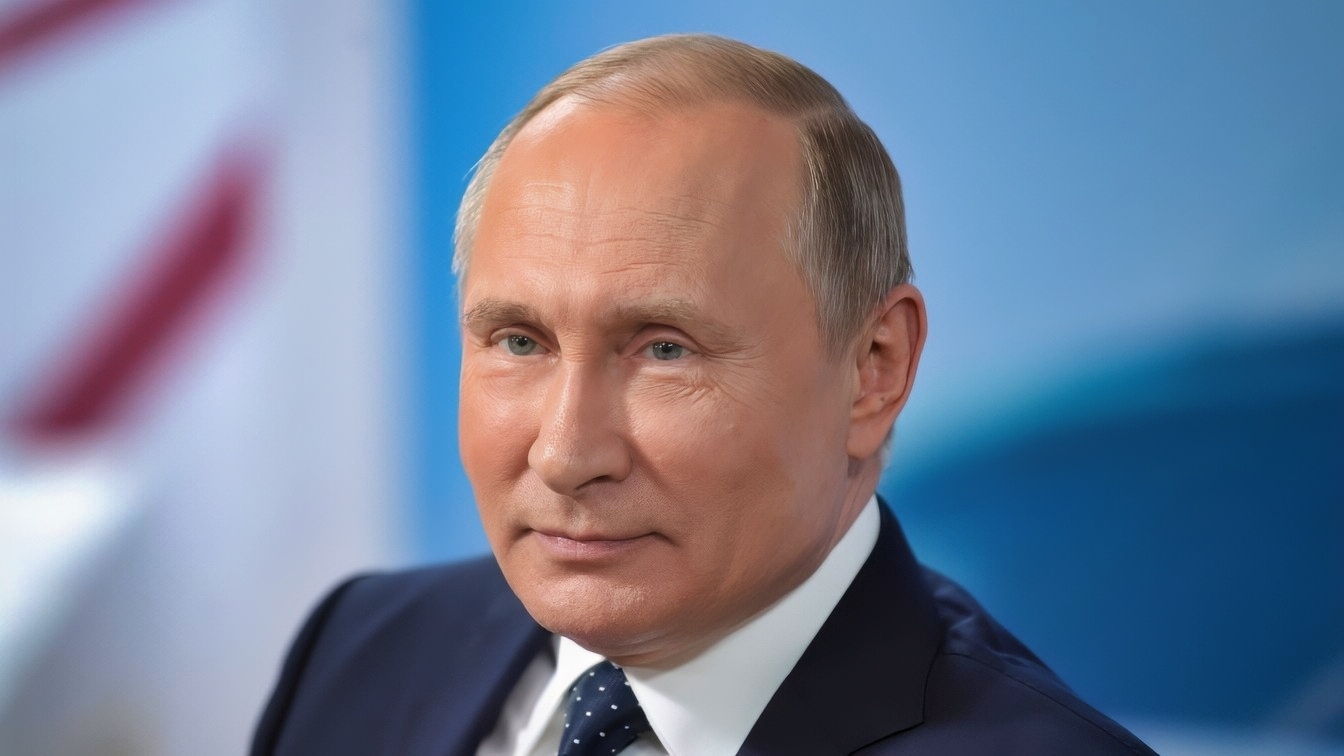
Vladimir Putin In March 2018 Creative Commons Image
Taking to social media, the Ukrainian president posted a video of cleanup efforts following the Russian bombardment. “So far,” President Zelensky wrote, “18 people are known to have died, four of whom were children: Oleksandr, Kyrylo, and Serhiy, who were all just one year old, and eight-year-old Maksym.”
“Dozens of people have been injured, including seven children. All emergency services are on the scene and responding. Rescuers have rescued 15 people, including one child. There are still people who have not yet been accounted for,” he added. “The Russians know full well that they are striking ordinary cities and disrupting ordinary lives. And the continued use of missiles against Ukraine—against our people and our children—is a completely deliberate choice to instill terror.”
“This is precisely what Moscow is choosing, despite all our efforts with our partners to bring peace closer,” President Zelensky added. “And this is a clear reason why more pressure must be put on Russia and why Ukraine needs more defense aid packages. Leaders must understand this. It is important that the world does not remain silent today.”
The Ukrainian president connected the strikes with Putin’s birthday, saying that the strikes were a kind of gift for the Russian strongman from the Russian military, though the connection is speculative.
Air Defense Squeeze
The Ukrainian president did acknowledge that Russian munitions had evaded Ukrainian air defenses.
In total, an estimated 70 ballistic missiles as well as 46 Shahed drones are believed to have been involved in the strike.
While the Ukrainian military said it successfully took down just over 80 percent of the munitions, an improvement over past Russian strikes, the damage from the munitions that evaded Ukraine’s air defenses highlighted how significant the consequences can be.
Ukraine is in the throes of a dire air defense shortage that coincides with a dramatic expansion of Russian drone capabilities.
Ukraine is heavily reliant on Patriot air defense interceptors to take down Russian cruise and ballistic missiles.
Although the munitions are highly effective and considered among the best in the world for air defense interception, they are incredibly complex.
Patriot interceptor manufacture is lengthy, and depending on the variant, can take anywhere from 24 to 30 months to build, as measured from when orders are placed to when they are ultimately delivered.
These long lead times reflect their high reliability.
The myriad components and subsystems in each missile are tested and validated at multiple points throughout production, ensuring combat performance but hindering rapid scaling of mass production.
Furthermore, Russian attack drones have become increasingly sophisticated.
For one, Russia’s early piston-driven models now eschew the propellers of their predecessors in favor of small jet engines sourced from Chinese suppliers.
Consequently, they fly much faster, giving Ukrainian defenders less time to respond and shoot them down while also outrunning all but the very fastest of Ukraine’s own drone interceptors.
Similarly, Geran drones’ networked capabilities are changing the game.
As a recent report from the Center for Strategic and International Studies explains, Gerans are now networked by radio, turning them into explosive-laden eyes and ears for the Russian military.
The radio mesh networking of the Geran “transformed every drone that carried it into a signal repeater for other units nearby, forming an airborne network that facilitated not only the transmitting of information about air defenses and potential targets but also remote operator control in real time,” the report says.
“Data could now be transmitted between an operator on the ground and a unit in the air via a “chain” of network nodes.
If a link in the chain became compromised, the signal could dynamically reroute through another neighboring node, making the communication channel remarkably resilient (as long as there were enough nodes nearby).”
Russia’s Geran drones are therefore much more resilient than in years past, not just faster munitions. Combined with Ukraine’s air defense squeeze, this winter season promises to be one of the most difficult of the war for Ukraine’s civilian population, which increasingly finds itself in the Kremlin’s crosshairs.
About the Author: Caleb Larson
Caleb Larson is an American multiformat journalist based in Berlin, Germany. His work covers the intersection of conflict and society, focusing on American foreign policy and European security. He has reported from Germany, Russia, and the United States. Most recently, he covered the war in Ukraine, reporting extensively on the war’s shifting battle lines from Donbas and writing on the war’s civilian and humanitarian toll. Previously, he worked as a Defense Reporter for POLITICO Europe. You can follow his latest work on X.


