

Ukraine is reportedly continuing to fortify its northern border with Belarus, more than four years after Russian forces launched a failed assault on Kyiv from Belarusian territory.
According to a new report by the Associated Press, which sent a reporting team to the border earlier this month, Kyiv is turning what was once a busy international border into one of the most heavily fortified front lines in Europe.
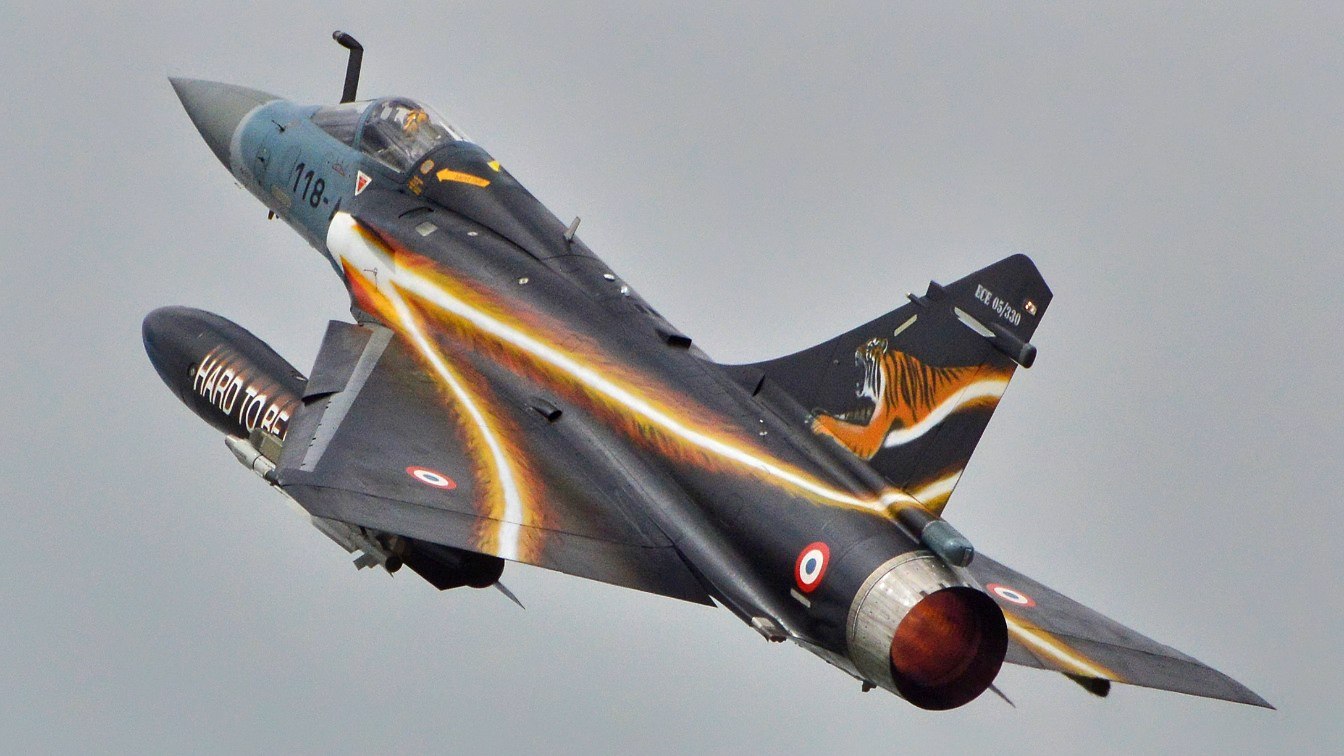
Mirage 2000. Image Credit: Creative Commons.
The Associated Press team reportedly found extensive minefields and anti-drone defenses, anti-tank obstacles, razor wire, and military patrols that stretch the entire 673-mile frontier.
The news also comes as Kyiv prepares for a potential new northern assault from Russian forces – even if officials say they don’t believe it will begin in Belarus.
What the AP Found
Reporters from the Associated Press who visited Ukraine’s border with Belarus earlier in July said that they discovered large sections of the frontier have been transformed into an extensive defensive network designed to prevent or slow a potential Russian advance from the north.
The outlet’s reporting said that roads leading toward the border are covered for long distances by anti-drone netting that was intended to protect military vehicles from aerial attack.
The surrounding landscape was also dominated by rows of razor wire and minefields, as well as concrete anti-tank obstacles known as “dragon’s teeth.”
According to the news agency, the civilian crossing that once allowed people to travel between the two countries has also been closed, with access now replaced by a permanent military presence along the northern border.
Ukrainian border guards are also now patrolling the area around the clock using surveillance equipment and armored vehicles. Drones are also reportedly being used to monitor activity across the border.
Ukraine Sees No Immediate Threat
Although Ukraine has spent years turning its northern frontier into a fortified defensive line, political and military officials are on the record stating that they do not believe Russia is preparing to launch another invasion from Belarus.
The Associated Press reported that Ukrainian officials see no signs of a Russian troop buildup across the border – the kind of buildup that was visible in the run-up to the invasion of Ukraine.
Even as Ukraine continues to fortify the border with minefields and anti-tank obstacles, officials reportedly believe that the chances of a new invasion are low.
They also expressed a belief that fortifying the border serves to ensure that the possibility does not arise regardless.
The Belarusian leader himself has also repeatedly insisted that he has no intention of committing Belarusian troops to the war unless his country is attacked.
But even so, Ukrainian officials see Belarus as a long-term military risk because it is still Moscow’s closest security partner and hosts Russian military infrastructure – an issue that saw President Alexander Lukashenko and Ukrainian President Volodymyr Zelenskyy in a war of words just this summer.
Ukraine Envisions A Northern Assault
While Belarus is generally seen as an unlikely point of origin for a new assault, Ukrainian officials do believe that a Russian assault from the north could occur.
Speaking during a televised interview on June 30, then-Commander-in-Chief Gen. Oleksandr Syrskyi said that Ukraine was preparing for the possibility of a renewed Russian offensive from the north, but suggested that the greater danger no longer lies in Belarus itself.
Instead, he identified Russia’s Bryansk region, which borders Ukraine’s Chernihiv Oblast, as the more likely avenue for any future attack.
“The most likely scenario, and this is confirmed by several data sources, is possible offensive action in the north from the territory of Russia, from the Bryansk region,” Syrskyi said. “This is a realistic option, of course, and we are preparing for it.”
Syrskyi also said that while military planners continue to monitor Belarus, he considered a repeat of the 2022 push toward Kyiv from Belarusian territory to be less likely than an operation launched directly across Russia’s own border into northern Ukraine.
An offensive like that, he said, would likely be designed to seize territory in the Chernihiv region and force Ukraine to divert troops from the east, where Russian President Vladimir Putin is hoping to establish full Russian control of the Donbas.
Residents living near the Belarusian border, however, told the Associated Press that the possibility of Belarus becoming more involved in the war is a constant source of anxiety, with many also saying that the expanding network of fortifications provides reassurance that Ukraine is preparing for every possible scenario.
Now, more than four years after Russian forces crossed into Ukraine from Belarus, Kyiv appears to be unwilling to assume history cannot repeat itself.
Even if military planners believe that a Russian invasion would come directly from Russia, the new defensive network suggests Kyiv isn’t taking any chances.
But, in an age of drone warfare, there’s no telling what could soon arrive from the north.
About the Author: Jack Buckby
Jack Buckby is a British researcher and analyst specializing in defense and national security, based in New York. His work focuses on military capability, procurement, and strategic competition, producing and editing analysis for policy and defense audiences. He brings extensive editorial experience, with a career output spanning over 1,000 articles at 19FortyFive and National Security Journal, and has previously authored books and papers on extremism and deradicalization.


