

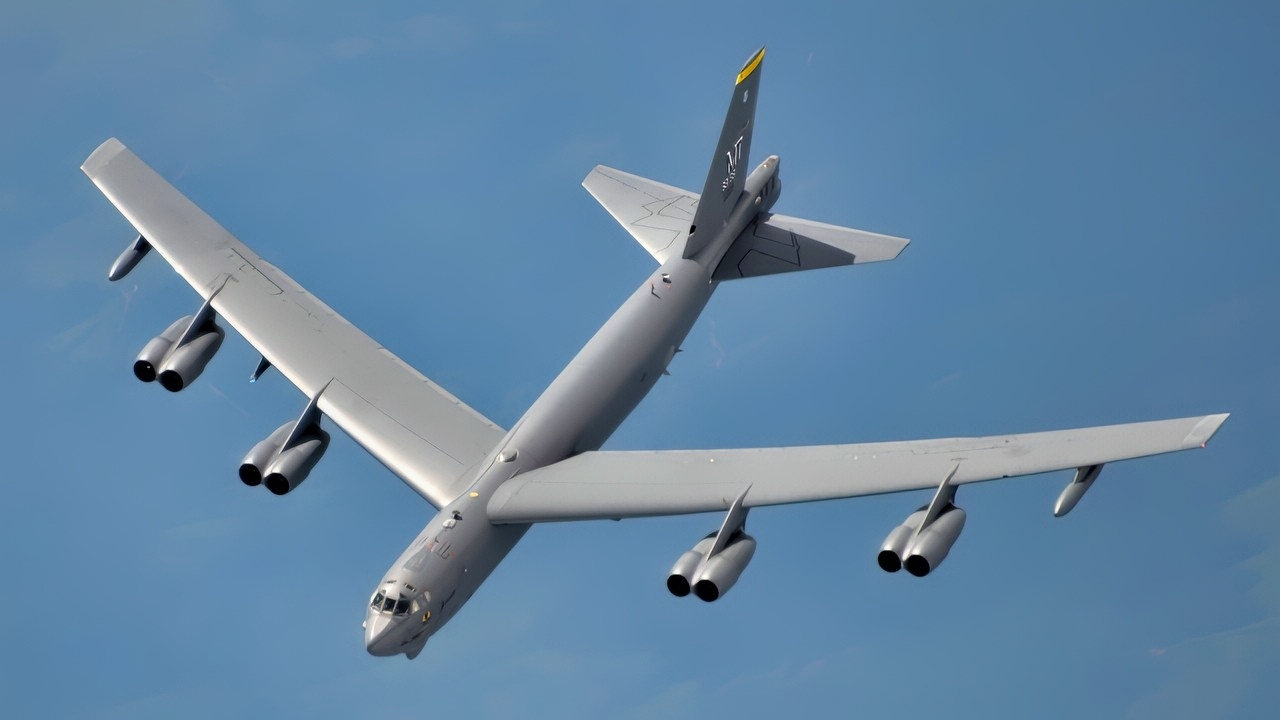
The idea of a massive, Vietnam-era bomber surging 100 years into the future, retaining sustained relevance and effectiveness, might bewilder the masses in the world of combat aviation, yet the possibility is actually realistic. Yes, indeed, the classic B-52 bomber has been upgraded so many times throughout its service life that today’s B-52J bomber is an entirely different aircraft.
The B-52J Bomber Is Coming Soon

A B-52H Stratofortress assigned to the 5th Bomb Wing, prepares to take-off at Minot Air Force Base North Dakota, July 14, 2021. Strategic bomber missions enhance the readiness and training necessary to respond to any potential crisis or challenge across the globe. (U.S. Air Force photo by Senior Airman Jesse Jenny)
New technologies continue to add capability and introduce new concepts of operation. Should the Air Force’s modern B-52J fly into the late 1950s and 1960s, then it will indeed become a 100-year aircraft, something which would doubtless secure a permanent resting place in the annals of aviation history for an eternity.
The airplane that carpet-bombed the North Vietnamese in the late 1960s will soon be firing lasers, launching drones, armed with hypersonic missiles and operating as a flying aerial “node” or command and control hub.
The reality of this “evolution” of the B-52 rests on a clear yet somewhat paradoxical premise: that airframes can remain viable and highly functional for decades beyond their intended service life with maintenance and structural reinforcement.
F130 Engines for B-52J
The most modern “J” variant of the upgraded B-52 is now famous for its new Rolls-Royce F130 engine, a “re-engining” effort that has evolved over many years.
The new engine increases power, fuel efficiency, and performance to new levels, ensuring the bomber can operate with maximum dwell time over targets and propel itself into future decades.

A B-52H Stratofortress taxis down the runway at Minot Air Force Base, N.D., Sept. 16, 2021. The bomber is capable of flying at high subsonic speeds at altitudes up to 50,000 feet. (U.S. Air Force photo by Airman 1st Class Zachary Wright)
Beyond the engine itself, the B-52 bomber has also received a new generation of digital networking, computing, avionics, and radar systems in recent years.
One defining step forward for the B-52 was the introduction of a digital data networking system called Combat Network Communication Technology; this system was paradigm-changing for B-52 crews as it enabled them to receive intelligence updates while “in-flight,” so the aircraft could adjust to new target details or make modifications as needed based on real-time communications. Prior to the adoption of this system, B-52 crews would take off with a predetermined, set target list.
Now, new intelligence information can reach B-52 crews as needed while the bomber is in the air.
Weapons Bay
The B-52 arsenal has also evolved considerably over the years, as the bomber will soon fly with hypersonic weapons, lasers, and the dual-use, nuclear-capable Long Range Stand Off weapon cruise missile.
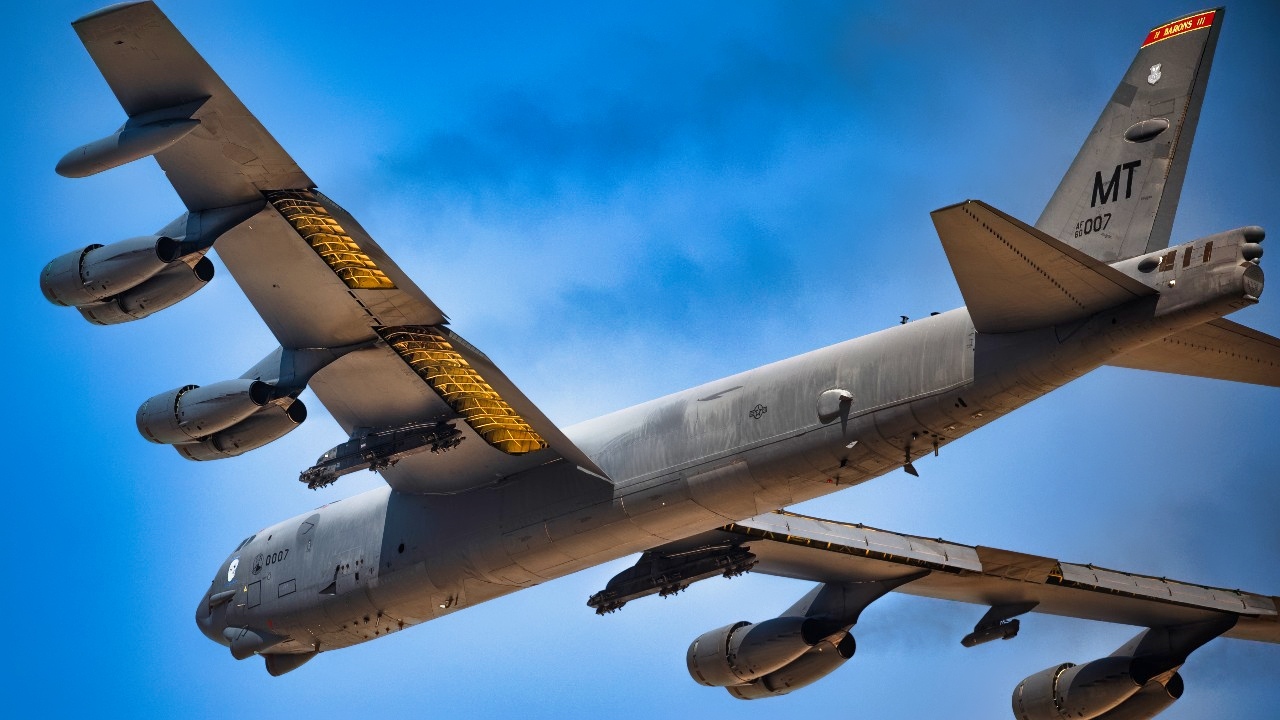
A U.S. Air Force B-52H Stratofortress strategic bomber assigned to the 69th Expeditionary Bomb Squadron flies within the U.S. Central Command area of responsibility, Nov. 15, 2024. The B-52H provides strategic options and flexibility to U.S. and coalition senior leaders with the aircraft’s ability to employ a wide range of weapons with precision and deliver a decisive response to adversaries who threaten peace and security across the region. (U.S. Air Force photo)
The aircraft will also incorporate the most modern variant of the enduring B-61, called the Mod 13. The Mod 13 is a bomb that combines the capabilities of separate variants into a single unit, allowing it to be tailored for an earth-penetrating blast effect, area detonation, or a simple point detonation.
This increases efficiency and enables pilots to operate with a full scope of combat attack options while flying with fewer actual individual “bombs.” The B-52’s bomb carriage capacity has also been massively revamped, with the aircraft now flying with a new internal weapons bay that greatly increases the bomber’s payload or weapons-carrying capacity.
With the new 1760 internal weapons bay upgrade, the B-52 can carry up to eight of the newest “J-series” bombs and more ordnance overall.
Concepts of Operation
All these modifications and enhancements to the aircraft introduce new tactics and concepts of operation for the bomber, as it has evolved light-years beyond its initial function as a carpet-bombing weapon able to blanket enemy areas with unguided bombs, enabling maneuver, degrading enemy capacity, and “rattling” enemy territory.

A U.S. Air Force B-52 Stratofortress, assigned to the 2nd Bomb Wing, flies over Southwest Asia during a aerial refueling mission with KC-135 Stratotanker aircraft assigned to the 340th Expeditionary Air Refueling Squadron Dec. 10, 2020. Bomber Task Force missions or deployments showcase the Air Force’s capability to rapidly and effectively support missions around the globe and seamlessly integrate into operations. (U.S Air Force photo by Master Sgt. Joey Swafford)
Now, the bomber not only operates with precision-guided weapons and long-range guided cruise missiles but also incorporates hypersonic weapons, lasers, and the ability to launch drones.
About the Author: Kris Osborn
Kris Osborn is the Military Technology Editor of 19FortyFive. Osborn is also President of Warrior Maven – Center for Military Modernization. Osborn previously served at the Pentagon as a highly qualified expert in the Office of the Assistant Secretary of the Army—Acquisition, Logistics & Technology. Osborn has also worked as an anchor and on-air military specialist at national TV networks. He has appeared as a guest military expert on Fox News, MSNBC, The Military Channel, and The History Channel. He also has a Master’s Degree in Comparative Literature from Columbia University.


