


Key Points and Summary – Seventy years after entering service, the B-52 Stratofortress is being rebuilt for a new era.
-Under the B-52J upgrade, the Air Force will replace obsolete TF33 engines with Rolls-Royce F130s, add a modern AESA radar, and refresh weapons and avionics—changes senior leaders say will make it “basically a new airplane” and keep it flying into the 2050s.
-But design and testing issues, plus GAO-flagged schedule slips, are pushing key milestones toward 2030 and beyond.
-The program now sits alongside the B-21 Raider debate, raising a central question: can Washington afford to modernize both—and fast enough?
The B-52 Just Turned 70 – And the ‘New’ B-52J Could Fly Into the 2050s
This past June, the US Strategic Command marked the 70th anniversary of the B-52 Stratofortress, which first entered service in 1955.
“For seven decades, the B-52 has stood as a symbol of American airpower. With its unmistakable silhouette and dual-capable nature, the Stratofortress continues to serve as a visible and credible strategic deterrent for the United States and its allies,” Strategic Command said in its commemoration of the anniversary.
“The final B-52H model entered service in May 1961 and is still active to this day. The longevity of the B-52 is a testament to both the airframe’s robust original design and the Air Force’s continued investment in modernization as Airmen from both active-duty and reserve components continue to train, deploy and deter with the aircraft.”
That is an unusually long time for a specific type of jet to remain in service. And the key to its longevity has been a series of upgrades.
And now, more such upgrades are on the way.
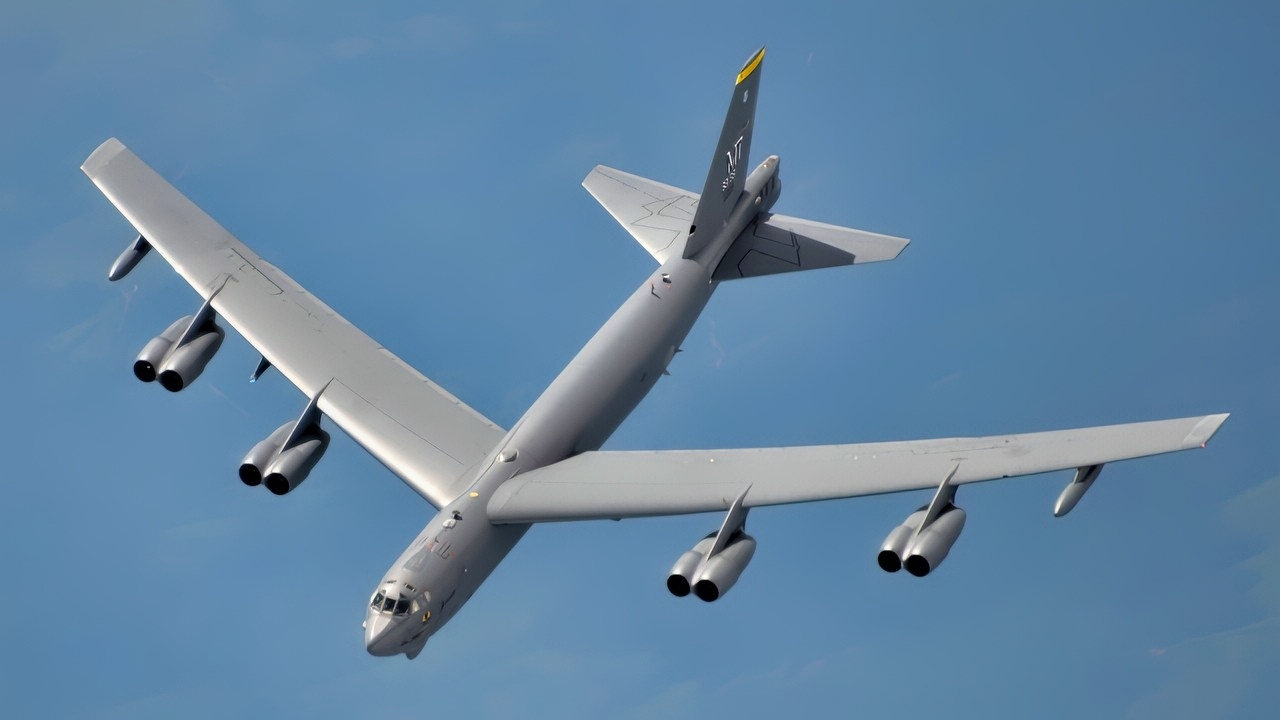
A B-52 Stratofortress assigned to the 5th Bomb Wing, Minot Air Force Base, North Dakota, completes refueling behind a KC-135 Stratotanker assigned to the 134th Air Refueling Wing, Tennessee Air National Guard, during exercise Saber Guardian 19, June 17, 2019. The bombers participated in three exercises in the Baltic and Black Sea regions, providing opportunities for training with our allies and partners. Strategic bomber missions enhance the readiness and training necessary to respond to any potential crisis or challenge across the globe. The USEUCOM, NATO exercise promotes regional stability and security while increasing readiness, strengthening partner capabilities and fostering trust. (U.S. Air National Guard photo by Tech. Sgt. Daniel Gagnon)
Maj. Gen. Jason Armagost, Eighth Air Force and Joint Global Strike Operations Center, said in June that “we look to the next model to serve as the physical embodiment of the idea of peace through strength and carry us into the 2050s.”
Known as the “J model,” the upgraded version will include “new engines, radar systems and weapons upgrades,” with the existing TF33 engines replaced by Rolls-Royce F130 ones.
The modernization, in fact, is expected to keep the plane in the air into the 2050s.
“Basically a New Airplane”
Last month, at his confirmation hearing to serve as head of Strategic Command, Vice Adm. Richard Correll testified that the upgrades are “essential” and that, in the end, the B-52 will resemble “a new airplane.”
Per Business Insider, “Correll added that the planned updates would improve the readiness rate of the bombers going forward. But the B-52 upgrades won’t be fielded until as late as 2030, about three years after originally planned.”
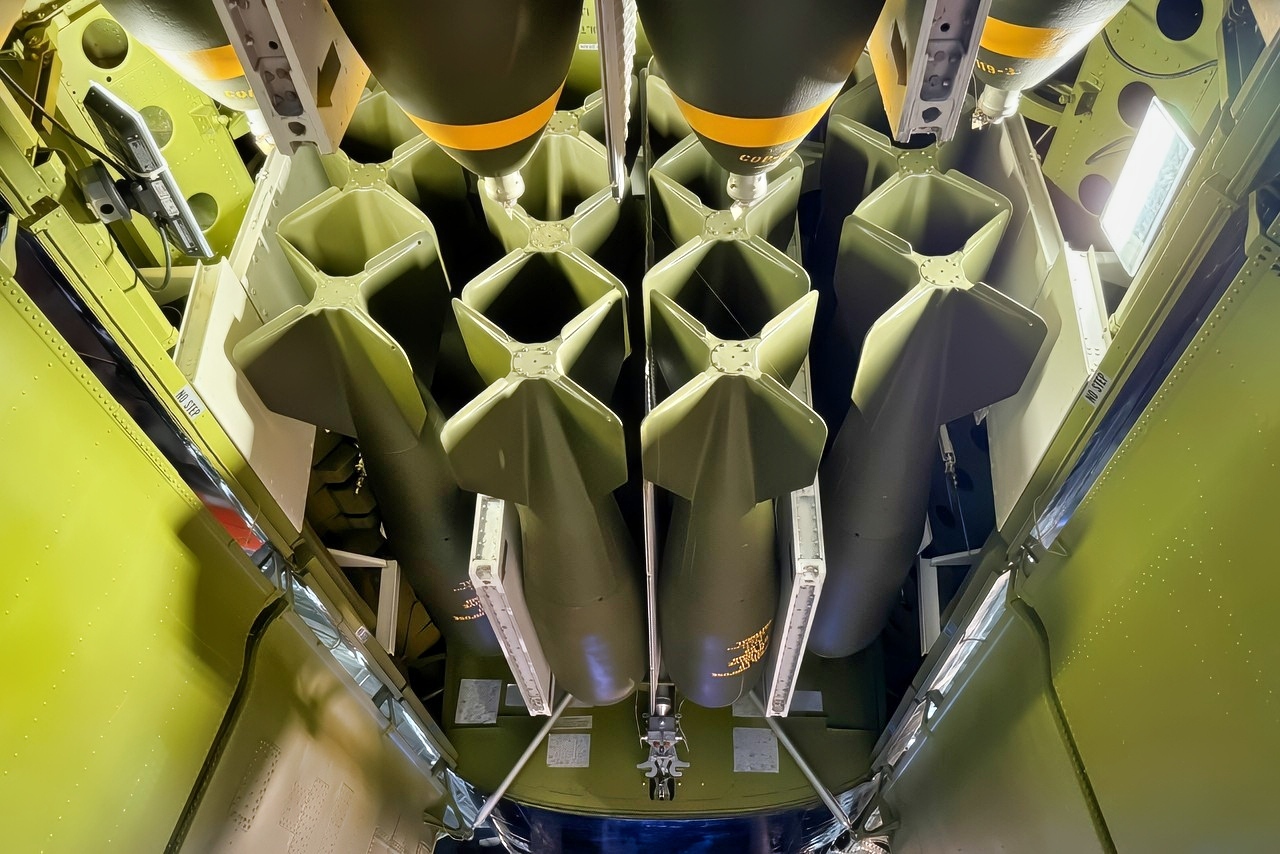
Bombs Inside the B-52 Bomber. Photo taken by Harry J. Kazianis/National Security Journal.
Correll was confirmed to the role late last month. This confirmation came at a time when, per Defense Scoop, “units under Stratcom have been conducting B-52 bomber flights near Latin America amid a surge of U.S. military forces to the region and increasing tensions with Venezuela under the Trump administration.”
About the Upgrades
The War Zone reported in March of this year about how the B-52 upgrade program was coming into sharper focus. The report noted that “re-engining” of the 76 existing bombers is now planned by 2036.
“The US Air Force’s goal has been to finish re-engining the last of its fleet of 76 B-52 bombers by 2035, but this schedule might now slip to the following year,” TWZ reported. “This would extend the total time between the original Commercial Engine Replacement Program (CERP) contract award and the completion of the upgrade work to around 15 years.”
The Rolls-Royce engine had been chosen as the new engine for the upgrade in 2021.
TWZ also cited a recent contracting notice, part of the B-52J CERP production phase, which showed that the Pentagon was seeking “procurement and/or production of aircraft components to support installation of new engines and associated sub-systems onto the B-52 aircraft. (engines will be provided separately by the Government).”
The report also looked at what the upgrades will achieve once they’re complete.
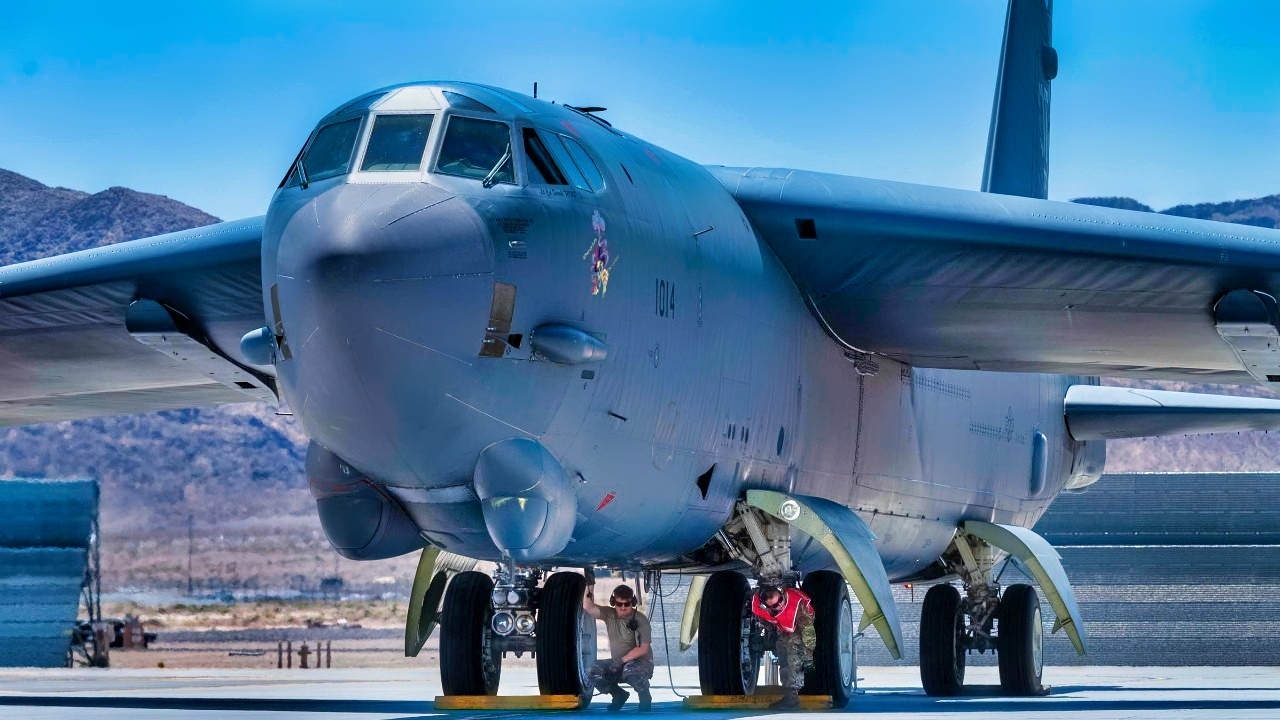
U.S. Air Force Tech. Sgt. Jacob Durham, left, and Staff Sgt. Kenneth Garris, crew chiefs assigned to the 307th Aircraft Maintenance Squadron, Barksdale Air Force Base, Louisiana, prepare to launch a B-52H Stratofortress in support of U.S. Air Force Weapons School Integration (WSINT) at Nellis Air Force Base, Nevada, June 3, 2025. WSINT serves as the culminating exercise for U.S. Air Force Weapons School students, bringing together air, space, and cyber forces in realistic, mission-critical training scenarios that mirror the complexities of modern warfare. (U.S. Air Force photo by William R. Lewis)
“The re-engining effort is set to give the bombers substantially better fuel economy and reduce maintenance demands, which, in turn, are expected to cut sustainment costs and provide operational benefits, including extended range, as you can learn more about here,” the report said. “The TF33 is a 1950s-era design that has been out of production since 1985 and is now very costly to operate and maintain.”
GAO Weighs In
The Government Accountability Office’s Weapon Systems Annual Assessment, released in June, shared details on how the upgrades will work and how they have been delayed.
The Air Force’s B-52 Commercial Engine Replacement Program, per the GAO, “plans to support nuclear and conventional operations by replacing the aircraft’s engine with military-configured commercial engines. Along with the new engines, the B-52 CERP will replace associated subsystems, such as engine struts, the electrical power generation system, and cockpit displays for the B-52H fleet.”

A B-52H Stratofortress assigned to the 419th Flight Test Squadron is undergoes pre-flight procedures at Edwards Air Force Base, California, Aug. 8. The aircraft conducted a captive-carry flight test of the AGM-183A Air-launched Rapid Response Weapon Instrumented Measurement Vehicle 2 at the Point Mugu Sea Range off the Southern California coast. (Air Force photo by Giancarlo Casem)
The report also found that the engine replacement program is facing delays.
“According to the program, delays stem from ongoing engine inlet issues the program found during design testing and from Boeing’s lag in submitting proposals needed for maturing the program’s cost and schedule baselines. Officials stated that Boeing submitted qualified proposals in summer 2024 that the program is currently reviewing.”
The GAO report also looked at the B-52 Radar Modernization Program, which “plans to replace the current APQ-166 radar on all 76 B-52H aircraft with a modern off-the-shelf Active Electronically Scanned Array radar.”
This also, GAO said, “continues to struggle with schedule delays while mitigating cost increases.”
“Since our last assessment, the program office notified the Air Force senior acquisition executive that it will breach the baseline schedule for production start and initial operational capability. Program officials delayed the first and second low-rate production decisions by 11 months each.”
Earlier this year, the radar upgrade program reportedly had a Nunn-McCurdy Cost Breach, meaning the service was required to notify Congress of a significant cost or schedule increase.
More B-21s, Sooner?
At that confirmation hearing, Adm. Richard Correll testified that he supports buying more B-21 Raiders than the 100 currently ordered.
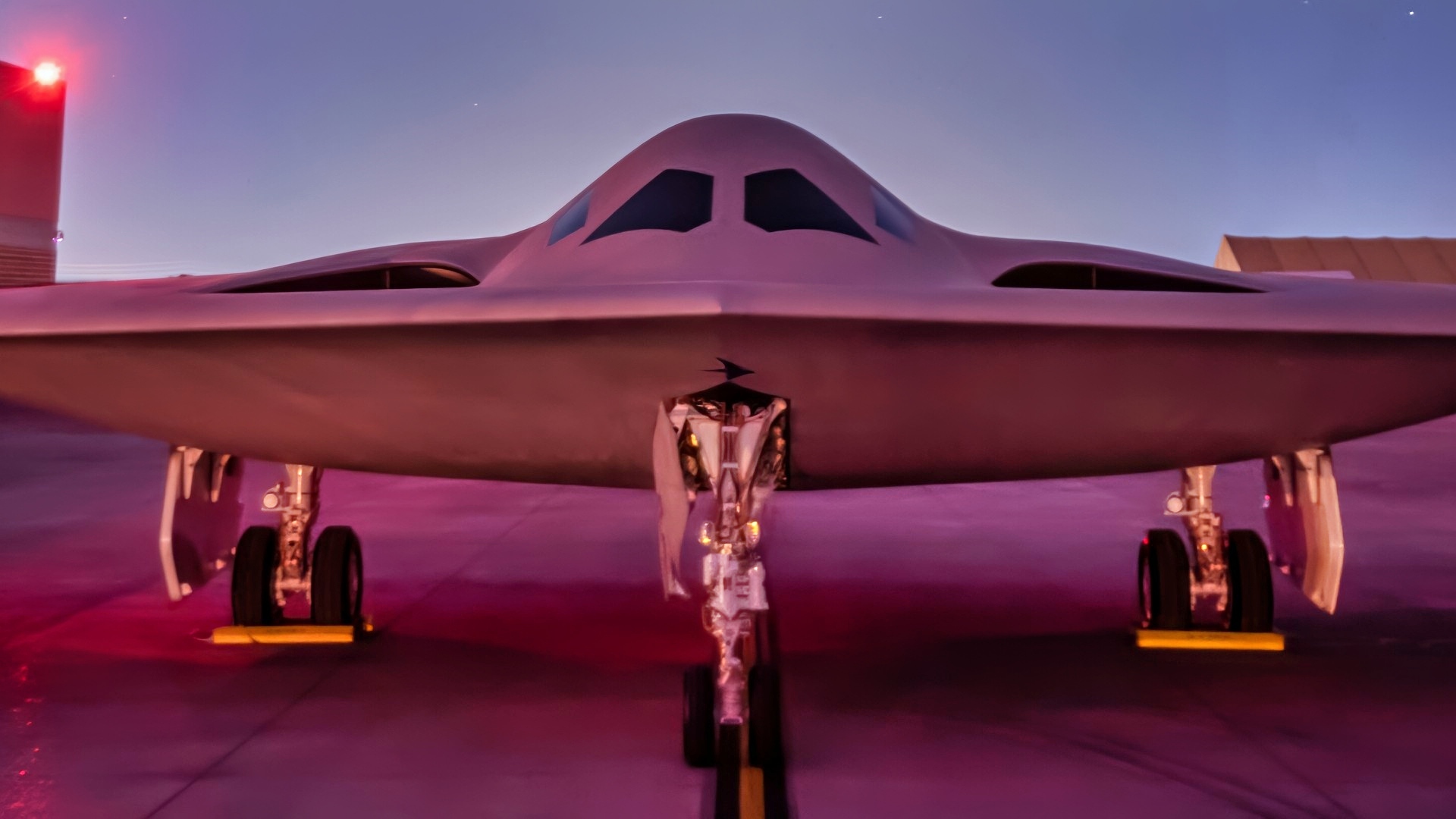
The B-21 Raider was unveiled to the public at a ceremony December 2, 2022 in
Palmdale, Calif. Designed to operate in tomorrow’s high-end threat environment, the B-21 will play a critical role in ensuring America’s enduring airpower capability. (U.S. Air Force photo)
Earlier this year, Air Force Chief of Staff Gen. David W. Allvin testified to the Senate Armed Services Committee that if the B-52 upgrade “goes worse than we hope, then we would need more funding for the B-21.”
“The 100 minimum is certainly something we can stand behind,” he said. “When we look at what the maximum is, I really want to look at the risk over time, and opportunities over time.”

B-52D Bomber at USAF Museum. Image Credit: National Security Journal.
About the Author: Stephen Silver
Stephen Silver is an award-winning journalist, essayist, and film critic, and contributor to the Philadelphia Inquirer, the Jewish Telegraphic Agency, Broad Street Review, and Splice Today. The co-founder of the Philadelphia Film Critics Circle, Stephen lives in suburban Philadelphia with his wife and two sons. For over a decade, Stephen has authored thousands of articles that focus on politics, national security, technology, and the economy. Follow him on X (formerly Twitter) at @StephenSilver, and subscribe to his Substack newsletter.


Krystal cane
December 5, 2025 at 4:47 pm
Is it trump is dumb
John
December 17, 2025 at 2:18 pm
What??? You people are so ridiculous and empty of any substance. Are you aware of what you look like to real Americans?
David C Stevens
December 17, 2025 at 9:44 pm
I read in 1980 that SAC had a bunch of B 52 Ds in bunkers as “Secound Strike”aircraft.Are they all gonzo now?How many F 111s are in “Secound Strike” capable SAC bunkers?All gonzo too?