

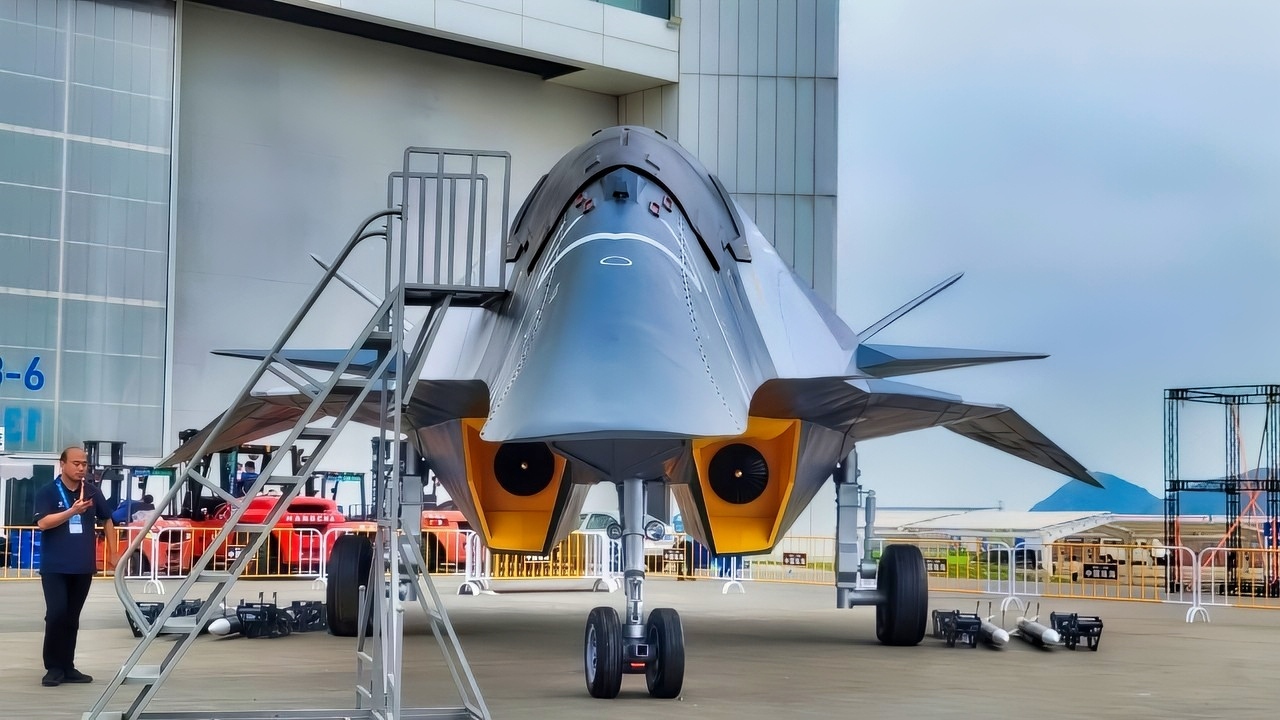
Key Points and Summary – The next leap in air combat, the 7th-generation fighter, will likely be a revolutionary combination of technologies currently in their infancy.
-These aircraft may be entirely unmanned, powered by advanced AI capable of autonomous dogfighting.
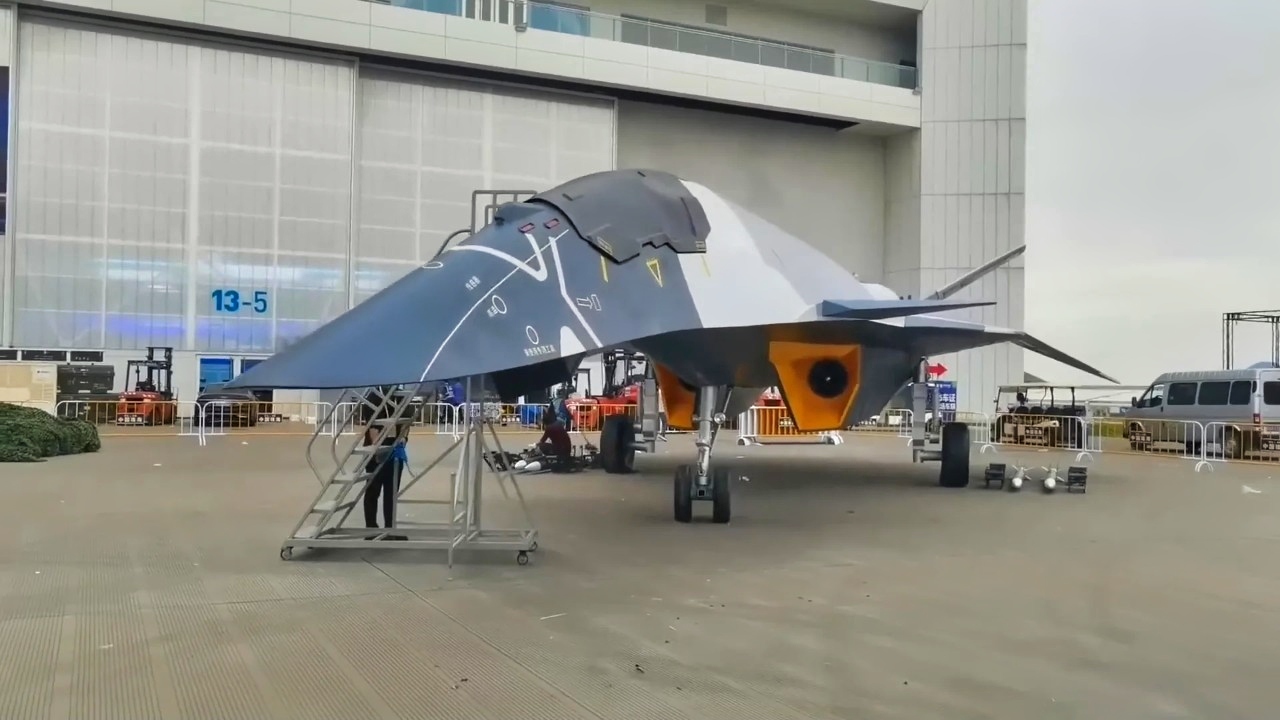
China’s White Emperor Concept Fighter.

White Emperor 6th Generation Fighter China. Image Credit: Creative Commons.
-They could feature quantum radar systems that render stealth obsolete, achieve sustained hypersonic speeds over Mach 5, and be armed with directed energy weapons like high-powered lasers.
-While still theoretical, these concepts point to a future of warfare defined by artificial intelligence, quantum technology, and unprecedented speed, transforming the fighter from a mere aircraft into a distributed, thinking combat system.
Meet the 7th-Generation Fighter
Over the past 50 years, aerospace engineering has undergone significant advancements. In the 60s, engineers were taking their first steps in the realm of supersonic flight.
In the early 2000s, stealth and sensor fusion technologies dominated the most advanced fighter jets.
Today, the first sixth-generation fighters are taking their first flights.
What will the future look like for military aircraft?
While it is uncertain how fighters will evolve in the coming decades, examining current trends may provide insight into what the future holds.
Will 7th-Generation Fighters Even Need Pilots?
Today, experiments with unmanned systems have been conducted.
Unlike sixth-generation aircraft, which are expected to have the option of autonomy, 7th-generation fighters might be entirely unmanned, operating independently with human oversight from remote command centers.
These aircraft would likely be powered by highly advanced artificial intelligence systems capable of making split-second tactical decisions, adapting to changing mission parameters, and even engaging in autonomous dogfighting.
The AI would be trained on vast datasets of combat scenarios and continuously updated through machine learning, allowing it to evolve and improve over time. Human operators would still play a critical role, but more as strategic supervisors than direct pilots.
A Quantum Leap in Performance… Literally
Sensor fusion would reach unprecedented levels, incorporating quantum-enhanced technologies. In the past ten years alone, quantum computing has gone from science fiction to a reality. Quantum radar systems could detect stealth aircraft by exploiting quantum entanglement, making it nearly impossible for adversaries to conceal their presence.
Quantum navigation would allow the aircraft to operate without GPS, rendering it immune to jamming and spoofing. Communications would be secured through quantum encryption, ensuring that data links are unhackable and resistant to interception. These capabilities would make the aircraft not only highly aware of its environment but also extremely difficult to deceive or disrupt.
In terms of performance, seventh-generation fighters might achieve sustained hypersonic speeds, potentially exceeding Mach 5. This would be made possible by revolutionary propulsion systems, such as combined-cycle engines that integrate turbofan, ramjet, and scramjet technologies.
These engines would allow the aircraft to transition seamlessly from subsonic to hypersonic flight. To withstand the extreme temperatures generated at such speeds, the airframe would have to be constructed from advanced heat-resistant materials, including metamaterials and ceramics with embedded cooling systems.
This level of speed and agility would enable the aircraft to achieve rapid global reach, allowing it to respond to threats anywhere on Earth within minutes.
It’s All About Drones
Today, significant efforts are being made to integrate fighter jets with autonomous drones. The Russian S-70 Okhotnik, which operates in tandem with the Su-57, is so far the only system to have received any sort of combat experience, and it didn’t exactly go well. In the future, these drones would operate as extensions of the fighter itself.
The aircraft would serve as a command node in a distributed combat cloud, orchestrating the actions of dozens or even hundreds of unmanned systems. This would allow for highly flexible and scalable mission execution, overwhelming enemy defenses through sheer complexity and coordination.
Weapons systems would likely be equally advanced. Directed energy weapons, such as high-powered lasers or microwave emitters, would likely be standard. These could be used to intercept incoming missiles, disable enemy electronics, or even destroy targets with pinpoint precision. However, powering these systems would be a massive barrier to overcome.
It would require power generators that are significantly more powerful than the ones currently in use. In addition to traditional kinetic weapons, the fighters would likely carry advanced electronic warfare suits, enabling them to disrupt enemy networks, jam communications, and launch digital attacks on adversary systems.
7th-Generation Fighters: How Will Future Platforms Be Powered?
Today, stealth is one of the most critical factors in advanced fighter jets.
In the future, stealth technology is likely to continue advancing. Stealth would evolve beyond radar evasion to encompass multi-spectral invisibility. The aircraft would be designed to minimize its infrared, acoustic, electromagnetic, and visual signatures. This would be achieved through a combination of active cooling systems, sound-dampening technologies, and adaptive camouflage.
Sustainability would also be a key consideration. Propulsion systems may utilize zero-emission fuels, such as hydrogen or synthetic biofuels, thereby reducing the environmental impact of military operations.
The aircraft would be designed for modularity, with components that could be 3D-printed on demand in the field. Software updates would be delivered via secure cloud networks, allowing for real-time capability enhancements without the need for physical upgrades.
The 7th Generation Fighter is a Long Way Away
Needless to say, all of the above is easier said than done. Developing a 7th-generation fighter (if the generational classification is still around by then) would require breakthroughs in multiple fields, including artificial intelligence, quantum computing, hypersonic materials, fusion energy, and ethical governance.
It would also demand massive investment, multinational collaboration, and decades of research and development. The challenges are immense, but the potential rewards, unparalleled security, strategic dominance, and technological leadership, make it a compelling vision for the future of air combat.
Of course, I must make the disclaimer that this is all theoretical.
I do not know the future, nor am I an industry insider.
I am making an educated guess based on current trends, which are subject to change. Currently, there are no examples of the technologies I have listed.
The only one that comes close is the Baidi, or White Emperor. This Chinese aircraft, essentially a mockup, offers a glimpse into what fighter jets might look like.
There has been progress in AI integration and drone coordination, but these technologies are still in their early stages of development.
About the Author: Isaac Seitz
Isaac Seitz, a Defense Columnist, graduated from Patrick Henry College’s Strategic Intelligence and National Security program. He has also studied Russian at Middlebury Language Schools and has worked as an intelligence Analyst in the private sector.
More Military
Canada’s Army Is on the Comeback Trail
You Can’t Stop the Nimitz-class aircraft Carrier


Vlad
August 26, 2025 at 11:28 pm
The coming batch of aircraft designed to clear the skies of f-47s and f/A-XX will be air-space fighters like the feitian-2.
Which can fly at mach 5 and accelerate seamlessly to mach 10. And beyond.
Forget the vaporware from lockheed. Its boffins haven’t been able to overcome super high-speed flight problems.
But the next next-gen craft could be a future evolution of spaceplanes like the x-37.
Kumar
August 27, 2025 at 3:20 am
Chinese spend 150B in military. USA 850B. Six times more than Chinese. Don’t under estimate or pretend to know what USA is doing to bolster their military dominance. To think that China will supersede USA capabilities is pure ignorance.