

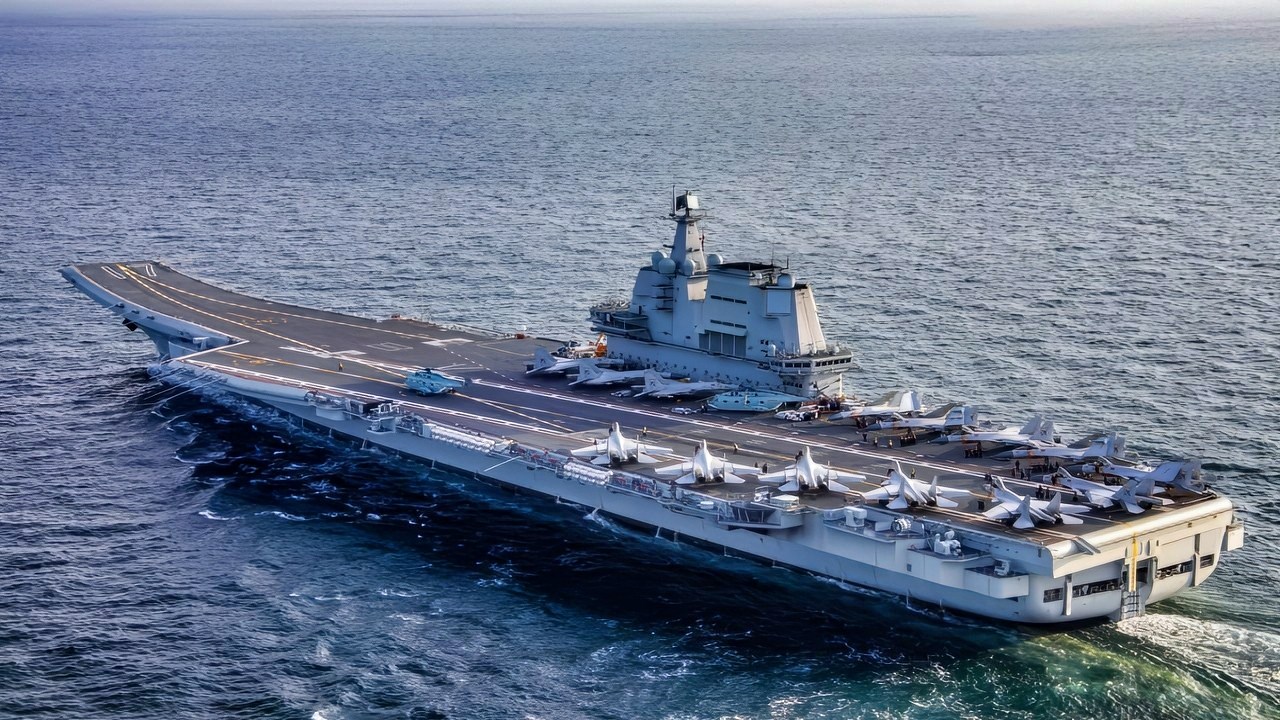
Key Points and Summary – China now fields three carriers and the advanced, EMALS-equipped Fujian, signaling real blue-water ambitions.
-But gaps remain: no nuclear propulsion, fewer decks, EMALS maturity questions, and—most critically—too few carrier-qualified pilots. Near term, the PLAN pressures regional allies more than U.S. supercarriers, while Beijing pursues overseas footholds and high-tempo exercises.
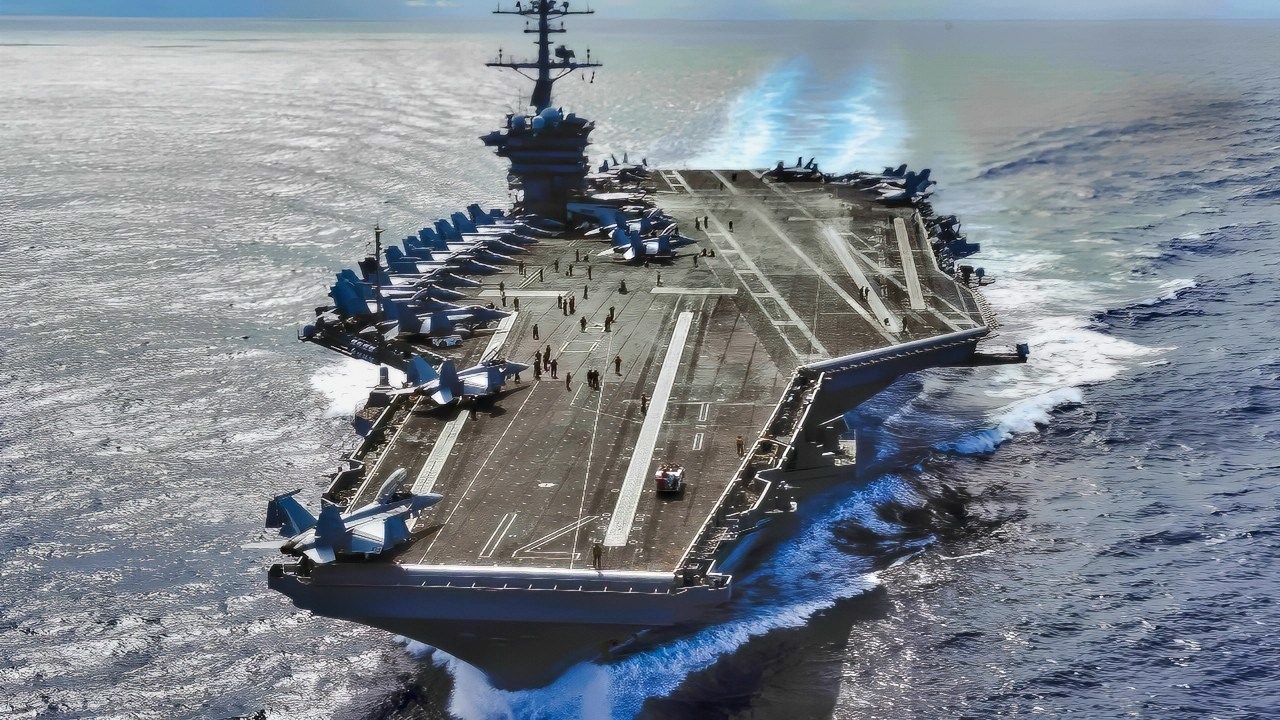
PHILIPPINE SEA (Sept. 24, 2024) The Nimitz-class aircraft carrier USS Theodore Roosevelt (CVN 71) transits the Philippine Sea, Sept. 24, 2024. Theodore Roosevelt, flagship of Carrier Strike Group 9, is underway conducting routine operations in the U.S. 7th Fleet area of operations. U.S. 7th Fleet is the U.S. Navy’s largest forward-deployed numbered fleet, and routinely interacts and operates with allies and partners in preserving a free and open Indo-Pacific region. (U.S. Navy photo by Mass Communication Specialist 3rd Class Adina Phebus)
-On weapons, the U.S. Navy canceled its HALO hypersonic anti-ship effort amid cost/schedule strain, refocusing on LRASM—a stealthy but subsonic alternative that external-carriage limits F-35 stealth.
-Bottom line: China’s trajectory is serious, but U.S. nuclear carrier capacity, experience, and aircrew depth still dominate—if Washington sustains modernization.
China’s Rise to Aircraft Carrier Powerhouse
Though China has made rapid progress in building a fleet of aircraft carriers, it lacks the numbers and technical maturity to challenge the United States’ carrier fleet—and suffers from a dearth of qualified pilots.
Much ink has been spilled concerning China’s rapid progress in building aircraft carriers and the country’s attempt to transform the People’s Liberation Army Navy into a true blue-water force, capable of projecting Chinese hard power globally, far from China’s littoral waters.
And for good reason—the PLAN now counts three aircraft carriers in service, and some of the technical aspects of the Fujian, China’s newest carrier, rival those of the US Navy’s newest class of aircraft carrier, the Gerald R. Ford-class.
However, as some clear-eyed analyses of China’s carrier capabilities reveal, despite the progress China has made, the United States retains a significant advantage.
As one analyst noted, despite the launch of China’s third aircraft carrier, it will be challenging for China to pose a significant threat to the United States Navy’s naval dominance in the Indo-Pacific over the last eight decades.
However, the growing capabilities of the People’s Liberation Army Navy pose a longer-term threat to the United States—and, more immediately, to America’s friends and allies in the region.
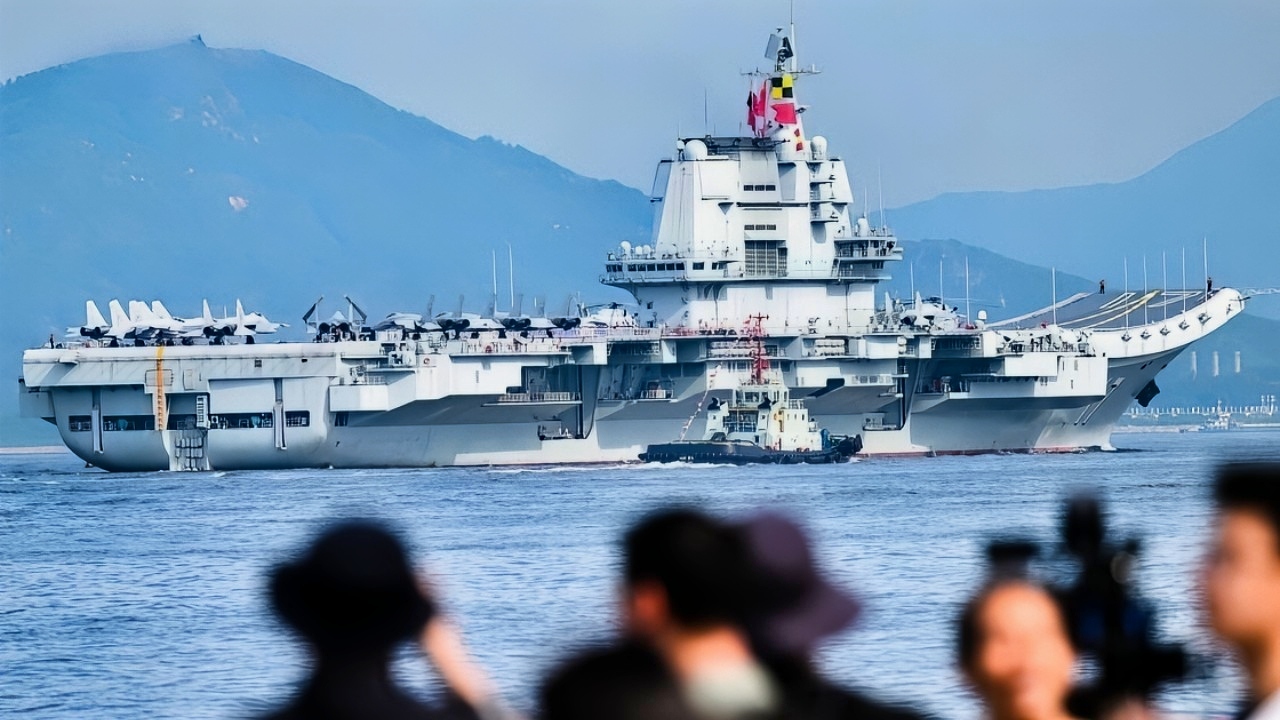
China Aircraft Carrier in Port. Image Credit: Chinese Navy.
And though the Fujian carrier is significantly more capable than the two PLAN carriers that came before it, the ship “falls short of direct competition with the US due to its lack of nuclear propulsion and its smaller scale.
Unlike the nuclear-powered super-carriers of the Ford and Nimitz Classes, the Fujian relies on support ships for extended range.
Moreover, although the Fujian comes with advanced catapults—namely, electromagnetic aircraft launch systems (EMALS)—that align with US technology, tests this past November have shown markedly decreased effectiveness compared to America’s nuclear carriers.”
Of equal concern to Beijing, aside from the technical shortcomings of its aircraft carriers compared to those of the United States, is an acute shortage of pilots —a dearth of talent that will hamstring China’s blue-water carrier operations—and pose a challenge to the United States if not addressed.
“While China’s carrier strategy may not imply a direct challenge to current US naval capabilities, it does put pressure on America’s regional allies, deviating them from the US-centered security architecture.”
But challenges notwithstanding, China is “working towards the construction of a post-American fleet and emphasizing the importance of foreign bases—such as in Cambodia and the Solomon Islands—for surveillance and rapid deployment.”
A review of China’s military exercises in 2023 reveals a diverse range of land, maritime, and air exercises involving a broad spectrum of nations across Africa, the Middle East, and Asia. As another analysis noted, China’s neighbors may feel uneasy. In India’s case, New Delhi may feel encircled.
A False Start?
Given the recent progress in the field of hypersonics, particularly research into hypersonic systems by China and Russia, there is a clear need for the United States to maintain its own hypersonic programs to keep pace with those threats.
It was rather unexpected, then, when the United States Navy decided to end its research into its own hypersonic anti-ship missile due to ballooning costs.
“The Navy canceled the solicitation for the Hypersonic Air-Launched Offensive Anti-Surface Warfare (HALO) Engineering and Manufacturing Development (EMD) effort in fall 2024,” a U.S. Navy spokesperson detailed to Naval News, and industry publication, “due to budgetary constraints that prevent fielding new capability within the planned delivery schedule.”
Instead of the HALO missile, the US Navy has decided to reinvest its efforts in the AGM-158C Long Range Anti-Ship Missile, or LRASM. An anti-ship weapon with radar-mitigating characteristics, that missile, though a capable gun, is subsonic and significantly slower than the HALO hypersonic missile would have been.

China Aircraft Carrier. Image Credit: Creative Commons.
A comprehensive overview of the various hypersonic weapon programs in development, both within the Department of Defense and privately, compiled by the nonpartisan Congressional Budget Office, is very informative.
One significant drawback of LRASM, however, is its size: it cannot be carried internally by the backbone of American combat aviation, the F-35. It can, however, be carried externally, though external carriage adversely affects the F-35’s stealth profile.
What Happens Now?
China’s rapid progress in aircraft carriers certainly poses a long-term strategic challenge to American maritime dominance in the Indo-Pacific in the future—the People’s Liberation Army Navy’s shift toward a blue-water force with aspirations for global power projection is clear.
However, in the near term, China’s carrier progress will pose more significant challenges to China’s neighbors than the United States, both because of their lesser capabilities compared to their nuclear-powered American counterparts and because of the PLAN’s overall lower carrier numbers.
Nonetheless, the need to stay informed about developments in carrier capacity and capabilities, as well as in the field of hypersonic anti-ship weapons, is imperative—and could, in the future, be the difference between an American victory and a defeat.
About the Author: Caleb Larson
Caleb Larson is an American multiformat journalist based in Berlin, Germany. His work covers the intersection of conflict and society, focusing on American foreign policy and European security. He has reported from Germany, Russia, and the United States. Most recently, he covered the war in Ukraine, reporting extensively on the war’s shifting battle lines from Donbas and writing on the war’s civilian and humanitarian toll. Previously, he worked as a Defense Reporter for POLITICO Europe. You can follow his latest work on X.
More Military
Canada’s F-35 Fighter Debate Summed Up in 3 Words
The U.S. Air Force’s B-52J Bomber Crisis
Mach 5.1 X-51 Waverider ‘Hypersonic Scramjet’ Has a Message for the Air Force
Beast Mode: How the F-35 Stealth Fighter Bolts on 22,000 Pounds of Bombs


