

Iran has announced the discovery of a new natural gas field at a far from convenient time, as the U.S. naval blockade of Iranian fuel leaving the Strait of Hormuz remains in place and the country faces an economic crisis.
Oil Minister Mohsen Paknehad said on Sunday, August 23, that a field in the southern Fars province contains more than 7.5 trillion cubic feet of gas, with roughly 5.7 trillion cubic feet deemed recoverable. The ministry says that more than 72% of the gas could ultimately be extracted, and would therefore become a valuable form of revenue for the struggling Islamic regime.

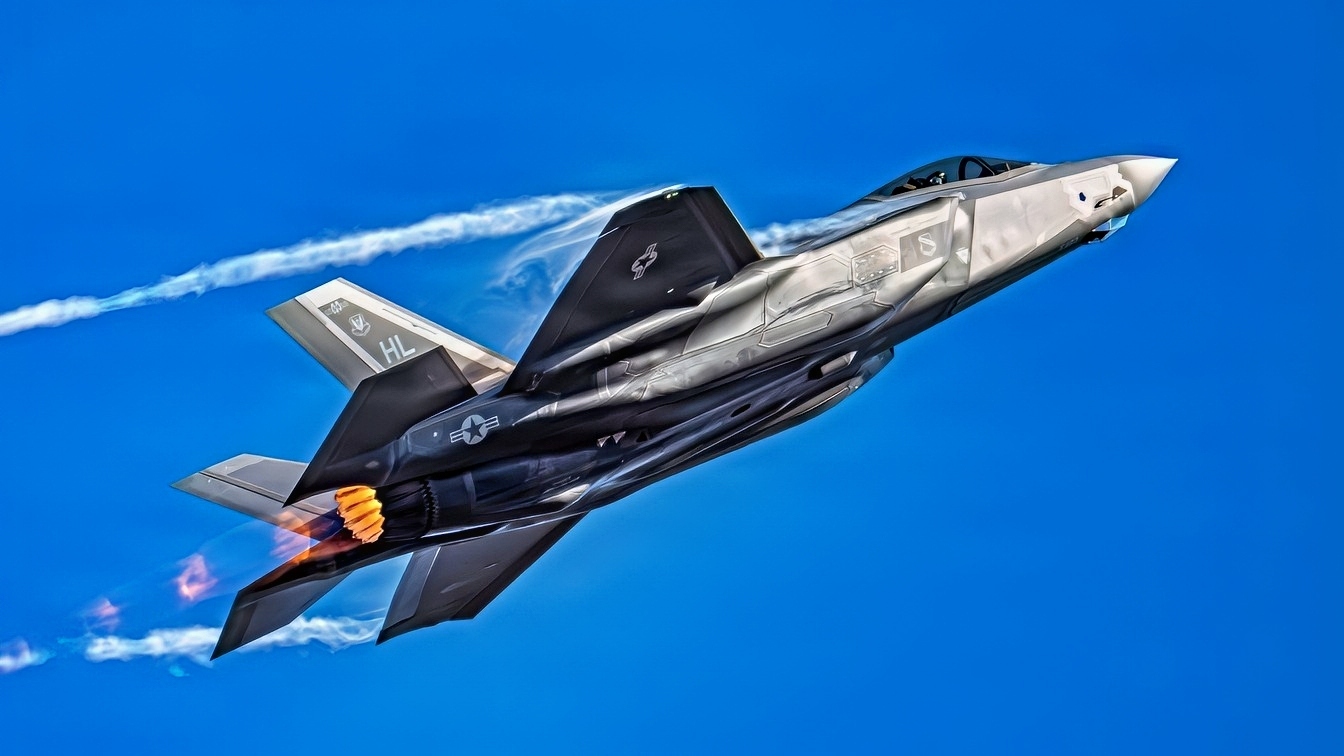
F-35. Image Credit: Lockheed Martin.
But finding gas and producing it are two very different things – and at present, there is little hope that Iran will have an easy time recovering, processing, and selling it on the international market.
What Iran Says
The discovery was announced by Paknejad during an appearance on Iranian state television on Sunday, where he said the newly identified reserve could eventually provide Iran with the equivalent of 15 years of production from a single phase of South Pars, the massive offshore gas field that Iran shares with Qatar.
He also said that the discovery includes gas condensates worth tens of billions of dollars and indicated that Tehran would begin the work to extract the resource as soon as possible.
But those plans are complicated by the fact that Iran is still trying to repair damage inflicted on its existing natural gas infrastructure during the war with the United States and Israel. South Pars is the core of the country’s natural gas industry and accounts for more than 70% of national production, according to the International Energy Agency (IEA).
In 2024, Iran produced around 276 billion cubic meters of natural gas – but critically, the country also consumes most of what it produces. It means that while international sales may be difficult if current conditions continue, the greatest challenge will still be extracting the gas in the first place.
Why Iran Will Struggle
During the early stages of the conflict with the United States and Israel, Iran’s gas processing infrastructure at Assaluyeh, the energy hub on Iran’s Persian Gulf coast, was hit. It is the center responsible for processing gas extracted from South Pars.
The IEA estimated that the initial damage from Israeli strikes could have affected around 100 million cubic meters of production every day – equivalent to around 12% of Iran’s national output. Iran later said that the attacks during the conflict knocked out up to 230 million cubic meters of its daily production capacity, roughly a quarter of the country’s capacity before the war.
But some of that capacity is understood to have returned.
It Could Take Time
On August 11, Paknejad said that approximately 95 million cubic meters per day of damaged production capacity was still offline. He also said that repairs are currently underway and that Tehran expects to restore it by the end of September. But even if that capacity is restored, Iran still faces the challenge of extracting gas from the newly discovered field and finding the financial resources required to make it happen while under the threat of a looming economic war with the United States.
What’s more, the repairs may not even be completed on time. Erfan Afazeli, the head of the Iranian Petroleum Industry Federation, said that four South Pars refineries were damaged during the war and estimated that fully repairing all affected facilities could take as long as 24 months.
Iran may have found trillions of cubic feet of additional natural gas, but much of the infrastructure it already relies on to produce and process its existing reserves may not be fully repaired and operational for years more. And that’s an estimate based on the assumption that the U.S. or Israel does not strike its facilities again.
Washington Turns Up the Pressure
And even if Iran can repair its infrastructure, financing the development of the new field will be extremely difficult. U.S. Treasury Secretary Scott Bessent is expected to outline the “toughest sanctions” ever imposed on Iran on Monday, August 24 – and Iran is already threatening a military response if Washington goes ahead with the plans.
It comes as the White House changes its strategy and aims to economically isolate Iran and force the regime to make major concessions over its nuclear program.
The pressure is already hitting Iran’s most important source of revenue, too. Iranian oil shipments are estimated to have fallen by around 534,000 barrels per day in August, compared with an average of roughly 1.4 million barrels per day in 2025, as the U.S. blockade restricts exports.
For Tehran, the discovery offers enormous potential – but realizing its value may remain a distant prospect for quite some time.
About the Author: Jack Buckby
Jack Buckby is a British researcher and analyst specializing in defense and national security, based in New York. His work focuses on military capability, procurement, and strategic competition, producing and editing analysis for policy and defense audiences. He brings extensive editorial experience, with a career output spanning over 1,000 articles at 19FortyFive and National Security Journal, and has previously authored books and papers on extremism and deradicalization.


