
President Donald Trump is asking Americans to accept higher gasoline prices as part of the cost of preventing Iran from obtaining a nuclear weapon – a significant change in tone from his administration as he struggles to end a war that is now impacting the U.S. and global economies.
Regular gasoline prices now average around $4.09 per gallon nationwide, up roughly 29% from a year ago, as traffic through the Strait of Hormuz remains extremely disrupted. President Trump acknowledged the price increase during a speech on Friday, in which he also argued that Americans should tolerate it.
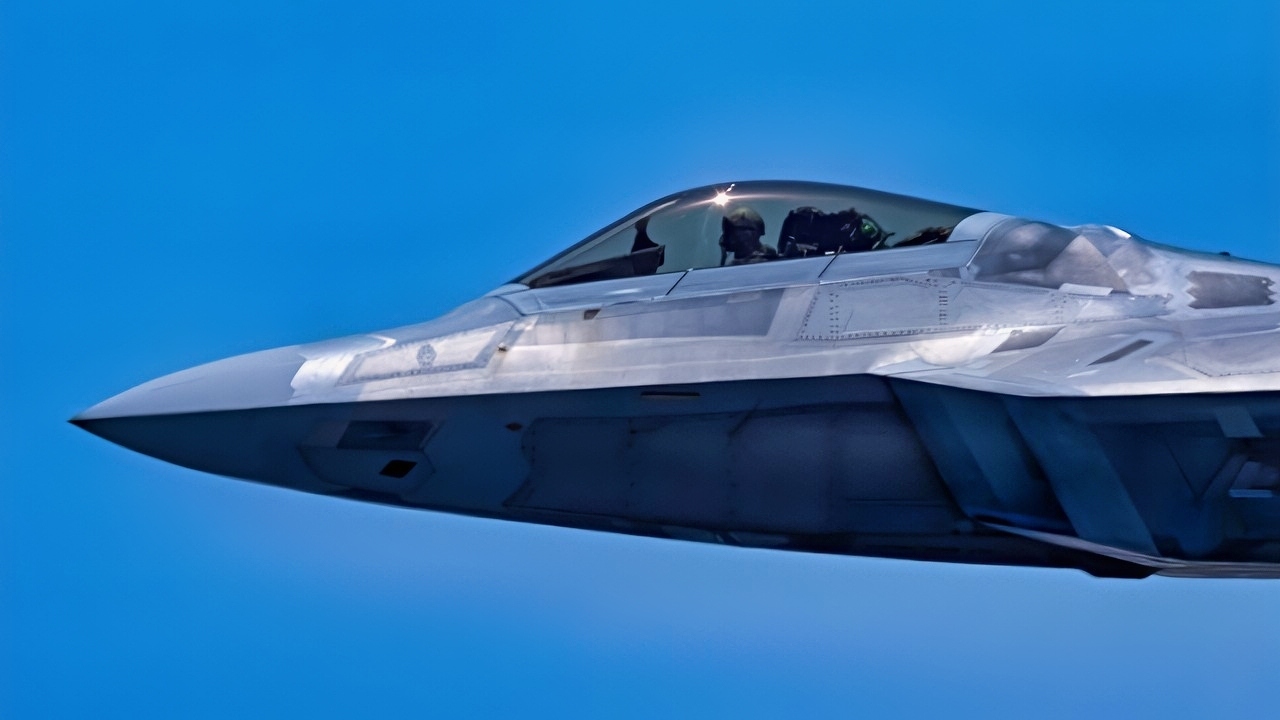
Air Force Chief of Staff Gen. Ken Wilsbach takes off in an F-22 Raptor from Joint Base Pearl Harbor-Hickam, Hawaii, May 13, 2026. Wilsbach flew an F-22 sortie, experiencing the total force integration among active-duty Airman and Hawaii Air National Guard counterparts. (U.S. Air Force photo Senior Airman Aden Brown)
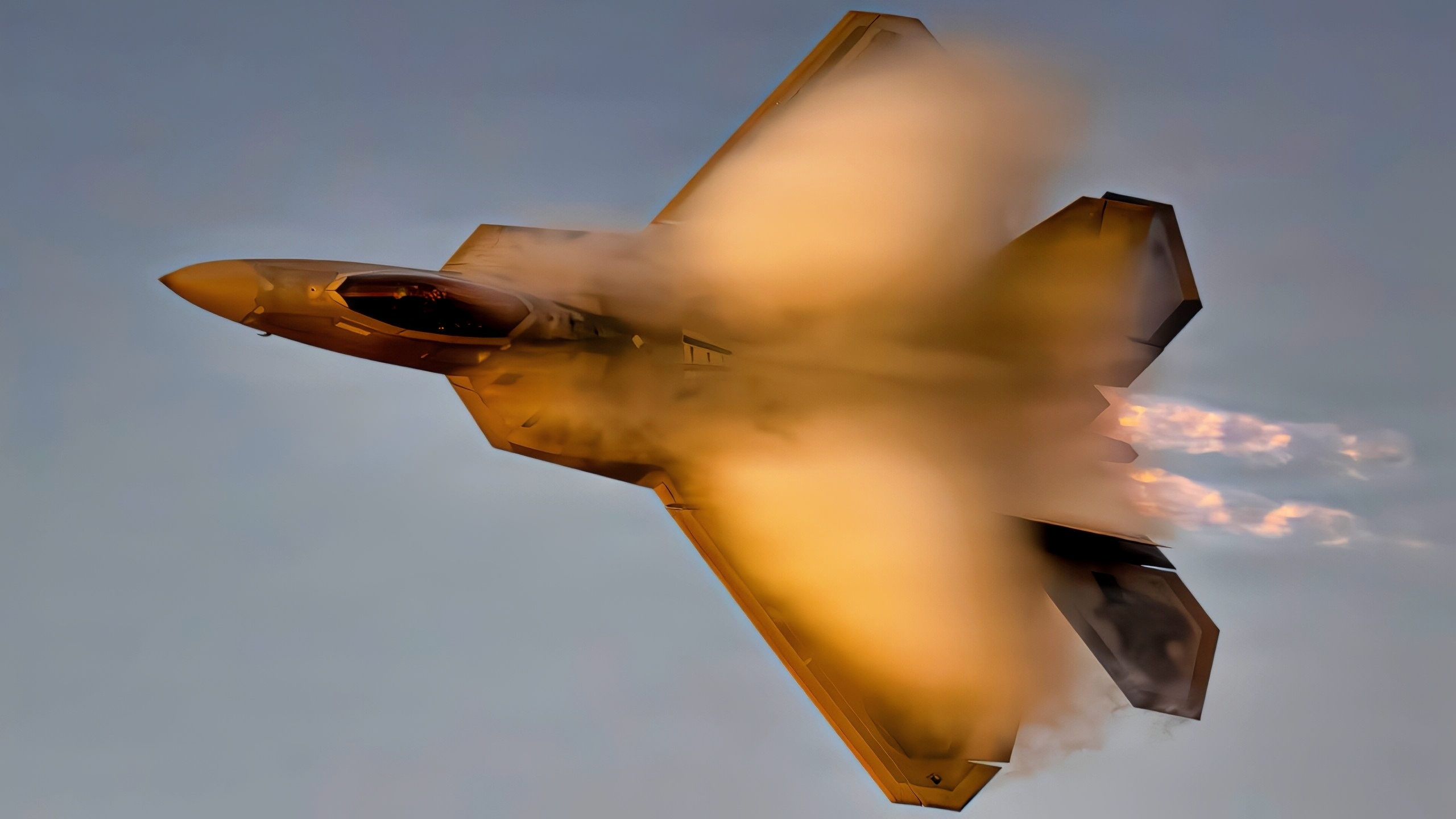
U.S. Air Force Capt. Nick “Laz” Le Tourneau, F-22 Raptor Aerial Demonstration Team pilot and commander, practices at Joint Base Langley-Eustis, VA, November 12th, 2025. The F-22 Raptor Aerial Demonstration showcases the unmatched maneuverability of the airframe by executing a series of combat maneuvers to inspire Americans and their allies, and deter foreign adversaries. (U.S. Air Force video by Staff Sgt. Michael Bowman)
In a speech in Garden City, New York, the president said that Americans who now “pay a tiny little bit more” for gasoline should remind themselves that it is the cost of preventing a “very evil country” from obtaining a nuclear weapon.
The president went on to defend the record of the U.S. military and his administration throughout the war, describing the ongoing conflict as evidence he is doing a “great service for the world” and “really doing a great job.”
The comments come as Washington struggles to bring Tehran to the negotiating table, with new Iranian military leadership becoming increasingly aggressive and refusing to open the Strait of Hormuz before Washington agrees to a series of major concessions.
Iran Refuses to Open Hormuz
Iran continues to strike vessels in the Strait of Hormuz, with the United Arab Emirates saying this week that another ship operated by state oil company ADNOC was attacked while passing through the waterway.
It was the third such attack involving the company’s ships in roughly a week.
The latest vessel was damaged but remained under control, with no injuries reported. The UAE called the attacks “unprovoked” and urged Iran to allow the full reopening of the strait. Shipping nevertheless remains dramatically below normal levels.
Before the war, more than 130 vessels routinely passed through Hormuz every day. Kpler data showed only 13 vessels crossing on Thursday, nine of them using the Iranian-approved route.
Iran has repeatedly insisted that normal shipping will not return until Washington ends the war, with officials recently setting out a list of extreme demands, which include the full withdrawal of U.S. troops from the region, the end of strikes, the lifting of all sanctions, and the end of the U.S. naval blockade on Iranian-linked ships.
Iran is also seeking the unfreezing of billions of dollars in Iranian assets overseas.
Washington Increases the Pressure
Washington’s response has so far been to step back and wait, hoping that the economic pressure will force Tehran to change its mind.
But the Trump administration isn’t doing it just because it’s tactically smart: it’s also a product of the well-documented shortage of Patriot interceptors and other precision-guided missiles caused by over five months of fighting.
Defense Secretary Pete Hegseth said Thursday that the U.S. Navy can maintain its blockade of Iranian ports “indefinitely,” while Treasury Secretary Scott Bessent has promised additional measures against Tehran next week.
Bessent said Washington would hit Iran economically in ways “that have never been seen,” describing the combination of financial restrictions and the naval blockade as a “one-two punch.”
Iran is already suffering, too.
Its oil exports have collapsed under the U.S. blockade, and sanctions and wartime damage are intensifying economic pressure.
For many other smaller nations, this would have been enough to bring their governments back to the negotiating table, but Iran is run by a theocratic regime that is so ideologically opposed to the United States and its Western allies that it is likely to continue fighting for as long as it possibly can.
Tehran also knows the pressure it faces is being felt across the rest of the world.
Brent crude settled at $88.52 per barrel on Friday, up 1.7% on the day, while West Texas Intermediate gained 1.9% to $82.55. Both benchmarks posted substantial weekly gains as tanker attacks and a lack of diplomatic progress renewed global supply concerns.
Iran Is Betting Americans Lose Patience First
The problem for Washington is that Iran doesn’t need to win economically, and probably isn’t expecting to.
All the regime needs to do is wait long enough for the cost of the war to become politically difficult for the United States.
Tehran has spent decades adapting to sanctions and economic isolation, and its leadership can impose extraordinary hardship on ordinary Iranians without facing the same democratic and political pressures that confront an American president.
Trump, meanwhile, will face the voters in November with gasoline above $4 per gallon and the administration focused on limiting the war’s economic fallout.
Trump must now somehow demonstrate that his strategy is working before Americans decide they are no longer willing to pay for it, while Iran simply needs to survive.
About the Author: Jack Buckby
Jack Buckby is a British researcher and analyst specializing in defense and national security, based in New York. His work focuses on military capability, procurement, and strategic competition, producing and editing analysis for policy and defense audiences. He brings extensive editorial experience, with a career output spanning over 1,000 articles at 19FortyFive and National Security Journal, and has previously authored books and papers on extremism and deradicalization.


