

Ukrainian drones struck Russia’s second-largest refinery overnight this week, striking oil facilities in Kirishi, in Russia’s Leningrad Oblast, about 800 kilometers, or around 500 miles, from Ukraine.
The refinery there can, under normal circumstances, handle about 20 million tons of oil per year, which translates to roughly more than six percent of Russia’s total refined oil output.

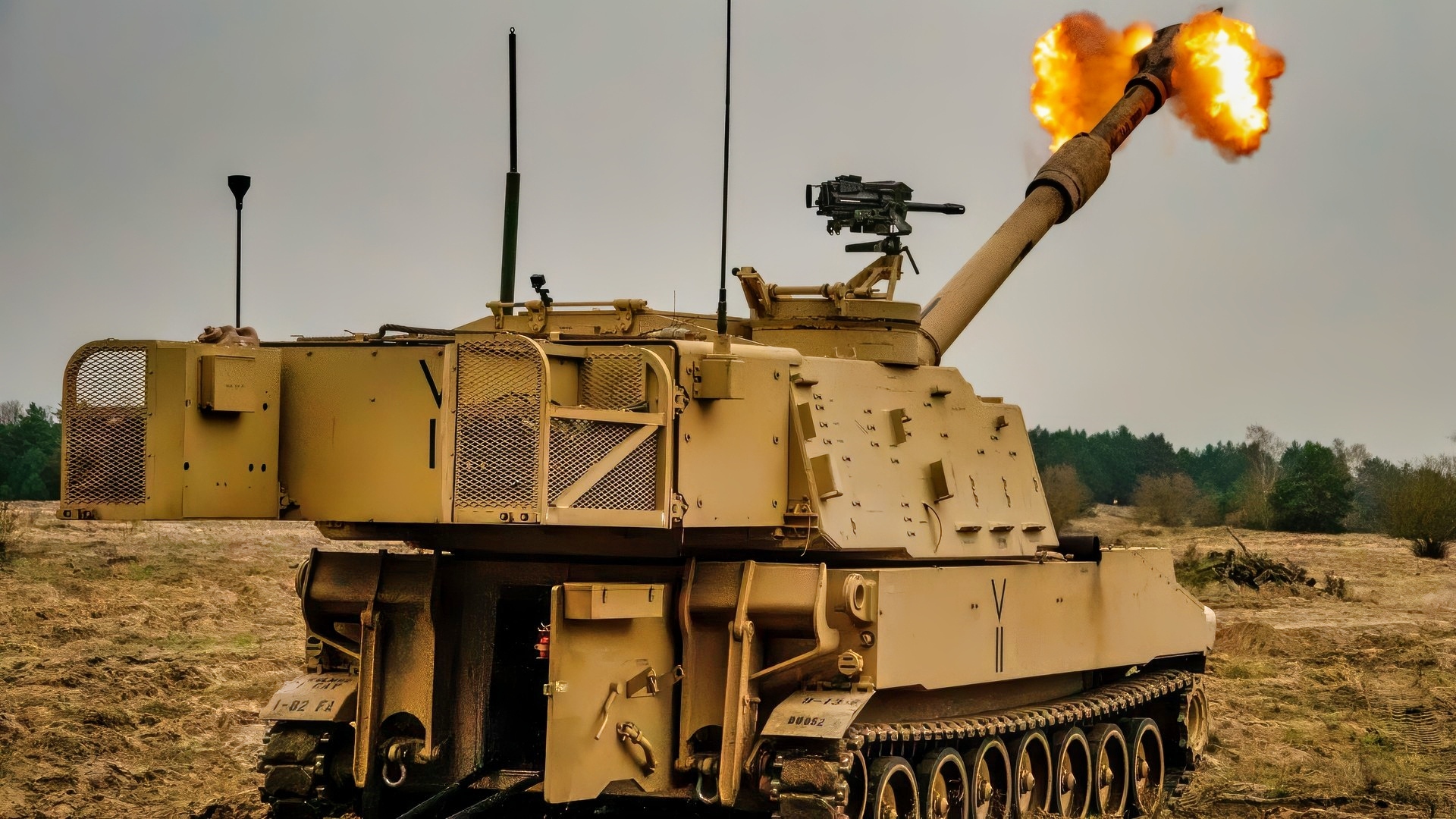
Finnish artillery units fire Howitzers At Rovajärvi exercise area In northern Finland. Image Credit: NATO Flickr.

Finnish artillery units fire Howitzers At Rovajärvi exercise area In northern Finland. Image Credit: NATO.
It is part of Ukraine’s ongoing effort to strike the Kremlin’s coffers hard and knock out the single largest source of Russian state revenue: tax on the export of oil and other energy products abroad.
Dubbed Ukraine’s “long-range sanctions” regime against the Russian state by Ukrainian President Volodymyr Zelensky, the effort has produced tangible results.
Russian oil and gas infrastructure across the country has repeatedly gone up in flames following Ukrainian drone and missile strikes against Russia’s fuel facilities, forcing Russian authorities to ease fuel environmental standards and temporarily ban the export of diesel fuel abroad, measures aimed at alleviating a domestic fuel squeeze and long lines at the pump for Russian commuters.
Despite a temporary letup on Ukrainian strikes in the lead-up to the American midterm elections, the strikes have resumed — and Russian strikes on Ukraine’s civilian infrastructure are ongoing, punishing a noncombatant population during the height of Ukraine’s bitterly cold winter months.
Attacks throughout the country — not just on some of Ukraine’s biggest, most important cities — have been a near-daily facet of life in recent months.
A far cry from the piston-engined propeller-pusher Geran drone design of the war’s early years, Russia’s newest drones are jet-powered and can outrun many of Ukraine’s air defenses.
But they’re not only faster — they’re interconnected, allowing many eyes and ears in the sky to relay real-time information to operators on the ground.
Light Shed on Scope of Russia’s Losses
The war has been punishing for Russia on the battlefield as well.
A recent data hack by a pair of hacker groups, Kiberpartizany BY and Silent Crow, targeted Russia’s Federal State Statistics Service, also known as Rosstat, revealed that between 393,000 and 450,000 Russian soldiers have been killed in the course of fighting in Ukraine — a tally that does not include wounded or missing and is greater than all the casualties the Kremlin’s forces have suffered since the end of the Second World War combined.
While recent evaluations by several independent and reputable news outlets have established previous estimates for Russian losses in Ukraine, this latest Russian KIA estimate is the highest, partly by nature of it being the most recent, but also thanks to the believed quality of the data it uncovered.
Talks in Abu Dhabi and Prospects for Peace
Tripartite talks between Washington, Kyiv, and Moscow focused on ending the war in Ukraine have commenced in Abu Dhabi, the capital city of the United Arab Emirates.
It is unclear what the talks hope to achieve exactly, given the gaping, seemingly irreconcilable chasm between the position of Russian strongman Vladimir Putin, who is bent on the subjugation of Ukraine, and that of President Zelensky and the Ukrainian people, who have no desire to capitulate to Moscow.
Still, Jared Kushner, American President Donald Trump’s son-in-law and envoy, tried to strike an optimistic note about the prospects for peace that could emerge from the unfolding discussions he and Steve Witkoff, another Trump envoy, are guiding.
“Our work has focused on four interconnected priorities: ending the fighting, developing credible postwar security guarantees and arrangements that reduce the risk of renewed conflict, preparing a comprehensive economic and prosperity plan for Ukraine, and advancing humanitarian measures to alleviate suffering and address the human consequences of this war,” Kushner posted to his X account.
“An important part of this process is encouraging all parties to begin thinking seriously about what comes after the war,” Kushner added. “By discussing postwar security, economic recovery, and the mechanisms needed to prevent future conflict, we hope to shift the focus from managing the war toward building the foundations for a durable peace.”
It is not only the Americans, Russians, and Ukrainians who will be in the room, however. So too will individuals representing Germany, France, and the United Kingdom.
The fear in Europe is that Moscow will manage to squeeze far-reaching concessions from the United States on the continent’s security posture without consulting friends within Europe and NATO treaty allies.
Perhaps the biggest crux of any agreement would be the fate of Donbas, Ukraine’s easternmost region, composed of the Donetsk and Luhansk Oblasts.
Most of Donbas is occupied by Russian forces, and the Kremlin has repeatedly affirmed that it won’t settle for a partial occupation of the region.
Cognizant of how crucial its eastern regions would be to any future security settlement, however, Kyiv is seemingly interested in freezing the conflict along its current lines.
About the Author: Caleb Larson
Caleb Larson is an American multiformat journalist based in Berlin, Germany. His work covers the intersection of conflict and society, focusing on American foreign policy and European security. He has reported from Germany, Russia, and the United States. Most recently, he covered the war in Ukraine, reporting extensively on shifting battle lines in Donbas and writing about the war’s civilian and humanitarian toll. Previously, he worked as a Defense Reporter for POLITICO Europe. You can follow his latest work on X.


