
Iran is Divided on Whether to Continue Fighting – Iran’s authoritarian regime is in crisis.
An obvious statement, undoubtedly, given six months of war with the United States and Israel. The country has been battered militarily, the economy is collapsing, much of its previous leadership is dead, and food shortages could plunge the country into civil unrest.
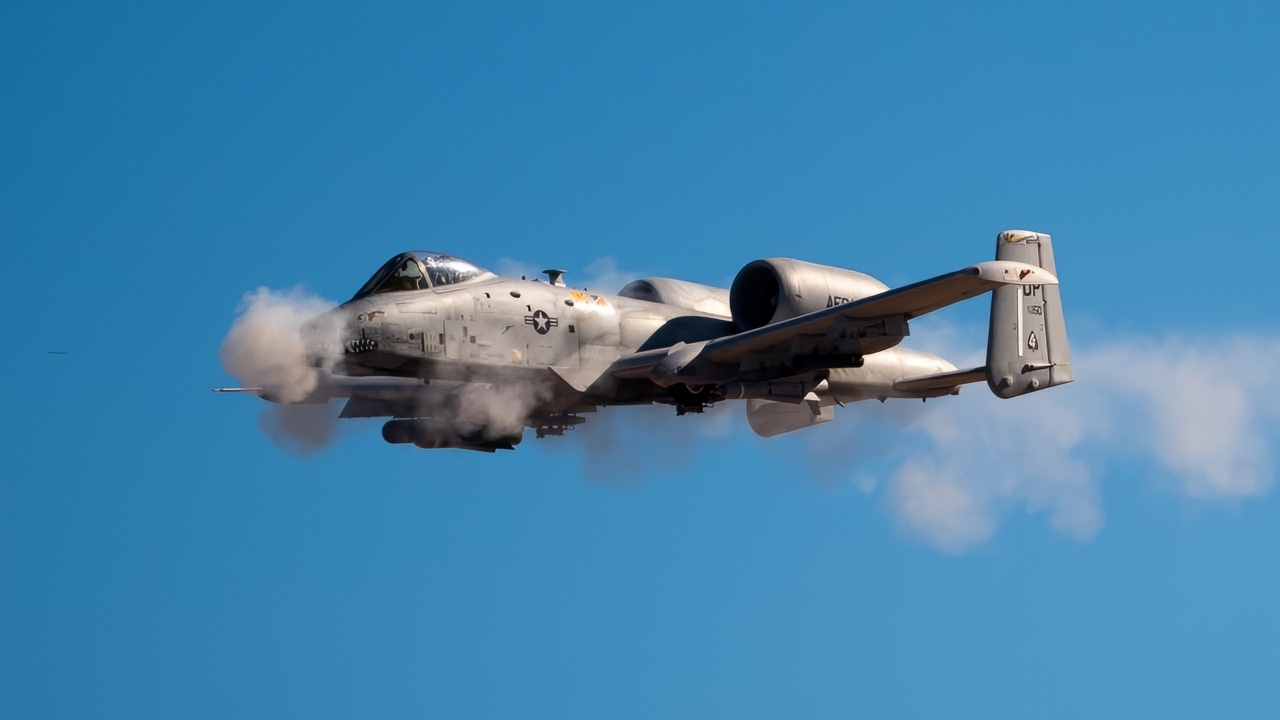
An A-10 Thunderbolt II from the 924th Fighter Group of the 944th Fighter Wing fires its 30mm GAU-8/A Avenger Gatling gun during Exercise Desert Hammer 25-1 at Barry M. Goldwater Range East near Gila Bend, Ariz., Nov. 14, 2024. Through joint and multinational collaboration, Desert Hammer tests the ability of over 700 participants and 131 aircraft to operate, defend, and sustain airbases under austere conditions. (U.S. Air Force photo by Senior Airman Jacob Dastas)
The solution, and the disagreements on the best way forward, is arguably where Tehran’s main problem lies.
Dilemmas and Division in Iran
Iran, to its credit, has survived a conflict that many other nations would have lost long ago.
Part of the reason why Iran has lasted six months, and not six weeks, is not all to do with the Iranian leadership itself. Iran is an enormous country – one of the largest in the Middle East – and its geographical boundaries and terrain mean that aerial attacks by missiles or airstrikes by fighter jets are the only way for the U.S. and Israel to attack.
Since the country’s revolution in 1979, succession has been instilled in Iran’s leadership. The death of Supreme Leader Ali Khamenei and many others around him undoubtedly shook Tehran, but within days a successor was found for most positions. It may have happened sooner and more abruptly than many had planned, but the ideology has continued even as new faces have taken their seats around the table.
Iran has tactically used these two factors to prolong the war longer than many would have anticipated, or indeed hoped. Control over the Strait of Hormuz – a key shipping lane through which 20% of the world’s oil once passed – has raised oil prices globally, thereby limiting support for the U.S.-Israel military campaign. This has given Iran leverage in negotiations, allowing it to continue fighting on.
Whether the country should, however, is another matter for Iran’s leaders.
Pragmatic Influence
Two camps are forming in Tehran over whether to pursue a compromise with Washington. Pragmatic leaders, including President Masoud Pezeshkian, Parliament Speaker Mohammad Bagher Ghalbaf, and Foreign Minister Abbas Araghchi, are favoring a compromise agreement which will bring hostilities to a formal conclusion.
“The war must end at some point,” Pezeshkian said last month. “It would be better to end it today, while we are in a position of strength and dignity, and the entire world acknowledges our victory.”
Whether many would consider Iran the victor in the conflict would depend solely on what agreement, if any, could be reached. But Pezeshkian’s comments come during a time of turmoil for a regime which, at the turn of the new year, had hundreds of thousands of protesters lining the streets.
Although Iran has been able to fight back economically by closing the Strait of Hormuz, it is also feeling economic pressure. U.S. sanctions are financially crippling the country, with exports falling well below pre-war levels. Moreover, the U.S. Naval blockade has not only made it difficult for Iran to export commodities, but import them too. This knock-on effect is stretching beyond inflation, with shortages increasingly reported across Iran as the conflict has progressed.
Hardliners Remain Adamant
On the flipside, Iranian hardliners see victory as anything other than collapse. For decades, hardline conservatives have held deep distrust for the U.S – something that has only exacerbated in recent years. A history of failed deals and diplomacy, quickly followed by conflict, suggests, at least to Iranian hardliners, that another compromise will only delay the inevitable.
The divisions are becoming intriguingly public for an authoritarian state. Last week, hardline lawmaker Kamran Ghazanfari told parliament that his pragmatic opponents “want to prepare public opinion to accept an agreement and a humiliating peace,” adding that his political opponents were standing against the deceased Supreme Leader Khamenei.
Distrust in Pezeshkian, a president who some Iranian hardliners view as an opportunist following his predecessor’s untimely demise in a helicopter crash a few years ago, is also influencing beliefs, with another lawmaker accusing him of blaming all of the country’s economic problems on the ongoing conflict.
What Happens Next?
Supreme Leader Mojtaba Khamenei has remained somewhat on the fence. Last week, he praised the government’s handling of the country’s problems while urging officials not to dwell publicly on the reasons behind them.
It’s difficult to see what side will prevail. The status quo, with no compromise agreement in sight, seems to favor the hardliners. But if the situation in Iran continues to deteriorate, even those with a strong distrust of Washington may be forced to concede that a deal must be made for the regime to survive.
About the Author: Shay Bottomley
Shay Bottomley is a British journalist. He has written for the Western Standard, Business Insider, Maidenhead Advertiser, Slough Express, Windsor Express, Berkshire Live and Southend Echo.