

While the United States has intensified its airstrikes against Iran, centering its attacks in the south along the coastal region, and other deep strikes, it also fired Hellfire missiles on an empty tanker that was headed for Kharg Island, after it attempted to run the US Navy’s blockade.
Iran responded on Thursday with several attacks using missiles and drones targeting Bahrain, Jordan and Kuwait, which host US bases.

B-1B Lancer Bomber in Museum in Dayton, Ohio. Image Credit: Harry J. Kazianis/National Security Journal.
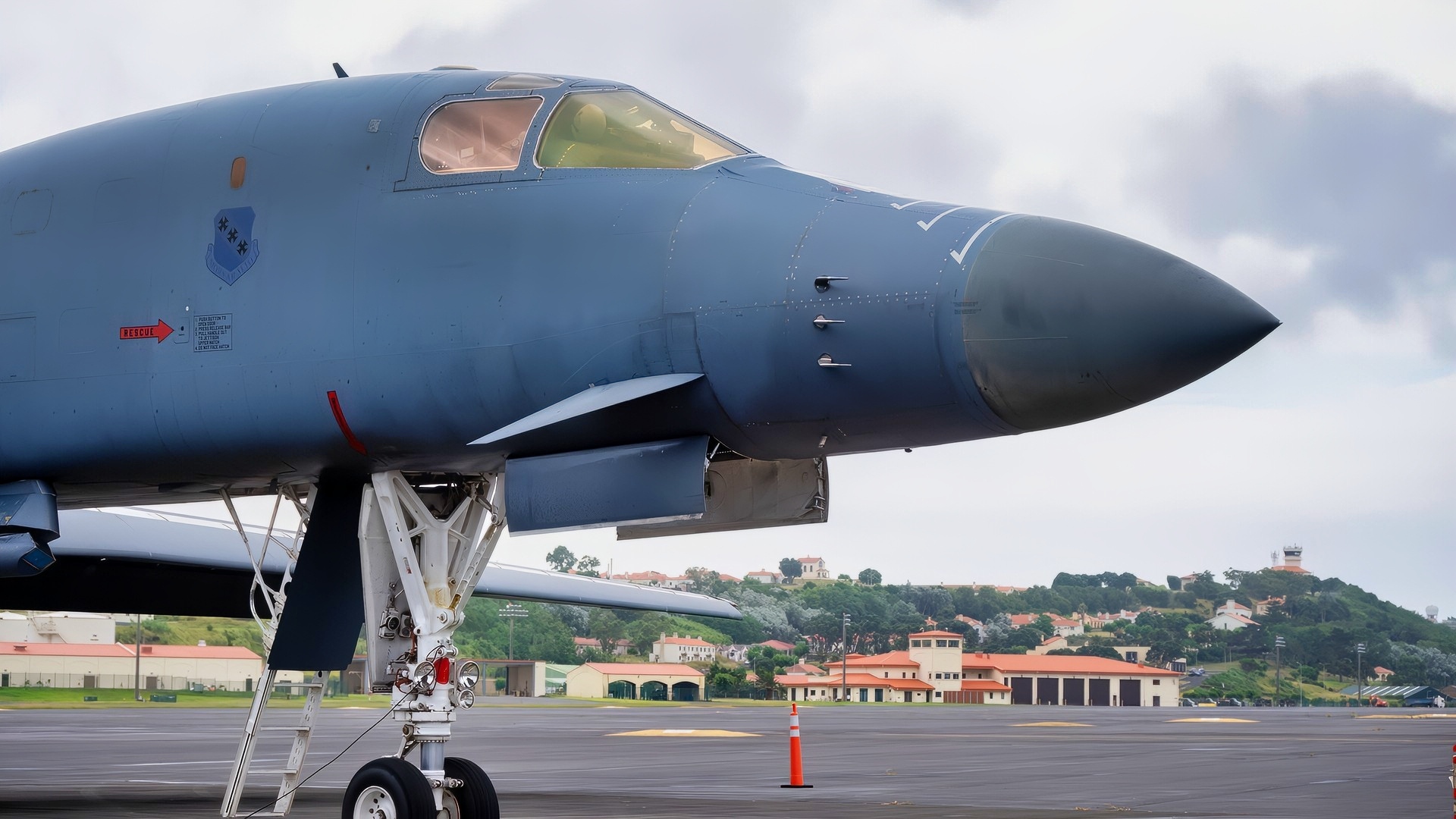
A U.S. Air Force B-1B Lancer sits on the flightline at Lajes Field, Azores, Aug. 22, 2025. The aircraft landed for a hot pit refuel during a Bomber Task Force Europe mission. (U.S. Air Force photo by Cristina Oliveira)
Iraq’s prime minister, Ali al-Zaidi, reported that there was an overnight drone attack on the city of Erbil in Iraqi Kurdistan.
The attack, which was intercepted, came as al-Zaidi pledged during a trip to the Washington to disarm non-state armed groups, which Iran’s proxy militias have refused to obey.
Iranian Attacks Against Other Gulf Countries
Three days ago, the Islamic Revolutionary Guard Corps (IRGC) targeted US military facilities in Bahrain, claimed it has destroyed radar systems in Oman and hit Jordan and Kuwait in its latest round of retaliatory strikes against the United States.
In Oman, the IRGC said it targeted “the FPS long-range aerial radar and the vessel detection radar in Oman”, adding that these radar systems were destroyed.
It attacked US Army and Navy bases, as well as the Sheikh Isa Air Base in Bahrain.
The IRGC claimed it targeted a US surface-to-surface missile base in Kuwait, “setting fire to two HIMARS missile launchers and missile-packed warehouses, completely destroying them.”
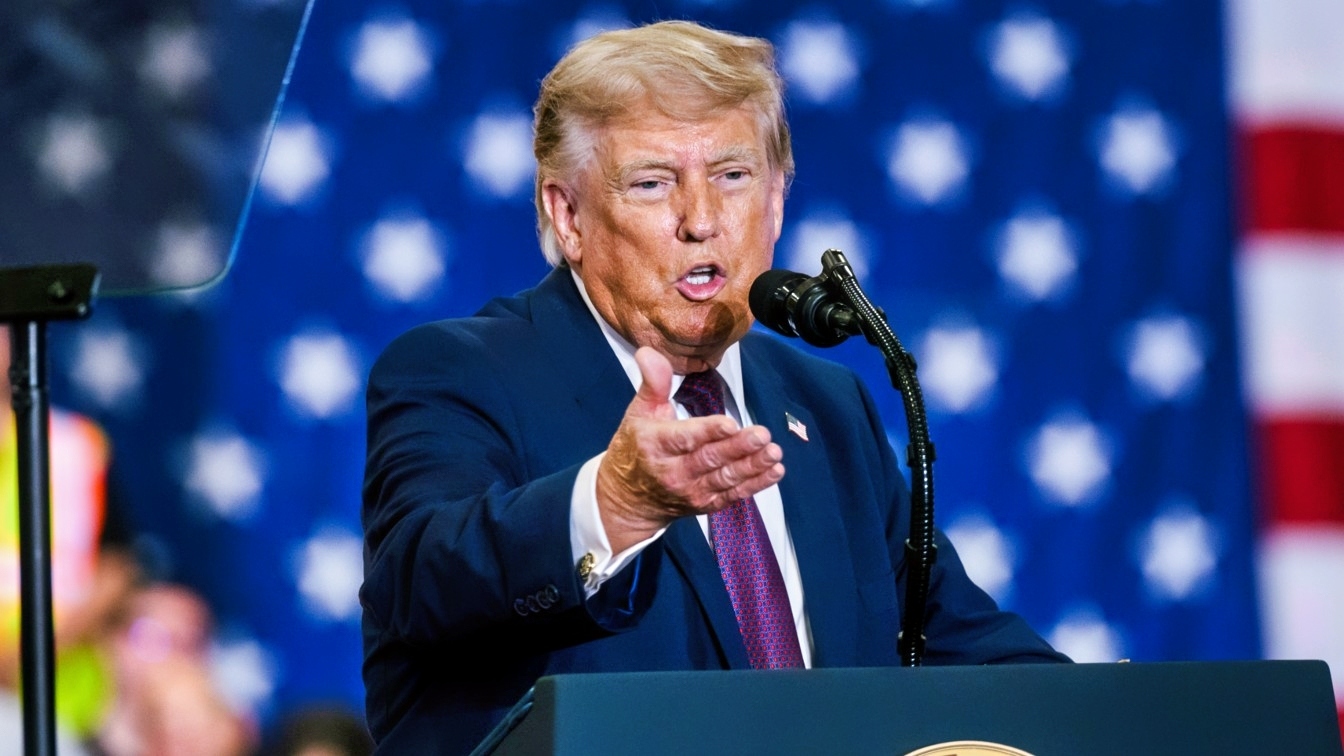
With the US continuing its attacks on Iran, President Trump warned Iran it had “better behave” or face further military action should it not return to negotiations after the latest exchanges.
The president said on Wednesday that he would authorize attacks on Iranian power plants, bridges, and other infrastructure targets if Tehran did not return to peace talks by next week.
“I don’t like giving deadlines, but they pretty much know, they know the story … they better behave,” Trump said when asked if Iran had a deadline before the attacks.
Earlier on Thursday, the Iranians conducted further drone and missile attacks on Kuwait and Bahrain, as well as Jordan.
Iran is Already Accusing The United States Of War Crimes
A CNN report stated that Iran’s Ministry of Foreign Affairs accused the United States of war crimes for targeting civilian infrastructure in its strikes on the country, while defending its own attacks on neighboring Arab states in the Persian Gulf as acts of self-defense.
The statement cited “Iran’s inherent and lawful right of self-defense under international law and Article 51 of the Charter of the United Nations.”
In a statement Thursday, the ministry accused the US of committing “numerous war crimes, particularly by targeting civilian facilities and infrastructure.”
Such attacks “constitute a flagrant violation of the Charter of the United Nations and the fundamental rules of international law,” the ministry said.
It is noteworthy that the United States has not taken any action against Iranian civilian infrastructure, but merely has threatened to do so.
The report states that the Iranian Foreign Ministry failed to mention that the regime has targeted commercial shipping and has conducted previous missile and drone attacks on residential buildings, hotels, civilian airports and major energy and water facilities in various Gulf states.
Among them was a June 3 strike on Kuwait International Airport that heavily damaged a passenger terminal, killing one person and wounding more than 60 others, and an attack late last month that Bahrain’s Interior Ministry said caused major damage to a residential building.
Meanwhile, Iran is threatening further strikes on civilian infrastructure in the Gulf.
“All Infrastructure In The Region Will Be Crushed”
Colonel Ebrahim Zolfaghari, an Iranian military spokesperson, made threatening overtures of his own in response to President Trump’s warnings that the United States could expand the strikes on Iran, reiterating that the Strait of Hormuz is Iran’s red line.
“All the infrastructure in the region will be crushed under the steel blows of the powerful armed forces of the Islamic Republic of Iran,” he said.
“Under no circumstances and in no way will we allow America, as a foreign and extra-regional country, to interfere in the Strait. This is Iran’s inviolable red line.”
Zolfaghari added that the only way to reopen the Strait was for the US to follow the 14-point Memorandum of Understanding (MoU) signed last month, as well as to abide by “Iranian regulations” for transiting ships.
Why Is Iran Attacking Its Gulf Neighbors?
Iran is targeting and attacking its Gulf neighbors ostensibly to retaliate against the United States and pressure its regional allies to de-escalate the broader U.S.-Iran conflict.
Tehran argues that these nations harbor U.S. military bases and allow Washington to launch operations from their territories.
The reason behind the Gulf countries allowing US bases is to deter the Iranians from attacking them. However, the Iranians are claiming that the very reason they are attacking their neighbors is the presence of the US bases.
Tehran has stated that its drone and missile strikes on countries like Kuwait and Bahrain are direct responses to U.S. strikes on Iranian soil.
By attacking civilian energy infrastructure, ports, and bases, Iran attempts to increase the collective economic and security cost of the conflict.
Tehran hopes this will force the Gulf states to use their diplomatic influence to pressure the U.S. into negotiations to stop the conflict.
But thus far, Iran’s tactics are backfiring on them. Many Gulf countries are doubling down on their alliances with the United States.
About the Author: Steve Balestrieri
Steve Balestrieri is a National Security Columnist. He served as a US Army Special Forces NCO and Warrant Officer. In addition to writing on defense, he covers the NFL for PatsFans.com and is a member of the Pro Football Writers of America (PFWA). His work was regularly featured in many military publications.


