

Two Italian technicians were killed, and two others were injured when drones attacked a Kuwaiti military facility on Thursday. European Commission President Ursula von der Leyen has called for increased pressure to be applied to Iran, which she blamed for the attack. Both Kuwait and Italy have also accused Iran of responsibility for the strike, which Tehran has denied.
Rheinmetall Italia, part of German defense firm Rheinmetall, employed the technicians. They were involved in maintaining defense systems for Kuwait’s military. The drone strike took place in the ninth month of the U.S.-Israeli war against Iran.
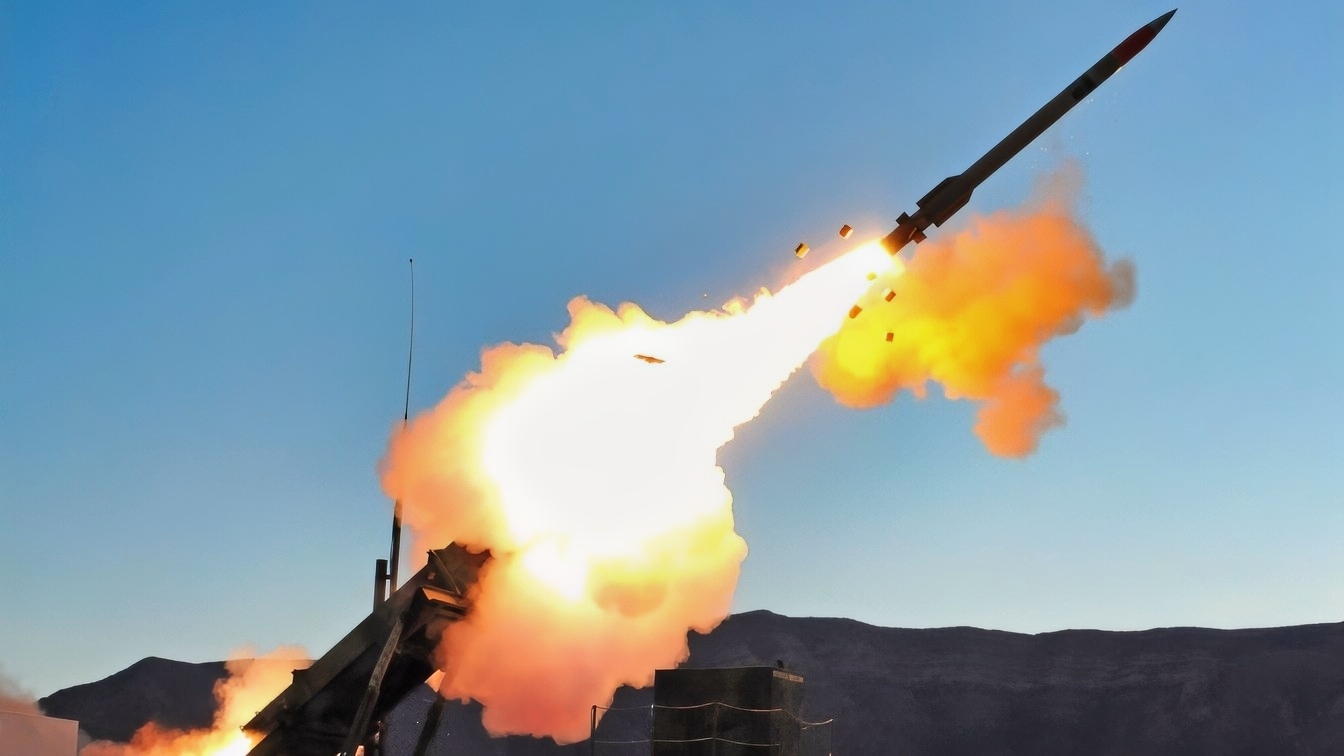
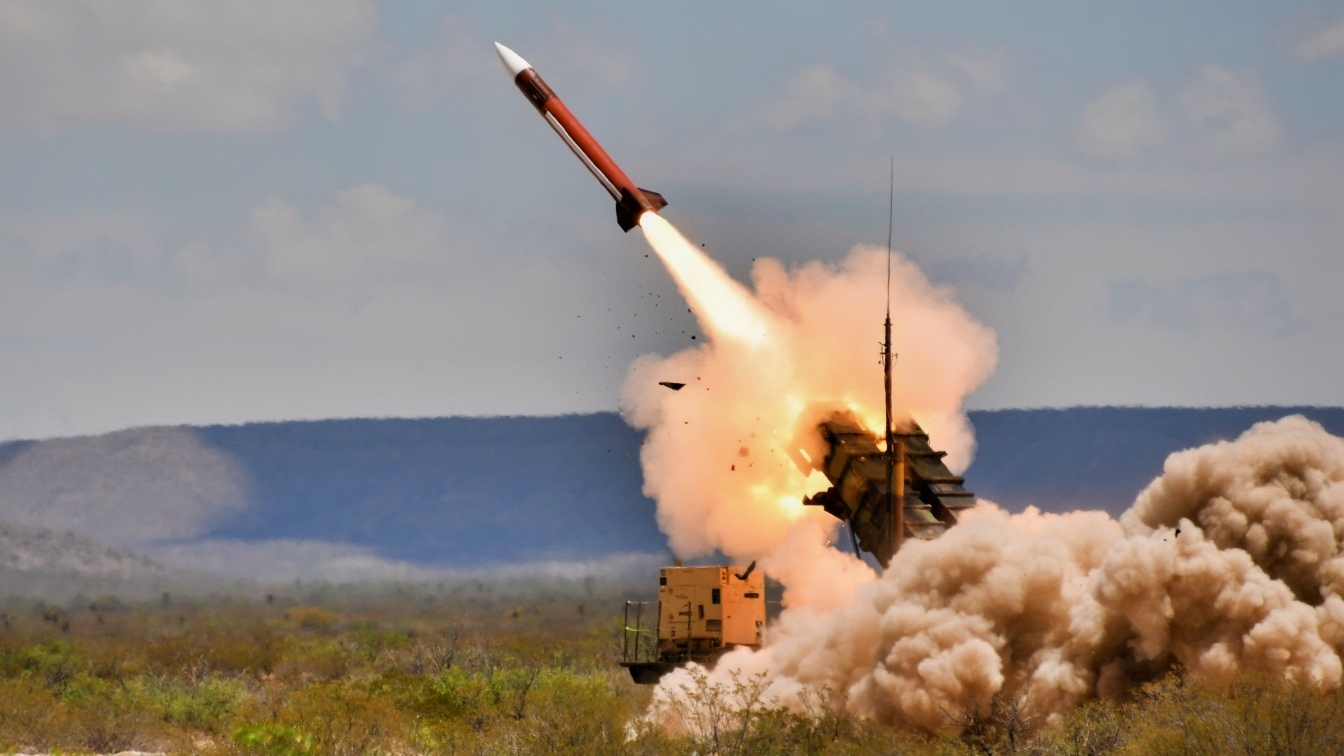
The Army test fires a Patriot missile in a recent test. The Patriot missile system is a ground-based, mobile missile defense interceptor deployed by the United States to detect, track and engage unmanned aerial vehicles, cruise missiles, and short-range and tactical ballistic missiles. Patriot, along with other missile defense systems, are included in the Army Air and Missile Defense 2028, which provides the Army’s overarching vision for the AMD force, describes how the AMD force is postured to support the Army and joint forces, and articulates what must be accomplished to achieve the 2028 desired end state of preventing and defeating adversary air and missile attacks through a combination of deterrence, active and passive defense, and support to attack operations. (U.S. Army photo)
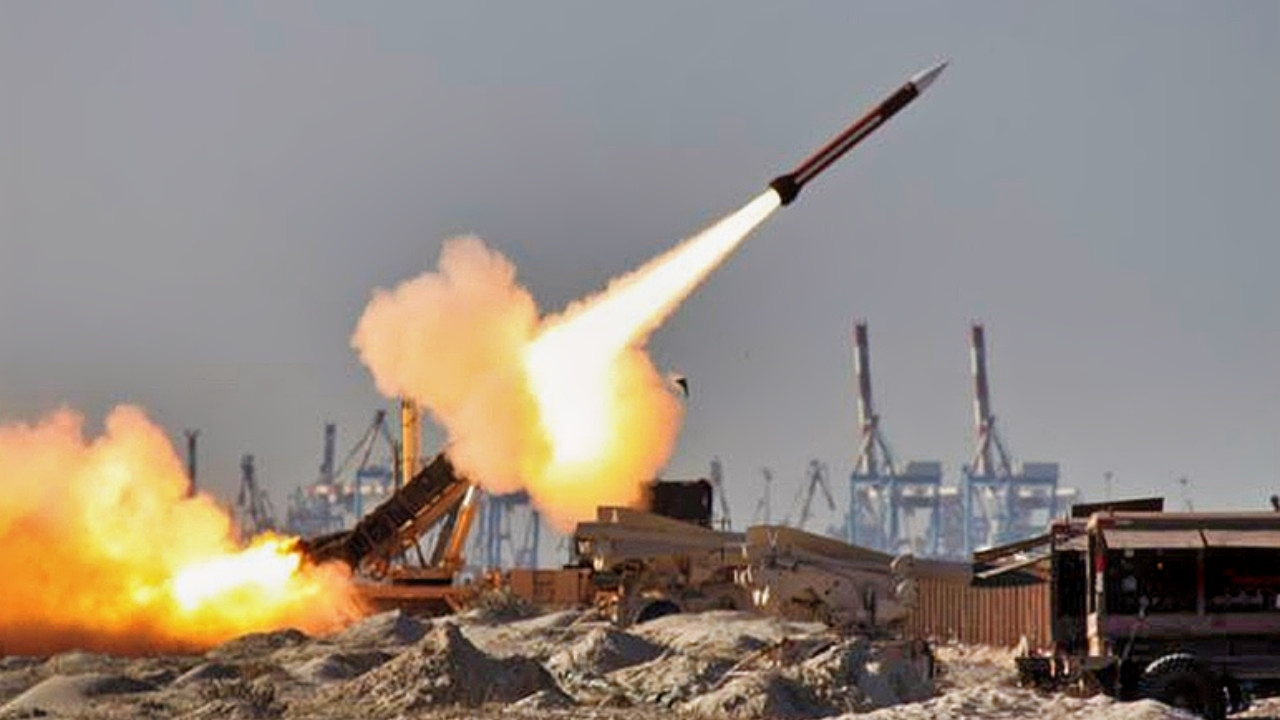
Patriot Missile Interceptor Test. Image Credit: Creative Commons.
Earlier this month, Tehran had also claimed to have launched an attack on U.S. drone and missile facilities in Kuwait, Reuters reported.
Drones Targeted Defense System
Foreign Minister Antonio Tajani told Italy’s Senate on Thursday that drones of Iranian origin had targeted Kuwaiti military installations at around 2 p.m. local time, including an air defense detection station where two Italian technicians were working.
“A powerful explosion occurred, and, according to reports reaching us from Kuwait, both of our compatriots have died,” Tajani said. A captain of the Kuwaiti army and a Pakistani national were also wounded.
Kuwait’s military said that Iranian drones had been shot down and falling debris had wounded four people. “Iranian forces have attacked an important facility,” said Staff Col. Saud Abdulaziz Al-Atwan, spokesman for the Defense Ministry.
Kuwait’s initial announcement did not specify which facility had been attacked. The Italian Foreign Ministry later said the technicians had been carrying out maintenance on the detection antennas of the Skyguard air defense system used by the Kuwaiti Armed Forces. It confirmed that “both Italian citizens lost their lives.”
Iran Denies Involvement
Senior Iranian armed forces spokesperson Abolfazl Shekarchi has denied that Iran was involved. Iranian state media reported on Thursday that he denied that Iran’s armed forces had carried out any military or offensive operations in the region. The Iranian Embassy in Rome also rejected the allegation that Iran was behind the attack.
Iranian Foreign Minister Abbas Araghchi has spoken with his Kuwaiti and Italian counterparts. In a subsequent post on X, he described the incident as “suspicious” and proposed a joint investigation.
“We stand ready to cooperate with Kuwait and Italy to determine the cause of the incident,” he added.
EU Leader Urges Pressure on Iran
On X, von der Leyen expressed her sadness at the loss of life and stated that it was essential to intensify pressure on Iran so that it stops what she described as unacceptable attacks on its neighbors and Gulf partners.
She also stressed that security in the Gulf was a concern for Europe.
Shipping and Energy Infrastructure Also at Risk
The Kuwait drone strike followed numerous attacks and attempted attacks throughout the Gulf. Seventeen oil tankers have been targeted in the Strait of Hormuz since Nov. 1, the Joint Maritime Information Center said on Thursday.
The strait is used to transport oil produced in the Gulf to world markets. In addition to mines, various munitions have reportedly been used against vessels.
Separately, a Saudi Aramco refinery in Jazan was attacked on Thursday, killing one Nepalese national and injuring several others. A “hostile aerial projectile” had been used, the Saudi Energy Ministry stated. It added that production activities had been temporarily paused.
While the Saudi-led military coalition combating Yemen’s Iran-backed Houthis has blamed the Houthis for the Jazan refinery attack, the ministry did not specify who it believed to be responsible.
Renewed Strikes Would Target Pickaxe Mountain
U.S. President Donald Trump told military personnel on Thursday that Washington was allowing Tehran to “make a deal and save a lot of lives.” He also questioned whether the Iranian leadership was “crazy.” Speaking with reporters during Thanksgiving festivities at Mar-a-Lago, he noted that the U.S. would “definitely hit Pickaxe Mountain,” a major nuclear site, if he decided to renew strikes on Iran. However, Trump claimed that no “real activity” had been seen there recently.
He previously told journalists at a Nov. 20 White House press conference that only a “real deal” would suffice and that Tehran had thus far refused a deal “acceptable to me.”
He also reiterated his position that the Iranian regime would not be permitted to obtain nuclear weapons.
About the Author: Georgia Gilholy
Georgia Gilholy is a journalist based in the United Kingdom who has been published in Newsweek, The Times of Israel, and the Spectator. Gilholy writes about international politics, culture, and education.


