


For two decades, Tehran’s line on the bomb never changed. It does now. The New York Times reported Tuesday that a growing chorus of Iranian officials, lawmakers, and clerics is openly calling for the Islamic Republic to build nuclear weapons.
A few years ago, that sentence would have been unthinkable.
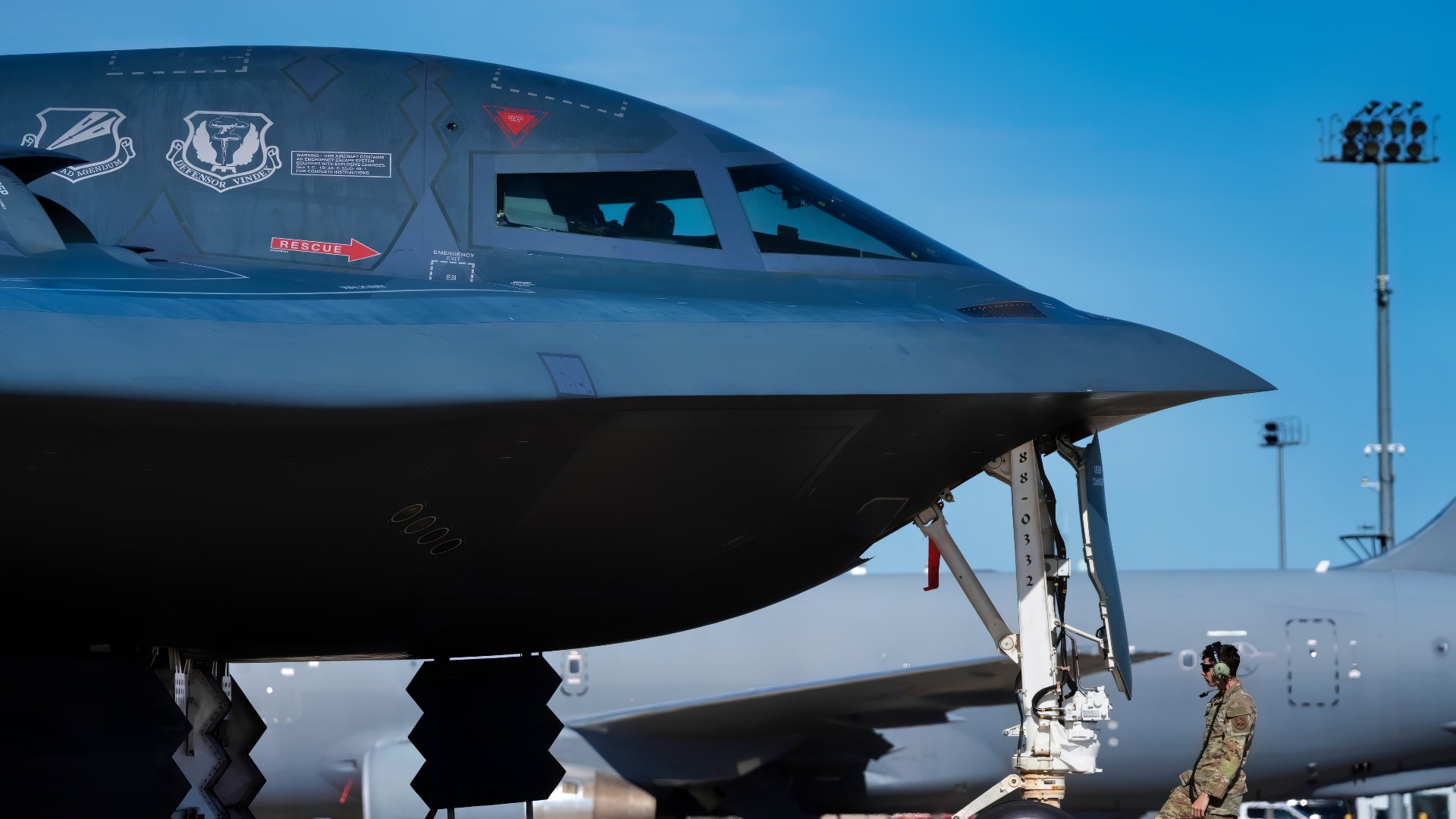
U.S. Air Force Staff Sgt. Hunter Kaloci, 393rd Bomber Generation Squadron crew chief, adjusts a wheel chock in front of a parked B-2 Spirit aircraft at Pease Air National Guard Base, New Hampshire, Sept. 20, 2025. The 393rd BGS provides worldwide combat capability by planning and conducting all aspects of on-aircraft maintenance, launch and recovery of B-2 aircraft in direct support of Joint Chiefs of Staff nuclear and conventional taskings. (U.S. Air Force photo by Staff Sgt. Joshua Hastings)
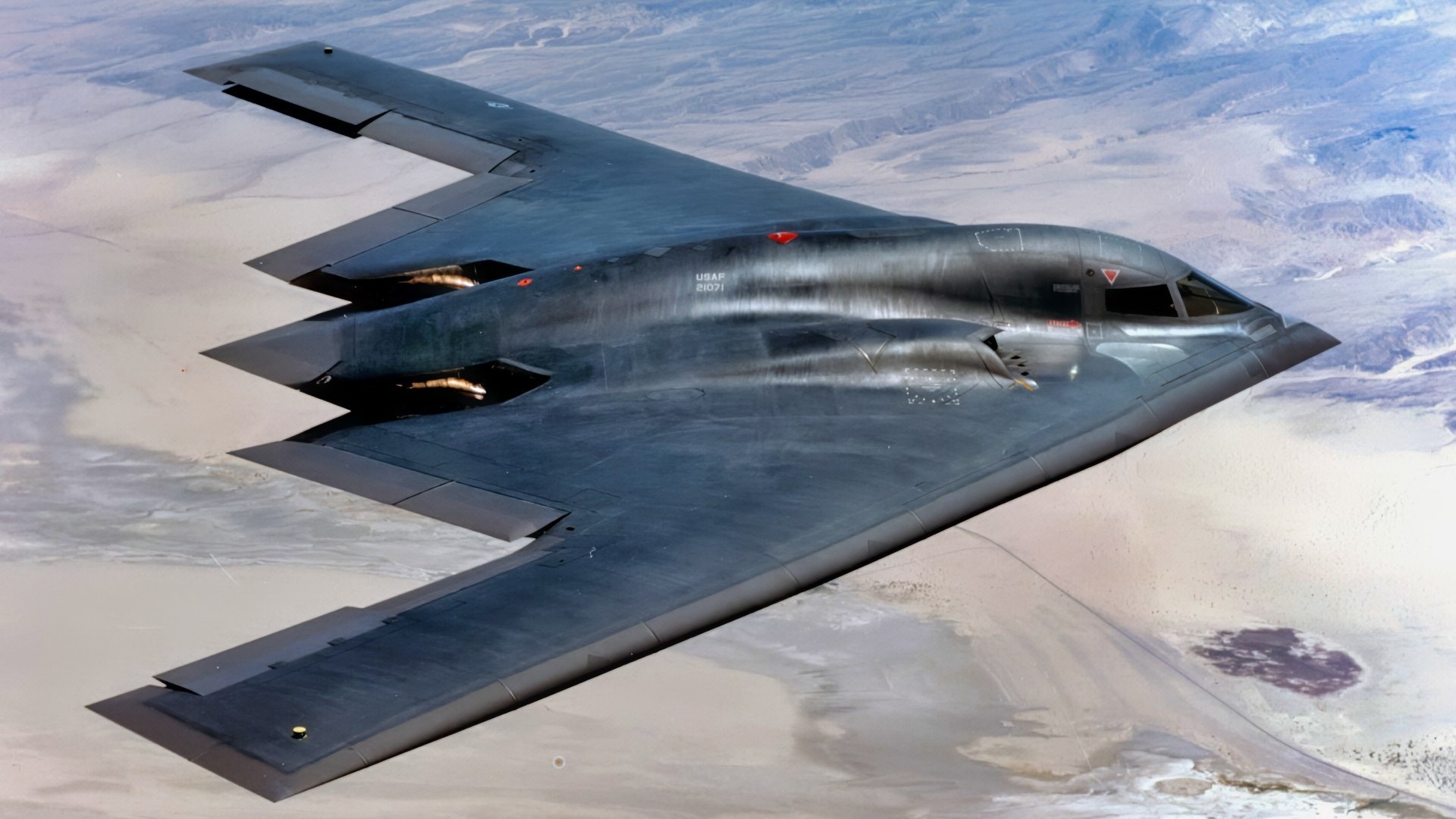
FILE PHOTO — The B-2 Spirit is a multi-role bomber capable of delivering both conventional and nuclear munitions. A dramatic leap forward in technology, the bomber represents a major milestone in the U.S. bomber modernization program. The B-2 brings massive firepower to bear, in a short time, anywhere on the globe through previously impenetrable defenses. (U.S. Air Force photo)
Friday prayer leaders are preaching it.
Rally crowds are chanting it. Sitting members of parliament are posting it on social media.
In the western city of Kuhdasht, a prayer leader named Ali Sepahvand called for atomic arms last week while worshippers chanted that nuclear deterrence was Iran’s “inalienable right.”
Lawmaker Mahmoud Nabavian wrote that after paying the price of war and sanctions, it was time to walk away from the Non-Proliferation Treaty and change the country’s nuclear doctrine.
Another lawmaker, Abolfazl Aboutorabi, went further and called for an actual bomb. Cleric Mohammad Javad Haj Ali Akbari used his Friday sermon to describe a doctrine change as a “national demand.”
Tehran has always been loud. However, this time is different, and the reasons are simple.
The Elder Khamenei Is Gone
For years, Iran’s answer to every accusation was Ali Khamenei’s fatwa banning nuclear weapons. Whether you believed it or not (and plenty of people in the intelligence community did not), it gave the regime a religious and diplomatic shield.
That shield died on February 28, when Khamenei was killed in the opening strikes of the US-Israeli war. His son Mojtaba took over and has never publicly reaffirmed his father’s edict.
Iran’s own foreign minister, Abbas Araqchi, conceded in March that a fatwa depends on the jurist who issues it.
In April, Mojtaba vowed to guard Iran’s nuclear and missile capabilities the way the country guards its borders.
The wording is the key factor. He didn’t say peaceful nuclear program. He said capabilities.
Iran, Despite The “Peaceful Program” Line, Has Always Sought Nukes
Iran for years touted its nuclear program as only for peaceful purposes. But that has been largely debunked.
As soon as the Shah was deposed, the Islamic Republic began work on trying to develop nuclear weapons by importing key equipment from Pakistan, Russia, and China.
Following the 1979 Islamic Revolution, Iran secretly pursued nuclear enrichment and weaponization technology.
This culminated in the organized Amad Plan (1998–2003), an explicit effort to develop an implosion-style nuclear warhead.
Iran has enriched its uranium stockpile to over 60 percent, far above what is needed for peaceful nuclear power, and just one step below weapons-grade.
In 2018, the Israeli Mossad broke into a warehouse in the Shorabad district of southern Tehran on January 31, 2018, smuggling out about 55,000 pages of physical documents and 55,000 files stored on 183 compact discs/DVDs (documenting Project Amad, Iran’s pre-2003 nuclear weapons program).
The documents detailed Iran’s work on nuclear warhead designs (such as for the Shahab-3 missile), high-explosive and neutron-initiator tests at the Parchin military base, and plans to split nuclear activities into overt and covert components.
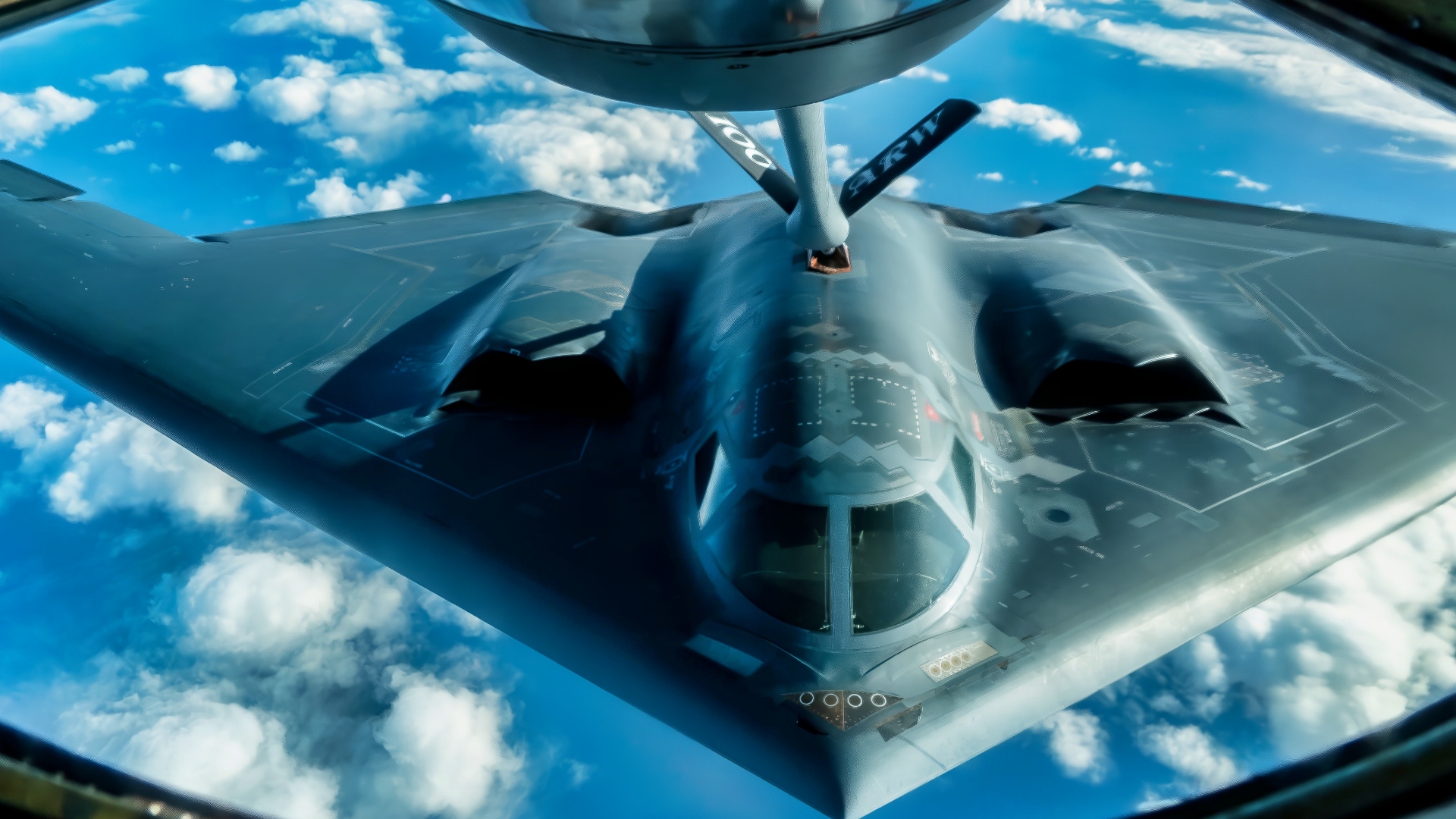
A U.S. Air Force B-2 Spirit assigned to the 509th Bomb Wing from Whiteman Air Force Base, Missouri, receives fuel from a 100th Air Refueling Wing KC-135 Stratotanker during Global Thunder 20, Oct. 28, 2019. Global Thunder is an annual command and control exercise that provides training opportunities for all of U.S. Strategic Command’s mission areas, tests joint and field training operations, and has a specific focus on nuclear readiness. (U.S. Air Force photo by Staff Sgt. Trevor T. McBride)
Iran later claimed the entire archive was fabricated.
The Nuclear Material Is Still Out There
When the bombing started in June 2025, Iran held 440.9 kilograms of uranium enriched to 60 percent.
Under the IAEA’s definition, about 42 kilograms of 60 percent material is enough, in theory, to make one weapon once it’s further enriched. That’s roughly enough to manufacture ten weapons.
The IAEA admitted in September that it lost track of that stockpile more than a year ago, and Director General Rafael Grossi has said more than 200 kilograms likely sits in tunnels at Isfahan.
Getting from 60 to 90 percent is the easy part. According to the Center for Arms Control and Non-Proliferation, it takes about 1 percent of the separative work Iran already sank into that stockpile. A few cascades would do it.
Pickaxe Mountain, where US and Israeli officials say Iran moved thousands of centrifuges, is buried 80 to 100 meters under granite. Trump has already said Washington may have to go there.
The Hardliners Think History Is On Their Side
So why is bomb talk going mainstream now?
The hardliners have the president’s own words to point to. Talking about Kim Jong Un last month, Trump noted that when a country has 11 nuclear missiles, it’s nice to get along.
Iranian commentator Davud Modarresian seized on that and argued a bomb is more important than food. Pyongyang kept its weapons and gets summits. Muammar Qaddafi gave his up and ended up in a drainage pipe.
Tehran’s hardliners can count.
Iran’s IRGC knows that its conventional forces can’t protect it from attacks by the US and Israel. And they view a nuclear weapon as a “cloak of immunity” or an insurance policy that deters foreign-backed regime change or continuous airstrikes.
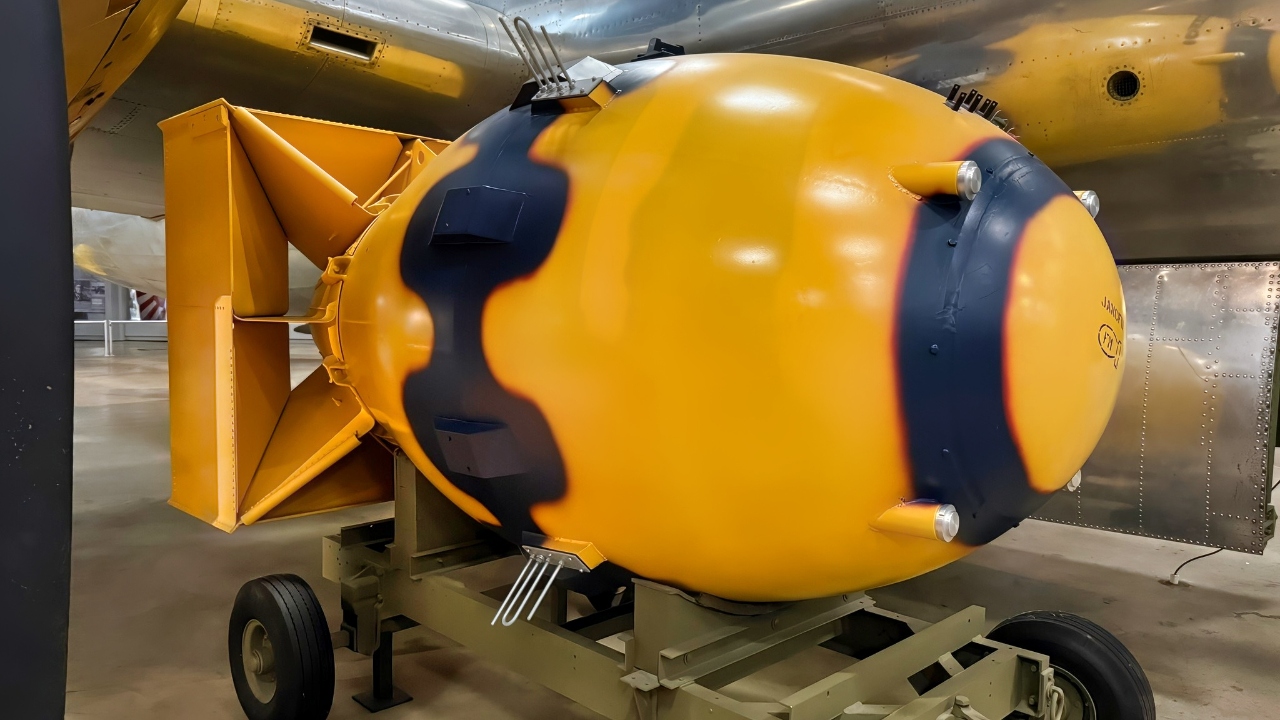
Fat Boy Nuclear Bomb At U.S. Air Force Museum. Photo Credit: Harry J. Kazianis/National Security Journal Original Photo.
The public has shifted too. A University of Maryland poll taken after the Twelve-Day War found, for the first time, a slim majority of Iranians favored developing both atomic bombs and nuclear power. That was before this year’s conflict.
The Trade-Off
However, much of this is theater, and it should be treated as such.
The IRGC-affiliated Fars news agency recently ran a video of street interviews selling the bomb as a popular demand.
Call it what it is—a propaganda messaging campaign. President Masoud Pezeshkian still denies Tehran wants an arsenal, and senior leadership hasn’t formally authorized any policy change.
Not everyone inside the system is on board, either. Mohammad Mokhber, a senior adviser to Mojtaba, argued that a country controlling the Strait of Hormuz doesn’t need a bomb.
Commentator Amir Ali Abolfath asked the obvious question: what good is deterrence if the country gets flattened before the weapon is finished?
That’s the trade-off in one sentence.
Every sermon calling for a weapon hands Washington and Jerusalem another reason to strike first.
Trump said last week that after the midterms “anything is possible,” and the Wall Street Journal reported Gulf states were warned to prepare for a short, intense campaign.
Loud intentions often shorten timelines.
The smart play for Iran’s leadership would be to stay silent. Instead, they’re broadcasting it from the pulpit.
About the Author: Steve Balestrieri
Steve Balestrieri is a National Security Columnist. He served as a US Army Special Forces NCO and Warrant Officer. In addition to writing on defense, he covers the NFL for PatsFans.com and is a member of the Pro Football Writers of America (PFWA). His work was regularly featured in many military publications.


