

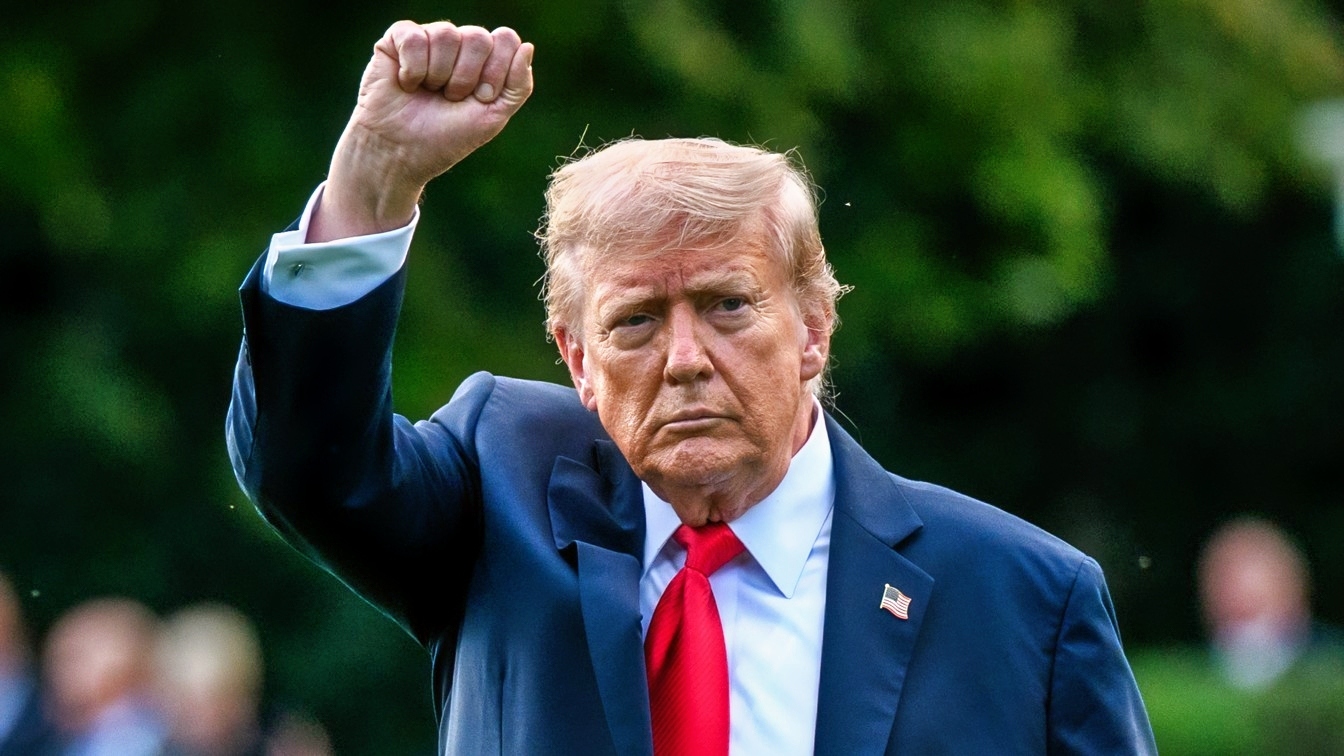
The United States Has Bombed Iran for 12 Nights. Hormuz Is Still Nearly Closed – President Donald Trump has kept American aircraft striking Iran for 12 consecutive nights, yet the campaign’s main political objectives remain unresolved. Tehran continues attacking shipping and regional bases, commercial traffic through the Strait of Hormuz remains severely reduced, and Iran has not accepted Washington’s terms. A Politico assessment of the campaign raised the question now facing the White House: how much more can airpower accomplish without a workable diplomatic end state?
U.S. Central Command said the latest round hit maritime capabilities, missile and drone storage facilities, coastal-surveillance sites, and air-defense assets. The official July 22 statement also said more than 50,000 American service members were operating across the Middle East and that the United States had resumed its blockade of Iranian ports.
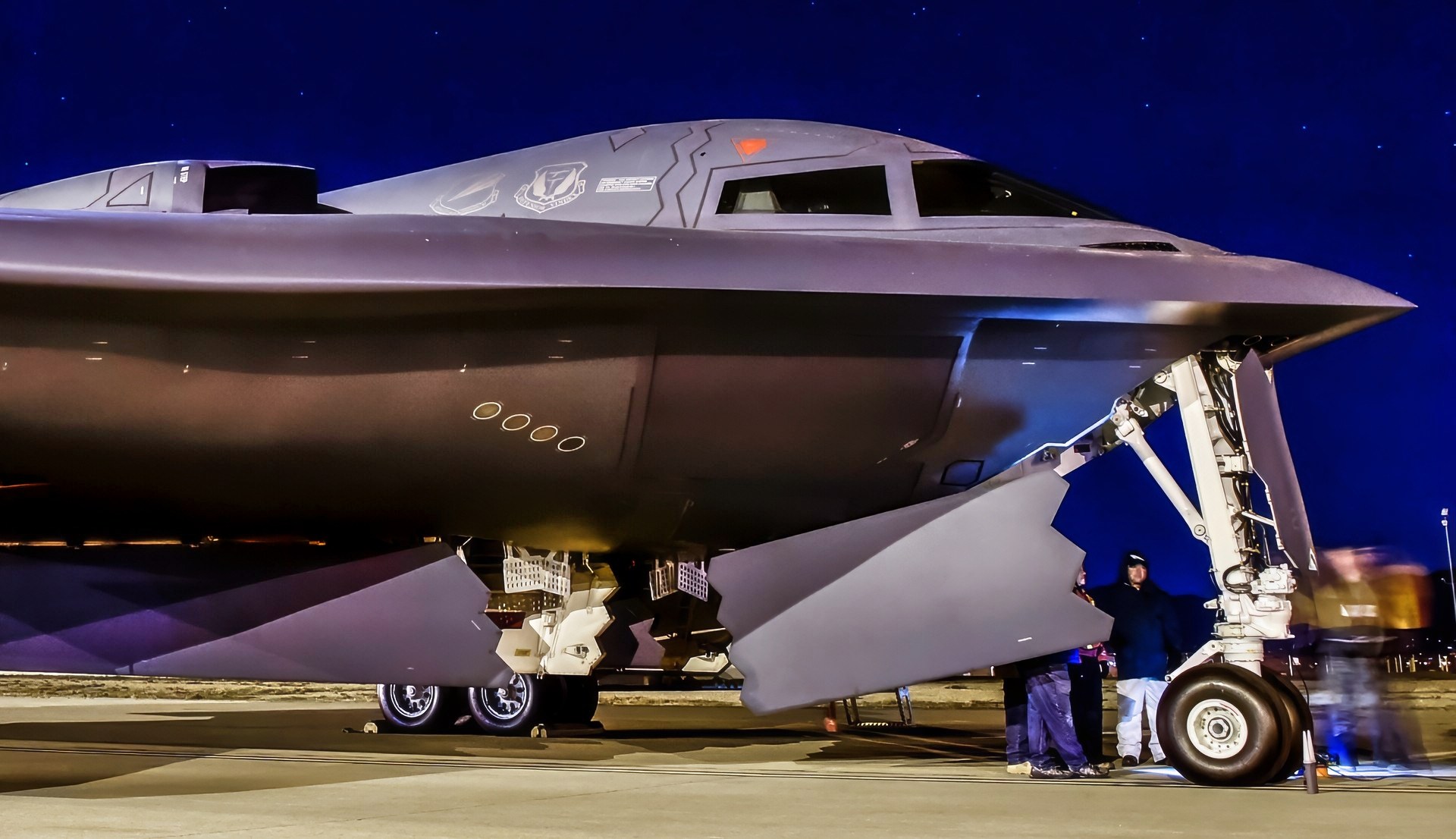
B-2 Spirit Stealth Bomber on Runway. Image Credit: Creative Commons.
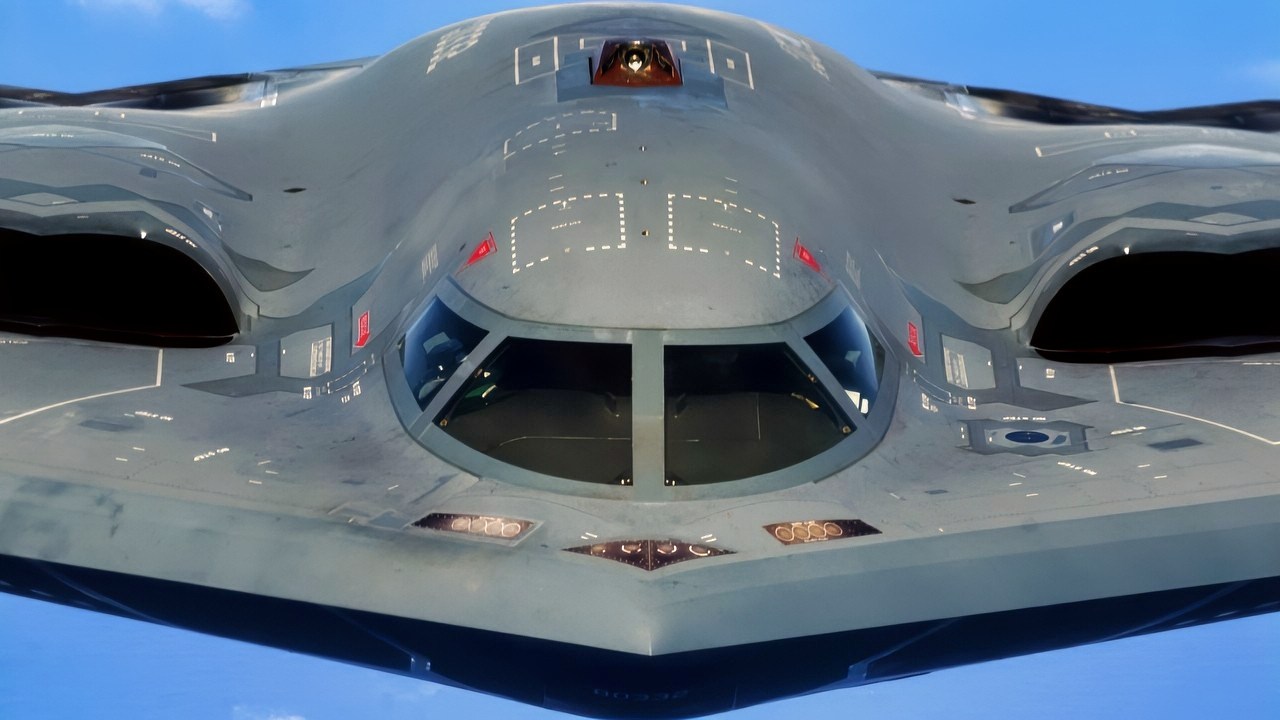
B-2 Spirit Stealth Bomber Flying. Image Credit: Creative Commons.
The military pressure has not restored normal shipping. Only three commodity vessels crossed Hormuz on July 21, and no very large crude carriers or liquefied natural gas tankers were recorded, according to shipping data reported by Reuters. Tanker owners, crews, charterers, and insurers continue treating the waterway as a high-risk route.
The financial and human costs are also rising. Defense Secretary Pete Hegseth estimated that the war had cost $37.5 billion, according to an Associated Press account of his Senate testimony. A separate AP casualty update put the American toll at 18 service members killed and well over 500 wounded.
U.S. Airstrikes Are Hitting a Harder Iranian Target Set
The early campaign concentrated on large, fixed, and well-mapped targets: air-defense sites, command facilities, missile storage areas, naval bases, and nuclear infrastructure. Later rounds have to find dispersed launchers, repaired equipment, mobile drone teams, mines, and small maritime units. Each strike can still destroy useful assets, but the remaining targets are harder to locate and less likely to change Iran’s political calculations.
American airpower has delivered substantial tactical effects by damaging infrastructure, reducing some launch capacity, and protecting selected shipping movements. The campaign still has to be measured against its political objectives. If the objective is military degradation, the strikes have produced results. Compelling Tehran to surrender its position on Hormuz remains a much harder task.
Iran Is Surviving Because Hormuz Is a Geography Problem
Iran only needs to preserve enough mines, drones, coastal weapons, and small units to keep commercial operators uncertain. That method allows Tehran to reduce traffic without sealing every lane. The United States can escort selected ships and strike suspected launch sites while normal trade still fails to return.
Geography gives Iran numerous firing positions, hidden storage areas, ports, islands, and short transit distances. Commercial confidence requires every crossing to look safe enough. That is why airstrikes cannot remove the strait’s basic geography.
Trump’s Infrastructure Threat Broadens the Iran War
Trump has threatened to destroy one Iranian bridge or power plant for every Iranian attack on a ship. The one-for-one retaliation policy expands the target set toward infrastructure with broader economic and civilian effects.
Some bridges and power facilities may support military operations and qualify as military objectives under specific circumstances. Repeated strikes on transportation and electricity networks could also interrupt hospitals, water systems, communications, and commerce. Iran has promised reciprocal attacks on regional infrastructure, increasing the risk that the campaign spreads into a wider contest over power grids, ports, and public services.
The Pentagon Is Paying More for Less Political Leverage
High-value aircraft, precision weapons, tankers, surveillance platforms, air-defense systems, and naval escorts are supporting a campaign against dispersed and comparatively inexpensive threats. Congress is considering tens of billions of dollars in additional funding while the Pentagon replaces munitions and sustains more than 50,000 personnel across the region.
Iran can impose global costs with a small number of successful attacks or credible threats. The campaign has reached the point where additional bombing has not produced additional shipping confidence. American forces retain overwhelming tactical superiority, but Tehran still holds political and economic leverage through Hormuz.
The United States Needs a Negotiated Iran End State
Washington can continue a long campaign of strikes and escorts, expand the war, reduce its involvement without restoring normal transit, or negotiate an arrangement that recognizes some Iranian role while preserving nondiscriminatory passage. Each possible exit requires a major concession or continuing cost.
A durable agreement would need enforceable rules for Hormuz, verified mine clearance, an end to attacks on shipping and American bases, and clear conditions for lifting U.S. strikes and blockade measures. Without those terms, the campaign risks becoming a recurring cycle of destruction and rebuilding.
As of July 23, the United States had completed 12 consecutive nights of strikes, Iran continued resisting American terms, and only three commodity vessels had crossed Hormuz on the latest reported day. Success will be visible when large tankers resume regular crossings under rules both governments can sustain.
About the Author: Harry J. Kazianis
Harry J. Kazianis (@Grecianformula) was the former Senior Director of National Security Affairs at the Center for the National Interest (CFTNI), a foreign policy think tank founded by Richard Nixon based in Washington, DC. Harry has over a decade of experience in think tanks and national security publishing. His ideas have been published in the NY Times, The Washington Post, The Wall Street Journal, CNN, and many other outlets worldwide. He has held positions at CSIS, the Heritage Foundation, the University of Nottingham, and several other institutions related to national security research and studies. He is the former Executive Editor of the National Interest and the Diplomat. He holds a Master’s degree focusing on international affairs from Harvard University.


Bryant
July 23, 2026 at 7:49 pm
No military has ever won a war with Air Power alone. It has always required Boots on the Ground to hold and secure territories. Trump has military and intelligence advisors that have advised him of this during his morning briefings and in his briefing book, Problems are,Trump doesn’t listen to his advisors and obviously he can’t read. The answers with fighting wars is never allow Politicians or Bean counters to run the war.