

Washington appears to be searching for an Epic Fury off-ramp. With public patience fading, costs mounting, missile stockpiles dwindling, and naval assets tied up, the administration likely recognizes that it’s time to pivot. Doing so will require political tact and a claim to victory, even if a decisive strategic victory remains elusive. The most likely outcome is a managed de-escalation, followed by declarations of victory.
Washington Wants Out of Iran War

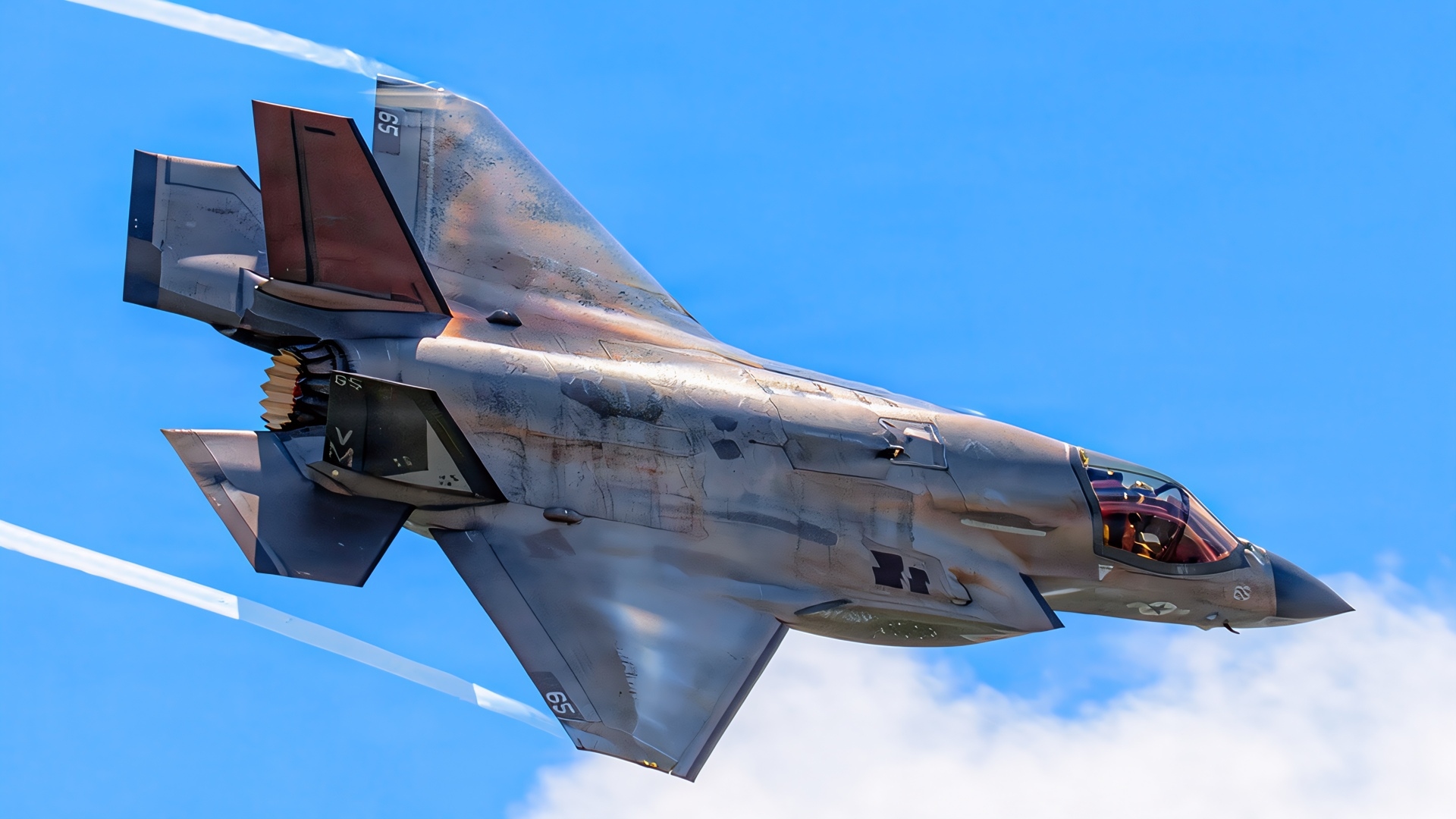
A U.S. Air Force F-35 Lightning II assigned to the 56th Fighter Wing, Luke Air Force Base, Arizona, performs a strafing run during Haboob Havoc 2024, April 24, 2024, at Barry M. Goldwater Range, Arizona. Haboob Havoc is an annual total force exercise that brings together multiple fighter squadrons from numerous bases to practice skills and test abilities in various mission sets. (U.S. Air Force photo by Staff Sgt. Noah D. Coger)
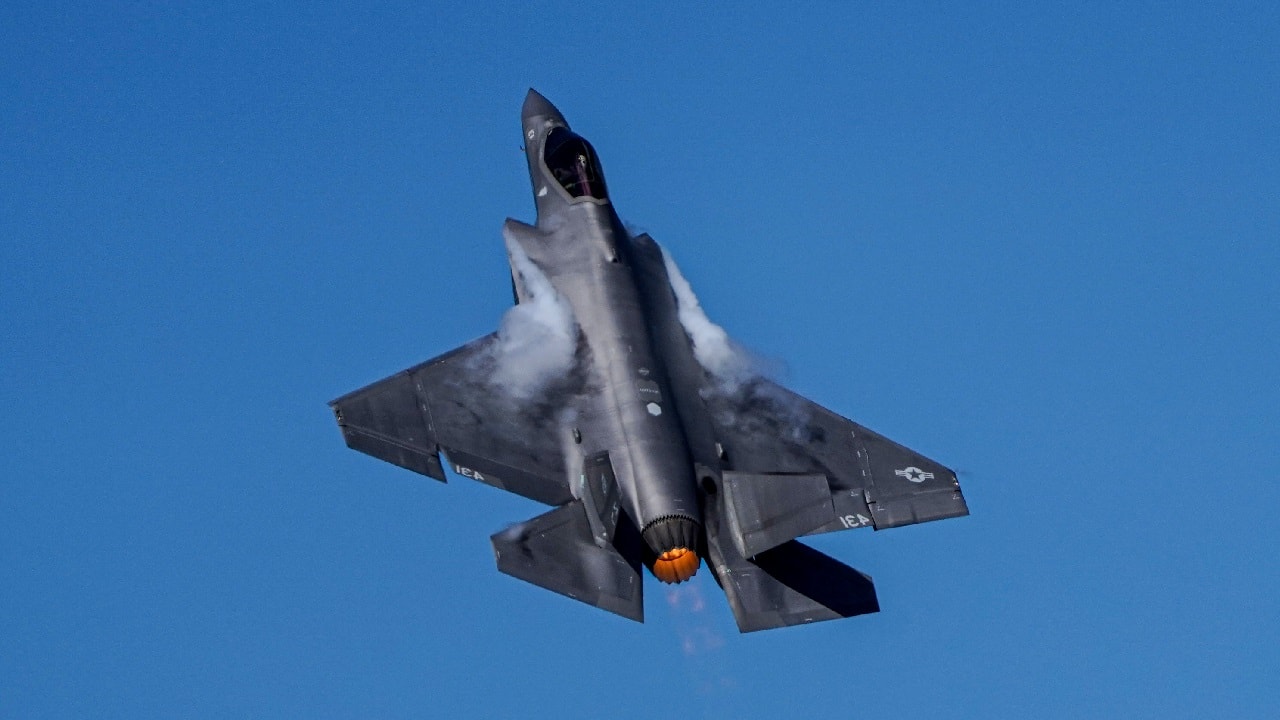
F-35 Fighter Heading Into the Sky. Image Credit: Creative Commons.
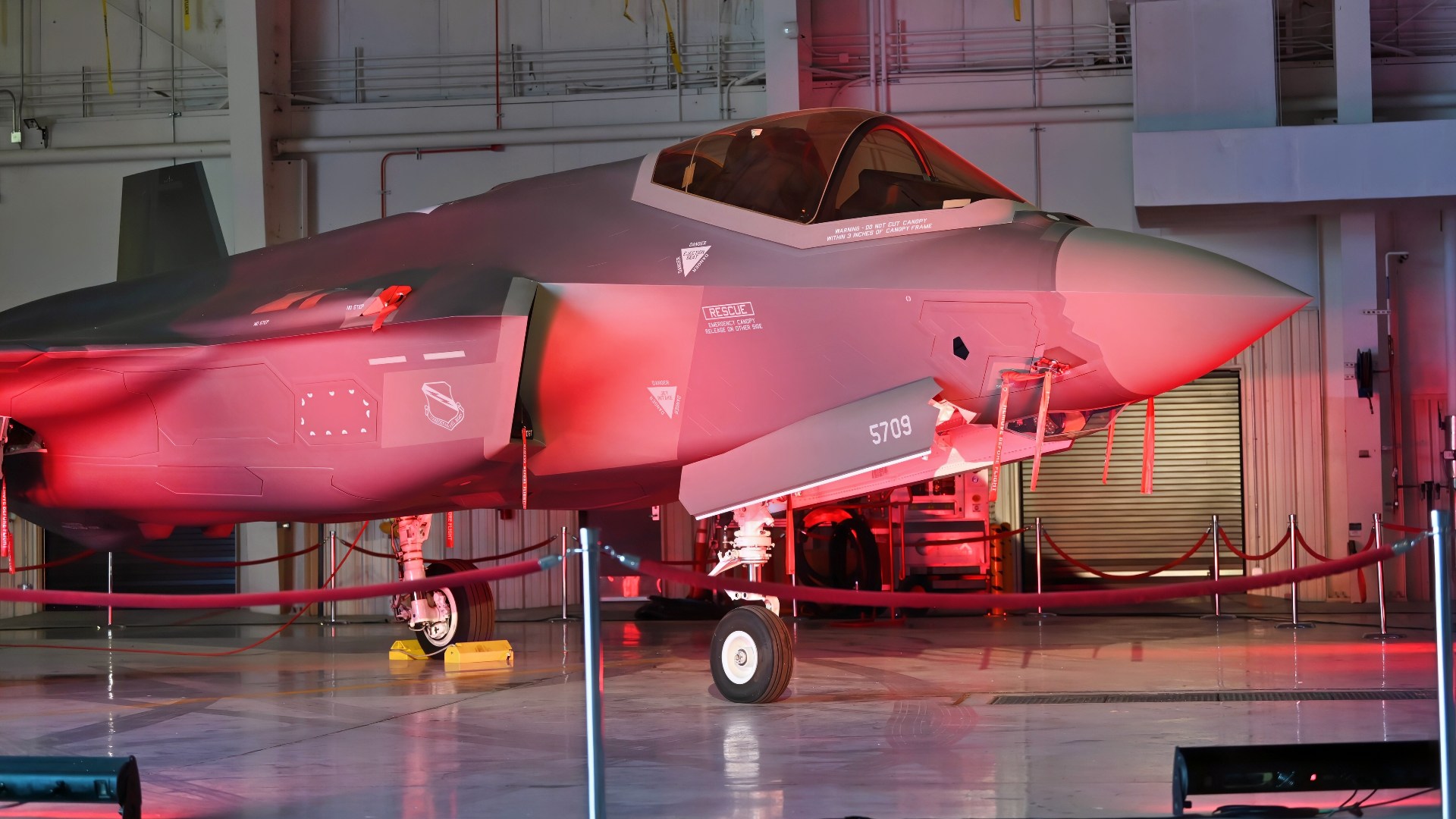
The new F-35 Lightning II stands on display at the First Aircraft Arrival ceremony on Nov. 2, 2024, at Naval Air Station Joint Reserve Base Fort Worth, Texas. The delivery of the F-35 ushered in a new era of modern-day warfighting for the U.S. Air Force. (U.S. Air Force photo by Staff Sgt. Richard Moser)
Americans don’t have an appetite for another open-ended Middle Eastern conflict.
Ironically, Trump ran on ending wars forever, citing Iraq and Afghanistan. So the administration likely understands that a prolonged deployment (and the associated costs) will eventually become a political liability. Driving the costs of war, specifically, is the use of expensive interceptors against relatively cheap drones and missiles.
The cost asymmetry is painful to sustain. Similarly, naval forces have maintained a costly presence around the Gulf and the Strait of Hormuz, drawing attention from elsewhere and straining the entire fleet.
These are resources that the administration would rather allocate towards China and the Indo-Pacific, not the Middle East, so Washington’s incentives are clearly aligned toward stabilization rather than another escalation.
Framing the Outcome
The administration will roll out a victory narrative, citing the destruction of military infrastructure, degraded Iranian capabilities, pressure on Iranian leadership, and the reopening of shipping lanes (if negotiations succeed, that is).
The message will be “Mission Accomplished”—that Epic Fury worked and that Iran was deterred. But that message is unlikely to align with the strategic reality, as many of the underlying issues that triggered the conflict remain unresolved.
Strategic Victory?
Epic Fury degraded Iran’s capabilities, yes, but it did not necessarily eliminate those capabilities. Iran still enjoys dispersed manufacturing, decentralized networks, proxy relationships, and missile capabilities. The war did not negate these key strengths. And while the US did destroy some physical infrastructure, Iran’s technical expertise and organizational networks have proven much harder to remove. And a temporary suppression of capability is not necessarily a permanent solution.
Potential Complications
But a smooth exit is not assured.
Possible scenarios could serve to complicate the US exit. First, Israel could escalate through continued operations in Lebanon that force Iran to respond. If a missile exchange resumes, Washington could get pulled back in despite wanting out. Were this to happen, it would serve as a prime example of the US relationship with Israel no longer serving US interests.
Second, things could go hot in Hormuz. US and Iranian forces remain in close proximity in a contentious environment. An accident, misidentification, or naval incident is entirely plausible and could spark a regional escalation. Third, Tehran could accelerate its nuclear activity, perhaps sensing that Western war fatigue creates an opportunity. This would likely cause the US and Israel to intervene immediately.
Mowing the Lawn
Even if the US successfully withdraws from Iran, larger questions remain. The underlying threat that prompted US intervention in the first place remains mostly unresolved.
This is likely to create a cycle of sporadic intervening violence—what Israelis call “mowing the lawn,” where occasional intervention is launched to degrade threats, reduce capabilities, and buy more time.
Of course, this does not fundamentally resolve the conflict. The cycle could follow a predictable pattern where the US exits, claims success, and moves their attention elsewhere; then Iran rebuilds; then something happens—a proxy attack, maritime incident, or nuclear threshold is reached—which prompts another US or Israeli intervention, but not occupation or a full-fledged campaign, just more half measures. Repeat.
Walking Away
Epic Fury likely ends with a negotiated wind-down and a political victory lap in Washington.
However, the war’s apparent conclusion may be misleading. The conclusion of Epic Fury could just be an intermission; the US will be eager to reduce its footprint in the Middle East before costs and public fatigue become overwhelming, before they become political liabilities.
But the strategic disputes that prompted the conflict remain unresolved, which raises serious questions about the long-term prospects for peace. In the short term, the biggest question marks are Israel’s conduct in Lebanon and friction in Hormuz.
About the Author: Harrison Kass
Harrison Kass is a writer and attorney focused on national security, technology, and political culture. His work has appeared in City Journal, The Hill, Quillette, The Spectator, and The Cipher Brief. He holds a JD from the University of Oregon and a master’s in Global & Joint Program Studies from NYU. More at harrisonkass.com.


